Loading...
Ahmed Vefik Pasha vs Julius Caesar
Julius Caesar leads by 35.8 pts · 2 figures compared
…
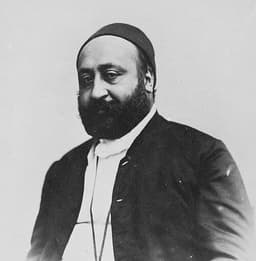
Ahmed Vefik Pasha
Politician · Modern
47.0Total

Julius Caesar
General · Ancient
82.8Total
Basic Information
Born
1823
-100
Died
1891
-44
Era
Modern
Ancient
Nationality
Ottoman Empire
Roman Republic
Occupation
Politician
General
Civilization
Middle Eastern
Western
Score Comparison
Military (10%)
47.1
88.0
Political (20%)
43.7
78.0
Influence (20%)
55.7
85.0
Legacy (20%)
42.5
82.0
Leadership (15%)
45.0
80.0
Strategy (15%)
44.6
85.0
TOTAL
47.0
82.8
Ahmed Vefik Pasha — Complete Timeline
1863 AD
Served as Governor of BursaPolitical Action
As governor of Bursa, Ahmed Vefik Pasha implemented modernization projects including road construction, public buildings, and educational reforms. He also established the first theater in Bursa and promoted cultural activities.
GovernorModernizationBursa
constructive
1870 AD
Translated Molière's Works into TurkishCultural◆ Major
Ahmed Vefik Pasha translated several plays by Moli
TranslationTheaterCultural Exchange
Impact: nationalconstructive
1876 AD
Published the First Turkish DictionaryCultural◆ Major
Ahmed Vefik Pasha compiled and published 'Lehce-i Osmani', a comprehensive dictionary of Ottoman Turkish. This work standardized Turkish vocabulary and grammar, becoming a foundational text for modern Turkish linguistics.
DictionaryLanguageScholarship
Impact: nationalconstructive
1878 AD
Appointed Grand VizierPolitical Action◆ Major
Ahmed Vefik Pasha served as Grand Vizier for a brief period in 1878 during the aftermath of the Russo-Turkish War. His tenure lasted only a few months as he was unable to stabilize the empire's finances or secure peace terms.
Grand VizierRusso-Turkish War
Impact: national
Julius Caesar — Complete Timeline
58 BC
Gallic WarsWar◆ Major
Caesar, as proconsul of Gaul, launched a series of campaigns that conquered all of Gaul (modern France, Belgium, and parts of Switzerland). He fought numerous battles, including against the Helvetii, the Belgae, and the Gallic chieftain Vercingetorix. The wars brought immense wealth and a loyal army to Caesar.
Gallic WarsConquestRoman Expansion
Impact: regional
49 BC
Crossing the RubiconPolitical Action◆ Major
Caesar led Legio XIII across the Rubicon River into Italy, defying the Roman Senate's order to disband his army. This act triggered a civil war against Pompey and the Optimates, ultimately leading to Caesar's dictatorship and the end of the Roman Republic.
Roman Civil WarEnd of RepublicPower Struggle
Impact: global
48 BC
Battle of PharsalusWar◆ Major
Caesar's outnumbered army defeated the larger forces of Pompey the Great at Pharsalus in Greece. Caesar's tactical use of a reserve line to counter Pompey's cavalry charge proved decisive. Pompey fled to Egypt, where he was assassinated, leaving Caesar as the undisputed master of the Roman world.
Roman Civil WarBattleDecisive Victory
Impact: regional
44 BC
Appointment as Dictator for LifePolitical Action◆ Major
The Roman Senate appointed Caesar dictator perpetuo (dictator for life), granting him unprecedented personal power. This move concentrated military, legislative, and judicial authority in one person, effectively ending the Roman Republic's traditional system of checks and balances and alarming many senators.
DictatorshipEnd of RepublicPower Consolidation
Impact: regionaldestructive
Assassination on the Ides of MarchPolitical Action◆ Major
A group of Roman senators, led by Marcus Junius Brutus and Gaius Cassius Longinus, stabbed Caesar to death at a meeting of the Senate in the Theatre of Pompey. The assassination was intended to restore the Republic, but instead triggered another civil war that led to the rise of the Roman Empire.
AssassinationRoman PoliticsEnd of Republic
Impact: globaldestructive
Expert Analysis
ahmed-vefik-pasha-vs-julius-caesar
# The Dictator and the Translator
In the spring of 44 BCE, a man who had conquered Gaul, defeated his rivals in a civil war, and declared himself dictator for life walked into the Senate chamber in Rome. Moments later, he lay bleeding on the marble floor, stabbed twenty-three times by men he had once called friends. Across the Mediterranean and nineteen centuries later, another man—a scholar who had translated Molière into Ottoman Turkish and compiled the first comprehensive dictionary of his language—sat in a grand vizier’s palace in Constantinople, his tenure already crumbling after only a few months. One died at the height of his power; the other faded into the margins of history. What separates a figure who reshapes the world from one who merely passes through it?
Origins
Julius Caesar was born into the patrician Julian clan, a family of ancient lineage but modest political clout in the late Roman Republic. Rome in the first century BCE was a cauldron of ambition—a republic in name, but in practice a theater for aristocratic competition, where military glory and popular favor could elevate a man to near-absolute power. Caesar’s uncle by marriage was Gaius Marius, the great populist general, and his aunt was Marius’s wife. This connection exposed Caesar early to the volatile politics of the age. He learned that survival required cunning, that popularity with the masses could counterbalance senatorial hostility, and that debt and ambition were twin engines of advancement.
Ahmed Vefik Pasha was born in 1823 in Constantinople, into a family of Ottoman bureaucrats and scholars. The Ottoman Empire in the nineteenth century was the “sick man of Europe”—weakened by military defeats, nationalist uprisings, and the slow erosion of its once-mighty institutions. Reformers like Sultan Mahmud II had begun modernizing the army and bureaucracy, but the empire remained tethered to tradition. Vefik’s father was a diplomat, and the son grew up fluent in French, Persian, Arabic, and Turkish, absorbing the ideas of the Enlightenment from afar. He was a child of the Tanzimat, the era of top-down reform that sought to save the empire by copying Europe. Where Caesar inhaled the air of a republic cracking under its own ambitions, Vefik breathed the stifling atmosphere of an empire struggling to imitate its rivals.
Rise to Power
Caesar’s path to power was a masterpiece of calculated risk. He began as a military tribune, then quaestor, aedile, and praetor—each step lubricated by borrowed money and populist gestures. His appointment as governor of Gaul in 58 BCE gave him the lever he needed: a massive army. Over eight years, he conquered the entire region, crossing the Rhine into Germany and the English Channel into Britain. The Gallic Wars made him fabulously wealthy and gave him a loyal army that adored him. When the Senate ordered him to disband his forces, he instead crossed the Rubicon River in 49 BCE, igniting a civil war. By 45 BCE, he was master of Rome.
Ahmed Vefik Pasha rose through the Ottoman bureaucracy. He served as ambassador to Paris and Tehran, then as governor of Bursa in 1863, where he built roads, schools, and public buildings. His translations of Molière—plays like *Tartuffe* and *The Miser*—introduced Ottoman audiences to French comedy and satire. In 1876, he published *Lehce-i Osmani*, the first comprehensive dictionary of Ottoman Turkish, a work that standardized the language and preserved its literary heritage. These were genuine achievements, but they were the achievements of a scholar-administrator, not a conqueror. In 1878, in the chaos after the Russo-Turkish War, he was appointed grand vizier—the Ottoman equivalent of prime minister. He lasted only a few months, dismissed after failing to stabilize the empire’s finances or secure a favorable peace.
Leadership & Governance
Caesar governed as a dictator, but a surprisingly pragmatic one. He reformed the calendar (the Julian calendar, still used in modified form today), granted citizenship to provincials, redistributed land to veterans, and launched public works projects that employed the urban poor. He centralized power in his own hands while preserving the forms of the republic—a contradiction that ultimately cost him his life. His military genius was undeniable: he won battles against overwhelming odds, most famously at Alesia (52 BCE), where he besieged the Gallic chieftain Vercingetorix, and at Pharsalus (48 BCE), where he defeated his rival Pompey with half the troops.
Ahmed Vefik Pasha’s governance was reformist but constrained. As governor of Bursa, he built infrastructure and promoted education. As grand vizier, he attempted to modernize the bureaucracy and curb corruption, but the empire’s problems were too deep—military defeat, economic decline, and the eternal meddling of European powers. He lacked the raw power that Caesar commanded. Where Caesar could march on Rome, Vefik could only petition the sultan. Where Caesar could execute his enemies, Vefik had to navigate court intrigues. His strategy score of 56.4 against Caesar’s 88.0 reflects this chasm: one man commanded armies and shaped continents; the other managed provinces and translated plays.
Triumph & Tragedy
Caesar’s greatest triumph was the conquest of Gaul, which added a vast, wealthy territory to the Roman sphere and made him the richest man in the Republic. His greatest tragedy was his assassination on the Ides of March, 44 BCE, at the hands of senators who feared he would abolish the republic entirely. He died at fifty-five, at the peak of his power, his work unfinished.
Ahmed Vefik Pasha’s greatest triumph was intellectual: his dictionary and translations preserved Ottoman Turkish at a moment when the language was changing under Western influence. His tragedy was political: a brief, failed grand vizierate that left him a footnote rather than a turning point. He died in 1891, at sixty-eight, remembered more as a scholar than a statesman.
Character & Destiny
Caesar was audacious, calculating, and ruthless. He pardoned his enemies (until they conspired again), gambled on impossible odds (crossing the Rubicon with a single legion), and cultivated an image of divine favor. His personality—a mix of charm, ambition, and cold pragmatism—drove him to break the republic and remake it in his image. Destiny favored him until the very end, when his overconfidence undid him.
Ahmed Vefik Pasha was cautious, intellectual, and reformist. He believed in gradual change through education and administration, not revolution. He was a product of the Tanzimat—men who thought the empire could be saved by adopting European techniques without European democracy. His personality suited a scholar, not a dictator. Destiny placed him in an empire too weak for his reforms and too rigid for his vision.
Legacy
Caesar’s legacy is immense. His name became synonymous with imperial power—*Kaiser* and *Tsar* both derive from it. His conquests and reforms set the stage for the Roman Empire, which lasted another five centuries in the West and a thousand years in the East. His writings, especially the *Commentaries on the Gallic War*, are still read as military classics. He is remembered as both a tyrant and a genius, a man who destroyed the republic and built the empire.
Ahmed Vefik Pasha’s legacy is modest but real. His dictionary remains a landmark in Turkish lexicography. His translations introduced Ottoman readers to Western satire and drama. But he is little known outside Turkey, and even there, he is a footnote in the long, sad decline of the Ottoman Empire. His total score of 63.3 against Caesar’s 83.3 is not just a number—it reflects the difference between a man who changed the world and a man who tried, but could not.
Conclusion
Caesar and Vefik Pasha were both reformers, both ambitious, both products of their times. But Caesar lived in an era when individual ambition could shatter a system; Vefik lived in an era when the system was already shattered, and no individual could save it. Caesar had an army; Vefik had a dictionary. Caesar crossed a river and changed history; Vefik translated a play and was forgotten. The difference is not merely talent or luck—it is the shape of the age itself. Some men are born when the world is clay, and they mold it. Others arrive when the clay is already hard, and they can only scratch its surface.
Rankings
🥇
Julius CaesarLeader
Mil: 88.0Pol: 78.0Inf: 85.0
82.8
🥈
Ahmed Vefik Pasha
Mil: 47.1Pol: 43.7Inf: 55.7
47.0
+35.8 behind
How This Comparison Works
Algorithm
Each figure is scored on 6 dimensions (0—100 scale) based on structured historical data: Military (10%), Political (20%), Influence (20%), Legacy (20%), Leadership (15%), Strategy (15%). The weighted total produces the final ranking.
Data Sources
Scores are computed from structured sub-indicators in the database. Scale factors adjust for era (Ancient ×0.85, Modern ×1.0) and civilization size (Eastern ×1.05, Other ×0.80) to account for differences in population and military scale.
Maximum 3 Figures
Comparisons are limited to 2—3 figures to ensure readability and statistical meaningfulness.
Error Margins
±5 points per dimension — Sub-scores are derived from historical records with inherent uncertainty. Two figures within 5 points on a dimension should be considered roughly equivalent in that area.
Total Score Accuracy
±3 points overall — The weighted combination of 6 dimensions produces a total score with approximately ±3 points of uncertainty. Differences of less than 3 points are not statistically significant— the figures are effectively tied.
Known Limitations
- Historical records are incomplete and uneven across civilizations
- Figures from oral-tradition societies may be underrepresented
- Occupation labels can misclassify multi-role figures
- Scores measure capability and impact, not moral character
- Quantitative scoring is a comparison tool, not absolute truth
Capability Radar
Military (10%) — Battles & Warfare
Battles
20
95
Win Rate
26
92
Expansion
28
97
Political (20%) — Governance & Reform
Reform
35
90
Diplomacy
40
85
Economy
30
82
Influence (20%) — Cultural & Global Reach
Cultural
45
88
Global
20
94
Legacy (20%) — Historical Impact
Historical
30
95
Longevity
25
96
Leadership (15%) — Power & Stability
Tenure
15
75
Stability
20
60
Strategy (15%) — Tactics & Innovation
Strategy
29
94
Tactics
31
96
Reform
39
88
Similar Comparisons
Comments & Discussion
GallicButcher6/17/2026
You can't compare a world-shattering conqueror with an Ottoman bureaucrat. Caesar redrew Europe's political map, created the Julian calendar we still use today, and wrote military commentaries studied for millennia. Vefik Pasha translated Molière into Turkish—good for cultural preservation, but come on. Caesar's military innovations like the ten-cohort legion structure dominated warfare for centuries. One man bent history to his will; the other was a footnote in a fading empire.
文言刀笔吏6/17/2026
拿新疆字典官和罗马独裁官比,本身就滑稽。凯撒在英伦三岛打仗时,他用拉丁文写的《高卢战记》里精确计算过战损率、补给线、行军速度,那是血腥的数据管理。维菲克呢?编了本好词典?我查过他的《奥斯曼语词典》,词条收集挺全,但语法混乱,不符合突厥语言传统。凯撒用剑和数字改写了欧陆史,这位帕夏连自己国家的语言规范都没厘清。同样是被杀,一个是暗杀,一个是冷板凳坐死。水准天地差。
ClassicsReject6/17/2026
This comparison is absurd category confusion. Julius Caesar belongs to the pantheon of transformative historical forces—his actions directly caused the end of the Roman Republic and birth of the Empire. We're still living with consequences of that shift. Vefik Pasha? A competent translator and lexicographer in a declining empire. I've read his Ottoman-French dictionary; it's solid philology but hardly world-changing. You might as well compare Napoleon to your local librarian. The scale of impact
史海拾贝人6/17/2026
我翻过奥斯曼档案,维菲克帕夏在1876年任大维齐尔期间试图改革教育体系,被伊斯兰法学家联合抵制,三个月就下台。凯撒改革日历、公民权、土地分配,虽然被刺杀,但措施大多保留。维菲克没实现任何结构性变革。凯撒是改变游戏规则的人,维菲克是连规则都改不动的人。历史上相差两千年,本质上差了一个文明层级。别拿翻译家碰瓷独裁官,这是对历史力度的无知。
RatioSkeptic6/17/2026
Let's talk numbers. Caesar conquered Gaul (modern France, Belgium, parts of Switzerland/Netherlands) in eight years—territory roughly 500,000 km², population estimated 5-10 million. He fought over 30 major battles with stunning efficiency. Vefik Pasha's greatest administrative achievement lasted exactly four months as grand vizier. His translations reached perhaps a few thousand literate Ottomans. Caesar's Commentaries are still assigned in military academies and Latin classes worldwide. Vefik's