Loading...
Ahmed Dini Ahmed vs Julius Caesar
Julius Caesar leads by 35.1 pts · 2 figures compared
…
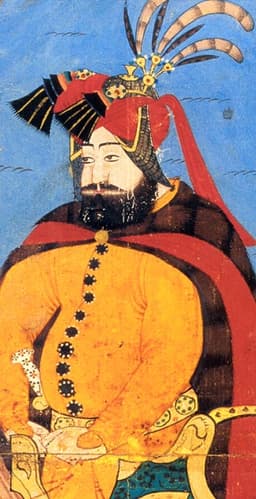
Ahmed Dini Ahmed
Politician · Modern
47.7Total

Julius Caesar
General · Ancient
82.8Total
Basic Information
Born
1932
-100
Died
—
-44
Era
Modern
Ancient
Nationality
Djibouti
Roman Republic
Occupation
Politician
General
Civilization
Other
Western
Score Comparison
Military (10%)
39.4
88.0
Political (20%)
46.6
78.0
Influence (20%)
51.0
85.0
Legacy (20%)
40.0
82.0
Leadership (15%)
65.7
80.0
Strategy (15%)
42.1
85.0
TOTAL
47.7
82.8
Ahmed Dini Ahmed — Complete Timeline
1977 AD
Appointed First Prime Minister of DjiboutiPolitical Action◆ Major
Ahmed Dini Ahmed was appointed the first Prime Minister of Djibouti after independence from France. He served under President Hassan Gouled Aptidon and helped establish the new nation's government.
IndependenceDjiboutiLeadership
Impact: nationalconstructive
1978 AD
Resigned as Prime MinisterPolitical Action◆ Major
Ahmed Dini Ahmed resigned as Prime Minister due to disagreements with President Gouled over political direction and ethnic representation. His resignation marked a split in the ruling party and led to his move into opposition.
ResignationPoliticsDjibouti
Impact: national
1991 AD
Founded the Front for the Restoration of Unity and DemocracyPolitical Action◆ Major
Ahmed Dini Ahmed founded the Front for the Restoration of Unity and Democracy (FRUD), an armed opposition group that launched a rebellion against President Gouled's government. The conflict lasted until a peace agreement in 1994.
RebellionCivil WarDjibouti
Impact: nationaldestructive
Julius Caesar — Complete Timeline
58 BC
Gallic WarsWar◆ Major
Caesar, as proconsul of Gaul, launched a series of campaigns that conquered all of Gaul (modern France, Belgium, and parts of Switzerland). He fought numerous battles, including against the Helvetii, the Belgae, and the Gallic chieftain Vercingetorix. The wars brought immense wealth and a loyal army to Caesar.
Gallic WarsConquestRoman Expansion
Impact: regional
49 BC
Crossing the RubiconPolitical Action◆ Major
Caesar led Legio XIII across the Rubicon River into Italy, defying the Roman Senate's order to disband his army. This act triggered a civil war against Pompey and the Optimates, ultimately leading to Caesar's dictatorship and the end of the Roman Republic.
Roman Civil WarEnd of RepublicPower Struggle
Impact: global
48 BC
Battle of PharsalusWar◆ Major
Caesar's outnumbered army defeated the larger forces of Pompey the Great at Pharsalus in Greece. Caesar's tactical use of a reserve line to counter Pompey's cavalry charge proved decisive. Pompey fled to Egypt, where he was assassinated, leaving Caesar as the undisputed master of the Roman world.
Roman Civil WarBattleDecisive Victory
Impact: regional
44 BC
Appointment as Dictator for LifePolitical Action◆ Major
The Roman Senate appointed Caesar dictator perpetuo (dictator for life), granting him unprecedented personal power. This move concentrated military, legislative, and judicial authority in one person, effectively ending the Roman Republic's traditional system of checks and balances and alarming many senators.
DictatorshipEnd of RepublicPower Consolidation
Impact: regionaldestructive
Assassination on the Ides of MarchPolitical Action◆ Major
A group of Roman senators, led by Marcus Junius Brutus and Gaius Cassius Longinus, stabbed Caesar to death at a meeting of the Senate in the Theatre of Pompey. The assassination was intended to restore the Republic, but instead triggered another civil war that led to the rise of the Roman Empire.
AssassinationRoman PoliticsEnd of Republic
Impact: globaldestructive
Expert Analysis
ahmed-dini-ahmed-vs-julius-caesar
# The Crossing of Paths: Julius Caesar and Ahmed Dini Ahmed
On a chilly March morning in 44 BCE, a crowd gathered in Rome’s Theater of Pompey, unaware they were about to witness the death of a republic. Sixty senators surrounded Gaius Julius Caesar, and with twenty-three dagger strokes, they ended the life of the man who had conquered Gaul, crossed the Rubicon, and declared himself dictator for life. Nearly two thousand years later, in the arid Horn of Africa, another man stood at a crossroads of history. Ahmed Dini Ahmed, the first prime minister of newly independent Djibouti, resigned his post in 1978 after just one year, unable to reconcile his vision with that of President Hassan Gouled. One man died at the height of his power; the other walked away from it. Both were shaped by their eras, yet their paths could not have diverged more starkly.
Origins
Julius Caesar was born into the patrician Julian clan in 100 BCE, a time when the Roman Republic was already cracking under the weight of its own expansion. His family claimed descent from the goddess Venus, but their political influence had waned. Caesar’s father died when he was sixteen, leaving him to navigate a world of civil wars, proscriptions, and shifting alliances. He was educated in rhetoric and philosophy, trained for the forum and the battlefield. His world was one of ambition, where a man could rise through military glory and political cunning—or be crushed by rivals.
Ahmed Dini Ahmed was born in 1932 in what was then French Somaliland, a small colonial outpost on the Gulf of Aden. His people, the Afars, were pastoral nomads, their lives governed by clan loyalties and the harsh rhythms of the desert. Unlike Caesar, who inherited a tradition of conquest, Dini grew up under foreign rule. His education came through French colonial schools, where he learned the language of the oppressor while absorbing the hopes of liberation. Where Caesar’s Rome was the center of the world, Dini’s Djibouti was a periphery—a place where history happened to people, not through them.
Rise to Power
Caesar’s ascent was a masterclass in calculated risk. He began his political career as a military tribune, then quaestor, aedile, and praetor, each step lubricated by borrowed money and strategic marriages. His appointment as governor of Gaul in 58 BCE gave him the platform he needed. Over eight years, he subdued the Gallic tribes, crossed the Rhine into Germany, and even invaded Britain. His *Commentaries on the Gallic War* were not just history but propaganda, crafted to burnish his reputation in Rome. When the Senate ordered him to disband his army, he instead crossed the Rubicon River in 49 BCE, igniting a civil war that ended with him as dictator.
Dini’s rise was quieter but no less significant. He joined the nationalist movement in French Somaliland, advocating for independence from France. In 1977, when Djibouti finally achieved sovereignty, he was appointed its first prime minister. It was a moment of triumph, but the challenges were immense: a fragile economy, ethnic tensions between Afars and Issas, and the lingering shadow of French influence. Dini’s power came not from legions but from negotiations, from the trust of his community, and from the fragile institutions of a newborn state.
Leadership & Governance
Caesar governed with ruthless pragmatism. As dictator, he reformed the calendar, granted citizenship to provincials, initiated public works, and centralized authority in his own hands. He was a military genius—his siege of Alesia in 52 BCE remains a textbook example of tactical brilliance—but he was also a political visionary who understood that the old republican system could no longer govern an empire. His reforms were aimed at stability, but they came at the cost of liberty. He pardoned former enemies, yet his concentration of power made him a tyrant in the eyes of his peers.
Dini’s leadership was fundamentally different. As prime minister, he sought to balance ethnic representation and build a national identity, but he clashed with President Gouled over the direction of the state. Gouled favored a centralized, Issa-dominated government; Dini, an Afar, advocated for federalism and power-sharing. When he could not win, he resigned—a choice Caesar would never have made. In 1991, Dini founded the Front for the Restoration of Unity and Democracy (FRUD), an armed opposition group that launched a rebellion. Here, he became a military leader of sorts, but his war was not one of conquest. It was a struggle for inclusion, fought in the shadow of a globalized world where great powers mediated, not conquered.
Triumph & Tragedy
Caesar’s greatest triumph was his conquest of Gaul, which brought immense wealth and prestige to Rome—and to himself. His victory at the Battle of Alesia in 52 BCE, where he besieged the Gallic leader Vercingetorix, was a masterpiece of engineering and strategy. His tragedy was his assassination. The Ides of March in 44 BCE was not just a personal death; it was the death of a political order. His murder plunged Rome into another civil war, and the Republic he had dismantled never recovered.
Dini’s triumph was more modest but no less real: leading Djibouti to independence and serving as its first prime minister. His tragedy lay in the failure of that promise. The FRUD rebellion, while forcing some concessions, also deepened ethnic divisions and led to years of conflict. Dini never achieved the unified, equitable Djibouti he envisioned. He died in obscurity, his exact date of death unknown, a footnote in a global history that rarely remembers the small nations.
Character & Destiny
Caesar was driven by an insatiable ambition, a belief that he was destined to rule. His clemency toward enemies was a political tool, not a moral principle; his reforms were genuine but always served his own power. He took risks that would have destroyed lesser men, and he died because he underestimated the resentment he had sown. His character was his destiny: he could not stop reaching for more, and that reaching cost him everything.
Dini was a man of principle, but principle is a fragile weapon. He could have clung to power, compromised, or traded influence for survival. Instead, he chose resignation and then rebellion—acts of conviction that ultimately left him on the losing side of history. His destiny was shaped by his times: a small country, a cold war, a struggle for identity. He could not bend the world to his will, so he broke against it.
Legacy
Caesar’s legacy is monumental. His name became a title—*kaiser* in German, *tsar* in Russian—and his reforms laid the foundation for the Roman Empire. He is remembered as a military genius, a master politician, and a cautionary tale about the price of ambition. His story has been told for two millennia, from Shakespeare’s play to modern scholarship.
Dini’s legacy is local and contested. In Djibouti, he is remembered as a founding father and a rebel, a man who fought for Afar rights but also took up arms. His scores—Military 30.2, Political 63.4, Influence 67.1—reflect a life of modest impact on the global stage. Yet his story matters precisely because it is not grand. It reminds us that history is not only made by conquerors but also by those who resist, who fail, who choose integrity over power.
Conclusion
Standing at the crossroads of history, Julius Caesar and Ahmed Dini Ahmed made choices that defined their worlds. Caesar crossed his Rubicon and changed the course of Western civilization; Dini crossed a line of principle and changed the course of a small nation. One built an empire; the other built a legacy of resistance. In the end, both were shaped by forces larger than themselves—Caesar by the decay of a republic, Dini by the birth of a nation. Their stories, so different in scale, share a common thread: the eternal human struggle between ambition and principle, between the will to power and the desire for justice. And that is a tale that never grows old.
Rankings
🥇
Julius CaesarLeader
Mil: 88.0Pol: 78.0Inf: 85.0
82.8
🥈
Ahmed Dini Ahmed
Mil: 39.4Pol: 46.6Inf: 51.0
47.7
+35.1 behind
How This Comparison Works
Algorithm
Each figure is scored on 6 dimensions (0—100 scale) based on structured historical data: Military (10%), Political (20%), Influence (20%), Legacy (20%), Leadership (15%), Strategy (15%). The weighted total produces the final ranking.
Data Sources
Scores are computed from structured sub-indicators in the database. Scale factors adjust for era (Ancient ×0.85, Modern ×1.0) and civilization size (Eastern ×1.05, Other ×0.80) to account for differences in population and military scale.
Maximum 3 Figures
Comparisons are limited to 2—3 figures to ensure readability and statistical meaningfulness.
Error Margins
±5 points per dimension — Sub-scores are derived from historical records with inherent uncertainty. Two figures within 5 points on a dimension should be considered roughly equivalent in that area.
Total Score Accuracy
±3 points overall — The weighted combination of 6 dimensions produces a total score with approximately ±3 points of uncertainty. Differences of less than 3 points are not statistically significant— the figures are effectively tied.
Known Limitations
- Historical records are incomplete and uneven across civilizations
- Figures from oral-tradition societies may be underrepresented
- Occupation labels can misclassify multi-role figures
- Scores measure capability and impact, not moral character
- Quantitative scoring is a comparison tool, not absolute truth
Capability Radar
Military (10%) — Battles & Warfare
Battles
19
95
Win Rate
26
92
Expansion
28
97
Political (20%) — Governance & Reform
Reform
35
90
Diplomacy
45
85
Economy
20
82
Influence (20%) — Cultural & Global Reach
Cultural
20
88
Global
15
94
Legacy (20%) — Historical Impact
Historical
25
95
Longevity
15
96
Leadership (15%) — Power & Stability
Tenure
40
75
Stability
25
60
Strategy (15%) — Tactics & Innovation
Strategy
29
94
Tactics
35
96
Reform
38
88
Similar Comparisons
Comments & Discussion
LegionLegacy6/17/2026
Caesar was Rome's greatest pragmatist while Ahmed Dini was Djibouti's doomed idealist. Caesar crossed the Rubicon with one legion knowing civil war would follow—he calculated risk perfectly. Ahmed Dini resigned after one year because he wouldn't compromise his federalist vision with Gouled's centralization. One man shaped an empire, the other couldn't shape a postage-stamp nation. Power isn't about principle; it's about knowing when to fight and when to fold. Caesar fought, Dini folded.
数据铁匠6/17/2026
拿数据说话:凯撒打了8场主要战役,统治了差不多112万平方公里的土地,而阿赫迈德·迪尼的“执政期”只有12个月,治下1万平方公里的小国。把这两个人放一起比较,就像把富士山和门槛石比高低——都是石头,但不是一个量级。历史比较不能光看“辞职”和“被刺杀”这种表面标签,要看实际影响力。迪尼很可敬,但跟凯撒完全不在一个维度。
StoaSkeptic6/17/2026
Classical education tells me this comparison is ludicrous. Caesar was an autocrat who destroyed 500 years of republican tradition by crossing the Rubicon in 49 BCE. He centralized power, purged his enemies, and accepted divine honors—a textbook tyrant. Ahmed Dini voluntarily stepped down from power, likely preserving Djibouti's fragile democracy. We glorify Caesar's conquests while ignoring that he turned Rome into a monarchy. Walking away from power in 1978 shows more political wisdom than seiz
历史显微镜6/17/2026
有问题:这个比较忽视了最关键的变量——时代结构。凯撒生在罗马共和国晚期,那个时代奖励侵略和权力集中,不扩张就等死。迪尼生在1970年代去殖民化浪潮中,小国刚独立,政治规则很清楚:要么团结,要么分裂。凯撒选择跨过卢比孔河时,他知道自己要么当老大要么被清算;迪尼辞职时,他清楚自己选独立还是选团结。两个人都理性选择了对自己时代的最优解,只是时代给他们的选项截然不同。
CapitolineCritic6/17/2026
Sorry, but Ahmed Dini isn't Caesar and never was. Caesar conquered 800 cities in Gaul alone, rewrote Roman law, reformed the calendar, and had Cleopatra's kid. Dini lasted one year as PM in a nation smaller than Corsica and resigned because he couldn't play the tribal politics game. The analysis tries to make a noble "anti-Caesar" figure out of Dini, but history doesn't remember people who quit. Caesar's assassination made him immortal; Dini's resignation made him invisible. That's the differenc
遗产猎手6/17/2026
说到底,凯撒和迪尼的最大区别不是权力