Loading...
This comparison has not been analyzed yet.
One-time AI generation (~1 minute). Scores and timeline are already available below.
Ahmad Zia Massoud vs Patrice Talon
Patrice Talon leads by 8.3 pts · 2 figures compared
…
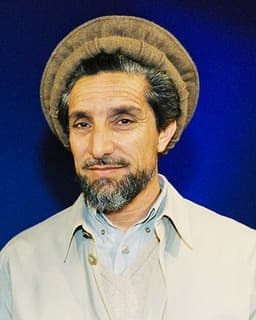
Ahmad Zia Massoud
Politician · Modern
39.5Total

Patrice Talon
Politician · Modern
47.8Total
Basic Information
Born
1956
1958
Died
—
—
Era
Modern
Modern
Nationality
Afghanistan
Benin
Occupation
Politician
Politician
Civilization
Middle Eastern
Other
Score Comparison
Military (10%)
50.0
50.0
Political (20%)
25.0
68.0
Influence (20%)
47.1
49.4
Legacy (20%)
37.5
39.2
Leadership (15%)
34.6
40.0
Strategy (15%)
44.1
44.4
TOTAL
39.5
47.8
Ahmad Zia Massoud — Complete Timeline
2005 AD
Served as Ambassador to RussiaPolitical Action
Ahmad Zia Massoud served as Afghanistan's ambassador to Russia from 2005 to 2010. He worked to strengthen bilateral relations and secure Russian support for Afghanistan's reconstruction and counter-terrorism efforts.
AfghanistanDiplomacyRussia
Impact: nationalconstructive
2009 AD
Ran for Afghan Presidency in 2009Political Action
Ahmad Zia Massoud ran as a candidate in the 2009 Afghan presidential election. He received a small percentage of the vote and later withdrew, endorsing Abdullah Abdullah in the runoff against Hamid Karzai.
AfghanistanElectionPresidential
Impact: national
2014 AD
Appointed First Vice President of AfghanistanPolitical Action◆ Major
Ahmad Zia Massoud was appointed First Vice President of Afghanistan under President Ashraf Ghani in 2014. He served in this role until 2020, focusing on security and reconciliation efforts, drawing on his Northern Alliance background.
AfghanistanVice PresidencyGovernment
Impact: nationalconstructive
Patrice Talon — Complete Timeline
2016 AD
Cotton sector reformsReform◆ Major
As a former cotton magnate, Talon implemented reforms to liberalize Benin's cotton sector, including privatizing state-owned companies and improving farmer access to credit. These reforms boosted production and exports, making cotton a key economic driver.
EconomyAgricultureReform
Impact: nationalconstructive
Election as President of BeninPolitical Action◆ Major
Patrice Talon won the 2016 Beninese presidential election as an independent candidate, defeating incumbent Prime Minister Lionel Zinsou in a runoff. Talon, a wealthy cotton magnate, campaigned on promises to revive the economy and fight corruption.
ElectionBeninPresidency
Impact: nationalconstructive
2021 AD
Re-election amid political crisisPolitical Action◆ Major
Talon was re-elected in 2021 with over 86% of the vote, but the election was marred by opposition boycotts and allegations of repression. Critics accused Talon of authoritarian drift, including the arrest of opposition figures and restrictions on media.
ElectionBeninAuthoritarianism
Impact: nationaldestructive
This comparison has not been analyzed yet.
One-time AI generation (~1 minute). Scores and timeline are already available below.
Rankings
🥇
Patrice TalonLeader
Mil: 50.0Pol: 68.0Inf: 49.4
47.8
🥈
Ahmad Zia Massoud
Mil: 50.0Pol: 25.0Inf: 47.1
39.5
+8.3 behind
How This Comparison Works
Algorithm
Each figure is scored on 6 dimensions (0—100 scale) based on structured historical data: Military (10%), Political (20%), Influence (20%), Legacy (20%), Leadership (15%), Strategy (15%). The weighted total produces the final ranking.
Data Sources
Scores are computed from structured sub-indicators in the database. Scale factors adjust for era (Ancient ×0.85, Modern ×1.0) and civilization size (Eastern ×1.05, Other ×0.80) to account for differences in population and military scale.
Maximum 3 Figures
Comparisons are limited to 2—3 figures to ensure readability and statistical meaningfulness.
Error Margins
±5 points per dimension — Sub-scores are derived from historical records with inherent uncertainty. Two figures within 5 points on a dimension should be considered roughly equivalent in that area.
Total Score Accuracy
±3 points overall — The weighted combination of 6 dimensions produces a total score with approximately ±3 points of uncertainty. Differences of less than 3 points are not statistically significant— the figures are effectively tied.
Known Limitations
- Historical records are incomplete and uneven across civilizations
- Figures from oral-tradition societies may be underrepresented
- Occupation labels can misclassify multi-role figures
- Scores measure capability and impact, not moral character
- Quantitative scoring is a comparison tool, not absolute truth
Capability Radar
Military (10%) — Battles & Warfare
Battles
24
19
Win Rate
25
27
Expansion
27
30
Political (20%) — Governance & Reform
Reform
10
40
Diplomacy
20
50
Economy
10
45
Influence (20%) — Cultural & Global Reach
Cultural
10
20
Global
10
15
Legacy (20%) — Historical Impact
Historical
15
20
Longevity
10
15
Leadership (15%) — Power & Stability
Tenure
15
60
Stability
5
35
Strategy (15%) — Tactics & Innovation
Strategy
28
31
Tactics
33
32
Reform
38
35
Similar Comparisons
Comments & Discussion
No comments yet. Be the first to share your thoughts!