Loading...
Adolfo Suarez vs Houari Boumediene
Adolfo Suarez leads by 6.0 pts · 2 figures compared
…

Adolfo Suarez
Politician · Modern
61.0Total
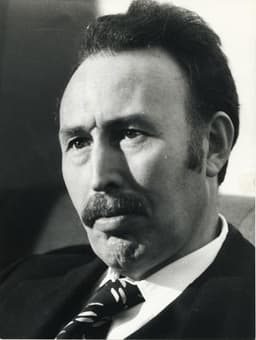
Houari Boumediene
Politician · Modern
55.0Total
Basic Information
Born
1932
1932
Died
—
—
Era
Modern
Modern
Nationality
Spain
Algeria
Occupation
Politician
Politician
Civilization
Western
Middle Eastern
Score Comparison
Military (10%)
47.5
41.6
Political (20%)
75.0
60.0
Influence (20%)
62.0
58.0
Legacy (20%)
52.0
48.3
Leadership (15%)
82.0
72.0
Strategy (15%)
42.2
45.0
TOTAL
61.0
55.0
Adolfo Suarez — Complete Timeline
1976 AD
Appointed Prime Minister by King Juan CarlosPolitical Action
King Juan Carlos I appointed Adolfo Suarez as prime minister on July 3, 1976, tasked with leading Spain's transition to democracy. Suarez, a former Francoist official, surprised many by pushing for democratic reforms against the wishes of hardline conservatives.
AppointmentTransitionDemocracy
Impact: nationalprogressive
Passed the Political Reform ActPolitical Action
Suarez's government drafted the Political Reform Act, which was approved by the Francoist Cortes in November 1976 and ratified by referendum in December. This law dismantled the Francoist political system and paved the way for democratic elections.
Political ReformDemocratizationReferendum
Impact: nationalprogressive
1977 AD
Legalized the Spanish Communist PartyPolitical Action◆ Major
Suarez legalized the Spanish Communist Party (PCE) on April 9, 1977, a key step in the democratic transition. This decision faced strong opposition from the military and conservative sectors, but Suarez's gamble allowed the PCE to participate in the 1977 elections.
LegalizationCommunismTransition
Impact: nationalprogressive
Won the First Democratic ElectionsPolitical Action◆ Major
Suarez led the Union of the Democratic Centre (UCD) to victory in the June 15, 1977 general election, the first free elections since 1936. His party won a plurality of seats, allowing him to form a government and continue the democratic transition.
ElectionDemocracyUCD
Impact: nationalprogressive
1978 AD
Oversaw the Drafting of the 1978 ConstitutionPolitical Action
Suarez's government facilitated the drafting of the Spanish Constitution of 1978 by a cross-party committee. The constitution was approved by referendum on December 6, 1978, establishing a parliamentary monarchy and democratic rights, and remains in force today.
ConstitutionDemocracyConsensus
Impact: nationalconstructive
1981 AD
Resigned as Prime MinisterPolitical Action◆ Major
Suarez resigned as prime minister on January 29, 1981, citing internal party divisions and political pressure. His resignation triggered a political crisis that culminated in the failed 23-F coup attempt on February 23, 1981.
ResignationPolitical Crisis23-F
Impact: nationaltragic
Houari Boumediene — Complete Timeline
1954 AD
Role in Algerian War of IndependenceWar◆ Major
Boumediene joined the National Liberation Front (FLN) and became a key military commander in the war against French colonial rule. He organized guerrilla operations and rose through the ranks.
Algerian WarDecolonizationFLN
Impact: national
1965 AD
Coup d'État against Ben BellaPolitical Action
Boumediene led a military coup that overthrew President Ahmed Ben Bella. He suspended the constitution, dissolved parliament, and established a Revolutionary Council, consolidating power.
CoupAuthoritarianismMilitary Rule
Impact: nationaldestructive
1971 AD
Nationalization of HydrocarbonsReform◆ Major
Boumediene nationalized French oil and gas companies, taking control of Algeria's hydrocarbon resources. This provided the state with revenue to fund industrialization and socialist development programs.
NationalizationEconomic SovereigntySocialism
Impact: nationalconstructive
Launch of Agrarian RevolutionReform◆ Major
Boumediene implemented an agrarian reform program that redistributed land from large landowners to peasants and established state farms. The program aimed to increase agricultural production and reduce rural inequality.
Land ReformAgricultureSocialism
Impact: nationalconstructive
1973 AD
Chairmanship of Non-Aligned MovementPolitical Action◆ Major
Boumediene chaired the Non-Aligned Movement (NAM) and advocated for a New International Economic Order. He used the platform to promote Third World solidarity and challenge Western economic dominance.
Non-Aligned MovementThird WorldDiplomacy
Impact: globalconstructive
Expert Analysis
Origins
Adolfo Suárez González was born on September 25, 1932, in Cebreros, Ávila, Spain. His father was a lawyer and his mother a homemaker. He studied law at the University of Salamanca and later obtained a doctorate in law from the Complutense University of Madrid. Suárez began his political career in the Francoist bureaucracy, serving as civil governor of Segovia and later as director of Spanish Television.
Houari Boumediene was born Mohamed Ben Brahim Boukharouba on August 23, 1932, in Heliopolis, Algeria. He studied at the Islamic Institute in Constantine and later at Al-Azhar University in Cairo, where he was exposed to revolutionary ideas. He joined the National Liberation Front (FLN) in 1955 and became a key military commander during the Algerian War of Independence (1954-1962).
Rise to Power
Suárez rose through the ranks of the Francoist regime, but his decisive turning point came on July 3, 1976, when King Juan Carlos I appointed him Prime Minister to lead Spain's transition to democracy. Suárez, scoring 82.0 in leadership, skillfully navigated the political landscape, pushing through the Political Reform Act in November 1976, which dismantled the Francoist system from within. He legalized the Spanish Communist Party on April 9, 1977, a major risk that faced strong opposition from the military and right-wing factions. His party, the Union of the Democratic Centre (UCD), won the first democratic elections on June 15, 1977.
Boumediene's rise was more violent. He participated in the Algerian War as a military commander, organizing guerilla operations. After independence, he served as Minister of Defense under President Ahmed Ben Bella. On June 19, 1965, Boumediene led a coup that overthrew Ben Bella, suspending the constitution and establishing a Revolutionary Council. He became President in 1976 after a new constitution was adopted. His political score of 60.0 reflects his authoritarian consolidation of power.
Leadership & Governance
Suárez governed through consensus and negotiation. He facilitated the drafting of the 1978 Spanish Constitution by a cross-party committee, which was approved by referendum. His leadership style was pragmatic, seeking to reconcile former enemies. He managed the transition without a civil war, a remarkable achievement given Spain's violent past. His strategy score of 42.2 reflects the challenges he faced in maintaining unity within his own party.
Boumediene governed with a socialist, centralized approach. He nationalized French oil and gas companies in 1971, taking control of Algeria's hydrocarbons, which funded industrialization. He launched an Agrarian Revolution in 1971, redistributing land to peasants, though it faced inefficiencies. He also pursued heavy industrialization, building steel plants and petrochemical complexes. His military score of 41.6 reflects his reliance on the army for control.
Triumph & Tragedy
Suárez's greatest success was overseeing Spain's peaceful transition to democracy, culminating in the 1978 Constitution. His legalization of the Communist Party and the first free elections were pivotal. However, his later years were marked by tragedy: the UCD fractured, and he resigned in 1981 due to internal party conflicts and economic crises. He died in 2014, but his reputation grew posthumously.
Boumediene's triumph was the nationalization of hydrocarbons, which gave Algeria economic sovereignty. He also chaired the Non-Aligned Movement from 1973-1976, advocating for a New International Economic Order. His tragedy was the authoritarian nature of his regime: political repression, lack of democratic freedoms, and the failure of his agrarian reforms to achieve self-sufficiency. He died in 1978 of a rare blood disease.
Character & Destiny
Suárez was characterized by his pragmatism, charm, and ability to build bridges. He was a centrist who understood the need for compromise. His destiny was shaped by his decision to reform the system from within, a path that required immense political courage. Historians note his skill in managing the military and the far-right.
Boumediene was a disciplined, ascetic revolutionary. He was known for his secrecy and iron will. His character drove him to centralize power and pursue rapid industrialization. His destiny was to build a strong state, but at the cost of democratic freedoms. He is remembered as a nationalist who modernized Algeria.
Legacy
Suárez's legacy is the consolidation of Spanish democracy. He is honored as the key figure in the transition; his political score of 75.0 reflects his impact. The 1978 Constitution still governs Spain. His legacy score of 52.0 is lower due to his later political decline, but his role in ending dictatorship is undeniable.
Boumediene's legacy is mixed. He is credited with building Algeria's state and economic infrastructure, but his authoritarianism set a precedent for military involvement in politics. His influence score of 58.0 reflects his role in the Non-Aligned Movement. Algeria's hydrocarbon wealth remains state-controlled, but political freedoms are limited.
Conclusion
Adolfo Suárez had a greater overall impact due to his successful, peaceful transition of Spain from dictatorship to democracy, a model for political reform. His total score of 61.0 vs Boumediene's 55.0 reflects this. While Boumediene's economic achievements were significant, Suárez's creation of a stable democratic system has endured and influenced other transitions. Suárez's leadership (82.0) and political skill (75.0) outweigh Boumediene's authoritarian methods. Therefore, Suárez is the more impactful figure for his contribution to democratic governance.
Rankings
🥇
Adolfo SuarezLeader
Mil: 47.5Pol: 75.0Inf: 62.0
61.0
🥈
Houari Boumediene
Mil: 41.6Pol: 60.0Inf: 58.0
55.0
+6.0 behind
How This Comparison Works
Algorithm
Each figure is scored on 6 dimensions (0—100 scale) based on structured historical data: Military (10%), Political (20%), Influence (20%), Legacy (20%), Leadership (15%), Strategy (15%). The weighted total produces the final ranking.
Data Sources
Scores are computed from structured sub-indicators in the database. Scale factors adjust for era (Ancient ×0.85, Modern ×1.0) and civilization size (Eastern ×1.05, Other ×0.80) to account for differences in population and military scale.
Maximum 3 Figures
Comparisons are limited to 2—3 figures to ensure readability and statistical meaningfulness.
Error Margins
±5 points per dimension — Sub-scores are derived from historical records with inherent uncertainty. Two figures within 5 points on a dimension should be considered roughly equivalent in that area.
Total Score Accuracy
±3 points overall — The weighted combination of 6 dimensions produces a total score with approximately ±3 points of uncertainty. Differences of less than 3 points are not statistically significant— the figures are effectively tied.
Known Limitations
- Historical records are incomplete and uneven across civilizations
- Figures from oral-tradition societies may be underrepresented
- Occupation labels can misclassify multi-role figures
- Scores measure capability and impact, not moral character
- Quantitative scoring is a comparison tool, not absolute truth
Capability Radar
Military (10%) — Battles & Warfare
Battles
32
10
Win Rate
32
10
Expansion
36
10
Political (20%) — Governance & Reform
Reform
85
70
Diplomacy
80
60
Economy
60
65
Influence (20%) — Cultural & Global Reach
Cultural
55
40
Global
55
40
Legacy (20%) — Historical Impact
Historical
70
50
Longevity
60
40
Leadership (15%) — Power & Stability
Tenure
65
65
Stability
70
55
Strategy (15%) — Tactics & Innovation
Strategy
39
10
Tactics
42
10
Reform
41
40
Similar Comparisons
Comments & Discussion
No comments yet. Be the first to share your thoughts!