Loading...
Adolfo Suarez vs Qin Shi Huang
Qin Shi Huang leads by 24.2 pts · 2 figures compared
…

Adolfo Suarez
Politician · Modern
61.0Total
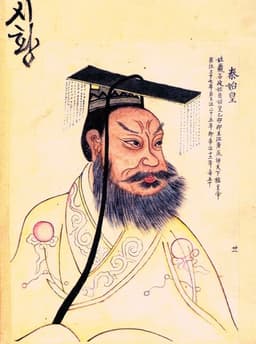
Qin Shi Huang
Emperor · Ancient
85.2Total
Basic Information
Born
1932
-259
Died
—
-210
Era
Modern
Ancient
Nationality
Spain
China
Occupation
Politician
Emperor
Civilization
Western
Eastern
Score Comparison
Military (10%)
47.5
80.0
Political (20%)
75.0
90.0
Influence (20%)
62.0
85.0
Legacy (20%)
52.0
90.0
Leadership (15%)
82.0
78.0
Strategy (15%)
42.2
82.0
TOTAL
61.0
85.2
Adolfo Suarez — Complete Timeline
1976 AD
Appointed Prime Minister by King Juan CarlosPolitical Action
King Juan Carlos I appointed Adolfo Suarez as prime minister on July 3, 1976, tasked with leading Spain's transition to democracy. Suarez, a former Francoist official, surprised many by pushing for democratic reforms against the wishes of hardline conservatives.
AppointmentTransitionDemocracy
Impact: nationalprogressive
Passed the Political Reform ActPolitical Action
Suarez's government drafted the Political Reform Act, which was approved by the Francoist Cortes in November 1976 and ratified by referendum in December. This law dismantled the Francoist political system and paved the way for democratic elections.
Political ReformDemocratizationReferendum
Impact: nationalprogressive
1977 AD
Legalized the Spanish Communist PartyPolitical Action◆ Major
Suarez legalized the Spanish Communist Party (PCE) on April 9, 1977, a key step in the democratic transition. This decision faced strong opposition from the military and conservative sectors, but Suarez's gamble allowed the PCE to participate in the 1977 elections.
LegalizationCommunismTransition
Impact: nationalprogressive
Won the First Democratic ElectionsPolitical Action◆ Major
Suarez led the Union of the Democratic Centre (UCD) to victory in the June 15, 1977 general election, the first free elections since 1936. His party won a plurality of seats, allowing him to form a government and continue the democratic transition.
ElectionDemocracyUCD
Impact: nationalprogressive
1978 AD
Oversaw the Drafting of the 1978 ConstitutionPolitical Action
Suarez's government facilitated the drafting of the Spanish Constitution of 1978 by a cross-party committee. The constitution was approved by referendum on December 6, 1978, establishing a parliamentary monarchy and democratic rights, and remains in force today.
ConstitutionDemocracyConsensus
Impact: nationalconstructive
1981 AD
Resigned as Prime MinisterPolitical Action◆ Major
Suarez resigned as prime minister on January 29, 1981, citing internal party divisions and political pressure. His resignation triggered a political crisis that culminated in the failed 23-F coup attempt on February 23, 1981.
ResignationPolitical Crisis23-F
Impact: nationaltragic
Qin Shi Huang — Complete Timeline
246 BC
Construction of the Mausoleum and Terracotta ArmyOther◆ Major
Qin Shi Huang commissioned a vast mausoleum complex near Xi'an, guarded by thousands of life-sized terracotta soldiers, horses, and chariots. The project employed hundreds of thousands of workers and reflected his obsession with immortality and imperial power.
Impact: global
230 BC
Conquest of the Six Warring StatesWar
From 230 to 221 BCE, Ying Zheng led the Qin state in a series of campaigns that conquered the Han, Zhao, Wei, Chu, Yan, and Qi states. This unified China under a single ruler for the first time, ending the Warring States period.
Impact: global
221 BC
Standardization of Writing, Currency, and MeasurementsReform◆ Major
Qin Shi Huang ordered the standardization of Chinese script, currency, and weights and measures across the unified empire. This facilitated administration, trade, and cultural integration, laying a foundation for future dynasties.
Impact: globalconstructive
Proclamation of the Qin DynastyPolitical Action
After conquering the last independent state, Ying Zheng declared himself Shi Huangdi (First Emperor), founding the Qin Dynasty. He adopted a new title to signify his supreme authority and initiated centralized imperial rule.
Impact: global
214 BC
Initiation of the Great Wall ConstructionOther◆ Major
Qin Shi Huang ordered the connection and extension of existing northern fortifications to create a unified defensive wall against nomadic Xiongnu raids. This project involved massive conscripted labor and became the precursor to the later Great Wall.
Impact: regional
213 BC
Burning of Books and Burying of ScholarsPolitical Action◆ Major
On the advice of Li Si, Qin Shi Huang ordered the burning of historical records and philosophical texts not aligned with Legalist doctrine. He also had 460 Confucian scholars buried alive to suppress dissent and consolidate ideological control.
Impact: nationaldestructive
Expert Analysis
adolfo-suarez-vs-qin-shi-huang
# The Emperor and the Democrat
In 221 BC, a king from the western frontier of ancient China declared himself the First Emperor, having conquered his rivals through blood and iron. Two thousand years later, in 1976, a former Francoist bureaucrat was appointed prime minister of Spain, tasked with dismantling the very dictatorship he had served. Qin Shi Huang and Adolfo Suárez could not have been more different: one built a wall, the other tore down the walls of authoritarianism. Yet both faced the same fundamental question: how do you create order from chaos? Their answers—and their destinies—reveal the profound gulf between power seized and power shared.
Origins
Ying Zheng was born in 259 BC into a world of war. The Warring States period had torn China apart for centuries, and his Qin state was the most ruthless of them all. His father was a king, his mother a concubine, and his childhood was spent in a court poisoned by intrigue. He learned early that trust was a weakness and that power was the only currency that mattered. When he ascended the throne at thirteen, his regents plotted against him; he responded by purging them with calculated ferocity.
Adolfo Suárez was born in 1932 in a small Spanish town, the son of a lawyer. His Spain was also divided, but by ideology rather than ancient kingdoms. The Civil War ended when he was seven, and he grew up under Franco's gray dictatorship. Unlike Qin Shi Huang, Suárez did not inherit a sword—he inherited a system. He studied law, joined the regime's bureaucracy, and rose through its ranks. He was a product of the dictatorship, not its enemy. Yet something in him saw that the system could not last forever.
Rise to Power
Qin Shi Huang's path was paved with conquest. From 230 to 221 BC, he unleashed a series of campaigns that devoured the six rival states one by one. He was not a general who led charges, but a strategist who orchestrated annihilation. When the last king surrendered, Ying Zheng did not simply claim victory—he reinvented himself. He took the title *Shi Huangdi*, "First Emperor," and declared that his dynasty would last ten thousand generations.
Suárez's rise was quieter but no less audacious. King Juan Carlos, inheriting Franco's poisoned chalice, needed a prime minister who could navigate the regime's own institutions. Suárez was young, ambitious, and—crucially—unknown to the public. When the King appointed him on July 3, 1976, the left scoffed and the right fumed. But Suárez understood something they did not: that the old regime could be reformed from within, if you knew where to apply pressure.
Leadership & Governance
Qin Shi Huang governed through standardization and terror. He unified writing, currency, and measurements across his empire, creating a common Chinese civilization where none had existed. He connected northern fortifications into what would become the Great Wall, a monument to his vision of control. Yet his methods were brutal: in 213 BC, he ordered the burning of books and the burying of scholars alive, erasing history that did not serve him. His philosophy was Legalism—the belief that law, not virtue, must bind humanity.
Suárez governed through negotiation and trust. In 1976, he pushed the Political Reform Act through Franco's own parliament, convincing the old guard to vote themselves out of power. In April 1977, he legalized the Communist Party, a decision that risked military revolt but proved essential for democracy. He then oversaw the drafting of the 1978 Constitution, a document built on consensus rather than command. His philosophy was pragmatism—the belief that democracy required enemies to become partners.
Triumph & Tragedy
Qin Shi Huang's greatest triumph was also his greatest tragedy. He unified China, but at a terrible cost. His obsession with immortality led him to consume mercury elixirs, which likely poisoned him. When he died in 210 BC, his empire crumbled within years. His mausoleum near Xi'an, guarded by thousands of life-sized terracotta soldiers, was meant to protect him for eternity. Instead, it became a tomb for his dream.
Suárez's triumph was Spain's peaceful transition to democracy. He led his party to victory in the first free elections in June 1977, and by 1978, Spain had a constitution that enshrined rights Franco had denied. But the cost was personal. Internal party divisions, political pressure, and the weight of constant negotiation wore him down. On January 29, 1981, he resigned, exhausted and isolated. A month later, a coup attempt nearly destroyed everything he had built.
Character & Destiny
Qin Shi Huang saw the world as clay to be molded. He believed that power flowed from the top down, that unity required uniformity, and that history began with him. His personality—paranoid, ruthless, visionary—shaped a China that would endure for millennia, but also ensured his own dynasty's collapse. He could not imagine a future without his control.
Suárez saw the world as a negotiation. He believed that power flowed from consent, that unity required diversity, and that history required continuity. His personality—patient, cunning, empathetic—shaped a Spain that would thrive as a democracy, but also ensured his own obscurity. He understood that true leadership meant making yourself unnecessary.
Legacy
Qin Shi Huang is remembered as the First Emperor, the unifier, the tyrant. His standardization of writing and currency shaped Chinese civilization. His Great Wall became a symbol of Chinese endurance. Yet he is also remembered as a warning: that power without wisdom creates only ruins. His legacy is a paradox—the man who made China, but could not keep it.
Suárez is remembered as the father of Spanish democracy. His reforms allowed a nation to escape its authoritarian past and join the modern world. Yet he is also remembered as a transitional figure—a man who served his purpose and then faded. His legacy is a lesson: that sometimes the greatest leaders are those who build systems that outlive them.
Conclusion
Two men, two worlds, two visions of order. Qin Shi Huang built walls—of stone, of law, of fear. Suárez tore them down. One believed that unity required uniformity; the other believed that unity required freedom. Both succeeded, and both failed. The First Emperor's empire collapsed within a generation; Suárez's democracy endures. Perhaps that is the deepest contrast of all: the difference between a legacy built on control and one built on trust. In the end, the walls that protect us are not made of stone, but of the consent of the governed.
Rankings
🥇
Qin Shi HuangLeader
Mil: 80.0Pol: 90.0Inf: 85.0
85.2
🥈
Adolfo Suarez
Mil: 47.5Pol: 75.0Inf: 62.0
61.0
+24.2 behind
How This Comparison Works
Algorithm
Each figure is scored on 6 dimensions (0—100 scale) based on structured historical data: Military (10%), Political (20%), Influence (20%), Legacy (20%), Leadership (15%), Strategy (15%). The weighted total produces the final ranking.
Data Sources
Scores are computed from structured sub-indicators in the database. Scale factors adjust for era (Ancient ×0.85, Modern ×1.0) and civilization size (Eastern ×1.05, Other ×0.80) to account for differences in population and military scale.
Maximum 3 Figures
Comparisons are limited to 2—3 figures to ensure readability and statistical meaningfulness.
Error Margins
±5 points per dimension — Sub-scores are derived from historical records with inherent uncertainty. Two figures within 5 points on a dimension should be considered roughly equivalent in that area.
Total Score Accuracy
±3 points overall — The weighted combination of 6 dimensions produces a total score with approximately ±3 points of uncertainty. Differences of less than 3 points are not statistically significant— the figures are effectively tied.
Known Limitations
- Historical records are incomplete and uneven across civilizations
- Figures from oral-tradition societies may be underrepresented
- Occupation labels can misclassify multi-role figures
- Scores measure capability and impact, not moral character
- Quantitative scoring is a comparison tool, not absolute truth
Capability Radar
Military (10%) — Battles & Warfare
Battles
32
85
Win Rate
32
90
Expansion
36
90
Political (20%) — Governance & Reform
Reform
85
95
Diplomacy
80
75
Economy
60
90
Influence (20%) — Cultural & Global Reach
Cultural
55
95
Global
55
85
Legacy (20%) — Historical Impact
Historical
70
95
Longevity
60
95
Leadership (15%) — Power & Stability
Tenure
65
70
Stability
70
65
Strategy (15%) — Tactics & Innovation
Strategy
39
85
Tactics
42
80
Reform
41
95
Similar Comparisons
Comments & Discussion
QinTheUnifier6/17/2026
Qin Shi Huang didn't just conquer six kingdoms—he standardized writing, currency, and axle widths across all of China. Suárez legalized political parties and held free elections. One built a unified state, the other dismantled one. For empire-building, give me the First Emperor every time. He at least knew coercion creates order better than consensus ever will. Democracy's messy; a single strong hand? That gets things done.
长城下的书生6/17/2026
说秦始皇只懂暴力的人,可曾读过他统一文字、车同轨、书同文的诏令?两百多公斤的秦简写不下你说的简单粗暴。他让华夏第一次有了共同的语言和度量衡,两千年后我们还在用。苏亚雷斯呢?拆了佛朗哥的旧墙,却让西班牙在地区分裂中头疼至今。真的进步,有时靠的不是拆,而是建。
ReformTraitor6/17/2026
Suárez was a Francoist who betrayed his own side. That’s not vision—that’s opportunism. He dismantled the dictatorship not out of principle but because he saw the winds shifting. Meanwhile, Qin Shi Huang built the Terracotta Army, unified the Great Wall, and created a bureaucracy that lasted two millennia. Suárez couldn’t even keep his own party together for a decade. Please. One founded an empire; the other just saved his own skin.
民主拆墙人6/17/2026
苏亚雷斯在1976年说服了佛朗哥的旧势力接受民主,这不是背叛,这是最大的勇气。你知道他推动《政治改革法》时,军队里多少将军想把他绑起来枪毙吗?他直面坦克仍轻声说“民主不是动摇,而是选择”。而秦始皇烧书坑儒,把百家之言塞进火堆。两个时代的选择—一个用恐惧筑城,一个用信任开路。我站苏亚雷斯。