Loading...
Hassan Rouhani vs Houari Boumediene
Houari Boumediene leads by 4.9 pts · 2 figures compared
…
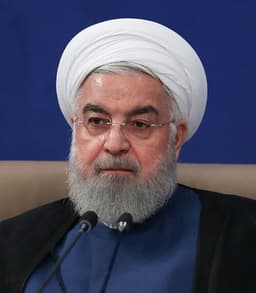
Hassan Rouhani
Politician · Modern
50.1Total
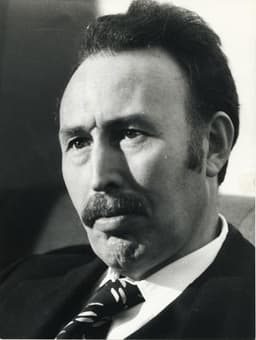
Houari Boumediene
Politician · Modern
55.0Total
Basic Information
Born
1948
1932
Died
—
—
Era
Modern
Modern
Nationality
Iran
Algeria
Occupation
Politician
Politician
Civilization
Middle Eastern
Middle Eastern
Score Comparison
Military (10%)
34.1
41.6
Political (20%)
45.0
60.0
Influence (20%)
60.0
58.0
Legacy (20%)
50.0
48.3
Leadership (15%)
53.2
72.0
Strategy (15%)
44.4
45.0
TOTAL
50.1
55.0
Hassan Rouhani — Complete Timeline
2013 AD
Elected President of IranPolitical Action◆ Major
Rouhani won the presidential election with a landslide, promising to improve relations with the West and revive the economy. His victory was seen as a mandate for moderation and reform after the hardline presidency of Mahmoud Ahmadinejad.
ElectionReformIran
Impact: nationalconstructive
2015 AD
Joint Comprehensive Plan of Action (JCPOA)Political Action
Rouhani's government negotiated the JCPOA with the P5+1 (US, UK, France, Russia, China, Germany). The deal limited Iran's nuclear program in exchange for sanctions relief, marking a major diplomatic achievement.
Nuclear DealDiplomacySanctions
Impact: globalconstructive
2018 AD
US withdrawal from JCPOAPolitical Action◆ Major
President Trump withdrew the US from the JCPOA and reimposed sanctions. Rouhani's government struggled to maintain the deal with European partners, but the economic pressure led to protests and a currency crisis in Iran.
Nuclear DealSanctionsUS-Iran
Impact: globaldestructive
2019 AD
2019-2020 Iranian protestsPolitical Action◆ Major
Rouhani's government faced nationwide protests over fuel price hikes and economic mismanagement. The protests were violently suppressed, with hundreds killed according to human rights groups, damaging Rouhani's reformist image.
ProtestsSuppressionEconomy
Impact: nationaldestructive
Houari Boumediene — Complete Timeline
1954 AD
Role in Algerian War of IndependenceWar◆ Major
Boumediene joined the National Liberation Front (FLN) and became a key military commander in the war against French colonial rule. He organized guerrilla operations and rose through the ranks.
Algerian WarDecolonizationFLN
Impact: national
1965 AD
Coup d'État against Ben BellaPolitical Action
Boumediene led a military coup that overthrew President Ahmed Ben Bella. He suspended the constitution, dissolved parliament, and established a Revolutionary Council, consolidating power.
CoupAuthoritarianismMilitary Rule
Impact: nationaldestructive
1971 AD
Nationalization of HydrocarbonsReform◆ Major
Boumediene nationalized French oil and gas companies, taking control of Algeria's hydrocarbon resources. This provided the state with revenue to fund industrialization and socialist development programs.
NationalizationEconomic SovereigntySocialism
Impact: nationalconstructive
Launch of Agrarian RevolutionReform◆ Major
Boumediene implemented an agrarian reform program that redistributed land from large landowners to peasants and established state farms. The program aimed to increase agricultural production and reduce rural inequality.
Land ReformAgricultureSocialism
Impact: nationalconstructive
1973 AD
Chairmanship of Non-Aligned MovementPolitical Action◆ Major
Boumediene chaired the Non-Aligned Movement (NAM) and advocated for a New International Economic Order. He used the platform to promote Third World solidarity and challenge Western economic dominance.
Non-Aligned MovementThird WorldDiplomacy
Impact: globalconstructive
Expert Analysis
Origins
**Hassan Rouhani** was born on November 12, 1948, in Sorkheh, Iran, into a religious family. He studied at the Qom Seminary and later earned a law degree from the University of Tehran. His early involvement in the Islamic Revolution led to positions in the Majlis and the Supreme National Security Council, where he served as secretary from 1989 to 2005.
**Houari Boumediene** was born on August 23, 1932, in Guelma, Algeria, into a peasant family. He studied at the Al-Azhar University in Cairo and later joined the National Liberation Front (FLN) during the Algerian War of Independence. He became a key military commander, organizing guerrilla operations against French forces.
Rise to Power
Rouhani rose to national prominence after the 1979 revolution, serving as a deputy in the Majlis and as a key negotiator during the Iran-Iraq War. He was elected President of Iran in 2013 with 50.7% of the vote, promising to improve relations with the West and revive the economy. His victory was a turning point for Iran's engagement with the international community.
Boumediene rose to power as a military commander in the FLN. After independence, he served as Minister of Defense under President Ahmed Ben Bella. In June 1965, he led a bloodless coup against Ben Bella, suspending the constitution and establishing a Revolutionary Council. He became President in 1976.
Leadership & Governance
Rouhani's leadership was defined by pragmatism and diplomacy. He prioritized the nuclear deal (JCPOA), signed in July 2015, which limited Iran's uranium enrichment in exchange for sanctions relief. Domestically, he pursued economic reforms and expanded internet access, but faced opposition from hardliners. His political score of 45.0 reflects his struggle to balance reform with conservative resistance.
Boumediene's governance was authoritarian and socialist. He nationalized French oil and gas companies in 1971, seizing control of Algeria's hydrocarbon resources. He implemented an Agrarian Revolution in 1971, redistributing land to peasants and establishing state farms. His leadership score of 72.0 indicates his firm control and ability to implement sweeping changes.
Triumph & Tragedy
Rouhani's greatest triumph was the JCPOA, which temporarily curbed Iran's nuclear program and opened economic ties. However, his tragedy came in 2018 when the US withdrew from the deal and reimposed sanctions, crippling Iran's economy. The 2019-2020 protests over fuel prices and mismanagement were violently suppressed, tarnishing his legacy.
Boumediene's triumph was the nationalization of hydrocarbons, which funded Algeria's industrialization and social programs. He also chaired the Non-Aligned Movement from 1973 to 1974, advocating for a New International Economic Order. His tragedy was the failure of his agrarian reforms, which led to inefficiency and food shortages. He died in 1978 with many projects incomplete.
Character & Destiny
Rouhani was a cautious, consensus-building politician, often described as a centrist. His diplomatic approach enabled the nuclear deal but left him vulnerable to hardline opponents. His strategy score of 44.4 reflects his inability to secure the deal against US withdrawal.
Boumediene was a decisive, authoritarian leader who brooked no dissent. His military background shaped his governance style, focusing on state control and rapid development. His leadership score of 72.0 reflects his effectiveness, but his rigidity also led to economic inefficiencies.
Legacy
Rouhani's legacy is tied to the JCPOA, which remains a landmark in nonproliferation despite its collapse. He opened Iran to limited international engagement and fostered a generation of reformists. His influence score of 60.0 reflects his global recognition.
Boumediene's legacy is more enduring. His nationalization policy created a strong state-owned hydrocarbon sector that still funds Algeria. He is remembered as a founding father of independent Algeria and a leader of the Global South. His total score of 55.0 is higher than Rouhani's 50.1.
Conclusion
Houari Boumediene had a greater impact than Hassan Rouhani. His nationalization of hydrocarbons fundamentally transformed Algeria's economy and provided lasting revenue. His leadership of the Non-Aligned Movement amplified the voice of developing nations. Rouhani's nuclear deal was significant but short-lived, undone by US withdrawal. Boumediene's structural changes outlasted his rule, while Rouhani's achievements were reversed. Boumediene's total score of 55.0 versus Rouhani's 50.1 reflects this difference.
Rankings
🥇
Houari BoumedieneLeader
Mil: 41.6Pol: 60.0Inf: 58.0
55.0
🥈
Hassan Rouhani
Mil: 34.1Pol: 45.0Inf: 60.0
50.1
+4.9 behind
How This Comparison Works
Algorithm
Each figure is scored on 6 dimensions (0—100 scale) based on structured historical data: Military (10%), Political (20%), Influence (20%), Legacy (20%), Leadership (15%), Strategy (15%). The weighted total produces the final ranking.
Data Sources
Scores are computed from structured sub-indicators in the database. Scale factors adjust for era (Ancient ×0.85, Modern ×1.0) and civilization size (Eastern ×1.05, Other ×0.80) to account for differences in population and military scale.
Maximum 3 Figures
Comparisons are limited to 2—3 figures to ensure readability and statistical meaningfulness.
Error Margins
±5 points per dimension — Sub-scores are derived from historical records with inherent uncertainty. Two figures within 5 points on a dimension should be considered roughly equivalent in that area.
Total Score Accuracy
±3 points overall — The weighted combination of 6 dimensions produces a total score with approximately ±3 points of uncertainty. Differences of less than 3 points are not statistically significant— the figures are effectively tied.
Known Limitations
- Historical records are incomplete and uneven across civilizations
- Figures from oral-tradition societies may be underrepresented
- Occupation labels can misclassify multi-role figures
- Scores measure capability and impact, not moral character
- Quantitative scoring is a comparison tool, not absolute truth
Capability Radar
Military (10%) — Battles & Warfare
Battles
19
10
Win Rate
26
10
Expansion
26
10
Political (20%) — Governance & Reform
Reform
55
70
Diplomacy
75
60
Economy
50
65
Influence (20%) — Cultural & Global Reach
Cultural
30
40
Global
60
40
Legacy (20%) — Historical Impact
Historical
55
50
Longevity
40
40
Leadership (15%) — Power & Stability
Tenure
60
65
Stability
40
55
Strategy (15%) — Tactics & Innovation
Strategy
30
10
Tactics
32
10
Reform
37
40
Similar Comparisons
Comments & Discussion
No comments yet. Be the first to share your thoughts!