Loading...
Adolfo Suarez vs Jacques Chirac
Adolfo Suarez leads by 0.3 pts · 2 figures compared
…

Adolfo Suarez
Politician · Modern
61.0Total
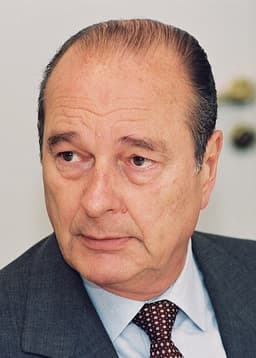
Jacques Chirac
Politician · Modern
60.7Total
Basic Information
Born
1932
1932
Died
—
—
Era
Modern
Modern
Nationality
Spain
France
Occupation
Politician
Politician
Civilization
Western
Western
Score Comparison
Military (10%)
47.5
10.0
Political (20%)
75.0
72.0
Influence (20%)
62.0
82.0
Legacy (20%)
52.0
50.0
Leadership (15%)
82.0
78.0
Strategy (15%)
42.2
41.7
TOTAL
61.0
60.7
Adolfo Suarez — Complete Timeline
1976 AD
Appointed Prime Minister by King Juan CarlosPolitical Action
King Juan Carlos I appointed Adolfo Suarez as prime minister on July 3, 1976, tasked with leading Spain's transition to democracy. Suarez, a former Francoist official, surprised many by pushing for democratic reforms against the wishes of hardline conservatives.
AppointmentTransitionDemocracy
Impact: nationalprogressive
Passed the Political Reform ActPolitical Action
Suarez's government drafted the Political Reform Act, which was approved by the Francoist Cortes in November 1976 and ratified by referendum in December. This law dismantled the Francoist political system and paved the way for democratic elections.
Political ReformDemocratizationReferendum
Impact: nationalprogressive
1977 AD
Legalized the Spanish Communist PartyPolitical Action◆ Major
Suarez legalized the Spanish Communist Party (PCE) on April 9, 1977, a key step in the democratic transition. This decision faced strong opposition from the military and conservative sectors, but Suarez's gamble allowed the PCE to participate in the 1977 elections.
LegalizationCommunismTransition
Impact: nationalprogressive
Won the First Democratic ElectionsPolitical Action◆ Major
Suarez led the Union of the Democratic Centre (UCD) to victory in the June 15, 1977 general election, the first free elections since 1936. His party won a plurality of seats, allowing him to form a government and continue the democratic transition.
ElectionDemocracyUCD
Impact: nationalprogressive
1978 AD
Oversaw the Drafting of the 1978 ConstitutionPolitical Action
Suarez's government facilitated the drafting of the Spanish Constitution of 1978 by a cross-party committee. The constitution was approved by referendum on December 6, 1978, establishing a parliamentary monarchy and democratic rights, and remains in force today.
ConstitutionDemocracyConsensus
Impact: nationalconstructive
1981 AD
Resigned as Prime MinisterPolitical Action◆ Major
Suarez resigned as prime minister on January 29, 1981, citing internal party divisions and political pressure. His resignation triggered a political crisis that culminated in the failed 23-F coup attempt on February 23, 1981.
ResignationPolitical Crisis23-F
Impact: nationaltragic
Jacques Chirac — Complete Timeline
1995 AD
Election as President of FrancePolitical Action◆ Major
Chirac was elected President of France, defeating Socialist candidate Lionel Jospin. His victory ended 14 years of Socialist presidency under Mitterrand, and he promised to reduce unemployment and social divisions.
ElectionPresidencyPolitical Change
Impact: national
Recognition of France's Role in the HolocaustPolitical Action◆ Major
Chirac officially recognized the French state's responsibility for the deportation of Jews during World War II, reversing the previous official position that the Vichy regime was not legitimate. This marked a significant shift in French historical memory.
HolocaustVichy FranceHistorical Memory
Impact: nationalconstructive
2003 AD
Opposition to the Iraq WarPolitical Action◆ Major
Chirac led France's opposition to the US-led invasion of Iraq, threatening to veto a UN Security Council resolution authorizing force. His stance garnered international support and strained Franco-American relations, but was popular in France and the Arab world.
Iraq WarForeign PolicyUN Security Council
Impact: global
Expert Analysis
Origins
Adolfo Suarez was born on September 25, 1932, in Cebreros, Spain, into a middle-class family. His father was a lawyer and his mother a homemaker. He studied law at the University of Salamanca and later earned a doctorate in law from the Complutense University of Madrid. Suarez began his political career within the Francoist regime, serving as a civil governor and later as director of the Spanish Television (TVE). His early career was marked by loyalty to the regime, but he also developed connections with reformist circles around King Juan Carlos.
Jacques Chirac was born on November 29, 1932, in Paris, France, into a wealthy bourgeois family. His father was a bank director and his mother a homemaker. He studied at the Lycée Louis-le-Grand and later at the Institut d'Études Politiques de Paris (Sciences Po) and the École Nationale d'Administration (ENA). Chirac served in the French Army during the Algerian War, an experience that shaped his political views. He entered politics in the 1960s, joining the Gaullist party and serving as a deputy and minister under President Georges Pompidou.
Rise to Power
Suarez's rise was orchestrated by King Juan Carlos I. On July 3, 1976, the King appointed Suarez as prime minister, bypassing more prominent figures. Suarez's task was to dismantle the Francoist regime from within. He moved quickly: in November 1976, he pushed through the Political Reform Act, which was approved by the Francoist Cortes and ratified by referendum in December. This law paved the way for democratic elections. In April 1977, he legalized the Spanish Communist Party (PCE), a bold move that faced military opposition but was crucial for democratic legitimacy. On June 15, 1977, Suarez's Union of the Democratic Centre (UCD) won the first free elections since 1936, with 34.4% of the vote and 165 seats in the Cortes.
Chirac rose through the Gaullist ranks. He served as Minister of Agriculture (1972-1974) and then as Prime Minister under President Valéry Giscard d'Estaing from 1974 to 1976. He resigned due to policy differences and founded the neo-Gaullist party Rassemblement pour la République (RPR) in 1976. Chirac ran for president in 1981 and 1988, losing to François Mitterrand both times. He finally won in 1995, defeating Socialist Lionel Jospin with 52.6% of the vote in the runoff. His victory ended 14 years of Socialist presidency.
Leadership & Governance
Suarez's leadership was characterized by negotiation and consensus-building. He scored 82.0 in leadership, reflecting his ability to manage the transition despite opposition from hardliners. His governance focused on democratic reforms: he oversaw the drafting of the 1978 Constitution, which established a parliamentary monarchy. He legalized political parties and trade unions, and held free elections. However, his economic policies were less successful; inflation and unemployment rose. His political score of 75.0 reflects his effectiveness in navigating the transition, but his strategy score of 42.2 indicates a lack of long-term planning.
Chirac's leadership style was more assertive and confrontational. He scored 78.0 in leadership, but 41.7 in strategy. As president, he pursued Gaullist policies of national independence and social conservatism. He reduced taxes and cut social spending, but faced large protests against pension reforms in 1995. His most notable governance act was opposing the Iraq War in 2003, which boosted his influence (82.0) but strained relations with the US. He also recognized France's role in the Holocaust in 1995, a significant moral step. His legacy score of 50.0 reflects mixed domestic achievements.
Triumph & Tragedy
Suarez's greatest triumph was overseeing Spain's peaceful transition to democracy, a process that took just over two years. The 1978 Constitution and the legalization of the Communist Party were key milestones. However, his tragedy was his political decline: after winning the 1979 elections, his party fragmented, and he resigned in 1981 amid economic crisis and internal divisions. He later founded the Democratic and Social Centre (CDS) but never regained power. His military score of 47.5 reflects no direct military role, but he faced a coup attempt in 1981 that failed partly due to his democratic foundations.
Chirac's triumph was his opposition to the Iraq War, which made him a global symbol of resistance to US unilateralism. He also successfully navigated France through the early 2000s, maintaining its influence in Europe. His tragedy was his conviction in 2011 for embezzlement of public funds during his time as mayor of Paris, for which he received a suspended sentence. His military score of 10.0 indicates minimal military involvement, but his time in Algeria influenced his views.
Character & Destiny
Suarez was pragmatic and secretive, often working behind the scenes. He was a skilled negotiator, able to build trust with both left and right. His character—determined but cautious—enabled him to dissolve the Francoist regime without provoking a military backlash. However, his lack of a strong political base led to his downfall. Historians note that he was a transitional figure, not a long-term leader.
Chirac was charismatic and ambitious, but also opportunistic. He was known for his energy and public speaking, but also for his shifting political positions. His character—combative and proud—drove him to challenge US hegemony, but also led to corruption scandals. His destiny was to be a symbol of French independence, but his domestic legacy is mixed.
Legacy
Suarez's legacy is foundational: he established democratic institutions in Spain. The 1978 Constitution, the party system, and the autonomous communities all trace back to his leadership. He scored 52.0 in legacy, reflecting his role as a key figure in Spanish history, but overshadowed by later leaders. His influence score of 62.0 shows his impact on Spanish politics.
Chirac's legacy is more international: his opposition to the Iraq War and his recognition of the Holocaust are defining acts. He also strengthened the French presidency and the European Union. However, his legacy score of 50.0 reflects a divided judgment: while respected abroad, at home he is seen as a transitional figure between Mitterrand and Sarkozy. His influence score of 82.0 is higher than Suarez's, due to his global role.
Conclusion
Adolfo Suarez had a greater impact than Jacques Chirac because he fundamentally transformed Spain from a dictatorship to a democracy, a change that affected millions of lives. While Chirac's influence was broader, Suarez's achievement was more profound and lasting. Suarez's total score of 61.0 vs Chirac's 60.7 reflects this narrow edge. Suarez's political and leadership scores (75.0 and 82.0) were higher than Chirac's (72.0 and 78.0), and his legacy, though lower, is more directly tied to his country's trajectory. Suarez's transition remains a model for peaceful democratization, whereas Chirac's legacy is more symbolic. Thus, Suarez's impact is more substantial.
Rankings
🥇
Adolfo SuarezLeader
Mil: 47.5Pol: 75.0Inf: 62.0
61.0
🥈
Jacques Chirac
Mil: 10.0Pol: 72.0Inf: 82.0
60.7
+0.3 behind
How This Comparison Works
Algorithm
Each figure is scored on 6 dimensions (0—100 scale) based on structured historical data: Military (10%), Political (20%), Influence (20%), Legacy (20%), Leadership (15%), Strategy (15%). The weighted total produces the final ranking.
Data Sources
Scores are computed from structured sub-indicators in the database. Scale factors adjust for era (Ancient ×0.85, Modern ×1.0) and civilization size (Eastern ×1.05, Other ×0.80) to account for differences in population and military scale.
Maximum 3 Figures
Comparisons are limited to 2—3 figures to ensure readability and statistical meaningfulness.
Error Margins
±5 points per dimension — Sub-scores are derived from historical records with inherent uncertainty. Two figures within 5 points on a dimension should be considered roughly equivalent in that area.
Total Score Accuracy
±3 points overall — The weighted combination of 6 dimensions produces a total score with approximately ±3 points of uncertainty. Differences of less than 3 points are not statistically significant— the figures are effectively tied.
Known Limitations
- Historical records are incomplete and uneven across civilizations
- Figures from oral-tradition societies may be underrepresented
- Occupation labels can misclassify multi-role figures
- Scores measure capability and impact, not moral character
- Quantitative scoring is a comparison tool, not absolute truth
Capability Radar
Military (10%) — Battles & Warfare
Battles
32
0
Win Rate
32
0
Expansion
36
0
Political (20%) — Governance & Reform
Reform
85
60
Diplomacy
80
70
Economy
60
55
Influence (20%) — Cultural & Global Reach
Cultural
55
50
Global
55
60
Legacy (20%) — Historical Impact
Historical
70
55
Longevity
60
40
Leadership (15%) — Power & Stability
Tenure
65
75
Stability
70
65
Strategy (15%) — Tactics & Innovation
Strategy
39
0
Tactics
42
0
Reform
41
5
Similar Comparisons
Comments & Discussion
No comments yet. Be the first to share your thoughts!