Loading...
This comparison has not been analyzed yet.
One-time AI generation (~1 minute). Scores and timeline are already available below.
Abul Hasan Qutb Shah vs Khengarji III of Kutch
Khengarji III of Kutch leads by 3.2 pts · 2 figures compared
…
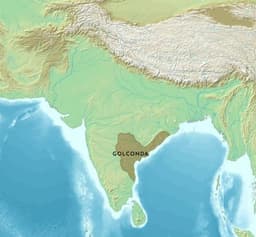
Abul Hasan Qutb Shah
Emperor · Modern
49.8Total

Khengarji III of Kutch
Emperor · Modern
53.0Total
Basic Information
Born
1672
1866
Died
1699
1942
Era
Modern
Modern
Nationality
India
India
Occupation
Emperor
Emperor
Civilization
Indian
Indian
Score Comparison
Military (10%)
50.0
21.2
Political (20%)
43.7
72.0
Influence (20%)
53.3
53.3
Legacy (20%)
42.5
45.0
Leadership (15%)
62.2
75.0
Strategy (15%)
50.0
42.3
TOTAL
49.8
53.0
Abul Hasan Qutb Shah — Complete Timeline
1672 AD
Accession to Golconda ThronePolitical Action◆ Major
Abul Hasan Qutb Shah became sultan of Golconda after the death of his father Abdullah Qutb Shah. His reign coincided with the final phase of Mughal expansion into the Deccan under Aurangzeb.
SuccessionGolconda Sultanate
Impact: regional
1687 AD
Mughal Siege of GolcondaWar
Aurangzeb's Mughal army besieged Golconda fort for eight months. The siege ended when a traitor opened the gates, leading to the capture of Abul Hasan Qutb Shah and the annexation of Golconda into the Mughal Empire.
SiegeMughal ConquestEnd of Dynasty
Impact: regionaltragic
Imprisonment by AurangzebPolitical Action◆ Major
After the fall of Golconda, Abul Hasan Qutb Shah was captured and imprisoned by Aurangzeb. He spent the rest of his life in captivity at Daulatabad fort, marking the end of the Qutb Shahi dynasty.
ImprisonmentMughal ConquestEnd of Reign
Impact: regionaltragic
Khengarji III of Kutch — Complete Timeline
1875 AD
Accession as Maharao of KutchPolitical Action◆ Major
Khengarji III became Maharao of Kutch at age nine after the death of his father Pragmulji II. A regency council governed until he came of age in 1884. His reign of 66 years was the longest in Kutch's history.
AccessionKutchMaharao
Impact: regional
1879 AD
Construction of Prag Mahal PalaceCultural◆ Major
Khengarji III completed the construction of the Prag Mahal Palace in Bhuj, started by his father. The Italian Gothic-style palace became a symbol of Kutch's prosperity and his patronage of architecture.
ArchitecturePrag MahalBhuj
Impact: regionalconstructive
1900 AD
Development of Bhuj cityReform◆ Major
Khengarji III oversaw the modernization of Bhuj, including the construction of roads, hospitals, schools, and a railway line. He also established a water supply system and improved sanitation, transforming the city into a modern urban center.
Urban DevelopmentBhujModernization
Impact: regionalconstructive
1914 AD
Support to British during World War IWar◆ Major
Khengarji III contributed troops and funds to the British war effort during World War I. He provided a hospital ship and financial donations, earning a knighthood and the title of Knight Grand Commander of the Order of the Indian Empire.
World War IBritish SupportKutch
Impact: global
1920 AD
Establishment of Kutch MuseumCultural
Khengarji III established the Kutch Museum in Bhuj, one of the oldest museums in Gujarat. The museum housed artifacts related to Kutch's history, culture, and natural history, promoting education and heritage preservation.
MuseumHeritageKutch
Impact: regionalconstructive
1942 AD
Death after 66-year reignOther◆ Major
Khengarji III died in 1942 after a 66-year reign, the longest in Kutch's history. He was succeeded by his son Vijayaraji. His reign saw Kutch's transformation into a modern princely state with significant infrastructure and cultural development.
DeathLong ReignKutch
Impact: regional
This comparison has not been analyzed yet.
One-time AI generation (~1 minute). Scores and timeline are already available below.
Rankings
🥇
Khengarji III of KutchLeader
Mil: 21.2Pol: 72.0Inf: 53.3
53.0
🥈
Abul Hasan Qutb Shah
Mil: 50.0Pol: 43.7Inf: 53.3
49.8
+3.2 behind
How This Comparison Works
Algorithm
Each figure is scored on 6 dimensions (0—100 scale) based on structured historical data: Military (10%), Political (20%), Influence (20%), Legacy (20%), Leadership (15%), Strategy (15%). The weighted total produces the final ranking.
Data Sources
Scores are computed from structured sub-indicators in the database. Scale factors adjust for era (Ancient ×0.85, Modern ×1.0) and civilization size (Eastern ×1.05, Other ×0.80) to account for differences in population and military scale.
Maximum 3 Figures
Comparisons are limited to 2—3 figures to ensure readability and statistical meaningfulness.
Error Margins
±5 points per dimension — Sub-scores are derived from historical records with inherent uncertainty. Two figures within 5 points on a dimension should be considered roughly equivalent in that area.
Total Score Accuracy
±3 points overall — The weighted combination of 6 dimensions produces a total score with approximately ±3 points of uncertainty. Differences of less than 3 points are not statistically significant— the figures are effectively tied.
Known Limitations
- Historical records are incomplete and uneven across civilizations
- Figures from oral-tradition societies may be underrepresented
- Occupation labels can misclassify multi-role figures
- Scores measure capability and impact, not moral character
- Quantitative scoring is a comparison tool, not absolute truth
Capability Radar
Military (10%) — Battles & Warfare
Battles
25
10
Win Rate
20
10
Expansion
10
10
Political (20%) — Governance & Reform
Reform
30
60
Diplomacy
25
60
Economy
35
55
Influence (20%) — Cultural & Global Reach
Cultural
40
40
Global
20
20
Legacy (20%) — Historical Impact
Historical
35
40
Longevity
30
40
Leadership (15%) — Power & Stability
Tenure
40
95
Stability
20
70
Strategy (15%) — Tactics & Innovation
Strategy
25
10
Tactics
30
10
Reform
15
15
Similar Comparisons
Comments & Discussion
No comments yet. Be the first to share your thoughts!