Loading...
Abul Hasan Qutb Shah vs Julius Caesar
Julius Caesar leads by 33.0 pts · 2 figures compared
…
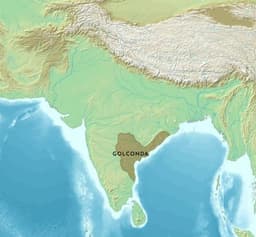
Abul Hasan Qutb Shah
Emperor · Modern
49.8Total

Julius Caesar
General · Ancient
82.8Total
Basic Information
Born
1672
-100
Died
1699
-44
Era
Modern
Ancient
Nationality
India
Roman Republic
Occupation
Emperor
General
Civilization
Indian
Western
Score Comparison
Military (10%)
50.0
88.0
Political (20%)
43.7
78.0
Influence (20%)
53.3
85.0
Legacy (20%)
42.5
82.0
Leadership (15%)
62.2
80.0
Strategy (15%)
50.0
85.0
TOTAL
49.8
82.8
Abul Hasan Qutb Shah — Complete Timeline
1672 AD
Accession to Golconda ThronePolitical Action◆ Major
Abul Hasan Qutb Shah became sultan of Golconda after the death of his father Abdullah Qutb Shah. His reign coincided with the final phase of Mughal expansion into the Deccan under Aurangzeb.
SuccessionGolconda Sultanate
Impact: regional
1687 AD
Mughal Siege of GolcondaWar
Aurangzeb's Mughal army besieged Golconda fort for eight months. The siege ended when a traitor opened the gates, leading to the capture of Abul Hasan Qutb Shah and the annexation of Golconda into the Mughal Empire.
SiegeMughal ConquestEnd of Dynasty
Impact: regionaltragic
Imprisonment by AurangzebPolitical Action◆ Major
After the fall of Golconda, Abul Hasan Qutb Shah was captured and imprisoned by Aurangzeb. He spent the rest of his life in captivity at Daulatabad fort, marking the end of the Qutb Shahi dynasty.
ImprisonmentMughal ConquestEnd of Reign
Impact: regionaltragic
Julius Caesar — Complete Timeline
58 BC
Gallic WarsWar◆ Major
Caesar, as proconsul of Gaul, launched a series of campaigns that conquered all of Gaul (modern France, Belgium, and parts of Switzerland). He fought numerous battles, including against the Helvetii, the Belgae, and the Gallic chieftain Vercingetorix. The wars brought immense wealth and a loyal army to Caesar.
Gallic WarsConquestRoman Expansion
Impact: regional
49 BC
Crossing the RubiconPolitical Action◆ Major
Caesar led Legio XIII across the Rubicon River into Italy, defying the Roman Senate's order to disband his army. This act triggered a civil war against Pompey and the Optimates, ultimately leading to Caesar's dictatorship and the end of the Roman Republic.
Roman Civil WarEnd of RepublicPower Struggle
Impact: global
48 BC
Battle of PharsalusWar◆ Major
Caesar's outnumbered army defeated the larger forces of Pompey the Great at Pharsalus in Greece. Caesar's tactical use of a reserve line to counter Pompey's cavalry charge proved decisive. Pompey fled to Egypt, where he was assassinated, leaving Caesar as the undisputed master of the Roman world.
Roman Civil WarBattleDecisive Victory
Impact: regional
44 BC
Appointment as Dictator for LifePolitical Action◆ Major
The Roman Senate appointed Caesar dictator perpetuo (dictator for life), granting him unprecedented personal power. This move concentrated military, legislative, and judicial authority in one person, effectively ending the Roman Republic's traditional system of checks and balances and alarming many senators.
DictatorshipEnd of RepublicPower Consolidation
Impact: regionaldestructive
Assassination on the Ides of MarchPolitical Action◆ Major
A group of Roman senators, led by Marcus Junius Brutus and Gaius Cassius Longinus, stabbed Caesar to death at a meeting of the Senate in the Theatre of Pompey. The assassination was intended to restore the Republic, but instead triggered another civil war that led to the rise of the Roman Empire.
AssassinationRoman PoliticsEnd of Republic
Impact: globaldestructive
Expert Analysis
abul-hasan-qutb-shah-vs-julius-caesar
# The Conqueror and the Captive: Two Fates in the Crucible of Empire
On a spring morning in 44 BCE, Julius Caesar walked into the Senate chamber in Rome, ignoring a soothsayer’s warning and a colleague’s desperate plea. Within minutes, he lay bleeding from twenty-three stab wounds, his blood pooling on the marble floor. Half a world away and seventeen centuries later, another ruler faced a different end: Abul Hasan Qutb Shah, the last sultan of Golconda, spent his final years in a Mughal prison, watching his dynasty crumble from behind iron bars. One man’s death sparked civil war and birthed an empire; the other’s quiet fade into obscurity marked the end of a golden age. Why did these two fates diverge so dramatically? The answer lies not in luck, but in the very marrow of their characters and the worlds they inhabited.
Origins
Julius Caesar was born into the patrician Julian clan, one of Rome’s oldest families, but his childhood was shadowed by political turmoil. His uncle Marius had plunged the Republic into civil war, and young Caesar watched his father-in-law Cinna murdered by mobs. He grew up in a Rome where power was won by the sword, not inherited by birthright. This taught him early that survival meant mastering both politics and war.
Abul Hasan Qutb Shah, by contrast, ascended the throne of Golconda in 1672 as a prince of a wealthy, cultured dynasty. His father, Abdullah Qutb Shah, had ruled for decades, and the kingdom was a jewel of the Deccan—famous for its diamonds, its poetry, and its religious tolerance. Abul Hasan inherited a stable state, but stability breeds complacency. He was a patron of the arts, a lover of music and architecture, but the skills needed to defend his realm had atrophied in the court’s perfumed halls.
Rise to Power
Caesar’s path to power was a brutal climb. He fled Rome during Sulla’s proscriptions, served as a military tribune in Asia, and was captured by pirates—whom he later crucified. He climbed the political ladder through sheer audacity: as aedile, he spent fortunes on games to win the mob’s love; as pontifex maximus, he outmaneuvered the Senate’s old guard. His true rise came in Gaul, where over eight years he conquered a territory larger than Italy, built a loyal army, and amassed wealth that dwarfed the Republic’s treasury. When the Senate ordered him to disband his legions, he crossed the Rubicon River in 49 BCE, triggering a civil war that would end the Republic.
Abul Hasan’s rise was a coronation, not a conquest. He became sultan at age thirty-five, inheriting a kingdom that had grown rich on diamond mines and trade. His reign began peacefully, but the Mughal Empire under Aurangzeb was expanding southward. The Deccan sultanates had long resisted Mughal dominance, but Golconda’s defenses were weak. Abul Hasan’s only real turning point came in 1687, when Aurangzeb’s massive army surrounded the fort of Golconda—and by then, it was too late.
Leadership & Governance
Caesar governed as a revolutionary. As dictator, he reformed the calendar, granted citizenship to Gauls, redistributed land to veterans, and launched public works that employed the poor. He centralized power but also broke the Senate’s stranglehold on governance. His military genius was unmatched: at Alesia, he besieged the Gallic chieftain Vercingetorix while simultaneously fighting off a relief army—a double siege that remains a textbook maneuver. Yet his political wisdom was flawed. He pardoned his enemies, hoping to reconcile the Republic, but his clemency was seen as weakness. He refused to wear a crown, but his absolute power made the crown irrelevant.
Abul Hasan governed as a caretaker. He continued his father’s policies of religious tolerance, allowing Hindus to hold high office and patronizing Sufi saints. Golconda’s architecture—its grand mosques and palaces—flourished under his rule. But he lacked Caesar’s strategic vision. When Aurangzeb’s siege began, he relied on the fort’s massive walls and his treasury’s diamonds to buy loyalty. For eight months, the fort held—until a traitor opened the gates. Abul Hasan’s military score of 36.9 reflects a ruler who could not adapt to the brutal realities of Mughal warfare.
Triumph & Tragedy
Caesar’s greatest moment was his triumph over Gaul—the conquest that made him the most powerful man in the Mediterranean. His tragedy was the Ides of March: he stood at the peak of power, yet failed to see that his own success had made him a target. He had crushed the Republic’s institutions, but he could not replace them with anything that would survive his death.
Abul Hasan’s triumph was cultural, not military. Under his patronage, Golconda became a center of Deccani art and literature. His tragedy was the siege itself—a slow, grinding defeat that ended with his capture and imprisonment in the Mughal fort of Daulatabad. He spent his final years in a cage, watching the empire his ancestors built dissolve into Aurangzeb’s dominion.
Character & Destiny
Caesar’s character was a paradox: he was ruthless yet magnanimous, ambitious yet calculating. He believed in his own destiny—a belief that drove him to cross the Rubicon and, ultimately, to ignore the warnings of his assassination. His decisions were shaped by a conviction that he alone could save Rome. That conviction made him great, but it also blinded him.
Abul Hasan’s character was gentle, perhaps too gentle for his age. He was a poet-king in an era of conquerors. His decisions—to trust his nobles, to rely on walls rather than armies, to negotiate rather than fight—stemmed from a worldview that valued stability over expansion. In a different time, he might have been remembered as a wise and just ruler. In Aurangzeb’s century, he was simply prey.
Legacy
Caesar’s legacy is the Roman Empire. His adopted heir, Octavian, used his name to seize power, and for five centuries, emperors called themselves Caesar. His military reforms, his calendar, his centralization of authority—all became the bedrock of Western civilization. His assassination made him a martyr, and his story has been told for two millennia.
Abul Hasan’s legacy is more fragile. Golconda’s diamonds were scattered; its poetry survives only in archives. He is remembered as the last sultan of a dynasty that once rivaled the Mughals in wealth and culture. His defeat marks the end of an era of Deccani independence. Today, tourists visit the ruins of Golconda fort and hear the story of the traitor who opened the gates—a cautionary tale about the price of complacency.
Conclusion
Two rulers, two empires, two fates. Caesar died in a blaze of glory, his blood staining the Senate floor; Abul Hasan died in silence, his kingdom already a memory. One shaped the course of Western history; the other was swept aside by the tide of Mughal expansion. The difference was not merely talent—Caesar’s military and political scores dwarf Abul Hasan’s—but also context. Caesar lived in a world of fluid power, where a man of genius could remake the state. Abul Hasan lived in a world of rigid empires, where one mistake meant extinction. In the end, both were victims of their own success: Caesar of his absolute power, Abul Hasan of his fragile peace. Their stories remind us that history rewards the bold, but it punishes the unwary—and that the line between triumph and tragedy is often a single, fatal decision.
Rankings
🥇
Julius CaesarLeader
Mil: 88.0Pol: 78.0Inf: 85.0
82.8
🥈
Abul Hasan Qutb Shah
Mil: 50.0Pol: 43.7Inf: 53.3
49.8
+33.0 behind
How This Comparison Works
Algorithm
Each figure is scored on 6 dimensions (0—100 scale) based on structured historical data: Military (10%), Political (20%), Influence (20%), Legacy (20%), Leadership (15%), Strategy (15%). The weighted total produces the final ranking.
Data Sources
Scores are computed from structured sub-indicators in the database. Scale factors adjust for era (Ancient ×0.85, Modern ×1.0) and civilization size (Eastern ×1.05, Other ×0.80) to account for differences in population and military scale.
Maximum 3 Figures
Comparisons are limited to 2—3 figures to ensure readability and statistical meaningfulness.
Error Margins
±5 points per dimension — Sub-scores are derived from historical records with inherent uncertainty. Two figures within 5 points on a dimension should be considered roughly equivalent in that area.
Total Score Accuracy
±3 points overall — The weighted combination of 6 dimensions produces a total score with approximately ±3 points of uncertainty. Differences of less than 3 points are not statistically significant— the figures are effectively tied.
Known Limitations
- Historical records are incomplete and uneven across civilizations
- Figures from oral-tradition societies may be underrepresented
- Occupation labels can misclassify multi-role figures
- Scores measure capability and impact, not moral character
- Quantitative scoring is a comparison tool, not absolute truth
Capability Radar
Military (10%) — Battles & Warfare
Battles
25
95
Win Rate
20
92
Expansion
10
97
Political (20%) — Governance & Reform
Reform
30
90
Diplomacy
25
85
Economy
35
82
Influence (20%) — Cultural & Global Reach
Cultural
40
88
Global
20
94
Legacy (20%) — Historical Impact
Historical
35
95
Longevity
30
96
Leadership (15%) — Power & Stability
Tenure
40
75
Stability
20
60
Strategy (15%) — Tactics & Innovation
Strategy
25
94
Tactics
30
96
Reform
15
88
Similar Comparisons
Comments & Discussion
SenateShiv6/17/2026
Caesar's mistake wasn't ignoring the soothsayer—it was dismissing his own military intelligence. He had 5,000 battle-hardened veterans just outside Rome, yet walked into the Senate without a single guard. That's not fate; that's a tactical blunder that would've gotten a centurion flogged. A general who forgets he's always on campaign dies like a politician. Abul Hasan at least knew when to negotiate from a position of weakness.
锰钢骑士6/17/2026
别扯什么命运与性格了。高康达最后一战兵力是奥朗则布的三倍,城防墙也举世无双——可苏丹只顾着在后宫听波斯诗朗诵。战场上的溃败从来不是运气问题,是决策链条的崩溃。对比之下恺撒被骗进元老院确实是情报失败,但人家至少握着一条元老系策反通道。死法不同,本质上都是指挥系统被暴击瓦解的历史典型病例。
HeracliusFan6/17/2026
The real divergence? Legacy management. Caesar's assassins mistakenly thought killing the man killed the movement—instead they turned a popular general into a martyr god whose name became a title for emperors. Abul Hasan's captors did it right: they left the "Tana Shah" alive but toothless, cloistered in Daulatabad until he literally vanished from memory. Death is spectacle; imprisonment is erasure. The Mughals understood propaganda better than any Roman.
墨迹考据党6/17/2026
你们搞错了重点。恺撒在罗马广场用的可是象牙记事板配蜡烛火漆,阿布尔·哈桑的高康达宫廷用的是棕榈叶文书。前者能流布地中海每个行省,后者被莫卧儿缴获后直接烧掉了整个皇家档案馆。恺撒的最后一封诏书离他死只隔十二小时就传到了安东尼手中,而末代苏丹被俘时,他写给波斯求援的信还在信使马鞍上没送出去。这不是英雄悲剧,这是情报载体决定论。
TyrantTracker6/17/2026
Let's be honest: Caesar's death was a PR win. He'd already centralized power, crushed the Gauls, and redrawn the calendar. Dying dramatically at 55 preserved his image forever. Abul Hasan? He lingered until 1699, outliving his kingdom by twelve pathetic years, forced to watch Mughal governors host parties in his own palace. That's not a captive's quiet dignity—that's a slow, humiliating footnote. I'll take a swift Senate ambush over that retirement any day.