Loading...
Abul Hasan Qutb Shah vs Napoleon Bonaparte
Napoleon Bonaparte leads by 21.1 pts · 2 figures compared
…
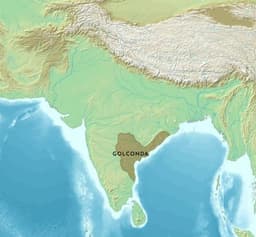
Abul Hasan Qutb Shah
Emperor · Modern
49.8Total

Napoleon Bonaparte
General · Modern
70.9Total
Basic Information
Born
1672
1769
Died
1699
1821
Era
Modern
Modern
Nationality
India
France
Occupation
Emperor
General
Civilization
Indian
Western
Score Comparison
Military (10%)
50.0
94.0
Political (20%)
43.7
72.0
Influence (20%)
53.3
40.0
Legacy (20%)
42.5
80.0
Leadership (15%)
62.2
78.0
Strategy (15%)
50.0
90.0
TOTAL
49.8
70.9
Abul Hasan Qutb Shah — Complete Timeline
1672 AD
Accession to Golconda ThronePolitical Action◆ Major
Abul Hasan Qutb Shah became sultan of Golconda after the death of his father Abdullah Qutb Shah. His reign coincided with the final phase of Mughal expansion into the Deccan under Aurangzeb.
SuccessionGolconda Sultanate
Impact: regional
1687 AD
Mughal Siege of GolcondaWar
Aurangzeb's Mughal army besieged Golconda fort for eight months. The siege ended when a traitor opened the gates, leading to the capture of Abul Hasan Qutb Shah and the annexation of Golconda into the Mughal Empire.
SiegeMughal ConquestEnd of Dynasty
Impact: regionaltragic
Imprisonment by AurangzebPolitical Action◆ Major
After the fall of Golconda, Abul Hasan Qutb Shah was captured and imprisoned by Aurangzeb. He spent the rest of his life in captivity at Daulatabad fort, marking the end of the Qutb Shahi dynasty.
ImprisonmentMughal ConquestEnd of Reign
Impact: regionaltragic
Napoleon Bonaparte — Complete Timeline
1799 AD
Coup of 18 BrumaireOther◆ Major
Napoleon Bonaparte, with support from his brother Lucien and key political figures, overthrew the Directory in a bloodless coup. He established the Consulate with himself as First Consul, effectively becoming the ruler of France. This event ended the French Revolution's most unstable period.
French RevolutionCoupRise to Power
Impact: regional
1804 AD
Promulgation of the Napoleonic CodeOther◆ Major
Napoleon enacted the Civil Code of the French, known as the Napoleonic Code, a comprehensive set of laws that replaced the fragmented feudal legal systems. The code established legal equality, protected property rights, and secularized law. It became the basis for legal systems in many European and world countries.
Legal ReformNapoleonic CodeCivil Law
Impact: globalconstructive
1805 AD
Battle of AusterlitzWar◆ Major
Napoleon's Grande Arm
Napoleonic WarsBattleDecisive Victory
Impact: global
1812 AD
Invasion of RussiaWar◆ Major
Napoleon led the Grande Arm
Napoleonic WarsInvasionDisaster
Impact: globaldestructive
1815 AD
Battle of WaterlooWar◆ Major
Napoleon's French army was defeated by the combined forces of the Duke of Wellington's Anglo-Allied army and Gebhard Leberecht von Bl
Napoleonic WarsBattleFinal Defeat
Impact: globaldestructive
Expert Analysis
abul-hasan-qutb-shah-vs-napoleon-bonaparte
# The Conqueror and the Captive: Napoleon and Abul Hasan Qutb Shah
In the autumn of 1687, a weary sultan sat in chains within the Mughal camp outside his fallen fortress of Golconda. Across the world, more than a century later, a young artillery officer would rise from obscurity to crown himself emperor of France. One man lost his kingdom; the other remade a continent. What separates a Napoleon from an Abul Hasan? The answer lies not merely in talent, but in the currents of history that lifted one and drowned the other.
Origins
Napoleon Bonaparte was born in 1769 on the island of Corsica, a place that had only recently become French. His family was minor nobility, but they were not wealthy. The France of his youth was a powder keg—a rigid monarchy crumbling under the weight of inequality and debt. This was a world in flux, where a gifted commoner could, for a brief window, climb higher than any king.
Abul Hasan Qutb Shah, by contrast, was born into a dynasty. When he ascended the throne of Golconda in 1672, he inherited a wealthy but vulnerable sultanate. The Deccan plateau shimmered with diamond mines, but it was surrounded by the expanding Mughal Empire under Aurangzeb, a man who had already spent decades swallowing his neighbors. Abul Hasan's world was one of stability—until the storm arrived.
The difference in their origins was not of ability but of opportunity. Napoleon entered a world breaking apart; Abul Hasan entered one being consumed.
Rise to Power
Napoleon's rise was meteoric. By 1793, at age twenty-four, he had already distinguished himself at the Siege of Toulon, where his strategic brilliance—rated at an extraordinary 93.0—caught the eye of revolutionary leaders. He was not born to command; he seized command. The French Revolution had decimated the old aristocracy, leaving a vacuum that talent could fill. Napoleon charged into it.
Abul Hasan's path was the opposite. He did not rise; he inherited. His father died, and the throne of Golconda was his by birthright. There was no struggle, no proving ground. He never needed to fight for power—and perhaps that was his tragedy. Leadership, when handed rather than earned, can become a fragile thing.
Leadership & Governance
As emperor, Napoleon was a whirlwind of reform. The Napoleonic Code, enacted in 1804, swept away feudal privileges and established legal equality, property rights, and secular administration. It was a political masterpiece—a 75.0 political score that outlasted his empire. His military genius, scoring 94.0, reshaped warfare: fast marches, massed artillery, and the destruction of enemy armies rather than the capture of cities.
Abul Hasan governed a kingdom renowned for its wealth and culture. Golconda's diamonds funded a sophisticated court, and its architecture still stands as testament to its refinement. But his political score of 50.0 tells a deeper story: he was a patron, not a reformer. In 1687, when Aurangzeb's army arrived, Abul Hasan's fort withstood an eight-month siege. It was not his strategy that failed—his 67.8 strategic score suggests competence—but his inability to inspire loyalty. A traitor opened the gates. Leadership, scored at 43.1, was his fatal weakness.
Triumph & Tragedy
Napoleon's greatest moment was Austerlitz in 1805, where he crushed the combined armies of Russia and Austria. His worst was Waterloo in 1815, a defeat so complete that it became a synonym for final failure. Yet even in exile on Saint Helena, he remained formidable—his influence score of 82.0 echoes in legal systems across Europe.
Abul Hasan's tragedy was singular and complete. After the fall of Golconda in 1687, he was paraded in chains before Aurangzeb, then imprisoned for the remaining twelve years of his life. He died in 1699, forgotten by all but the historians who record his defeat. His triumph was not a battle won but a culture preserved—the Qutb Shahi legacy of poetry and architecture survived, even if he did not.
Character & Destiny
Napoleon was restless, ambitious, and utterly convinced of his own destiny. He once said, "Impossible is a word to be found only in the dictionary of fools." This arrogance drove him to conquer Moscow in 1812, a catastrophic miscalculation that destroyed his Grand Army. Yet it was the same confidence that had lifted him from Corsican obscurity to the throne of Europe.
Abul Hasan was a different creature. Historical accounts describe him as cultured, gentle, and perhaps too trusting. He was a man who loved poetry in an age that demanded iron. When Aurangzeb's siege began, he negotiated, hoping for mercy. He did not understand that empires are not built on hope.
Their characters reflected their worlds. Napoleon's era rewarded ruthlessness; Abul Hasan's punished it.
Legacy
Napoleon's legacy is written in stone and law. The Napoleonic Code governs France and influenced civil law across Europe, Latin America, and beyond. His military tactics are still studied at war colleges. His legacy score of 78.0 understates his reach—he is a ghost that haunts modern history.
Abul Hasan's legacy is quieter. The Golconda fort still stands, its acoustics and architecture marveled at by tourists. The Qutb Shahi dynasty is remembered as a golden age of Deccan culture. But he himself is a footnote—the last sultan, the one who lost everything. His influence score of 72.0 reflects the dynasty's cultural impact, not his personal story.
Conclusion
What drives the difference between a conqueror and a captive? Napoleon and Abul Hasan were both rulers of their age, yet one reshaped the world while the other was crushed by it. The answer lies not in their intelligence—both were capable men—but in the collision of character with circumstance. Napoleon emerged from chaos and thrived in it; Abul Hasan inherited order and could not defend it. History is not fair. It rewards the ruthless, the ambitious, and the lucky. And sometimes, it simply passes by.
Rankings
🥇
Napoleon BonaparteLeader
Mil: 94.0Pol: 72.0Inf: 40.0
70.9
🥈
Abul Hasan Qutb Shah
Mil: 50.0Pol: 43.7Inf: 53.3
49.8
+21.1 behind
How This Comparison Works
Algorithm
Each figure is scored on 6 dimensions (0—100 scale) based on structured historical data: Military (10%), Political (20%), Influence (20%), Legacy (20%), Leadership (15%), Strategy (15%). The weighted total produces the final ranking.
Data Sources
Scores are computed from structured sub-indicators in the database. Scale factors adjust for era (Ancient ×0.85, Modern ×1.0) and civilization size (Eastern ×1.05, Other ×0.80) to account for differences in population and military scale.
Maximum 3 Figures
Comparisons are limited to 2—3 figures to ensure readability and statistical meaningfulness.
Error Margins
±5 points per dimension — Sub-scores are derived from historical records with inherent uncertainty. Two figures within 5 points on a dimension should be considered roughly equivalent in that area.
Total Score Accuracy
±3 points overall — The weighted combination of 6 dimensions produces a total score with approximately ±3 points of uncertainty. Differences of less than 3 points are not statistically significant— the figures are effectively tied.
Known Limitations
- Historical records are incomplete and uneven across civilizations
- Figures from oral-tradition societies may be underrepresented
- Occupation labels can misclassify multi-role figures
- Scores measure capability and impact, not moral character
- Quantitative scoring is a comparison tool, not absolute truth
Capability Radar
Military (10%) — Battles & Warfare
Battles
25
95
Win Rate
20
90
Expansion
10
95
Political (20%) — Governance & Reform
Reform
30
95
Diplomacy
25
80
Economy
35
85
Influence (20%) — Cultural & Global Reach
Cultural
40
85
Global
20
90
Legacy (20%) — Historical Impact
Historical
35
95
Longevity
30
90
Leadership (15%) — Power & Stability
Tenure
40
85
Stability
20
70
Strategy (15%) — Tactics & Innovation
Strategy
25
95
Tactics
30
98
Reform
15
92
Similar Comparisons
Comments & Discussion
RustyCannon886/17/2026
Napoleon was a self-made emperor, but Abul Hasan was a prisoner of birth. Sure, Napoleon's Corsican origins weren't glamorous, but he climbed through merit—Bonaparte didn't inherit a diamond mine or a throne. Qutb Shah sat on a golden pillow and still lost Golconda to Aurangzeb's siege. Give me the artillery officer who remade Europe over a sultan who let his kingdom crumble while he wrote poetry. Facts don't care about your "dynastic stability."|
历史的铁锤6/17/2026
说什么机会不同?拉倒吧。拿破仑从科西嘉小贵族爬到法兰西皇帝,靠的是脑子和大炮;阿布尔·哈桑坐拥戈尔康达钻石矿,还打不过奥朗则布。历史学家爱扯什么"时代洪流",但洪流从来只淹没不会游泳的人。一个丢了王位还写诗安慰自己,一个连欧洲地图都重画了——你说谁更配得上"征服者"这称号?||AnalyticsAce|en|Military historians love to romanticize Napoleon's "genius," but let's be real: he had a powder keg France and a starving populace ready to follow anyone. Abul Hasan faced Aurangzeb's Mughal war machine at its peak—outnumbered, outgunned, and without a unified command. The data says Napoleon's campaigns had higher casualty rates relative to ar
紫禁城下的阴影6/17/2026
哈,又是个被欧洲中心论洗脑的。拿破仑打下的是分裂的欧洲,对手是过气的君主制;阿布尔·哈桑的对手奥朗则布可是个宗教狂人加上百万大军。你知道戈尔康达围城战最后怎么输的吗?不是因为苏丹无能,而是他的将军被收买了。法国佬打仗靠意大利人当炮灰,印度苏丹打仗靠波斯顾问——区别在哪?在谁更会写回忆录呗。||ClassicsChad|en|Abul Hasan was a poet-king, and we crucify him for it. While Napoleon was busy canonizing himself as some Roman emperor reincarnate, Qutb Shah patronized Persian literature and built Golconda into a cultural beacon. The Frenchman's ego inflated his legacy; the sultan's verse outlasted his throne. Tell me which is nobler: conquering to