Loading...
This comparison has not been analyzed yet.
One-time AI generation (~1 minute). Scores and timeline are already available below.
Abul Hasan Qutb Shah vs John III of Sweden
John III of Sweden leads by 1.6 pts · 2 figures compared
…
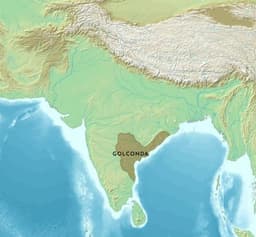
Abul Hasan Qutb Shah
Emperor · Modern
49.8Total
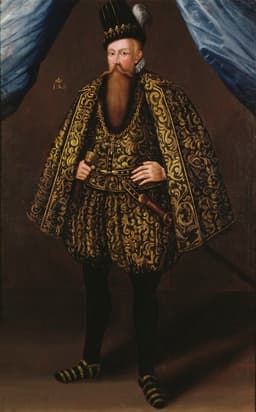
John III of Sweden
Emperor · Modern
51.4Total
Basic Information
Born
1672
1537
Died
1699
1592
Era
Modern
Modern
Nationality
India
Sweden
Occupation
Emperor
Emperor
Civilization
Indian
Western
Score Comparison
Military (10%)
50.0
50.0
Political (20%)
43.7
68.0
Influence (20%)
53.3
53.3
Legacy (20%)
42.5
44.2
Leadership (15%)
62.2
53.2
Strategy (15%)
50.0
38.3
TOTAL
49.8
51.4
Abul Hasan Qutb Shah — Complete Timeline
1672 AD
Accession to Golconda ThronePolitical Action◆ Major
Abul Hasan Qutb Shah became sultan of Golconda after the death of his father Abdullah Qutb Shah. His reign coincided with the final phase of Mughal expansion into the Deccan under Aurangzeb.
SuccessionGolconda Sultanate
Impact: regional
1687 AD
Mughal Siege of GolcondaWar
Aurangzeb's Mughal army besieged Golconda fort for eight months. The siege ended when a traitor opened the gates, leading to the capture of Abul Hasan Qutb Shah and the annexation of Golconda into the Mughal Empire.
SiegeMughal ConquestEnd of Dynasty
Impact: regionaltragic
Imprisonment by AurangzebPolitical Action◆ Major
After the fall of Golconda, Abul Hasan Qutb Shah was captured and imprisoned by Aurangzeb. He spent the rest of his life in captivity at Daulatabad fort, marking the end of the Qutb Shahi dynasty.
ImprisonmentMughal ConquestEnd of Reign
Impact: regionaltragic
John III of Sweden — Complete Timeline
1569 AD
Coronation of John IIIPolitical Action◆ Major
John III was crowned King of Sweden after deposing his half-brother Eric XIV. His reign focused on religious reconciliation and cultural patronage, including the introduction of the Red Book liturgy.
CoronationSuccession
Impact: national
Imprisonment of Eric XIVPolitical Action
John III ordered the continued imprisonment of his deposed half-brother Eric XIV, who was held at various castles until his death in 1577. This secured John's throne but created a lasting stain on his reign.
ImprisonmentDynastic Conflict
Impact: nationaldestructive
1570 AD
War against Russia (Livonian War)War◆ Major
John III continued Sweden's involvement in the Livonian War against Russia, seeking control over Estonia and Livonia. The war ended inconclusively in 1583 with the Treaty of Plussa, ceding some territories to Sweden.
Livonian WarRussiaTerritorial Conflict
Impact: regional
1574 AD
Establishment of the Swedish Jesuit MissionPolitical Action
John III invited Jesuit priests to Sweden to promote Catholic-Lutheran dialogue and secretly negotiated with the Papacy about a possible reunion. The mission failed due to Protestant opposition and the Jesuits' expulsion in 1580.
JesuitsCatholicismReligious Diplomacy
Impact: national
1576 AD
Promulgation of the Red BookCultural◆ Major
John III issued the Red Book (Liturgy of 1576), a new church liturgy that incorporated Catholic elements into Lutheran worship. This attempt to reconcile Catholicism and Lutheranism caused conflict with the Swedish clergy and nobility.
LiturgyReligious ReformCatholic-Lutheran
Impact: national
This comparison has not been analyzed yet.
One-time AI generation (~1 minute). Scores and timeline are already available below.
Rankings
🥇
John III of SwedenLeader
Mil: 50.0Pol: 68.0Inf: 53.3
51.4
🥈
Abul Hasan Qutb Shah
Mil: 50.0Pol: 43.7Inf: 53.3
49.8
+1.6 behind
How This Comparison Works
Algorithm
Each figure is scored on 6 dimensions (0—100 scale) based on structured historical data: Military (10%), Political (20%), Influence (20%), Legacy (20%), Leadership (15%), Strategy (15%). The weighted total produces the final ranking.
Data Sources
Scores are computed from structured sub-indicators in the database. Scale factors adjust for era (Ancient ×0.85, Modern ×1.0) and civilization size (Eastern ×1.05, Other ×0.80) to account for differences in population and military scale.
Maximum 3 Figures
Comparisons are limited to 2—3 figures to ensure readability and statistical meaningfulness.
Error Margins
±5 points per dimension — Sub-scores are derived from historical records with inherent uncertainty. Two figures within 5 points on a dimension should be considered roughly equivalent in that area.
Total Score Accuracy
±3 points overall — The weighted combination of 6 dimensions produces a total score with approximately ±3 points of uncertainty. Differences of less than 3 points are not statistically significant— the figures are effectively tied.
Known Limitations
- Historical records are incomplete and uneven across civilizations
- Figures from oral-tradition societies may be underrepresented
- Occupation labels can misclassify multi-role figures
- Scores measure capability and impact, not moral character
- Quantitative scoring is a comparison tool, not absolute truth
Capability Radar
Military (10%) — Battles & Warfare
Battles
25
20
Win Rate
20
25
Expansion
10
15
Political (20%) — Governance & Reform
Reform
30
55
Diplomacy
25
50
Economy
35
45
Influence (20%) — Cultural & Global Reach
Cultural
40
40
Global
20
20
Legacy (20%) — Historical Impact
Historical
35
45
Longevity
30
30
Leadership (15%) — Power & Stability
Tenure
40
60
Stability
20
40
Strategy (15%) — Tactics & Innovation
Strategy
25
20
Tactics
30
15
Reform
15
30
Similar Comparisons
Comments & Discussion
No comments yet. Be the first to share your thoughts!