Loading...
Anne of Great Britain vs John III of Sweden
Anne of Great Britain leads by 0.5 pts · 2 figures compared
…

Anne of Great Britain
Emperor · Modern
51.9Total
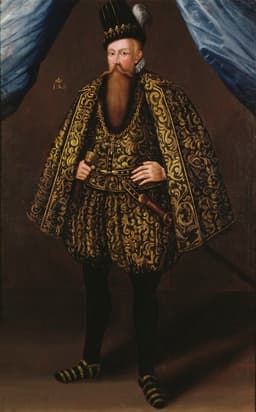
John III of Sweden
Emperor · Modern
51.4Total
Basic Information
Born
1665
1537
Died
1714
1592
Era
Modern
Modern
Nationality
England
Sweden
Occupation
Emperor
Emperor
Civilization
Western
Western
Score Comparison
Military (10%)
20.0
50.0
Political (20%)
72.0
68.0
Influence (20%)
57.2
53.3
Legacy (20%)
49.2
44.2
Leadership (15%)
53.2
53.2
Strategy (15%)
45.0
38.3
TOTAL
51.9
51.4
Anne of Great Britain — Complete Timeline
1702 AD
War of the Spanish SuccessionWar◆ Major
Anne's reign saw Britain's involvement in the War of the Spanish Succession against France and Spain. British forces under the Duke of Marlborough achieved major victories at Blenheim, Ramillies, and Oudenarde. The war ended with the Treaty of Utrecht in 1713.
WarMarlboroughEuropean Conflict
Impact: global
Establishment of the Church of England's SupremacyPolitical Action
Anne supported the Occasional Conformity Act (1711) and the Schism Act (1714), which aimed to strengthen the Church of England and suppress dissenters. These acts reflected her high church Tory sympathies and her commitment to Anglican supremacy.
ReligionChurch of EnglandTory Policy
Impact: national
1707 AD
Acts of Union 1707Political Action
Anne gave royal assent to the Acts of Union, which united the Kingdom of England and the Kingdom of Scotland into the Kingdom of Great Britain. This created a single parliament in London and ended Scottish independence. Anne became the first monarch of Great Britain.
UnionScotlandConstitutional Change
Impact: nationalconstructive
1714 AD
Death and End of Stuart DynastyOther◆ Major
Anne died of illness at Kensington Palace at age 49. She was the last Stuart monarch. Her death triggered the succession of the Hanoverian line under George I, as specified by the Act of Settlement 1701, which excluded Catholic claimants.
DeathStuart DynastySuccession
Impact: nationaltragic
John III of Sweden — Complete Timeline
1569 AD
Coronation of John IIIPolitical Action◆ Major
John III was crowned King of Sweden after deposing his half-brother Eric XIV. His reign focused on religious reconciliation and cultural patronage, including the introduction of the Red Book liturgy.
CoronationSuccession
Impact: national
Imprisonment of Eric XIVPolitical Action
John III ordered the continued imprisonment of his deposed half-brother Eric XIV, who was held at various castles until his death in 1577. This secured John's throne but created a lasting stain on his reign.
ImprisonmentDynastic Conflict
Impact: nationaldestructive
1570 AD
War against Russia (Livonian War)War◆ Major
John III continued Sweden's involvement in the Livonian War against Russia, seeking control over Estonia and Livonia. The war ended inconclusively in 1583 with the Treaty of Plussa, ceding some territories to Sweden.
Livonian WarRussiaTerritorial Conflict
Impact: regional
1574 AD
Establishment of the Swedish Jesuit MissionPolitical Action
John III invited Jesuit priests to Sweden to promote Catholic-Lutheran dialogue and secretly negotiated with the Papacy about a possible reunion. The mission failed due to Protestant opposition and the Jesuits' expulsion in 1580.
JesuitsCatholicismReligious Diplomacy
Impact: national
1576 AD
Promulgation of the Red BookCultural◆ Major
John III issued the Red Book (Liturgy of 1576), a new church liturgy that incorporated Catholic elements into Lutheran worship. This attempt to reconcile Catholicism and Lutheranism caused conflict with the Swedish clergy and nobility.
LiturgyReligious ReformCatholic-Lutheran
Impact: national
Expert Analysis
Origins
Anne of Great Britain was born on February 6, 1665, at St James's Palace, London, as the second daughter of James, Duke of York (later James II) and his first wife Anne Hyde. She was raised as a Protestant despite her father's Catholicism, a decision that shaped her reign. Her education focused on languages, history, and religion, but she was not considered intellectually gifted. Anne's mother died when she was six, and she developed a close bond with her sister Mary, who later became Mary II. Her early life was marked by the political turmoil of the Exclusion Crisis and the Glorious Revolution of 1688, which forced her Catholic father into exile and placed her brother-in-law William III and sister Mary on the throne.
John III of Sweden was born on December 20, 1537, at Stegeborg Castle, as the second son of King Gustav Vasa and his second wife Margaret Leijonhufvud. He grew up in a royal court deeply involved in the Protestant Reformation; his father had broken with the Catholic Church and established Lutheranism as the state religion. John received a thorough humanist education, studying theology, history, and languages, including Latin and Greek. His early years were overshadowed by his father's authoritarian rule and his brother Eric XIV's volatile temperament. After Gustav Vasa's death in 1560, Eric became king, and John was granted the Duchy of Finland, where he developed independent ambitions and a fascination with Catholic culture through his marriage to Catherine Jagellon, a Polish Catholic princess.
Rise to Power
Anne's path to power was indirect. She became queen regnant on March 8, 1702, following the death of William III, who had no direct heir. Her reign was initially seen as a continuation of William's policies, but she soon established her own authority. A key turning point occurred in 1704 when she dismissed the Whig Junto and appointed her close friend Sarah Churchill's husband, the Duke of Marlborough, as commander-in-chief. Anne's reliance on the Tories and her personal relationships, especially with Sarah Churchill and later Abigail Masham, shaped her government. The Acts of Union of 1707 were her greatest political achievement, unifying England and Scotland into one kingdom. She gave royal assent on May 1, 1707, creating the Kingdom of Great Britain.
John III seized power through a coup. His half-brother Eric XIV had become increasingly paranoid and tyrannical, imprisoning John in 1563 on suspicion of treason. John spent four years in captivity at Gripsholm Castle. In 1567, Eric's mental health deteriorated further, and John was released. In 1568, John and his younger brother Charles led a rebellion that deposed Eric. John was crowned king on February 10, 1569. His rise was marked by a desire to undo Eric's excesses and to pursue a more conciliatory religious policy. He immediately ordered Eric's imprisonment, despite promises of safe conduct, and Eric died in captivity in 1577.
Leadership & Governance
Anne's leadership was characterized by her reliance on ministers and her involvement in the War of the Spanish Succession (1701-1714). She supported the Duke of Marlborough's campaigns, which secured major victories at Blenheim (1704), Ramillies (1706), and Oudenarde (1708). However, her political acumen was tested by the rivalry between Whigs and Tories. Anne favored the Tories and used her power of veto only once, in 1708, against a bill to reorganize the Scottish militia. Her governance of Scotland was crucial: the Acts of Union were negotiated with Scottish commissioners, and she appointed the first British Parliament. Anne's health was poor; she suffered from gout and obesity, which limited her mobility but not her determination to maintain the Church of England's supremacy, as seen in the Occasional Conformity Act (1711) and the Schism Act (1714).
John III's governance was focused on religious reconciliation and cultural patronage. He issued the Red Book (Liturgy of 1576), which reintroduced Catholic elements such as vestments, the elevation of the host, and prayers for the dead into the Swedish Lutheran church. This sparked fierce opposition from the clergy and nobility, who saw it as a betrayal of the Reformation. John also invited Jesuits to Sweden and secretly corresponded with the Pope about a possible reunion with Rome. Politically, he strengthened the monarchy by reducing the power of the nobility and expanding the royal domain. His military leadership in the Livonian War (1558-1583) was mixed; he achieved some territorial gains in Estonia but failed to secure a decisive victory against Russia. John scored 68.0 in political leadership compared to Anne's 72.0, reflecting his more autocratic style.
Triumph & Tragedy
Anne's greatest triumph was the Acts of Union 1707, which created a unified British state and ended centuries of Anglo-Scottish conflict. This union has endured for over 300 years and laid the foundation for the later British Empire. Her reign also saw military successes under Marlborough, which established Britain as a major European power. However, her tragedies included the death of all her children; she had 17 pregnancies but only one child survived infancy, Prince William, who died at age 11 from smallpox. This left the Stuart dynasty without a direct heir, leading to the Hanoverian succession. The War of the Spanish Succession, while successful, drained the treasury and led to public debt. Anne's final years were marked by political infighting and her declining health.
John III's triumph was his cultural patronage: he founded the Royal Swedish Library, supported the arts, and commissioned the magnificent Kalmar Cathedral. His Red Book, though controversial, demonstrated a bold attempt at religious synthesis. However, his tragedy was the failure of his religious policy. The Red Book was met with widespread resistance and was eventually abandoned after his death. His secret negotiations with the Vatican alienated the Lutheran clergy and nobility. The Livonian War ended inconclusively, exhausting Swedish resources. John's imprisonment of Eric XIV, though securing his throne, tarnished his reputation as a merciful ruler. He died on November 17, 1592, at Stockholm Castle, leaving a divided church and a weakened monarchy.
Character & Destiny
Anne was a devout Anglican with a strong sense of duty but limited intellectual capacity. She was known for her stubbornness and loyalty to friends, which sometimes clouded her judgment. Her reliance on Sarah Churchill and later Abigail Masham led to factionalism at court. Historians often describe her as well-intentioned but overshadowed by her ministers. Her total score of 51.9 reflects moderate overall impact. Her character shaped her fate: her inability to produce an heir led to the end of the Stuart dynasty.
John III was an intellectual and a dreamer, fascinated by Renaissance culture and religious unity. He was more interested in theology and art than in military conquest, scoring only 38.3 in strategy. His determination to reconcile Catholicism and Lutheranism was ahead of its time but politically naive. His character led him to overestimate his ability to persuade the clergy and nobility. He was also ruthless when necessary, as shown by Eric's imprisonment. His death triggered the Synod of Uppsala (1593), which firmly re-established Lutheranism and repudiated his reforms.
Legacy
Anne's legacy is primarily the Acts of Union, which created the political entity of Great Britain. This union paved the way for British expansion and the Industrial Revolution. She is also remembered as the last Stuart monarch, ending a dynasty that had ruled since 1603. Her name lives on in places like Queen Anne's County (Maryland) and the architectural style Queen Anne. However, her personal rule is often considered less influential than that of her ministers. She scored 49.2 in legacy.
John III's legacy is more ambiguous. His Red Book influenced Swedish liturgy until the 19th century but was ultimately rejected. His attempt at Catholic-Lutheran reconciliation foreshadowed later ecumenical movements but failed in his time. He is remembered as a patron of the arts and a builder of churches and castles. The Swedish Jesuit mission he established was short-lived. His legacy score of 44.2 reflects the limited endurance of his reforms. Both rulers scored similarly in leadership (53.2 each).
Conclusion
Anne of Great Britain had a greater impact than John III of Sweden, despite their similar total scores (51.9 vs 51.4). Anne's Acts of Union created a lasting political structure that shaped the modern United Kingdom, while John's religious reforms were largely reversed. Anne's reign also saw Britain's rise as a European power, whereas John's Sweden remained a secondary player. While John's cultural contributions are notable, Anne's political legacy is more concrete and enduring. Therefore, Anne's impact is superior.
Rankings
🥇
Anne of Great BritainLeader
Mil: 20.0Pol: 72.0Inf: 57.2
51.9
🥈
John III of Sweden
Mil: 50.0Pol: 68.0Inf: 53.3
51.4
+0.5 behind
How This Comparison Works
Algorithm
Each figure is scored on 6 dimensions (0—100 scale) based on structured historical data: Military (10%), Political (20%), Influence (20%), Legacy (20%), Leadership (15%), Strategy (15%). The weighted total produces the final ranking.
Data Sources
Scores are computed from structured sub-indicators in the database. Scale factors adjust for era (Ancient ×0.85, Modern ×1.0) and civilization size (Eastern ×1.05, Other ×0.80) to account for differences in population and military scale.
Maximum 3 Figures
Comparisons are limited to 2—3 figures to ensure readability and statistical meaningfulness.
Error Margins
±5 points per dimension — Sub-scores are derived from historical records with inherent uncertainty. Two figures within 5 points on a dimension should be considered roughly equivalent in that area.
Total Score Accuracy
±3 points overall — The weighted combination of 6 dimensions produces a total score with approximately ±3 points of uncertainty. Differences of less than 3 points are not statistically significant— the figures are effectively tied.
Known Limitations
- Historical records are incomplete and uneven across civilizations
- Figures from oral-tradition societies may be underrepresented
- Occupation labels can misclassify multi-role figures
- Scores measure capability and impact, not moral character
- Quantitative scoring is a comparison tool, not absolute truth
Capability Radar
Military (10%) — Battles & Warfare
Battles
5
20
Win Rate
5
25
Expansion
5
15
Political (20%) — Governance & Reform
Reform
55
55
Diplomacy
65
50
Economy
50
45
Influence (20%) — Cultural & Global Reach
Cultural
40
40
Global
45
20
Legacy (20%) — Historical Impact
Historical
55
45
Longevity
50
30
Leadership (15%) — Power & Stability
Tenure
60
60
Stability
40
40
Strategy (15%) — Tactics & Innovation
Strategy
5
20
Tactics
5
15
Reform
5
30
Similar Comparisons
Comments & Discussion
No comments yet. Be the first to share your thoughts!