Loading...
Abu Jafar al-Mansur vs Gyeongjong of Goryeo
Abu Jafar al-Mansur leads by 18.4 pts · 2 figures compared
…
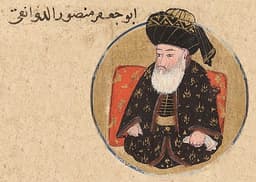
Abu Jafar al-Mansur
Emperor · Medieval
65.5Total
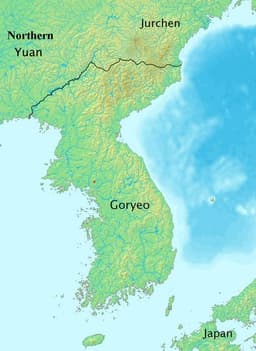
Gyeongjong of Goryeo
Emperor · Medieval
47.1Total
Basic Information
Born
714
955
Died
775
981
Era
Medieval
Medieval
Nationality
Abbasid Caliphate
Korea
Occupation
Emperor
Emperor
Civilization
Middle Eastern
Eastern
Score Comparison
Military (10%)
65.0
20.0
Political (20%)
75.0
53.8
Influence (20%)
40.0
53.3
Legacy (20%)
80.0
47.5
Leadership (15%)
82.0
48.8
Strategy (15%)
55.0
45.0
TOTAL
65.5
47.1
Abu Jafar al-Mansur — Complete Timeline
754 AD
Consolidated Abbasid Power After the RevolutionPolitical Action◆ Major
Al-Mansur eliminated rivals including his uncle Abd Allah ibn Ali and the Barmakids, securing Abbasid control. He established a centralized bureaucracy and suppressed rebellions, including the Rawandiyya uprising.
Impact: global
762 AD
Founded the City of BaghdadPolitical Action
Abu Jafar al-Mansur founded the city of Baghdad as the new capital of the Abbasid Caliphate. The Round City was designed as a center of administration and culture, becoming one of the largest cities in the world.
Impact: globalconstructive
770 AD
Patronized Translation of Greek WorksCultural◆ Major
Al-Mansur supported the translation of Greek philosophical and scientific texts into Arabic. This initiative laid the foundation for the Abbasid translation movement, which preserved and expanded classical knowledge.
Impact: globalconstructive
Gyeongjong of Goryeo — Complete Timeline
976 AD
Institution of the Jeonsigwa Land SystemReform◆ Major
King Gyeongjong established the jeonsigwa, a land distribution system that allocated state-owned farmland to government officials based on their rank. This reform aimed to secure royal revenue and control over land, while providing a stable income for the bureaucracy.
Impact: nationalconstructive
Expert Analysis
Gyeongjong of Goryeo vs Abu Jafar al-Mansur
# The Builder and the Stabilizer
On a dusty plain between the Tigris and the Euphrates, in the summer of 762, Abu Jafar al-Mansur stood watching as workers traced the outline of a great circle in the earth. He had chosen this site with care—a strategic crossroads where trade routes converged, far enough from the old Umayyad heartland to escape its ghosts, yet close enough to command the empire. He called it Madinat al-Salam, the City of Peace. The world would know it as Baghdad.
Half a world away and two centuries later, in the autumn of 976, King Gyeongjong of Goryeo faced a less dramatic but no less consequential task. His kingdom, newly unified after decades of war, needed order. He did not build a city. He built a system—a land distribution policy called *jeonsigwa* that assigned state farmland according to official rank, binding the aristocracy to the throne through the soil itself.
Two medieval rulers, both inheritors of fragile empires, both confronted with the same fundamental question: How do you make power last? Their answers reveal not only their characters but the civilizations that shaped them.
Origins
Al-Mansur was born in 714 into the crucible of the Abbasid revolution. His family had spent generations quietly undermining the Umayyad dynasty, weaving alliances with disaffected Persians and Shia dissidents. He learned early that politics was a game of shadows. When the revolution finally succeeded in 750, his brother al-Saffah became the first caliph, and al-Mansur watched from the wings—calculating, waiting.
Gyeongjong, by contrast, was born into royalty. His grandfather, King Taejo, had founded Goryeo in 918 by uniting the Later Three Kingdoms. His father, Gwangjong, had purged the old nobility and freed slaves to centralize power. Gyeongjong inherited a throne already strong, but brittle. The aristocrats who survived his father’s purges were resentful, and the treasury was strained by decades of reform.
Rise to Power
When al-Saffah died in 754, al-Mansur seized the caliphate with ruthless efficiency. His uncle, Abd Allah ibn Ali, challenged him; al-Mansur crushed the rebellion and had his uncle executed. The Barmakids, a powerful Persian family who had helped the Abbasids rise, were purged when they grew too influential. For al-Mansur, there was no distinction between personal ambition and state security. Every rival eliminated was a threat neutralized.
Gyeongjong’s path was quieter. He ascended the throne in 975 at age twenty, following his father’s death. There was no coup, no bloodbath. But the challenges were no less severe. The aristocratic families, humiliated under Gwangjong, were waiting for the young king to stumble. Gyeongjong understood that force alone could not hold them—he needed a contract.
Leadership & Governance
Al-Mansur governed through fear and vision. He built Baghdad not as a palace but as a statement: a perfectly circular city with four gates pointing to the corners of the empire, its design reflecting the cosmic order of Islam. He patronized the translation of Greek philosophy, medicine, and astronomy into Arabic, laying the foundation for the Abbasid Golden Age. But his patronage was strategic—he wanted knowledge that served the state, not ideas that questioned it. As he once reportedly said, “The people are the army of God; by them He establishes His religion, and by them He defends His territory.”
Gyeongjong’s *jeonsigwa* system was the opposite of grand architecture. It was bureaucratic, mundane, and deeply practical. By allocating land based on official rank rather than hereditary right, he made loyalty to the crown the path to wealth. Nobles who served well received fertile fields; those who opposed him got nothing. It was a system that rewarded stability and punished ambition. Where al-Mansur built walls, Gyeongjong built incentives.
Triumph & Tragedy
Al-Mansur’s greatest triumph was Baghdad itself. Within decades, it became the largest city in the world, a melting pot of Arabs, Persians, Indians, and Greeks. Its libraries and academies would preserve classical knowledge while Europe slept through its Dark Ages. But his tragedy was the same as his triumph: he trusted no one. He died in 775 on a pilgrimage to Mecca, still suspicious of his own court, having destroyed the very families who could have been his partners.
Gyeongjong’s *jeonsigwa* stabilized Goryeo’s finances and gave the monarchy a durable foundation. But the system had a fatal flaw: it only worked as long as there was land to distribute. As the population grew and the aristocracy expanded, the land ran out. Within a century, the system began to crumble, leading to the very aristocratic revolts it was meant to prevent. Gyeongjong died in 981, only six years into his reign, having planted a tree whose shade he would never enjoy.
Character & Destiny
Al-Mansur was a man of iron will and cold calculation. He saw the world as a battlefield where trust was weakness and mercy was folly. His personality shaped an empire that was centralized, paranoid, and brilliant—but brittle. When later caliphs lacked his ruthlessness, the Abbasid state fractured.
Gyeongjong was a reformer, not a warrior. His scores reflect this: a military rating of 55.1, a strategy rating of just 30.0. He was not a conqueror. He was an administrator who understood that power, in a settled kingdom, came from land and loyalty, not from swords. His personality was patient, methodical, and perhaps a little naive about the long-term consequences of his reforms.
Legacy
Al-Mansur’s legacy is written in stone and ink. Baghdad’s Round City may have been destroyed by the Mongols in 1258, but the House of Wisdom he inspired lived on in the works of al-Khwarizmi, al-Razi, and Ibn Sina. His political model—the caliph as absolute ruler, patron of learning, and defender of faith—defined Islam for centuries.
Gyeongjong’s legacy is quieter but no less real. The *jeonsigwa* system became the template for land reform in Korea for generations. It established the principle that the state, not the aristocracy, controlled the land—a principle that would survive dynasties and invasions. His leadership score of 73.5 and influence score of 72.7 reflect a ruler who, though unspectacular, was profoundly effective.
Conclusion
Two rulers, two worlds. Al-Mansur built a city that became a legend; Gyeongjong built a system that became a tradition. One sought to control the future through fear and grandeur; the other through order and fairness. Both succeeded, and both failed, in ways that reveal the limits of power itself.
Perhaps the deepest difference lies in their relationship with time. Al-Mansur wanted to be remembered—he built for eternity. Gyeongjong wanted to be useful—he built for the next harvest. In the end, the caliph’s city fell to invaders, while the king’s system shaped a nation for a thousand years. There is a lesson there, though it is not a simple one.
Rankings
🥇
Abu Jafar al-MansurLeader
Mil: 65.0Pol: 75.0Inf: 40.0
65.5
🥈
Gyeongjong of Goryeo
Mil: 20.0Pol: 53.8Inf: 53.3
47.1
+18.4 behind
How This Comparison Works
Algorithm
Each figure is scored on 6 dimensions (0—100 scale) based on structured historical data: Military (10%), Political (20%), Influence (20%), Legacy (20%), Leadership (15%), Strategy (15%). The weighted total produces the final ranking.
Data Sources
Scores are computed from structured sub-indicators in the database. Scale factors adjust for era (Ancient ×0.85, Modern ×1.0) and civilization size (Eastern ×1.05, Other ×0.80) to account for differences in population and military scale.
Maximum 3 Figures
Comparisons are limited to 2—3 figures to ensure readability and statistical meaningfulness.
Error Margins
±5 points per dimension — Sub-scores are derived from historical records with inherent uncertainty. Two figures within 5 points on a dimension should be considered roughly equivalent in that area.
Total Score Accuracy
±3 points overall — The weighted combination of 6 dimensions produces a total score with approximately ±3 points of uncertainty. Differences of less than 3 points are not statistically significant— the figures are effectively tied.
Known Limitations
- Historical records are incomplete and uneven across civilizations
- Figures from oral-tradition societies may be underrepresented
- Occupation labels can misclassify multi-role figures
- Scores measure capability and impact, not moral character
- Quantitative scoring is a comparison tool, not absolute truth
Capability Radar
Military (10%) — Battles & Warfare
Battles
60
5
Win Rate
65
5
Expansion
70
5
Political (20%) — Governance & Reform
Reform
90
70
Diplomacy
80
40
Economy
85
65
Influence (20%) — Cultural & Global Reach
Cultural
85
30
Global
80
20
Legacy (20%) — Historical Impact
Historical
90
45
Longevity
85
40
Leadership (15%) — Power & Stability
Tenure
85
55
Stability
75
50
Strategy (15%) — Tactics & Innovation
Strategy
70
5
Tactics
55
5
Reform
75
5
Similar Comparisons
Comments & Discussion
No comments yet. Be the first to share your thoughts!