Loading...
Abu Jafar al-Mansur vs Bappa Rawal
Abu Jafar al-Mansur leads by 17.7 pts · 2 figures compared
…
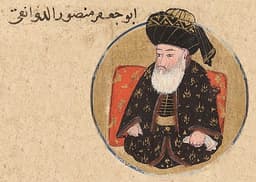
Abu Jafar al-Mansur
Emperor · Medieval
65.5Total
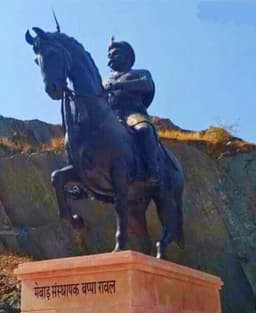
Bappa Rawal
Emperor · Medieval
47.8Total
Basic Information
Born
714
713
Died
775
780
Era
Medieval
Medieval
Nationality
Abbasid Caliphate
India
Occupation
Emperor
Emperor
Civilization
Middle Eastern
Indian
Score Comparison
Military (10%)
65.0
10.0
Political (20%)
75.0
35.1
Influence (20%)
40.0
58.0
Legacy (20%)
80.0
50.0
Leadership (15%)
82.0
67.0
Strategy (15%)
55.0
45.0
TOTAL
65.5
47.8
Abu Jafar al-Mansur — Complete Timeline
754 AD
Consolidated Abbasid Power After the RevolutionPolitical Action◆ Major
Al-Mansur eliminated rivals including his uncle Abd Allah ibn Ali and the Barmakids, securing Abbasid control. He established a centralized bureaucracy and suppressed rebellions, including the Rawandiyya uprising.
Impact: global
762 AD
Founded the City of BaghdadPolitical Action
Abu Jafar al-Mansur founded the city of Baghdad as the new capital of the Abbasid Caliphate. The Round City was designed as a center of administration and culture, becoming one of the largest cities in the world.
Impact: globalconstructive
770 AD
Patronized Translation of Greek WorksCultural◆ Major
Al-Mansur supported the translation of Greek philosophical and scientific texts into Arabic. This initiative laid the foundation for the Abbasid translation movement, which preserved and expanded classical knowledge.
Impact: globalconstructive
Bappa Rawal — Complete Timeline
734 AD
Conquest of ChittorWar◆ Major
Bappa Rawal captured the fort of Chittor from the Mori Rajputs, establishing it as the capital of the Mewar kingdom. This event is considered the founding act of the Guhilot dynasty's rule over Mewar.
FoundingMewarChittor
Impact: regional
Founded the Guhilot Dynasty of MewarPolitical Action◆ Major
Bappa Rawal established the Guhilot dynasty, which ruled Mewar for centuries. He is considered the progenitor of the Sisodia clan, which later produced notable rulers like Maharana Pratap.
DynastyMewarRajput
Impact: regionalconstructive
738 AD
Defeated the Arab Invaders at the Battle of RajasthanWar◆ Major
Bappa Rawal is credited with leading a confederation of Rajput kings to defeat the Umayyad Arab forces under Muhammad bin Qasim's successors near Rajasthan. This victory halted Arab expansion into northern India.
Arab InvasionDefenseRajput Confederation
Impact: regional
Expert Analysis
Abu Jafar al-Mansur vs Bappa Rawal
### Two Founders, One Age
In the year 734, two men, born just a year apart, were setting forces in motion that would define their worlds for centuries. One was a Rajput prince, carving a kingdom from the rocky ridges of northwestern India. The other was an Arab caliph, laying the first bricks of a city that would become the intellectual capital of the world. Bappa Rawal and Abu Jafar al-Mansur never met, yet their parallel lives offer a profound study in how character, geography, and opportunity shape the very different kinds of power a leader can wield. One built a dynasty through blood and loyalty; the other built an empire through bureaucracy and brainpower.
### Origins
Bappa Rawal, born in 713, emerged from the shadowy chaos of post-Gupta India. His legend begins in childhood, a prince dispossessed, raised among the Bhil tribes of the Aravalli hills. His world was one of clan, honor, and survival. The land was fractured, a mosaic of small kingdoms vulnerable to the rising tide of Arab expansion from the west. Al-Mansur, born in 714, came from a different crucible entirely: the sophisticated, conspiratorial heart of the Abbasid revolution. His family had just toppled the Umayyad dynasty, the first great Muslim empire. He was not a warrior prince but a political animal, raised in the shadow of revolt and the cold logic of power. Where Bappa’s education was the sword and the hunt, al-Mansur’s was the Koran, the court, and the art of assassination.
### Rise to Power
The paths to power could not have been more divergent. Bappa’s rise was a single, dramatic stroke. In 734, he led a daring assault on the fort of Chittor, wresting it from the Mori Rajputs. This was not a coup but a conquest, a personal feat of arms that won him a kingdom and the title of *Rawal*. He then cemented his rule by founding the Guhilot dynasty, a lineage that would trace its sacred thread back to the sun god himself. Al-Mansur’s rise was a long, bloody siege of the soul. He became caliph in 754, but the throne was a cage. He spent his first years methodically eliminating rivals: his uncle Abd Allah ibn Ali, the powerful general Abu Muslim, and the influential Barmakid family. His power was not won in a battle but in a series of silent, ruthless purges. He did not conquer a capital; he built one.
### Leadership & Governance
Here, the two men reveal their deepest natures. Bappa Rawal was a military leader in the ancient mold. His greatest moment came in 738 at the Battle of Rajasthan, where he united a confederation of Rajput kings to crush the invading Umayyad Arab army under Muhammad bin Qasim. This victory was decisive—it halted the Arab advance into the Indian subcontinent for centuries. His governance was the governance of a warlord: loyalty, personal valor, and the distribution of land. He did not create a bureaucracy; he created a brotherhood of warriors. Al-Mansur, by contrast, was the architect of a state. He founded Baghdad in 762, the legendary “Round City,” a perfect circle designed as a symbol of cosmic order and imperial control. But his true genius was intellectual. In 770, he began patronizing the translation of Greek philosophical and scientific texts into Arabic. This was a political act as much as a cultural one: by absorbing the wisdom of the ancients, the Abbasids claimed to be the heirs of all civilization. Bappa ruled by the sword; al-Mansur ruled by the book.
### Triumph & Tragedy
Bappa’s triumph was singular and complete: he saved his civilization from conquest. His tragedy is that we know so little of the man behind the myth. He vanished from the historical record, possibly retiring to a life of asceticism, leaving his dynasty to carry his legend forward. Al-Mansur’s triumph was the creation of the Abbasid state, a machine of power that would last five hundred years. His tragedy was that he could never enjoy it. He was a paranoid, haunted ruler, whose greatest creation—Baghdad—would soon be stained by the blood of his own family. He died in 775 on a pilgrimage to Mecca, a lonely emperor seeking peace he never found on earth.
### Character & Destiny
Their personalities were the engines of their fates. Bappa Rawal, as the stories tell, was a man of *dharma*—duty, honor, and spiritual detachment. He fought not for personal glory but for the preservation of a way of life. His destiny was to become a symbol, a founding father whose name would be invoked by generations of Rajput kings. Al-Mansur was a man of *dawla*—the state, the dynasty, the perpetual struggle for control. He was nicknamed “the Victorious,” but victory for him was a hollow thing. His destiny was to build a machine that would eventually run without him, a legacy of institutions, not heroes.
### Legacy
Bappa Rawal’s legacy is the soul of Rajputana. The Guhilot dynasty, which he founded, would produce legendary figures like Maharana Pratap. The fort of Chittor, which he captured, became the eternal symbol of Rajput resistance. He is remembered not as a ruler but as a father, a warrior-saint whose name is still chanted in the folk songs of Rajasthan. Al-Mansur’s legacy is the mind of the Islamic Golden Age. Baghdad became the intellectual capital of the world, a city where the works of Aristotle and Galen were preserved, studied, and transformed. The translation movement he started was the bridge between antiquity and the Renaissance. He is remembered not as a warrior but as a builder, a caliph who understood that the greatest power is the power of knowledge.
### Conclusion
Standing at the edge of the medieval world, Bappa Rawal and al-Mansur represent the two poles of leadership. One was the eternal chieftain, whose power flowed from the land and the loyalty of his men. The other was the imperial statesman, whose power flowed from the city and the loyalty of his scholars. One built a dynasty that would resist the march of empires; the other built an empire that would absorb the wisdom of the world. They were both founders, but they founded very different things: one a kingdom of honor, the other a civilization of the mind. In their difference lies the whole drama of human history—the eternal tension between the sword and the pen, the fort and the library, the clan and the state.
Rankings
🥇
Abu Jafar al-MansurLeader
Mil: 65.0Pol: 75.0Inf: 40.0
65.5
🥈
Bappa Rawal
Mil: 10.0Pol: 35.1Inf: 58.0
47.8
+17.7 behind
How This Comparison Works
Algorithm
Each figure is scored on 6 dimensions (0—100 scale) based on structured historical data: Military (10%), Political (20%), Influence (20%), Legacy (20%), Leadership (15%), Strategy (15%). The weighted total produces the final ranking.
Data Sources
Scores are computed from structured sub-indicators in the database. Scale factors adjust for era (Ancient ×0.85, Modern ×1.0) and civilization size (Eastern ×1.05, Other ×0.80) to account for differences in population and military scale.
Maximum 3 Figures
Comparisons are limited to 2—3 figures to ensure readability and statistical meaningfulness.
Error Margins
±5 points per dimension — Sub-scores are derived from historical records with inherent uncertainty. Two figures within 5 points on a dimension should be considered roughly equivalent in that area.
Total Score Accuracy
±3 points overall — The weighted combination of 6 dimensions produces a total score with approximately ±3 points of uncertainty. Differences of less than 3 points are not statistically significant— the figures are effectively tied.
Known Limitations
- Historical records are incomplete and uneven across civilizations
- Figures from oral-tradition societies may be underrepresented
- Occupation labels can misclassify multi-role figures
- Scores measure capability and impact, not moral character
- Quantitative scoring is a comparison tool, not absolute truth
Capability Radar
Military (10%) — Battles & Warfare
Battles
60
40
Win Rate
65
45
Expansion
70
35
Political (20%) — Governance & Reform
Reform
90
30
Diplomacy
80
35
Economy
85
25
Influence (20%) — Cultural & Global Reach
Cultural
85
40
Global
80
20
Legacy (20%) — Historical Impact
Historical
90
45
Longevity
85
50
Leadership (15%) — Power & Stability
Tenure
85
50
Stability
75
40
Strategy (15%) — Tactics & Innovation
Strategy
70
30
Tactics
55
35
Reform
75
25
Similar Comparisons
Comments & Discussion
MANSUR'S GHOST6/16/2026
The analysis stacks the deck by calling Bappa a "warrior prince" and Mansur a "political animal" — as if one is honorable and the other a schemer. In reality, al-Mansur's political murders (including his own uncle, Ibrahim) were calculated necessities that built the Abbasid Caliphate into a stable, centralized machine. Bappa had the luxury of tribal honor codes; Mansur faced a collapsing Umayyad hangover. Whose calculation took more guts? The man who founded Baghdad. Period.
SANSKRIT-STEEL6/16/2026
Bappa Rawal 的传奇被严重浪漫化:历史学家仍然争论他是否存在于734年,还是后来编造的神话。然而,al-Mansur 的圆城(Round City)有过真实的蓝图,有真实的进出城墙,有真实的哈里发在议事。一个是云里的神灵,一个是地上的钢铁。给我实际的结果,我不要童话。
BAGHDAD'S ARCHITECT6/16/2026
Let’s call it: al-Mansur didn’t just build a city — he built a civilization engine. The House of Wisdom, the translation movement, the standardization of Islamic law — none of it happens without his funding, his paranoia, his ruthless insistence on control. Bappa founded a clan fortress at Chittor. That’s a hilltop. Mansur founded Baghdad, which fed ideas to Europe, Africa, and Asia for 500 years. Scale matters.
RIDGE RUNNER6/16/2026
西方历史书会吹捧巴格达,但 Bappa Rawal 在734年阻止了阿拉伯扩张侵入印度腹地。他的矛尖阻止了倭马亚军队翻越阿拉瓦利山脉——一场历史书上不会提的隐形保卫战。巴格达是伟大的,但文明也建立在谁没被打败之上。Bappa 守护了一片整个大陆被侵略的区域。那是一场同样的革命,只是没人写史诗来歌颂它。
SassanidStriker6/16/2026
Comparing al-Mansur with Bappa Rawal is like comparing a chess grandmaster to a street brawler. Al-Mansur built Baghdad as a bureaucratic machine—its round city was a marvel of administrative control, not just walls. Bappa Rawal’s Guhila clan victory over the Arabs at 738 CE was a tactical raid, not empire-building. Give me the Abbasid founder’s systematic statecraft any day.
RājpūtRebel6/16/2026
Data skeptics, wake up—Bappa Rawal’s 738 CE victory at Chittor held the Muslim advance at bay for 200 years, while al-Mansur’s House of Wisdom? A house of words. The Guhila king’s guerrilla tactics against a massive Arab force outshines any tax policy. Give me a battle that saved a civilization over a library that burned in 1258.
沙漠铁砧6/16/2026
数据狂人又在玩量化游戏。阿尔-曼苏尔的经济改革确实让巴格达成了全球中心,但巴帕·拉瓦尔在拉贾斯坦抵抗伊斯兰扩张的意义,远超任何GDP曲线。你们给曼苏尔加分只是因为史料多,拉瓦尔的口传史诗里藏着更真实的英雄血。
CholaChronologer6/16/2026
The revisionists miss context: Bappa Rawal’s 8th-century exploits are legendary, but al-Mansur’s founding of Baghdad’s House of Wisdom supercharged global knowledge. No doubt the Rajput king fought hard, but lasting impact favors the builder. I’m siding with the Abbasid—his coinage, postal system, and promotion of Persian culture redefined the medieval world.
逆流史笔6/16/2026
把两个八世纪的军阀放上天平,本身就是现代人的傲慢。曼苏尔的炼金术炼丹坊和拉瓦尔的深山游击战,有可比性吗?论文化遗产,曼苏尔的巴格达圆城成了字母表的装饰,拉瓦尔的后裔至今掌控乌代浦尔。打分系统该加一栏“幽灵影响”——看不见的掌权者才是真赢家。