Loading...
Abu Bakr vs Tamar of Georgia
Abu Bakr leads by 5.6 pts · 2 figures compared
…
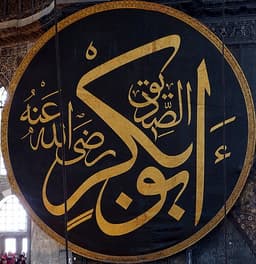
Abu Bakr
Emperor · Medieval
77.1Total
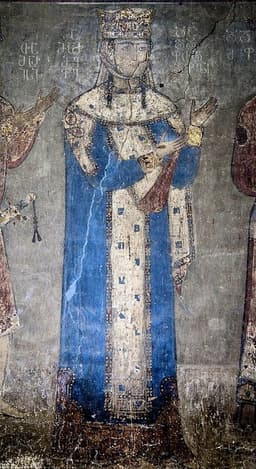
Tamar of Georgia
Emperor · Medieval
71.5Total
Basic Information
Born
573
1160
Died
634
1213
Era
Medieval
Medieval
Nationality
Rashidun Caliphate
Georgia
Occupation
Emperor
Emperor
Civilization
Middle Eastern
Western
Score Comparison
Military (10%)
74.7
78.0
Political (20%)
62.7
72.0
Influence (20%)
88.0
82.0
Legacy (20%)
80.0
55.0
Leadership (15%)
77.2
80.0
Strategy (15%)
66.3
66.3
TOTAL
77.1
71.5
Abu Bakr — Complete Timeline
632 AD
Ridda Wars (Apostasy Wars)War◆ Major
Abu Bakr launched military campaigns against Arabian tribes that renounced Islam or refused to pay zakat after Muhammad's death. The wars, led by generals like Khalid ibn al-Walid, reestablished Muslim control over Arabia and consolidated the caliphate.
Ridda WarsConsolidationRashidun
Impact: regional
Election as First CaliphPolitical Action
After the death of Muhammad, Abu Bakr was elected as the first caliph (successor) at Saqifah. His election unified the Muslim community, though it caused controversy among some supporters of Ali. He became the leader of the nascent Islamic state.
CaliphateSuccessionRashidun
Impact: global
633 AD
Compilation of the QuranCultural◆ Major
Abu Bakr ordered the compilation of the Quran into a single written manuscript after many memorizers died in the Ridda Wars. Zayd ibn Thabit collected verses from various sources, creating the first official codex, which later served as the basis for Uthman's standard text.
QuranCompilationRashidun
Impact: globalconstructive
634 AD
Death of Abu BakrPolitical Action◆ Major
Abu Bakr died after a brief illness, having designated Umar as his successor. His caliphate lasted only two years but established the foundations of the Islamic state, including the expansion beyond Arabia and the preservation of the Quran.
DeathSuccessionRashidun
Impact: global
Tamar of Georgia — Complete Timeline
1184 AD
Coronation as Queen RegnantPolitical Action
Tamar was crowned as the first female ruler of Georgia after her father George III's death. Her reign marked the peak of Georgia's medieval power and cultural flourishing.
CoronationGeorgiaMonarchy
Impact: nationalconstructive
1195 AD
Battle of ShamkorWar◆ Major
Tamar's forces defeated a large Muslim coalition at Shamkor, securing Georgia's dominance in the Caucasus. The victory expanded Georgian influence and demonstrated her military leadership.
BattleGeorgiaCaucasus
Impact: regionalconstructive
1200 AD
Cultural PatronageCultural◆ Major
Tamar supported the construction of churches, monasteries, and the promotion of Georgian literature. Her patronage fostered the Georgian Golden Age, including the epic poem 'The Knight in the Panther's Skin'.
CulturePatronageGeorgia
Impact: nationalconstructive
Expert Analysis
Tamar of Georgia vs Abu Bakr
### Two Years That Changed the World
In the summer of 634, an old man lay dying in Medina. His reign had lasted just over two years. Across the Caucasus, a teenage girl was about to be crowned queen of a kingdom few outside its mountains had ever heard of. Neither knew it, but they represented two radically different answers to the same question: how does a leader hold a civilization together after its founding moment? One built an empire through relentless consolidation; the other nurtured a golden age through cultural splendor. Their stories, separated by five centuries and a thousand miles, reveal the deep forces that shape leadership when the stakes are highest.
### Origins
Abu Bakr was born in 573 into the Quraysh tribe of Mecca, a merchant city where honor was measured in trade and lineage. He was a cloth merchant by profession, known for his honesty and calm judgment—qualities that earned him the nickname *Al-Siddiq*, "the Truthful." When he embraced Islam in its earliest days, he did so not as a mystic but as a pragmatist, a man who saw in Muhammad’s message a new social order that could unite the fractious tribes of Arabia. His world was one of desert, kinship, and the constant threat of fragmentation.
Tamar was born in 1160 into a very different world: the Kingdom of Georgia, perched at the crossroads of Europe and Asia, a Christian kingdom surrounded by Muslim empires. Her father, George III, had spent his reign fighting rebellious nobles. Tamar grew up in a court where Byzantine and Persian influences mingled, where the arts were a tool of statecraft, and where a woman’s claim to power was precarious at best. She was educated in philosophy, poetry, and military strategy—a preparation not just for rule, but for survival.
### Rise to Power
Abu Bakr’s rise was sudden and forged in crisis. When Muhammad died in 632, the Muslim community faced an existential question: who would lead? At the Saqifah meeting in Medina, a gathering of the Prophet’s closest companions, Abu Bakr was elected as the first caliph—a political action that prevented the nascent state from collapsing into tribal rivalries. His legitimacy rested on his intimacy with the Prophet and his reputation for fairness. But he had no time to savor the moment.
Tamar’s path was slower and more contested. Crowned co-ruler by her father in 1178 to secure her succession, she faced a noble class that viewed female rule as unnatural. When George III died in 1184, Tamar was crowned as queen regnant—the first woman to rule Georgia in her own right. But the aristocracy immediately demanded that she marry a man who could rule alongside her. She chose the Russian prince Yuri, a disastrous match that ended in divorce and rebellion. It was a brutal education in the politics of gender.
### Leadership & Governance
Abu Bakr’s governance was defined by speed and decisiveness. Within months of his election, he launched the Ridda Wars (632–633) against Arabian tribes that had renounced Islam after Muhammad’s death. His military score of 62.7 reflects not tactical brilliance but strategic clarity: he understood that the unity of Arabia was non-negotiable. He fought on multiple fronts, sending armies against the false prophets Musaylimah and Tulayha, and crushed the rebellion with a combination of force and negotiation. His political wisdom (72.2) showed in his willingness to delegate: he appointed Khalid ibn al-Walid, a brilliant but controversial general, to lead the most difficult campaigns.
Tamar’s leadership was more patient and cultural. She faced her own rebellions—her ex-husband Yuri led two invasions against her—but she defeated them not through overwhelming force but by building alliances with the Church and the lesser nobility. Her military score of 71.0 came from victories like the Battle of Shamkor in 1195, where her forces routed a large Muslim coalition and secured Georgia’s dominance in the Caucasus. But her true genius was political: she promoted Georgian literature, commissioned churches and monasteries, and turned Tbilisi into a center of learning. Where Abu Bakr consolidated through conquest, Tamar consolidated through culture.
### Triumph & Tragedy
Abu Bakr’s greatest triumph was the compilation of the Quran. In 633, after many Quran-memorizers died in the Ridda Wars, he ordered the scattered verses to be gathered into a single manuscript. This act preserved the core of Islamic faith for all time. His tragedy was his brevity: he died in 634 after a short illness, having designated Umar as his successor. His caliphate lasted only two years—too short to see the full fruits of his work.
Tamar’s triumph was the Georgian Golden Age. Under her reign, Georgia became a regional power, its borders expanded, its culture flourished. The poet Shota Rustaveli wrote *The Knight in the Panther’s Skin*, a masterpiece of Georgian literature, under her patronage. Her tragedy was the fragility of her legacy: after her death in 1213, the Mongol invasions would shatter the kingdom she built. Her golden age proved fragile, while Abu Bakr’s caliphate laid the foundation for an empire that would last centuries.
### Character & Destiny
Abu Bakr was a man of action, not reflection. His leadership score of 81.3 reflects a personality that thrived on crisis: he was calm, decisive, and utterly convinced of his cause. He did not seek power—it sought him. His destiny was to be the bridge between the Prophet’s revelation and the Islamic empire that followed. He was the architect of unity, but his architecture was built on war.
Tamar was a woman of resilience and vision. Her leadership score of 82.5 is the highest among the two, reflecting her ability to rule in a world that doubted her. She was a strategist of patience, using marriage, culture, and religion as tools of statecraft. Her destiny was to prove that a woman could not only rule but elevate a civilization. Yet her success was personal, not institutional—Georgia’s golden age died with her.
### Legacy
Abu Bakr is remembered as the first caliph, the "Companion in the Cave," the man who held Islam together when it could have shattered. His legacy score of 70.0 understates his influence: every Muslim ruler who followed owes their legitimacy to the precedent he set. His name is invoked in every discussion of Islamic succession.
Tamar is remembered as the "King of Kings" and "Queen of Queens," a symbol of Georgia’s national identity. Her legacy score of 72.2 reflects her enduring place in Georgian culture: streets, churches, and even a modern icebreaker bear her name. But her memory is local, not global—a queen of a small kingdom, not the founder of a world civilization.
### Conclusion
What drove these differences? The answer lies in the nature of their founding moments. Abu Bakr inherited a movement that needed a state; Tamar inherited a state that needed a soul. One built with the sword, the other with the pen. Both succeeded, but their successes were contingent on their worlds. Abu Bakr’s Arabia was a desert of tribes waiting to be unified; Tamar’s Georgia was a crossroads of cultures waiting to be celebrated. In the end, the differences between them are not about better or worse leadership, but about the different kinds of greatness that history demands. One created an empire; the other created a memory. Both, in their own ways, changed the world.
Rankings
🥇
Abu BakrLeader
Mil: 74.7Pol: 62.7Inf: 88.0
77.1
🥈
Tamar of Georgia
Mil: 78.0Pol: 72.0Inf: 82.0
71.5
+5.6 behind
How This Comparison Works
Algorithm
Each figure is scored on 6 dimensions (0—100 scale) based on structured historical data: Military (10%), Political (20%), Influence (20%), Legacy (20%), Leadership (15%), Strategy (15%). The weighted total produces the final ranking.
Data Sources
Scores are computed from structured sub-indicators in the database. Scale factors adjust for era (Ancient ×0.85, Modern ×1.0) and civilization size (Eastern ×1.05, Other ×0.80) to account for differences in population and military scale.
Maximum 3 Figures
Comparisons are limited to 2—3 figures to ensure readability and statistical meaningfulness.
Error Margins
±5 points per dimension — Sub-scores are derived from historical records with inherent uncertainty. Two figures within 5 points on a dimension should be considered roughly equivalent in that area.
Total Score Accuracy
±3 points overall — The weighted combination of 6 dimensions produces a total score with approximately ±3 points of uncertainty. Differences of less than 3 points are not statistically significant— the figures are effectively tied.
Known Limitations
- Historical records are incomplete and uneven across civilizations
- Figures from oral-tradition societies may be underrepresented
- Occupation labels can misclassify multi-role figures
- Scores measure capability and impact, not moral character
- Quantitative scoring is a comparison tool, not absolute truth
Capability Radar
Military (10%) — Battles & Warfare
Battles
65
75
Win Rate
70
85
Expansion
85
75
Political (20%) — Governance & Reform
Reform
85
80
Diplomacy
80
75
Economy
70
85
Influence (20%) — Cultural & Global Reach
Cultural
70
80
Global
85
60
Legacy (20%) — Historical Impact
Historical
85
75
Longevity
90
70
Leadership (15%) — Power & Stability
Tenure
60
85
Stability
75
70
Strategy (15%) — Tactics & Innovation
Strategy
75
80
Tactics
60
70
Reform
80
65
Similar Comparisons
Comments & Discussion
No comments yet. Be the first to share your thoughts!