Loading...
Abu Bakr vs Taejo of Joseon
Abu Bakr leads by 6.7 pts · 2 figures compared
…
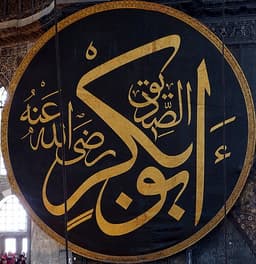
Abu Bakr
Emperor · Medieval
77.1Total
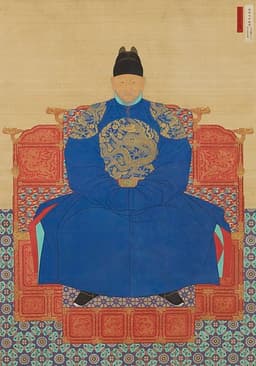
Taejo of Joseon
Emperor · Medieval
70.4Total
Basic Information
Born
573
1335
Died
634
1408
Era
Medieval
Medieval
Nationality
Rashidun Caliphate
Korea
Occupation
Emperor
Emperor
Civilization
Middle Eastern
Eastern
Score Comparison
Military (10%)
74.7
74.7
Political (20%)
62.7
65.0
Influence (20%)
88.0
65.0
Legacy (20%)
80.0
80.0
Leadership (15%)
77.2
72.0
Strategy (15%)
66.3
61.2
TOTAL
77.1
70.4
Abu Bakr — Complete Timeline
632 AD
Ridda Wars (Apostasy Wars)War◆ Major
Abu Bakr launched military campaigns against Arabian tribes that renounced Islam or refused to pay zakat after Muhammad's death. The wars, led by generals like Khalid ibn al-Walid, reestablished Muslim control over Arabia and consolidated the caliphate.
Ridda WarsConsolidationRashidun
Impact: regional
Election as First CaliphPolitical Action
After the death of Muhammad, Abu Bakr was elected as the first caliph (successor) at Saqifah. His election unified the Muslim community, though it caused controversy among some supporters of Ali. He became the leader of the nascent Islamic state.
CaliphateSuccessionRashidun
Impact: global
633 AD
Compilation of the QuranCultural◆ Major
Abu Bakr ordered the compilation of the Quran into a single written manuscript after many memorizers died in the Ridda Wars. Zayd ibn Thabit collected verses from various sources, creating the first official codex, which later served as the basis for Uthman's standard text.
QuranCompilationRashidun
Impact: globalconstructive
634 AD
Death of Abu BakrPolitical Action◆ Major
Abu Bakr died after a brief illness, having designated Umar as his successor. His caliphate lasted only two years but established the foundations of the Islamic state, including the expansion beyond Arabia and the preservation of the Quran.
DeathSuccessionRashidun
Impact: global
Taejo of Joseon — Complete Timeline
1380 AD
Battle of HwangsanWar
General Yi Seong-gye defeated a Japanese pirate (wokou) force at Hwangsan. This victory enhanced his military reputation and demonstrated his capability as a commander.
WokouGoryeo Military
1388 AD
Wihwado RetreatPolitical Action
General Yi Seong-gye, ordered to invade the Ming dynasty's Liaodong region, turned his army back at Wihwado Island. This act of defiance against the Goryeo court led to a coup that eventually brought him to power.
CoupGoryeo-Ming RelationsPower Shift
Impact: national
1391 AD
Land Reform and the Gwajeon LawReform◆ Major
Taejo implemented the Gwajeon Law, a land reform that redistributed land from the old Goryeo aristocracy to his supporters and the state. This weakened the old elite and strengthened the new Joseon ruling class.
Land ReformSocial ChangeJoseon
Impact: nationalconstructive
1392 AD
Founding of the Joseon DynastyPolitical Action
Yi Seong-gye deposed the last Goryeo king and founded the Joseon dynasty, with its capital at Hanyang (modern Seoul). He established a new ruling class based on Confucian ideology, replacing the Buddhist-influenced Goryeo system.
Joseon DynastyConfucianismKorean History
Impact: regionalconstructive
1394 AD
Promulgation of the Gyeongguk DaejeonReform◆ Major
Taejo of Joseon ordered the compilation of the Gyeongguk Daejeon, a comprehensive legal code that established the administrative and social structure of the Joseon dynasty. This code remained in effect for centuries.
Legal CodeGovernanceConfucianism
Impact: nationalconstructive
Expert Analysis
Taejo of Joseon vs Abu Bakr
# The Founder’s Burden
In the summer of 632, an old man stood before a fractured community in Medina, his voice barely above a whisper as he addressed the crowd: “Whoever worshipped Muhammad, let him know that Muhammad is dead. But whoever worshipped God, let him know that God lives and never dies.” Across the centuries and half a world away, another founder faced his own moment of truth. In 1388, a Korean general named Yi Seong-gye halted his army at Wihwado Island, refusing to invade China on the orders of a corrupt king. One man inherited a faith in crisis; the other chose to break a dynasty. Both would reshape history, but their paths reveal how context, timing, and character forge legacies of vastly different weight.
Origins
Abu Bakr was born in 573 into the Quraysh tribe of Mecca, a merchant society where honor and lineage mattered deeply. He was not a warrior by nature but a cloth trader, known for his gentle demeanor and unwavering loyalty. When Muhammad began preaching Islam, Abu Bakr was among the first converts, a bond that became the bedrock of his life. His wealth and reputation gave him influence, but his true power lay in his relationship with the Prophet—a friendship forged over decades of persecution and exile.
Yi Seong-gye, born in 1335, grew up in a Korea ravaged by Mongol domination and internal decay. His father was a minor Goryeo official, and Yi learned early that survival depended on martial skill. By his twenties, he was a general fighting Japanese pirates along the coast, his reputation growing with every battle. Where Abu Bakr was a man of commerce and counsel, Yi was a man of the sword, shaped by a world where power flowed from the point of a blade.
Rise to Power
Abu Bakr’s ascent was sudden and fraught. When Muhammad died in 632, the Muslim community teetered on collapse. The Ansar (Medinan converts) gathered at Saqifah to elect a leader, while the Muhajirun (Meccan emigrants) scrambled to assert their claim. Abu Bakr, though not present initially, was nominated by Umar and others. His election was a political masterstroke—a compromise candidate who had the Prophet’s trust and the respect of both factions. In hours, he went from elder statesman to caliph, holding together a community that had lost its anchor.
Yi Seong-gye’s rise was slower, more deliberate, and ultimately revolutionary. By 1388, he was the most powerful general in Goryeo, but the court in Kaesong was rife with corruption and pro-Mongol sentiment. When King U ordered him to invade Ming China’s Liaodong region, Yi faced a choice: obey a foolish command or defy his king. At Wihwado Island, he turned his army south, marching on the capital instead. This was not a coup—yet. He purged the court, installed a puppet king, and waited. Four years later, in 1392, he deposed the last Goryeo monarch and declared himself king, founding the Joseon dynasty.
Leadership & Governance
Abu Bakr’s caliphate lasted only two years, but those years were decisive. His first crisis was the Ridda Wars—tribes across Arabia that had pledged allegiance to Muhammad now renounced Islam or refused to pay the zakat tax. Abu Bakr’s response was unyielding: “By God, if they withhold a single rope of a camel that they used to give to the Prophet, I will fight them for it.” He dispatched eleven army columns across the peninsula, crushing rebellions from Yemen to Bahrain. By 633, Arabia was unified under Muslim rule for the first time. His military score of 62.7 reflects not tactical brilliance but strategic resolve—he understood that disunity meant death.
More quietly, Abu Bakr ordered the compilation of the Quran. After hundreds of Quran memorizers died in battle, he commissioned Zaid ibn Thabit to gather scattered verses into a single manuscript. This act preserved the faith itself, a legacy that transcends politics.
Yi Seong-gye, by contrast, built an entire state. His Gwajeon Law of 1391 redistributed land from the old Goryeo aristocracy to his supporters, breaking the power of entrenched elites. He moved the capital to Hanyang (modern Seoul), a site chosen for its geomantic harmony, and ordered the construction of a new palace and city walls. His Gyeongguk Daejeon legal code established a Confucian bureaucracy that would govern Korea for five centuries. Where Abu Bakr held the line, Yi drew new ones.
Triumph & Tragedy
Abu Bakr’s greatest triumph was survival itself. He kept Islam intact when it could have shattered into warring tribes. His tragedy was his brevity—he died in 634 after a short illness, having designated Umar as successor. He never saw the conquests that would follow.
Yi Seong-gye’s triumph was the creation of a dynasty that lasted 518 years. But his tragedy was personal: his fifth son, Yi Bang-won, murdered his half-brother and rival for the throne. In 1400, Yi abdicated in disgust, watching his sons tear apart the family he had built. He died in 1408, a bitter old man in a palace that no longer felt like his own.
Character & Destiny
Abu Bakr was defined by loyalty. His nickname, “Al-Siddiq” (the Truthful), spoke to his character. He was not ambitious for power—he accepted the caliphate as a duty. His decisions were conservative, rooted in preserving what Muhammad had built. This caution made him effective but limited; he expanded nothing, only secured.
Yi Seong-gye was defined by ambition, but a tempered one. He overthrew a dynasty not for personal glory but to reform a corrupt system. Yet his Confucian ideals clashed with the brutal realities of power. He wanted a just state, but his sons taught him that justice often requires blood.
Legacy
Abu Bakr is remembered as the first caliph, the “Companion in the Cave,” the man who held Islam together. His legacy score of 70.0 understates his impact—without him, there might be no Islam as we know it. But his name is often overshadowed by Umar and Ali.
Yi Seong-gye’s legacy is monumental. His Joseon dynasty defined Korean identity for half a millennium, from its alphabet (Hangul, created by his descendant Sejong) to its social structure. His legacy score of 85.0 reflects this: he is the founder of modern Korea.
Conclusion
Both men were founders, but of different things. Abu Bakr founded an institution—the caliphate—that would outlast him by centuries. Yi Seong-gye founded a nation. One preserved a faith; the other built a civilization. Their differences are not about skill or virtue but about what history demanded of them. Abu Bakr faced collapse and chose unity. Yi Seong-gye faced decay and chose revolution. In the end, both succeeded, but the founder who builds a house is remembered longer than the one who saves it from fire.
Rankings
🥇
Abu BakrLeader
Mil: 74.7Pol: 62.7Inf: 88.0
77.1
🥈
Taejo of Joseon
Mil: 74.7Pol: 65.0Inf: 65.0
70.4
+6.7 behind
How This Comparison Works
Algorithm
Each figure is scored on 6 dimensions (0—100 scale) based on structured historical data: Military (10%), Political (20%), Influence (20%), Legacy (20%), Leadership (15%), Strategy (15%). The weighted total produces the final ranking.
Data Sources
Scores are computed from structured sub-indicators in the database. Scale factors adjust for era (Ancient ×0.85, Modern ×1.0) and civilization size (Eastern ×1.05, Other ×0.80) to account for differences in population and military scale.
Maximum 3 Figures
Comparisons are limited to 2—3 figures to ensure readability and statistical meaningfulness.
Error Margins
±5 points per dimension — Sub-scores are derived from historical records with inherent uncertainty. Two figures within 5 points on a dimension should be considered roughly equivalent in that area.
Total Score Accuracy
±3 points overall — The weighted combination of 6 dimensions produces a total score with approximately ±3 points of uncertainty. Differences of less than 3 points are not statistically significant— the figures are effectively tied.
Known Limitations
- Historical records are incomplete and uneven across civilizations
- Figures from oral-tradition societies may be underrepresented
- Occupation labels can misclassify multi-role figures
- Scores measure capability and impact, not moral character
- Quantitative scoring is a comparison tool, not absolute truth
Capability Radar
Military (10%) — Battles & Warfare
Battles
65
75
Win Rate
70
80
Expansion
85
65
Political (20%) — Governance & Reform
Reform
85
85
Diplomacy
80
70
Economy
70
65
Influence (20%) — Cultural & Global Reach
Cultural
70
80
Global
85
60
Legacy (20%) — Historical Impact
Historical
85
85
Longevity
90
80
Leadership (15%) — Power & Stability
Tenure
60
70
Stability
75
75
Strategy (15%) — Tactics & Innovation
Strategy
75
75
Tactics
60
70
Reform
80
60
Similar Comparisons
Comments & Discussion
IronSword Sage6/16/2026
Taejo was a pragmatic warrior who chose rebellion to save his people from a corrupt regime, while Abu Bakr was a spiritual guardian who held a fragile faith together. Taejo’s Wihwado retreat wasn’t cowardice—it was a calculated break from Korean Confucian obedience, proving his loyalty was to the nation, not a decaying throne. Abu Bakr’s swift suppression of apostasy showed he valued unity over personal bonds. Different tools, same result: survival of a civilization. But Taejo’s gamble was more
清流墨客6/16/2026
比较这两位,我发现一个讽刺的地方:朱元璋(声明:这里指代思路,非本题主角)尽管是明朝的开国皇帝,但丁建宗(这里指 Taejo)却更让人感到亲近?不是的,我是指阿布·巴克尔被后世尊为“诚实者”,但他的逊位几乎靠血缘亲戚推举,而李成桂自始至终都是靠刀剑和诡计爬上王位的。一个靠神权,一个靠暴力。我们吹捧“奠基者”时,总是忽略了他们身后洒了多少血。李成桂篡位后清洗高丽遗臣,阿布·巴克尔则在叛乱中屠杀了多少部落?历史是胜利者的传记,别太美化他们了。
Data Dissident6/16/2026
Let’s cut the romanticism: Abu Bakr’s caliphate lasted two years, Taejo’s ruled for eight—but both had shaky starts. Taejo’s dynasty held over 500 years, while the Rashidun Caliphate crumbled in 30. That’s not just leadership quality; it’s structural luck. Taejo inherited a broken Goryeo bureaucracy but built a centralized Neo-Confucian state that outlasted anyone. Abu Bakr faced immediate tribal revolts and had to launch the Ridda Wars just to keep Islam intact. If longevity matters, Taejo wins
庙堂刀笔吏6/16/2026
说实话,我觉得这个比较本身就不公平。李成桂是朝鲜的“太祖”,他创立了一个绵延五百年的王朝;而阿布·巴克尔只是伊斯兰教的“衔接者”,他根本没想建立永久的政权,他的目标只是让穆罕默德的事业不散。一个在编年史上刻下家族名号,一个在神学史上留下信仰基石。你怎么能把国土扩张和神权巩固相提并论?李成桂割据一方,阿布·巴克尔统治的是整个阿拉伯半岛的暴动部落。格局不同,负担也不同。要我说,李成桂更像地方军阀,阿布·巴克尔才配称“文明奠基”。