Loading...
Abu Bakr vs Gyeongjong of Goryeo
Abu Bakr leads by 30.0 pts · 2 figures compared
…
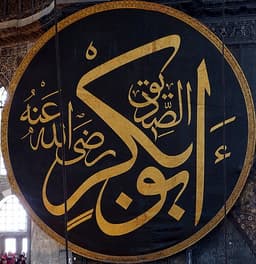
Abu Bakr
Emperor · Medieval
77.1Total
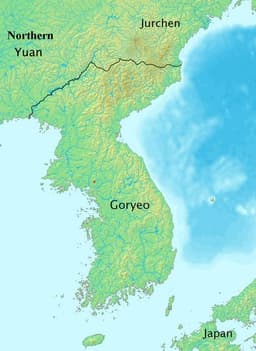
Gyeongjong of Goryeo
Emperor · Medieval
47.1Total
Basic Information
Born
573
955
Died
634
981
Era
Medieval
Medieval
Nationality
Rashidun Caliphate
Korea
Occupation
Emperor
Emperor
Civilization
Middle Eastern
Eastern
Score Comparison
Military (10%)
74.7
20.0
Political (20%)
62.7
53.8
Influence (20%)
88.0
53.3
Legacy (20%)
80.0
47.5
Leadership (15%)
77.2
48.8
Strategy (15%)
66.3
45.0
TOTAL
77.1
47.1
Abu Bakr — Complete Timeline
632 AD
Ridda Wars (Apostasy Wars)War◆ Major
Abu Bakr launched military campaigns against Arabian tribes that renounced Islam or refused to pay zakat after Muhammad's death. The wars, led by generals like Khalid ibn al-Walid, reestablished Muslim control over Arabia and consolidated the caliphate.
Ridda WarsConsolidationRashidun
Impact: regional
Election as First CaliphPolitical Action
After the death of Muhammad, Abu Bakr was elected as the first caliph (successor) at Saqifah. His election unified the Muslim community, though it caused controversy among some supporters of Ali. He became the leader of the nascent Islamic state.
CaliphateSuccessionRashidun
Impact: global
633 AD
Compilation of the QuranCultural◆ Major
Abu Bakr ordered the compilation of the Quran into a single written manuscript after many memorizers died in the Ridda Wars. Zayd ibn Thabit collected verses from various sources, creating the first official codex, which later served as the basis for Uthman's standard text.
QuranCompilationRashidun
Impact: globalconstructive
634 AD
Death of Abu BakrPolitical Action◆ Major
Abu Bakr died after a brief illness, having designated Umar as his successor. His caliphate lasted only two years but established the foundations of the Islamic state, including the expansion beyond Arabia and the preservation of the Quran.
DeathSuccessionRashidun
Impact: global
Gyeongjong of Goryeo — Complete Timeline
976 AD
Institution of the Jeonsigwa Land SystemReform◆ Major
King Gyeongjong established the jeonsigwa, a land distribution system that allocated state-owned farmland to government officials based on their rank. This reform aimed to secure royal revenue and control over land, while providing a stable income for the bureaucracy.
Impact: nationalconstructive
Expert Analysis
Gyeongjong of Goryeo vs Abu Bakr
### The Caliph and the King: Two Paths to Order in a Fractured World
In the summer heat of 632, a frail but determined man stood before a crowd in Medina, his voice steady as he declared himself the successor to the Prophet Muhammad. Half a world away, in the court of Songak, a young Korean king in his twenties prepared to redraw the map of his kingdom’s economy, not with swords but with ink. These two rulers—Abu Bakr of the Rashidun Caliphate and Gyeongjong of Goryeo—never met, never corresponded, and governed civilizations with no knowledge of each other. Yet both faced the same fundamental challenge: how to hold a fragile state together after a period of violent change. Their solutions could not have been more different, and the differences reveal something profound about the forces of faith, geography, and personality that shape history.
### Origins
Abu Bakr was born in 573 into the Quraysh tribe of Mecca, a merchant society where honor, lineage, and trade dictated survival. He was a cloth merchant by trade, known for his honesty and gentle nature—traits that earned him the nickname *Al-Siddiq* (“the truthful”). When he embraced Islam in its earliest days, he did so not as a warrior but as a confidant, becoming Muhammad’s closest friend and father-in-law. His world was one of revelation, desert warfare, and the fragile unity of a new faith.
Gyeongjong, by contrast, was born in 955 into the blood-soaked palace of a Korean dynasty still consolidating power after the fall of the Later Three Kingdoms. His father, Gwangjong, had purged the aristocracy with ruthless precision, executing rivals and freeing slaves to centralize authority. Gyeongjong inherited a court haunted by paranoia and a treasury strained by decades of conflict. His world was one of Confucian hierarchy, bureaucratic records, and the quiet terror of noble families watching their lands slip away.
### Rise to Power
Abu Bakr’s rise was swift and dramatic. When Muhammad died in 632, the nascent Muslim community teetered on the edge of collapse. The Ansar (Medinan converts) and the Muhajirun (Meccan emigrants) quarreled over succession in a makeshift meeting hall called Saqifah. Abu Bakr, with his characteristic calm, reminded the crowd that leadership belonged to the Quraysh, and then accepted the oath of allegiance as the first caliph. He was not elected by popular vote; he was chosen by a small elite in a moment of crisis, and his legitimacy rested on the consent of the powerful.
Gyeongjong’s path was quieter but no less precarious. He ascended the throne in 975 at the age of twenty, following his father’s death. There was no debate, no election—only the cold logic of primogeniture in a dynasty that had learned to fear civil war. But his real challenge came not from rivals but from the system itself. The Goryeo aristocracy, weakened but not destroyed by his father, still held vast private estates that drained state revenue. Gyeongjong could not purge them; he had to outthink them.
### Leadership & Governance
Abu Bakr’s caliphate lasted barely two years, yet it defined the future of Islam. His first act was to launch the Ridda Wars (632–633), a series of campaigns against Arabian tribes that had renounced Islam or refused to pay the zakat tax after Muhammad’s death. Abu Bakr’s logic was unyielding: loyalty to the faith required loyalty to the state. He sent eleven army columns across the peninsula, crushing rebellions at the Battle of Yamama and elsewhere. His military score of 62.7 reflects not tactical brilliance but relentless resolve—he understood that unity could only be enforced by the sword.
But his greatest achievement was perhaps the most intellectual. After hundreds of Quran memorizers died in the Ridda Wars, Abu Bakr ordered the compilation of the Quran into a single written manuscript. This was a political act as much as a religious one: by fixing the text, he fixed the faith, preventing schisms that could have torn Islam apart before it had a written foundation.
Gyeongjong, by contrast, never led an army. His military score of 55.1 reflects a king who ruled from the capital, not the battlefield. His genius lay in administration. In 976, he instituted the *jeonsigwa* (land stipend system), which allocated state-owned farmland to government officials based on their rank, not their birth. This was a quiet revolution: it broke the power of hereditary aristocrats by making land a reward for service, not inheritance. It stabilized state finances, created a loyal bureaucracy, and laid the groundwork for Goryeo’s golden age under his successors.
### Triumph & Tragedy
Abu Bakr’s triumph was the survival of Islam itself. When he died in 634, after a brief illness, he had unified Arabia, compiled the Quran, and designated Umar as his successor—a transition that ensured stability. Yet his tragedy was the brevity of his rule. He never saw the conquests of Persia and Byzantium that would follow, and his own death came just as the Caliphate was poised to explode onto the world stage.
Gyeongjong’s triumph was the *jeonsigwa*, a system that endured for centuries and became a model for later reforms. His tragedy was personal: he died young, in 981, at the age of twenty-six, with no clear successor and a court still simmering with resentment. The land system he created would later be corrupted by powerful families, and his name would be overshadowed by his father’s bloody legacy and his son’s more famous reign.
### Character & Destiny
Abu Bakr was a man of faith and action. His leadership score of 81.3 reflects a personality that combined humility with iron will. He did not seek power; he accepted it as a duty. His decisions—to wage war, to compile scripture, to name a successor—were driven by a single-minded devotion to preserving the community of believers. Destiny, for him, was the fulfillment of a divine mandate.
Gyeongjong was a man of calculation and caution. His leadership score of 73.5 suggests a ruler who wielded power through systems, not charisma. He had seen his father’s purges and knew the cost of force. His destiny was to build, not to conquer—to create order through law, not through war. Where Abu Bakr’s world was a desert of tribes and revelations, Gyeongjong’s was a palace of documents and ranks.
### Legacy
Abu Bakr is remembered as the first caliph, the “Companion in the Cave,” the man who held Islam together when it could have shattered. His legacy score of 70.0 is perhaps too modest: every Muslim who recites the Quran today owes something to his decision to preserve it. He is a figure of veneration, a model of righteous leadership.
Gyeongjong is less known, even in Korea. His legacy score of 64.4 reflects a ruler who was effective but not iconic. The *jeonsigwa* system was eventually replaced, but its principles—meritocracy, state control of land, bureaucratic stability—echoed through Korean history. He is remembered as a reformer, not a warrior; a king who used ink instead of blood.
### Conclusion
In the end, these two rulers illuminate the different paths to order in a fractured world. Abu Bakr wielded faith and the sword; Gyeongjong wielded law and the ledger. One faced a crisis of belief, the other a crisis of governance. One left a religion, the other left a system. Their stories remind us that leadership is not a single formula but a response to circumstance—and that the quietest reforms can be as enduring as the loudest battles. The Caliph and the King never met, but together they teach us that the struggle for unity, whether through revelation or regulation, is the oldest and most human of all endeavors.
Rankings
🥇
Abu BakrLeader
Mil: 74.7Pol: 62.7Inf: 88.0
77.1
🥈
Gyeongjong of Goryeo
Mil: 20.0Pol: 53.8Inf: 53.3
47.1
+30.0 behind
How This Comparison Works
Algorithm
Each figure is scored on 6 dimensions (0—100 scale) based on structured historical data: Military (10%), Political (20%), Influence (20%), Legacy (20%), Leadership (15%), Strategy (15%). The weighted total produces the final ranking.
Data Sources
Scores are computed from structured sub-indicators in the database. Scale factors adjust for era (Ancient ×0.85, Modern ×1.0) and civilization size (Eastern ×1.05, Other ×0.80) to account for differences in population and military scale.
Maximum 3 Figures
Comparisons are limited to 2—3 figures to ensure readability and statistical meaningfulness.
Error Margins
±5 points per dimension — Sub-scores are derived from historical records with inherent uncertainty. Two figures within 5 points on a dimension should be considered roughly equivalent in that area.
Total Score Accuracy
±3 points overall — The weighted combination of 6 dimensions produces a total score with approximately ±3 points of uncertainty. Differences of less than 3 points are not statistically significant— the figures are effectively tied.
Known Limitations
- Historical records are incomplete and uneven across civilizations
- Figures from oral-tradition societies may be underrepresented
- Occupation labels can misclassify multi-role figures
- Scores measure capability and impact, not moral character
- Quantitative scoring is a comparison tool, not absolute truth
Capability Radar
Military (10%) — Battles & Warfare
Battles
65
5
Win Rate
70
5
Expansion
85
5
Political (20%) — Governance & Reform
Reform
85
70
Diplomacy
80
40
Economy
70
65
Influence (20%) — Cultural & Global Reach
Cultural
70
30
Global
85
20
Legacy (20%) — Historical Impact
Historical
85
45
Longevity
90
40
Leadership (15%) — Power & Stability
Tenure
60
55
Stability
75
50
Strategy (15%) — Tactics & Innovation
Strategy
75
5
Tactics
60
5
Reform
80
5
Similar Comparisons
Comments & Discussion
铁血书吏6/16/2026
Gyeongjong的田柴科制度听起来很温和,但根本是给贵族送礼。他把土地按品级分,等于用法律固定了阶级,底层农民连翻身的机会都没有。Abu Bakr至少敢对叛教者动刀,统一半岛靠的是信仰和铁腕。Gyeongjong呢?躲在王宫里画地图,结果高丽后来还不是被契丹打得求饶?务实点好吗?
Skeptical Scribe6/16/2026
Hold up—let's not romanticize Gyeongjong's "ink." The man was a puppet king, his reforms likely ghostwritten by the powerful Hwangbo clan. Abu Bakr actually had to earn authority through battle and consensus, not inherit it. Plus, Gyeongjong's Goryeo had no equivalent of the Ridda Wars because the north was trashed after the Later Three Kingdoms; he was basically picking up scraps. One built an empire from scratch; the other organized a filing cabinet. Not the same league.
古典守望者6/16/2026
Abu Bakr是圣裔文化的产物,他靠的是部落盟约和宗教权威的融合,那套在阿拉伯行得通,搬到东亚就是笑话。Gyeongjong继承的是后三国混战的烂摊子,他搞田柴科不是为了公平,而是为了限制豪强,跟唐朝的均田制一个思路。两人面对的都是分裂后遗症,但工具不同:一把古兰经,一把量田尺。别硬比谁更高明。
Faith vs. Land Gamer6/16/2026
Revisionist take: Abu Bakr was the original state-builder because he merged religion and governance without blinking. Gyeongjong was a conservative manager, tweaking a broken fiscal model. The real difference? Abu Bakr's legacy is the Caliphate—a system that lasted centuries. Gyeongjong's land reforms were scrapped within a generation. One man set a template for theocracy; the other wrote a footnote in Korean history. I'll take the guy who invented the state over the guy who balanced a budget.
Chronicler44006/16/2026
Abu Bakr gets way too much credit for being the "gentle" caliph. Sure, he was Muhammad's BFF, but let's not forget he launched the Ridda Wars with brutal efficiency—ordering the massacre of tribes who dared to withhold zakat. That's not diplomacy; that's a taxman with a sword. Gyeongjong at least tried ink before iron, standardizing land grants without beheading peasants. One guy pacified Arabia, the other pacified a bureaucracy. I know which I'd rather live under.