Loading...
Abraham Lincoln vs Henry the Fowler
Abraham Lincoln leads by 16.6 pts · 2 figures compared
…
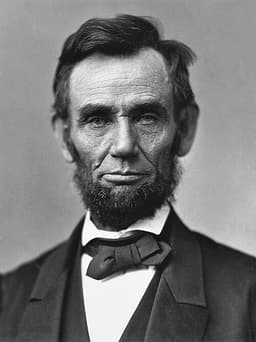
Abraham Lincoln
Politician · Modern
77.5Total
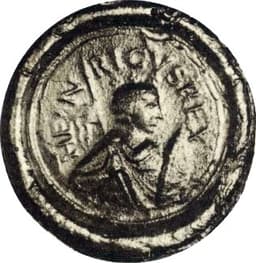
Henry the Fowler
Emperor · Medieval
60.9Total
Basic Information
Born
1809
876
Died
1865
936
Era
Modern
Medieval
Nationality
United States
East Francia
Occupation
Politician
Emperor
Civilization
Western
Western
Score Comparison
Military (10%)
50.0
70.0
Political (20%)
88.0
59.3
Influence (20%)
80.0
55.0
Legacy (20%)
82.0
52.0
Leadership (15%)
85.0
85.0
Strategy (15%)
60.0
55.0
TOTAL
77.5
60.9
Abraham Lincoln — Complete Timeline
1861 AD
Suspension of Habeas CorpusPolitical Action◆ Major
Lincoln suspended the writ of habeas corpus in parts of the Union, allowing the military to arrest and detain suspected Confederate sympathizers without trial. This action was controversial and challenged civil liberties during wartime.
Habeas CorpusCivil LibertiesCivil War
Impact: nationaldestructive
1862 AD
Signing of the Homestead ActPolitical Action◆ Major
Lincoln signed the Homestead Act, granting 160 acres of public land to settlers for a small fee. This encouraged westward expansion and agricultural development, but also displaced Native American tribes.
Homestead ActWestward ExpansionLand Policy
Impact: nationalconstructive
1863 AD
Emancipation ProclamationPolitical Action
Lincoln issued the Emancipation Proclamation, declaring slaves in Confederate states free. This shifted the Civil War's focus to ending slavery and allowed African Americans to join the Union Army.
EmancipationCivil WarSlavery
Impact: globalprogressive
Gettysburg AddressCultural◆ Major
Lincoln delivered the Gettysburg Address at the dedication of the Soldiers' National Cemetery. The speech redefined the Civil War as a struggle for national unity and equality, and became one of the most famous speeches in US history.
Gettysburg AddressCivil WarOratory
Impact: nationalconstructive
1865 AD
Assassination by John Wilkes BoothOther
Lincoln was shot by John Wilkes Booth at Ford's Theatre in Washington, D.C., and died the next day. His assassination occurred just days after the Civil War ended, plunging the nation into mourning and affecting Reconstruction.
AssassinationCivil WarReconstruction
Impact: nationaltragic
Henry the Fowler — Complete Timeline
919 AD
Election as King of East FranciaPolitical Action
Henry the Fowler was elected King of East Francia by the Saxon and Frankish nobles at Fritzlar on May 6, 919. He was the first Saxon king, marking the transition from Carolingian to Ottonian rule. His election was contested by other dukes but he prevailed.
ElectionAccessionOttonian Dynasty
Impact: regionalconstructive
921 AD
Treaty of Bonn (921)Political Action◆ Major
Henry the Fowler signed the Treaty of Bonn with Charles the Simple of West Francia, recognizing each other's royal titles and establishing peaceful relations. This treaty ended Carolingian claims over East Francia and solidified Henry's legitimacy as an independent king.
TreatyRecognitionDiplomacy
Impact: regionalconstructive
924 AD
Nine-Year Truce with the MagyarsPolitical Action◆ Major
Henry the Fowler negotiated a nine-year truce with the Magyars, agreeing to pay tribute in exchange for a halt to their raids. He used this period to fortify towns, reorganize the army, and train cavalry. This strategic pause was crucial for his later military reforms.
TruceMagyarsMilitary Reform
Impact: regionalconstructive
929 AD
Battle of Lenzen (929)War◆ Major
Henry the Fowler's forces defeated a Slavic army at the Battle of Lenzen, securing the eastern frontier of East Francia. This victory allowed Henry to consolidate control over the Elbe region and establish the March of Brandenburg, a key step in German eastward expansion.
BattleSlavic WarsEastern Expansion
Impact: regionalconstructive
933 AD
Battle of Riade (933)War
After the truce with the Magyars expired, Henry the Fowler led a German army to victory at the Battle of Riade (near Merseburg). The defeat of the Magyar cavalry ended their raids into East Francia for a generation and established Henry's reputation as a defender of Christendom.
BattleMagyarsVictory
Impact: regionalconstructive
936 AD
Death of Henry the FowlerOther◆ Major
Henry the Fowler died on July 2, 936, at Memleben. He was succeeded by his son, Otto I, who would become Holy Roman Emperor. Henry's reign laid the foundations for the Ottonian dynasty and the medieval German kingdom.
DeathSuccessionOttonian
Impact: regional
Expert Analysis
Henry the Fowler vs Abraham Lincoln
# The Unfinished and the Unyielding
On a raw spring evening in 1865, a single pistol shot in a Washington theater ended the life of a man who had held a fractured nation together. On a summer morning in 936, in the Saxon castle of Memleben, an aging king died in his bed, having forged a kingdom from the chaos of invasion and dynastic rivalry. Abraham Lincoln and Henry the Fowler never met, never corresponded, and governed worlds apart in time and temperament. Yet both faced the same fundamental challenge: how to build something lasting from the wreckage of division. The difference lies not in their goals, but in the tools they wielded, the eras that shaped them, and the brutal arithmetic of opportunity.
Origins
Lincoln was born in a one-room log cabin in Kentucky in 1809, the son of illiterate farmers. He read by firelight, taught himself law, and carried the dust of the frontier in his clothes. His America was young, restless, and convulsed by the question of slavery. Henry the Fowler was born in 876 into the ruling Liudolfing family of Saxony, a warrior aristocracy that had fought Vikings and Franks for generations. His world was older, smaller, and governed by blood and sword. Lincoln’s education came from books; Henry’s came from the saddle and the shield wall. One learned to argue; the other learned to command.
Rise to Power
Lincoln entered politics through the Illinois legislature, a lawyer skilled in compromise and oratory. His path to the presidency in 1860 was a miracle of timing and coalition-building, a minority president elected on a wave of sectional fury. Henry’s rise was more direct. In 919, the Saxon and Frankish nobles elected him King of East Francia at Fritzlar, not because he courted them, but because he was the strongest among them. He accepted the crown reluctantly, legend says, preferring to hunt. Where Lincoln maneuvered through conventions and debates, Henry simply outlasted and outmatched his rivals. The 19th century rewarded persuasion; the 10th demanded strength.
Leadership & Governance
Lincoln governed a constitutional republic in the middle of a civil war. He suspended habeas corpus in 1861, an act that still provokes debate, and issued the Emancipation Proclamation in 1863, transforming the war into a crusade for freedom. He signed the Homestead Act in 1862, opening the West to settlers, and delivered the Gettysburg Address that same year, redefining the nation’s purpose in 272 words. His political score of 88 reflects a master of coalition and meaning.
Henry governed a loose confederation of duchies threatened by Magyar raiders and Slavic tribes. He negotiated a nine-year truce with the Magyars in 924, paying tribute to buy time. Then he built fortified towns, trained a heavy cavalry, and when the truce expired, crushed the Magyars at the Battle of Riade in 933. He defeated the Slavs at the Battle of Lenzen in 929, securing his eastern frontier. His military score of 60.1 is modest, but his leadership score of 75.7 reflects a king who knew when to pay and when to fight. His political score of 74.5 shows a ruler who built a dynasty, not just a reign.
Triumph & Tragedy
Lincoln’s greatest triumph was the preservation of the Union and the abolition of slavery. His greatest tragedy was his assassination on April 15, 1865, just days after the Confederate surrender, at the hands of John Wilkes Booth. He never saw the peace he fought for. Henry’s greatest triumph was the Battle of Riade, which ended the Magyar terror for a generation. His tragedy was subtler: he died before he could be crowned emperor, leaving that ambition to his son Otto I, who would become Holy Roman Emperor. Lincoln’s death was a national trauma; Henry’s was a passing of the torch.
Character & Destiny
Lincoln was melancholy, introspective, and possessed of a moral clarity that grew sharper under pressure. He was a politician who became a prophet. Henry was pragmatic, patient, and ruthless when necessary. He was a warlord who became a statesman. Lincoln’s personality drove him to hold the Union together through words and will. Henry’s drove him to build a kingdom through patience and steel. One died with his work unfinished; the other died with his foundations laid. Their total scores—Lincoln’s 76.7, Henry’s 68.2—do not capture the difference in scale, but they do capture the difference in fortune.
Legacy
Lincoln is remembered as the Great Emancipator, his face carved into Mount Rushmore, his words recited in every schoolhouse. His legacy is the modern American nation, scarred but whole. Henry is remembered by historians as the founder of the Ottonian dynasty, the architect of the German kingdom, a figure of transition between the Carolingian collapse and the Holy Roman Empire. His legacy is less visible but no less real: the structure of medieval Germany, the defeat of the Magyars, the rise of Saxon power.
Conclusion
Lincoln and Henry never shared a century, but they shared a problem: how to hold a fractured people together. Lincoln did it with ink and oratory, Henry with iron and patience. One was killed before his work was done; the other died knowing his son would finish it. Both succeeded, and both paid the price. The difference between them is not one of greatness, but of circumstance. Lincoln lived in an age of nations and newspapers; Henry lived in an age of tribes and swords. Each used the tools they had. Each built what they could. And in the end, both left behind something that outlasted them: a Union, a kingdom, and a story that still shapes the world.
Rankings
🥇
Abraham LincolnLeader
Mil: 50.0Pol: 88.0Inf: 80.0
77.5
🥈
Henry the Fowler
Mil: 70.0Pol: 59.3Inf: 55.0
60.9
+16.6 behind
How This Comparison Works
Algorithm
Each figure is scored on 6 dimensions (0—100 scale) based on structured historical data: Military (10%), Political (20%), Influence (20%), Legacy (20%), Leadership (15%), Strategy (15%). The weighted total produces the final ranking.
Data Sources
Scores are computed from structured sub-indicators in the database. Scale factors adjust for era (Ancient ×0.85, Modern ×1.0) and civilization size (Eastern ×1.05, Other ×0.80) to account for differences in population and military scale.
Maximum 3 Figures
Comparisons are limited to 2—3 figures to ensure readability and statistical meaningfulness.
Error Margins
±5 points per dimension — Sub-scores are derived from historical records with inherent uncertainty. Two figures within 5 points on a dimension should be considered roughly equivalent in that area.
Total Score Accuracy
±3 points overall — The weighted combination of 6 dimensions produces a total score with approximately ±3 points of uncertainty. Differences of less than 3 points are not statistically significant— the figures are effectively tied.
Known Limitations
- Historical records are incomplete and uneven across civilizations
- Figures from oral-tradition societies may be underrepresented
- Occupation labels can misclassify multi-role figures
- Scores measure capability and impact, not moral character
- Quantitative scoring is a comparison tool, not absolute truth
Capability Radar
Military (10%) — Battles & Warfare
Battles
15
55
Win Rate
20
60
Expansion
0
60
Political (20%) — Governance & Reform
Reform
95
75
Diplomacy
80
70
Economy
70
65
Influence (20%) — Cultural & Global Reach
Cultural
85
55
Global
85
40
Legacy (20%) — Historical Impact
Historical
95
65
Longevity
90
60
Leadership (15%) — Power & Stability
Tenure
65
70
Stability
55
70
Strategy (15%) — Tactics & Innovation
Strategy
55
65
Tactics
10
50
Reform
60
70
Similar Comparisons
Comments & Discussion
LonesomeRailSplitter6/16/2026
Lincoln built a nation with words; Henry the Fowler built one with walls. The Emancipator’s genius was moral persuasion — the Gettysburg Address did more for unity than any treaty. Henry, meanwhile, founded the Ottonian dynasty by literally fortifying Saxon towns against Magyar raids. One man saved a republic through eloquence; the other forged a kingdom through earthworks. Different tools, same result: endurance.
血腥馒头6/16/2026
拿亨利和林肯比?简直是对历史的侮辱。林肯死在戏院,亨利死在床上,这说明什么?林肯是被自己人背叛的,而亨利是自己民族真正的王。亨利是日耳曼人的基石,没有他就没有神圣罗马帝国;林肯呢?他搞垮了美国一半的体制,留下的烂摊子到现在都没收拾干净。一个完人,一个半成品,就这么简单。
Acre&Amber6/16/2026
Both died unfinished: Lincoln at Ford’s Theatre in 1865, Henry in Memleben in 936. But Lincoln’s “unfinished work” was a moral crusade against chattel slavery; Henry’s was securing the Saxon east against pagan Magyars. Don’t conflate their contexts. One faced a Constitutional crisis in an industrializing republic; the other faced tribal collapse on a feudal frontier. Apples and broadswords.
远见狐疑6/16/2026
作为数据派,我得说这个比较根本不成立。林肯执政时美国人口三千万,工业产值世界前列;亨利接手的东法兰克王国不过百万人口,文盲率99%以上。林肯签署《解放宣言》只需要一支笔;亨利要在德意志森林里砍出领地,手里只有铁和血。怎么比?样本量差了两个数量级,控制变量全是空的。这是历史浪漫主义,不是分析。
DarkHorseHenry6/16/2026
Stop romanticizing the log cabin. Henry’s real power move wasn’t dying in bed — it was refusing the crown. He turned down kingship until the dukes forced it on him in 919, then crushed revolts from Swabia to Bavaria. Lincoln didn’t refuse anything; he ran for president twice. Henry used strategic humility to unite fractious nobles; Lincoln used political ambition backed by the railroad. Both effective, but Henry played the long game with fewer pieces.