Loading...
Abebe Aregai vs Suchinda Kraprayoon
Abebe Aregai leads by 21.1 pts · 2 figures compared
…
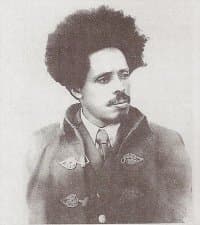
Abebe Aregai
General · Modern
58.2Total
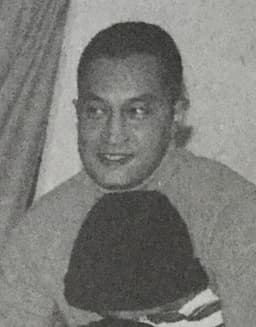
Suchinda Kraprayoon
General · Modern
37.1Total
Basic Information
Born
1903
1933
Died
1960
—
Era
Modern
Modern
Nationality
Ethiopia
Thailand
Occupation
General
General
Civilization
Other
Eastern
Score Comparison
Military (10%)
70.0
10.2
Political (20%)
53.8
27.9
Influence (20%)
62.0
47.1
Legacy (20%)
50.0
37.5
Leadership (15%)
62.0
45.0
Strategy (15%)
58.0
39.6
TOTAL
58.2
37.1
Abebe Aregai — Complete Timeline
1936 AD
Led Arbegnoch Resistance against Italian OccupationWar
After the Italian conquest, Abebe Aregai organized and led the Arbegnoch (Patriots) guerrilla resistance in Shewa. His forces harassed Italian supply lines and conducted hit-and-run attacks for five years.
ResistanceGuerrilla WarfareItalian Occupation
Impact: regionalconstructive
1957 AD
Appointed Prime Minister of EthiopiaPolitical Action◆ Major
Emperor Haile Selassie appointed Abebe Aregai as Prime Minister of Ethiopia. He served until his death in 1960, overseeing post-war reconstruction and modernization efforts.
Prime MinisterGovernmentReconstruction
Impact: nationalconstructive
1960 AD
Killed during 1960 Coup AttemptPolitical Action◆ Major
Abebe Aregai was assassinated during an attempted coup d'
CoupAssassinationEthiopia
Impact: nationaltragic
Suchinda Kraprayoon — Complete Timeline
1991 AD
Leadership of the 1991 Thai Coup d'ÉtatPolitical Action◆ Major
General Suchinda Kraprayoon led the National Peace Keeping Council in a bloodless coup that overthrew Prime Minister Chatichai Choonhavan. The coup was justified by claims of corruption and political instability, establishing a military junta.
CoupMilitary JuntaPower Seizure
Impact: nationaldestructive
1992 AD
Appointment as Prime MinisterPolitical Action◆ Major
After a general election, Suchinda was appointed Prime Minister despite not being an elected MP. His appointment sparked widespread protests, as it was seen as a continuation of military rule and a violation of democratic principles.
Prime MinisterControversyMilitary Rule
Impact: nationaldestructive
Black May 1992 Uprising and ResignationPolitical Action
Massive pro-democracy protests in Bangkok, led by Chamlong Srimuang, demanded Suchinda's resignation. The military crackdown resulted in dozens of deaths. King Bhumibol intervened, leading to Suchinda's resignation and the restoration of civilian government.
UprisingBlack MayResignation
Impact: nationaltragic
Expert Analysis
Abebe Aregai vs Suchinda Kraprayoon
### The General and the Patriot: Two Paths from the Barracks to Power
On a sweltering May morning in 1992, Bangkok’s streets filled with hundreds of thousands of protesters, their voices rising against a man who had seized power without ever winning a single vote. Twenty-six years earlier and half a world away, another general faced a far more brutal end: Abebe Aregai, Prime Minister of Ethiopia, was gunned down in his office by mutinous soldiers, dying for a regime he had spent decades defending. Both men were generals. Both became prime ministers. Yet one is remembered as a patriot, the other as a symbol of tyranny. What drove them down such different paths?
### Origins
Abebe Aregai was born in 1903 in the highlands of Shewa, Ethiopia, a land that had never been colonized, yet one that faced existential threats from European powers. He came of age in a feudal empire where loyalty to the emperor was sacred, and where military service was a path to honor. The Italian invasion of 1935 shattered his world, but it also forged his destiny. Forced to choose between submission and resistance, he chose the latter, leading a guerrilla campaign that would define his life.
Suchinda Kraprayoon, born in 1933, grew up in a Thailand that had never been colonized either, but which was deeply entangled in Cold War politics. The military was the backbone of Thai society, and for ambitious young men, it offered the surest route to power. Suchinda entered the army during the era of Field Marshal Sarit Thanarat, a dictator who fused nationalism, monarchy, and military rule into a single, unchallengeable ideology. For Suchinda, the barracks were not a place of sacrifice but of opportunity.
### Rise to Power
Abebe’s rise was forged in fire. After Emperor Haile Selassie fled the Italian invasion in 1936, Abebe gathered a ragtag force of peasants and former soldiers in the mountains of Shewa. For five years, he waged a relentless guerrilla war, ambushing Italian convoys, cutting supply lines, and refusing to surrender even when the enemy offered amnesty. His men called him *“the Lion of Shewa.”* When the British and Ethiopian forces liberated the country in 1941, Abebe emerged as a national hero, his reputation untarnished by compromise.
Suchinda’s path was quieter but no less calculated. He rose through the ranks of the Thai army, serving in the elite special forces and building alliances with powerful patrons. In 1991, he saw his moment. Thailand was mired in political corruption and economic uncertainty. Suchinda, as leader of the National Peace Keeping Council, orchestrated a bloodless coup, overthrowing the elected government. The coup was swift and efficient; the public, weary of chaos, initially accepted it. But Suchinda’s ambition did not end with toppling a government. He wanted to rule it.
### Leadership & Governance
Abebe Aregai governed as a servant of the emperor, not as a dictator. Appointed Prime Minister in 1957, he focused on rebuilding Ethiopia’s infrastructure, modernizing its army, and maintaining stability in a nation of diverse ethnicities and religions. His leadership style was cautious and consensus-driven. He did not seek personal glory; he saw himself as a steward of the throne. When the Imperial Bodyguard attempted a coup in 1960, Abebe did not flee or negotiate. He walked into the room where the rebels held his colleagues, hoping to reason with them. They shot him dead.
Suchinda’s governance was the opposite. After the 1991 coup, he engineered a general election, but when the results produced a prime minister he disliked, he simply appointed himself. His government was a military junta in civilian clothes, and his legitimacy rested on bayonets. He ignored calls for democratic reform and cracked down on dissent. The economy, meanwhile, stagnated under his heavy-handed management. Where Abebe had built bridges, Suchinda built walls.
### Triumph & Tragedy
Abebe’s greatest triumph was his resistance against the Italians. He proved that a guerrilla army, poorly equipped but fiercely motivated, could humiliate a modern European power. His tragedy was that he died defending a regime that would, within a decade, be overthrown by its own people. The 1960 coup attempt failed, but it foreshadowed the revolution that would topple Haile Selassie in 1974. Abebe’s loyalty was absolute, but it was loyalty to a fading order.
Suchinda’s triumph was brief: he seized power with minimal bloodshed. His tragedy was the Black May uprising of 1992. When pro-democracy protests swelled, he ordered the military to open fire. Dozens were killed, hundreds wounded, and the world watched in horror. The king eventually intervened, and Suchinda resigned in disgrace. His name became synonymous with repression.
### Character & Destiny
Abebe was shaped by a culture of honor and duty. He believed in hierarchy and loyalty, but he also believed in service. His decisions were driven by a moral compass forged in war: you do not abandon your country, and you do not betray your emperor. That compass led him to his death, but it also earned him a place in Ethiopian history as a martyr.
Suchinda was shaped by a culture of pragmatism and power. He saw politics as a game of control, not of principles. His decisions were driven by ambition and a belief that order mattered more than freedom. That belief led him to crush dissent, and ultimately, to fall from power with no legacy but shame.
### Legacy
Abebe Aregai is remembered in Ethiopia as a patriot and a martyr. His face appears on currency, his name adorns streets and schools. He is studied as a model of guerrilla leadership and as a symbol of resistance against colonialism. His legacy is complicated by his association with an imperial regime, but his personal integrity remains unchallenged.
Suchinda Kraprayoon is remembered, if at all, as a cautionary tale. In Thailand, his name evokes the dark days of military dictatorship. Historians cite him as an example of how quickly a general can lose legitimacy when he confuses power with authority. His legacy is a warning, not an inspiration.
### Conclusion
Two generals, two prime ministers, two fates. Abebe Aregai died with his boots on, fighting for a cause he believed in, his reputation intact. Suchinda Kraprayoon left power alive but diminished, his name forever linked to the blood of protesters. The difference between them was not skill or ambition—it was purpose. Abebe served something larger than himself; Suchinda served only himself. In the end, history judges not by the power one seizes, but by the cause one serves.
Rankings
🥇
Abebe AregaiLeader
Mil: 70.0Pol: 53.8Inf: 62.0
58.2
🥈
Suchinda Kraprayoon
Mil: 10.2Pol: 27.9Inf: 47.1
37.1
+21.1 behind
How This Comparison Works
Algorithm
Each figure is scored on 6 dimensions (0—100 scale) based on structured historical data: Military (10%), Political (20%), Influence (20%), Legacy (20%), Leadership (15%), Strategy (15%). The weighted total produces the final ranking.
Data Sources
Scores are computed from structured sub-indicators in the database. Scale factors adjust for era (Ancient ×0.85, Modern ×1.0) and civilization size (Eastern ×1.05, Other ×0.80) to account for differences in population and military scale.
Maximum 3 Figures
Comparisons are limited to 2—3 figures to ensure readability and statistical meaningfulness.
Error Margins
±5 points per dimension — Sub-scores are derived from historical records with inherent uncertainty. Two figures within 5 points on a dimension should be considered roughly equivalent in that area.
Total Score Accuracy
±3 points overall — The weighted combination of 6 dimensions produces a total score with approximately ±3 points of uncertainty. Differences of less than 3 points are not statistically significant— the figures are effectively tied.
Known Limitations
- Historical records are incomplete and uneven across civilizations
- Figures from oral-tradition societies may be underrepresented
- Occupation labels can misclassify multi-role figures
- Scores measure capability and impact, not moral character
- Quantitative scoring is a comparison tool, not absolute truth
Capability Radar
Military (10%) — Battles & Warfare
Battles
65
5
Win Rate
60
5
Expansion
40
5
Political (20%) — Governance & Reform
Reform
45
5
Diplomacy
60
10
Economy
40
5
Influence (20%) — Cultural & Global Reach
Cultural
45
5
Global
35
5
Legacy (20%) — Historical Impact
Historical
55
10
Longevity
40
5
Leadership (15%) — Power & Stability
Tenure
55
10
Stability
50
5
Strategy (15%) — Tactics & Innovation
Strategy
75
10
Tactics
70
10
Reform
50
5
Similar Comparisons
Comments & Discussion
"General's Reckoning"6/16/2026
Comparing Abebe Aregai to Suchinda Kraprayoon is like equating a lion with a hyena. Aregai was a genuine guerrilla hero who led resistance against Mussolini's fascist occupation in the 1930s, earning his place as a national icon. Suchinda, by contrast, never faced a foreign invader—only his own people. He ordered troops to fire on unarmed protesters during Black May 1992, leaving dozens dead. One died defending sovereignty; the other died disgraced in a golf cart. Context matters.
"数据老顽童"6/16/2026
这种对比简直离谱。阿贝贝·阿雷盖伊从1935年开始打游击抗意军,1941年带着2万游击队和英军一起光复亚的斯亚贝巴,战功明明白白。素金达呢?1991年政变上台,1992年就镇压示威,逼得国王出面才下台。一个是打了六年仗的实战英雄,一个是靠政变上台的政客将军,拿寿命长短当可比点?数据不会撒谎:阿雷盖伊54岁为国捐躯,素金达活到87岁在富足中老死。
"Epigraphy Enthusiast"6/16/2026
Let's talk historical reception. In Ethiopia, Abebe Aregai's name adorns schools, streets, and monuments—he's celebrated annually on Patriot's Day. Suchinda Kraprayoon? In Bangkok, nobody named a noodle stall after him, let alone a boulevard. One is a founding pillar of modern Ethiopian nationalism; the other is a cautionary footnote in Thai democratization. The monuments don't lie: Aregai shaped identity, Suchinda just shaped traffic jams during protests.
"冷眼史学"6/16/2026
别被爱国叙事骗了。阿贝贝·阿雷盖伊效忠的是海尔·塞拉西的封建帝国,1974年死于兵变并非偶然——他镇压过学生运动,是旧制度的死忠打手。素金达的确是个军事独裁者,但泰国1992年民主化后相对平稳转型。你非要分高下的话:同样是手握权力的将军,阿雷盖伊用三年游击战换一辈子奴性服从,素金达用一年压迫换二十年政治死亡。谁更可悲?
"Medal on the Left"6/16/2026
As a left-leaning historian, I see this as a classic class versus nation trap. Aregai fought Italian colonialism—admirable—but his postwar politics crushed land reform and silenced peasants. Suchinda represented the Bangkok elite's fear of democracy. One was a patriot for the empire, the other a tyrant for the oligarchy. Neither served the common soldier or citizen. Pick your poison: feudal loyalty or coup-happy generalship? I'd rather the