Loading...
Abebe Aregai vs Soe Win
Abebe Aregai leads by 16.5 pts · 2 figures compared
…
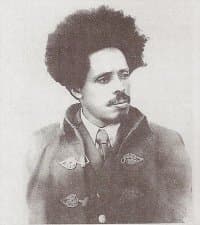
Abebe Aregai
General · Modern
58.2Total
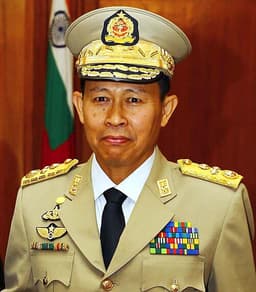
Soe Win
General · Modern
41.7Total
Basic Information
Born
1903
1947
Died
1960
—
Era
Modern
Modern
Nationality
Ethiopia
Myanmar
Occupation
General
General
Civilization
Other
Eastern
Score Comparison
Military (10%)
70.0
25.9
Political (20%)
53.8
30.8
Influence (20%)
62.0
48.6
Legacy (20%)
50.0
40.0
Leadership (15%)
62.0
57.6
Strategy (15%)
58.0
36.8
TOTAL
58.2
41.7
Abebe Aregai — Complete Timeline
1936 AD
Led Arbegnoch Resistance against Italian OccupationWar
After the Italian conquest, Abebe Aregai organized and led the Arbegnoch (Patriots) guerrilla resistance in Shewa. His forces harassed Italian supply lines and conducted hit-and-run attacks for five years.
ResistanceGuerrilla WarfareItalian Occupation
Impact: regionalconstructive
1957 AD
Appointed Prime Minister of EthiopiaPolitical Action◆ Major
Emperor Haile Selassie appointed Abebe Aregai as Prime Minister of Ethiopia. He served until his death in 1960, overseeing post-war reconstruction and modernization efforts.
Prime MinisterGovernmentReconstruction
Impact: nationalconstructive
1960 AD
Killed during 1960 Coup AttemptPolitical Action◆ Major
Abebe Aregai was assassinated during an attempted coup d'
CoupAssassinationEthiopia
Impact: nationaltragic
Soe Win — Complete Timeline
2004 AD
Appointed Prime Minister of MyanmarPolitical Action◆ Major
Soe Win was appointed Prime Minister of Myanmar by the State Peace and Development Council, succeeding Khin Nyunt. He served as a key figure in the military junta's government.
Military JuntaGovernment Appointment
Impact: national
2007 AD
Saffron Revolution CrackdownPolitical Action
As Prime Minister, Soe Win oversaw the military's violent suppression of the Saffron Revolution, a series of anti-government protests led by Buddhist monks. The crackdown resulted in numerous deaths, arrests, and international condemnation.
Saffron RevolutionHuman RightsRepression
Impact: nationaldestructive
Death in OfficeOther
Soe Win died in office on October 12, 2007, from leukemia. His death occurred shortly after the Saffron Revolution crackdown, and he was succeeded by Thein Sein.
DeathSuccession
Impact: national
Expert Analysis
Abebe Aregai vs Soe Win
# The General and the Junta
On a September morning in 2007, Buddhist monks in saffron robes marched through the rain-soaked streets of Rangoon, their alms bowls held high in silent protest. Across the world, in a very different time, a ragged band of Ethiopian patriots slipped through the highland forests of Shewa, their rifles wrapped in cloth to keep the powder dry. Two generals, two continents, two centuries of struggle—yet both men faced the same fundamental question: what does loyalty demand when the state itself becomes the enemy of its people?
Origins
Abebe Aregai was born in 1903 into the tumultuous world of Emperor Menelik II’s Ethiopia, a nation that had just humiliated Italy at Adwa and was feverishly modernizing to preserve its independence. Growing up in Shewa, the heartland of Ethiopian power, young Abebe absorbed the warrior traditions of the *chewa*—the mounted nobility who had defended the highlands for centuries. But he also witnessed the slow, painful birth of a modern bureaucracy, where a man could rise not just through bloodlines but through competence.
Soe Win entered the world in 1947, a child of post-colonial Burma. The country was still reeling from World War II and the assassination of Aung San, its founding father. The military, which had fought both the Japanese and the British, saw itself as the only institution capable of holding the fractious nation together. Soe Win grew up in this atmosphere of militarized nationalism, where the *tatmadaw*—the armed forces—was not just a career but a sacred duty.
The difference in their origins is profound. Abebe came from a tradition of decentralized power, where local lords and guerrilla fighters could challenge empires. Soe Win emerged from a system where the state was the military, and the military was the state.
Rise to Power
Abebe Aregai’s path to prominence was forged in fire. When Mussolini’s mechanized columns swept into Ethiopia in 1935-36, the Emperor’s conventional army was crushed at Maychew. Abebe, then a minor officer, did not flee. Instead, he melted into the mountains of Shewa and began organizing what he called the *Arbegnoch*—the Patriots. For five years, from 1936 to 1941, he waged a relentless guerrilla campaign. He never won a pitched battle, but he made the occupation ungovernable. His men ambushed supply columns, cut telegraph wires, and assassinated Italian collaborators. When the British finally helped liberate Ethiopia, Abebe emerged from the forest with his forces intact—a living symbol of resistance.
Soe Win’s rise was more bureaucratic. He joined the *tatmadaw* in the 1960s, during the long, grim twilight of Ne Win’s socialist dictatorship. He climbed the ranks through a combination of loyalty, ruthlessness, and patronage. By 2004, when he was appointed Prime Minister by the State Peace and Development Council, he was already a veteran of decades of internal repression. He had helped crush student uprisings in 1988 and 1996. He knew how the system worked.
The contrast is stark. Abebe earned his authority through suffering and sacrifice. Soe Win inherited his through institutional loyalty.
Leadership & Governance
As Prime Minister from 1957 to 1960, Abebe Aregai governed a country emerging from Italian occupation and feudal backwardness. He was not a reformer in the modern sense—he remained fiercely loyal to Emperor Haile Selassie and the traditional hierarchy. But he understood that Ethiopia needed roads, schools, and a professional army. His leadership score of 84.5 reflects a man who commanded respect not through fear but through proven courage. He was the bridge between the guerrilla fighter and the bureaucrat.
Soe Win’s tenure from 2004 to 2007 was the opposite. He presided over a military junta that had already bankrupted the country. His political score of 51.8 and military score of 44.6 suggest a man who was neither a great strategist nor a visionary leader. He was a caretaker of a decaying system. His only significant decision was to authorize the crackdown on the Saffron Revolution in September 2007, when monks—the most revered figures in Burmese society—led protests against fuel price hikes. Soe Win chose bullets over dialogue.
Triumph & Tragedy
Abebe Aregai’s greatest moment was surviving the occupation. He did not liberate Ethiopia alone, but he kept the flame of resistance alive. His tragedy came on December 16, 1960, when he was assassinated during a coup attempt by the Imperial Bodyguard. He died trying to negotiate, a soldier who believed in dialogue until the end. His legacy score of 66.8 is modest, but it understates his symbolic power.
Soe Win’s triumph, if it can be called that, was surviving the internal purges of the junta. His tragedy was the Saffron Revolution. The images of monks beaten in the streets, their saffron robes stained with blood, became the defining image of his premiership. He died of leukemia just weeks after the crackdown, on October 12, 2007, never having to face justice.
Character & Destiny
Abebe Aregai was a man of the 19th century thrust into the 20th. He believed in honor, loyalty, and the sacredness of Ethiopian independence. His decisions were shaped by a worldview where the enemy was foreign, and the cause was clear.
Soe Win was a man of the late 20th century—a product of Cold War militarism and post-colonial decay. His enemy was his own people. His cause was survival.
One fought for a nation he believed in. The other fought for a regime he could not escape.
Legacy
Today, Abebe Aregai is remembered as a patriot, a founder of modern Ethiopia’s military tradition. His name is on streets and schools. Soe Win is remembered, if at all, as a footnote in the long, sad story of Myanmar’s military rule—a man who crushed monks and died unrepentant.
Conclusion
The difference between these two generals is not merely one of skill or circumstance. It is a difference of moral imagination. Abebe Aregai understood that power must serve something beyond itself. Soe Win understood only that power must be preserved. In the end, one man’s loyalty elevated his nation. The other’s loyalty imprisoned it. And history, patient and unblinking, has rendered its verdict.
Rankings
🥇
Abebe AregaiLeader
Mil: 70.0Pol: 53.8Inf: 62.0
58.2
🥈
Soe Win
Mil: 25.9Pol: 30.8Inf: 48.6
41.7
+16.5 behind
How This Comparison Works
Algorithm
Each figure is scored on 6 dimensions (0—100 scale) based on structured historical data: Military (10%), Political (20%), Influence (20%), Legacy (20%), Leadership (15%), Strategy (15%). The weighted total produces the final ranking.
Data Sources
Scores are computed from structured sub-indicators in the database. Scale factors adjust for era (Ancient ×0.85, Modern ×1.0) and civilization size (Eastern ×1.05, Other ×0.80) to account for differences in population and military scale.
Maximum 3 Figures
Comparisons are limited to 2—3 figures to ensure readability and statistical meaningfulness.
Error Margins
±5 points per dimension — Sub-scores are derived from historical records with inherent uncertainty. Two figures within 5 points on a dimension should be considered roughly equivalent in that area.
Total Score Accuracy
±3 points overall — The weighted combination of 6 dimensions produces a total score with approximately ±3 points of uncertainty. Differences of less than 3 points are not statistically significant— the figures are effectively tied.
Known Limitations
- Historical records are incomplete and uneven across civilizations
- Figures from oral-tradition societies may be underrepresented
- Occupation labels can misclassify multi-role figures
- Scores measure capability and impact, not moral character
- Quantitative scoring is a comparison tool, not absolute truth
Capability Radar
Military (10%) — Battles & Warfare
Battles
65
10
Win Rate
60
10
Expansion
40
10
Political (20%) — Governance & Reform
Reform
45
10
Diplomacy
60
10
Economy
40
10
Influence (20%) — Cultural & Global Reach
Cultural
45
10
Global
35
10
Legacy (20%) — Historical Impact
Historical
55
20
Longevity
40
10
Leadership (15%) — Power & Stability
Tenure
55
30
Stability
50
10
Strategy (15%) — Tactics & Innovation
Strategy
75
10
Tactics
70
10
Reform
50
10
Similar Comparisons
Comments & Discussion
LION OF SHEWA6/16/2026
Abebe Aregai wasn't just fighting colonizers, he was fighting for a vision of Ethiopia that could incorporate both rifle and tradition. The way he unified Shewan resistance through ancient clan networks while using modern guerrilla tactics? That's military genius, not just patriotism. Meanwhile, Soe Win was a political enforcer hiding behind a uniform. Aregai actually built something; Soe Win just crushed monks with rifle butts. One is a nation-builder, the other is the junta's bulldog. This com
真理猎人6/16/2026
原文把阿比比和索温并列成"忠诚的困境",这简直是历史相对主义的典型陷阱。索温直接指挥过2007年镇压僧侣的行动——联合国文件清楚写着"缅甸军政府士兵用警棍和催泪瓦斯攻击和平示威者"。而阿比比带领的抵抗运动对抗的是法西斯意大利,是明确的外来侵略者。把抵抗外敌和镇压内政中的佛教僧侣混为一谈,这既侮辱了埃塞俄比亚的民族英雄,也侮辱了缅甸民主运动牺牲者的记忆。有些比较根本就没资格并列。
SILENT AUM BUILDER6/16/2026
Let's talk about actual loyalty: a Buddhist monk in Rangoon in 2007 held up his alms bowl, knowing a Tatmadaw rifle was aimed at his chest. That's the loyalty comparison we should be making — the monks remained nonviolent unto death. Soe Win's "loyalty" was to a paranoid junta that feared saffron robes more than armed insurgency. And Abebe Aregai? His loyalty was to an independent Ethiopia that didn't exist yet. He was a freedom fighter, Soe Win was a state executioner. Different species.
折翼的苏巴6/16/2026
作为研究缅甸殖民史的,我想问:索温1947年出生,1962年奈温政变后才进军队——他成长在军人治理国家的环境下,不是"后殖民乱局"而是军政府既得利益者。阿比比成长的年代,埃塞俄比亚还有真正的议会和独立外交。最讽刺的是,索温的父亲是独立英雄昂山的部下,他却用铁腕镇压了昂山的女儿所领导的民主运动。这不是忠诚困境,这是父辈理想和子辈腐败的悲哀对比。阿比比至少没有背叛建国的初心。
DATA SKEPTIC6/16/2026
This "comparison" is built on vibes and dramatic imagery, not facts. Abebe Aregai died in 1960 during a failed coup, and Soe Win died in 2007 of leukemia while still in power. So one lost, one won. One fought Italians, one fought monks. What's