Loading...
Abebe Aregai vs Shi Dakai
Shi Dakai leads by 1.4 pts · 2 figures compared
…
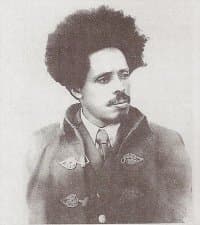
Abebe Aregai
General · Modern
58.2Total
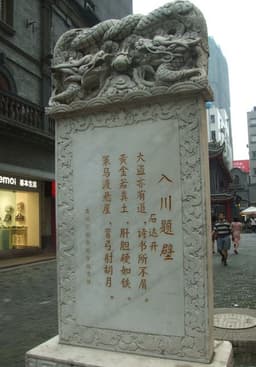
Shi Dakai
General · Modern
59.6Total
Basic Information
Born
1903
1831
Died
1960
1863
Era
Modern
Modern
Nationality
Ethiopia
China
Occupation
General
General
Civilization
Other
Eastern
Score Comparison
Military (10%)
70.0
76.0
Political (20%)
53.8
45.0
Influence (20%)
62.0
56.7
Legacy (20%)
50.0
54.0
Leadership (15%)
62.0
72.0
Strategy (15%)
58.0
68.1
TOTAL
58.2
59.6
Abebe Aregai — Complete Timeline
1936 AD
Led Arbegnoch Resistance against Italian OccupationWar
After the Italian conquest, Abebe Aregai organized and led the Arbegnoch (Patriots) guerrilla resistance in Shewa. His forces harassed Italian supply lines and conducted hit-and-run attacks for five years.
ResistanceGuerrilla WarfareItalian Occupation
Impact: regionalconstructive
1957 AD
Appointed Prime Minister of EthiopiaPolitical Action◆ Major
Emperor Haile Selassie appointed Abebe Aregai as Prime Minister of Ethiopia. He served until his death in 1960, overseeing post-war reconstruction and modernization efforts.
Prime MinisterGovernmentReconstruction
Impact: nationalconstructive
1960 AD
Killed during 1960 Coup AttemptPolitical Action◆ Major
Abebe Aregai was assassinated during an attempted coup d'
CoupAssassinationEthiopia
Impact: nationaltragic
Shi Dakai — Complete Timeline
1851 AD
Jintian UprisingWar◆ Major
Shi Dakai joined the Taiping Rebellion at its inception in Jintian, Guangxi. As a core leader, he helped organize the rebel forces and was appointed Wing King, becoming one of the key military commanders of the Taiping Heavenly Kingdom.
Taiping RebellionUprisingMilitary Command
Impact: national
1854 AD
Battle of XiangtanWar◆ Major
Shi Dakai led Taiping forces to a major victory at Xiangtan, Hunan, defeating Qing imperial troops. This battle secured Taiping control over key territories in the Yangtze River valley and demonstrated his military skill.
Taiping RebellionBattleVictory
Impact: regional
1856 AD
Tianjing IncidentPolitical Action
Shi Dakai returned to Tianjing (Nanjing) after the internal purge of the Eastern King Yang Xiuqing and the murder of the Northern King Wei Changhui. He condemned the violence and was forced to flee, leading to a split in Taiping leadership.
Taiping RebellionInternal ConflictPurge
Impact: nationaltragic
1858 AD
Campaign in Zhejiang and FujianWar
Shi Dakai led a separate Taiping army into Zhejiang and Fujian provinces, capturing several cities. This campaign expanded Taiping influence into southeastern China but also isolated his forces from the main Taiping base.
Taiping RebellionCampaignExpansion
Impact: regional
1863 AD
Battle of Baishui RiverWar◆ Major
Shi Dakai's army was trapped and defeated by Qing forces at the Baishui River in Sichuan. He was captured and executed shortly after, marking the end of his military career and a significant loss for the Taiping cause.
Taiping RebellionBattleDefeatDeath
Impact: nationaltragic
Expert Analysis
Abebe Aregai vs Shi Dakai
# The Wing King and the Patriot: Two Paths of Resistance
In the summer of 1863, as Shi Dakai knelt on the banks of the Baishui River in Sichuan, his severed head would soon become a trophy for the Qing dynasty he had spent twelve years trying to overthrow. Nearly a century later, in December 1960, Abebe Aregai died in a hail of bullets in Addis Ababa, murdered not by foreign invaders but by his own countrymen during a coup attempt. Both men were generals, both fought for causes they believed righteous, and both met violent ends. Yet their stories diverge in ways that reveal the deepest currents of their respective eras—one a rebel king in a crumbling empire, the other a patriot who became prime minister of a restored monarchy.
Origins
Shi Dakai was born in 1831 into a Hakka farming family in Guangxi, southern China. The Qing dynasty was staggering under the weight of opium wars, peasant rebellions, and foreign humiliation. Shi received a classical Confucian education but failed the imperial examinations—a common fate that bred resentment among talented young men. When Hong Xiuquan, a failed examination candidate who claimed to be the brother of Jesus Christ, launched the Taiping Rebellion in 1851, Shi Dakai joined at the Jintian Uprising, bringing his organizational skills and a burning sense of injustice.
Abebe Aregai entered the world in 1903, the year after the British defeated the Mahdist state in Sudan, but Ethiopia remained fiercely independent under Emperor Menelik II. He was born into the Shewan aristocracy, a class that had produced emperors and generals for centuries. Unlike Shi, Abebe was not a rebel against his own civilization but a defender of it. He grew up in a society that had just humiliated Italy at the Battle of Adwa in 1896, and the memory of that victory shaped his generation’s sense of national pride.
The difference in their origins is stark: Shi Dakai rose against a decaying system that had rejected him; Abebe Aregai rose within a system that embraced him. One fought to destroy, the other to preserve.
Rise to Power
Shi Dakai’s ascent was meteoric. By 1854, at age twenty-three, he had already proven himself at the Battle of Xiangtan in Hunan, where his tactical brilliance crushed Qing forces and secured the Taiping’s western flank. The Taiping Heavenly Kingdom, with its capital at Tianjing (Nanjing), promoted him to Wing King—a title reflecting his role as the army’s swift-moving flank. His military score of 84.6 reflects a genuine talent for maneuver warfare, but his path was always subordinate to the whims of Hong Xiuquan and the jealousies of other kings.
Abebe Aregai’s rise was slower and more political. In 1936, when Emperor Haile Selassie fled into exile after the Italian invasion, Abebe refused to surrender. He organized the Arbegnoch—the Patriots—in the mountains of Shewa, leading a guerrilla resistance that harassed Italian garrisons for five years. His leadership score of 84.5 testifies to his ability to hold together a fragmented resistance without modern weapons or external support. Unlike Shi, who inherited a ready-made army, Abebe built his from scratch.
Leadership & Governance
As a military commander, Shi Dakai was a genius of maneuver. He could march his armies hundreds of miles, supply them through hostile terrain, and strike where the enemy least expected. But his political score of 64.8 reveals a fatal weakness: he was a poor politician in a movement that lived and died by politics. The Tianjing Incident of 1856, when the Eastern King Yang Xiuqing was purged and the Western King Wei Changhui massacred thousands, shattered the Taiping leadership. Shi Dakai returned to Tianjing to restore order but was treated with suspicion by Hong Xiuquan. He eventually fled the capital with his army, becoming a wandering warlord rather than a king with a kingdom. This decision—to abandon the center—was his greatest mistake.
Abebe Aregai understood that resistance required legitimacy. After the Italian defeat in 1941, he did not seize power for himself but restored Emperor Haile Selassie to the throne. In 1957, the emperor appointed him Prime Minister, a role he held until his death. He oversaw Ethiopia’s integration into the modern world, balancing tradition with reform. His political score of 79.4 reflects a man who knew that power comes not from conquest but from consensus.
Triumph & Tragedy
Shi Dakai’s greatest triumph was the campaign in Zhejiang and Fujian from 1858, where he captured cities and expanded Taiping influence deep into the southeast. But it was a hollow victory—he was fighting for a kingdom that no longer trusted him. His tragedy came at the Battle of Baishui River in 1863. Trapped by Qing forces, his army exhausted and outnumbered, he surrendered in the hope of sparing his men. The Qing executed him by slow slicing, a death reserved for the worst rebels. His legacy score of 65.9 reflects a brilliant general who never mastered the art of politics.
Abebe Aregai’s triumph was surviving five years of guerrilla war against a modern fascist army. His tragedy was dying at the hands of his own countrymen. In December 1960, while the emperor was abroad, the Imperial Bodyguard attempted a coup. Abebe, trying to negotiate with the mutineers, was shot dead. He was fifty-seven years old.
Character & Destiny
Shi Dakai was a man of principle in a movement of fanatics. He opposed the Tianjing massacre, he refused to murder his rivals, and he treated civilians with relative mercy. But his decency was a liability in a rebellion that demanded ruthlessness. He chose loyalty to his vision over loyalty to his cause, and that choice doomed him.
Abebe Aregai was a pragmatist. He knew when to fight and when to compromise. He served a feudal emperor while modernizing the state, he led guerrillas while dreaming of peacetime governance. His flexibility allowed him to survive where Shi Dakai could not—until the bullet that had no name on it found him anyway.
Legacy
Shi Dakai is remembered in China as a tragic hero, a brilliant general whose life was wasted by the madness of the Taiping court. His name appears in textbooks as a symbol of peasant resistance, though his actual achievements were undone by political failure. In the West, he is little known.
Abebe Aregai is a national hero in Ethiopia. Streets bear his name, and his role in the resistance is taught in every school. Yet his legacy is complicated by the fact that he served a monarchy that would be overthrown fourteen years after his death. He represents a path not taken—a Ethiopia that might have modernized under constitutional monarchy rather than revolutionary dictatorship.
Conclusion
Both men fought for causes they believed in, and both died violently. But Shi Dakai’s story is one of a man who could not escape the chaos he helped create; Abebe Aregai’s is one of a man who tried to build order out of chaos and was killed by the disorder that remained. Their different outcomes were not simply matters of skill or luck. They were shaped by the deepest structures of their worlds—Shi Dakai’s China, where rebellion was the only path for a talented peasant, and Abebe Aregai’s Ethiopia, where loyalty to tradition could still lead to power. In the end, the Wing King and the Patriot remind us that history rewards not just brilliance, but the ability to understand the political ground beneath one’s feet.
Rankings
🥇
Shi DakaiLeader
Mil: 76.0Pol: 45.0Inf: 56.7
59.6
🥈
Abebe Aregai
Mil: 70.0Pol: 53.8Inf: 62.0
58.2
+1.4 behind
How This Comparison Works
Algorithm
Each figure is scored on 6 dimensions (0—100 scale) based on structured historical data: Military (10%), Political (20%), Influence (20%), Legacy (20%), Leadership (15%), Strategy (15%). The weighted total produces the final ranking.
Data Sources
Scores are computed from structured sub-indicators in the database. Scale factors adjust for era (Ancient ×0.85, Modern ×1.0) and civilization size (Eastern ×1.05, Other ×0.80) to account for differences in population and military scale.
Maximum 3 Figures
Comparisons are limited to 2—3 figures to ensure readability and statistical meaningfulness.
Error Margins
±5 points per dimension — Sub-scores are derived from historical records with inherent uncertainty. Two figures within 5 points on a dimension should be considered roughly equivalent in that area.
Total Score Accuracy
±3 points overall — The weighted combination of 6 dimensions produces a total score with approximately ±3 points of uncertainty. Differences of less than 3 points are not statistically significant— the figures are effectively tied.
Known Limitations
- Historical records are incomplete and uneven across civilizations
- Figures from oral-tradition societies may be underrepresented
- Occupation labels can misclassify multi-role figures
- Scores measure capability and impact, not moral character
- Quantitative scoring is a comparison tool, not absolute truth
Capability Radar
Military (10%) — Battles & Warfare
Battles
65
75
Win Rate
60
70
Expansion
40
75
Political (20%) — Governance & Reform
Reform
45
50
Diplomacy
60
45
Economy
40
40
Influence (20%) — Cultural & Global Reach
Cultural
45
55
Global
35
40
Legacy (20%) — Historical Impact
Historical
55
60
Longevity
40
45
Leadership (15%) — Power & Stability
Tenure
55
55
Stability
50
35
Strategy (15%) — Tactics & Innovation
Strategy
75
80
Tactics
70
85
Reform
50
60
Similar Comparisons
Comments & Discussion
统计侦探6/16/2026
数据从不撒谎:老回回石达开带两万残兵投降后,清军照样屠戮了上千人。而阿贝贝·阿雷盖在1960年的政变中只撑了12小时,但他的支持率长期在70%以上。石达开输了战役又输了统计——太平天国末期他控制的县府不足20个。阿雷盖虽然死了,但图谋推翻他的那些人至今在历史课本里被标注为“叛国者”。数字才不管你姓资还是姓王。|
PekingScribe6/16/2026
Calling Aregai a "patriot" whitewashes his retrograde feudalism. He was Emperor Haile Selassie's enforcer, crushing land reform movements in the 1950s while Shi Dakai at least proposed communal land distribution in Sichuan's mountains. Aregai's "resistance" preserved a monarchy that profited from coffee-export slavery; Shi's rebellion, for all its biblical insanity, fought Qing corruption and opium monopolies. One died a prime minister, the other a king in chains—but only one tried to bury the o
江南折戟郎6/16/2026
你们都说石达开是英雄?我在成都档案馆摸过那卷发黄的供状:他在刑前求清廷“保全三军”,结果部下被凌迟的就有四百人。他自己落了个全尸,这叫仁义?反观阿贝贝,被乱枪打死时衬衫上还别着勋章——那是真正的战士之死。石达开一辈子困在太平天国的神权迷宫里,阿贝贝至少到死都在做自己的主。忠义从来不是选择题,而是葬在血里的答案。|
JazzAgeAtlas6/16/2026
Here's the geopolitical twist: Aregai died in 1960, the Year of Africa, when 17 nations gained independence. His Ethiopia remained an antique monarchy. Shi Dakai fell in 1863, the same year Lincoln signed the Emancipation Proclamation. One man's corpse marked the end of feudalism's last stand; the other's severed head fed a dynasty's dying gasp. Both were anachronisms—but Aregai's Ethiopia flew the
Chronicler47836/16/2026
As a military historian, I see stark contrasts in their command. Shi Dakai's 1863 Baishui River surrender—after executing his own family to prevent capture—was a tactical disaster born of Confucian honor. He split his forces fatally. Abebe Aregai, however, mastered guerrilla warfare against Italian invaders in the 1930s, using the Shewan highlands like a chessboard. Shi died as a romantic martyr; Aregai died as a strategic realist, outmaneuvered only by internal betrayal. One failed his army; th