Loading...
Abebe Aregai vs Prayut Chan-o-cha
Abebe Aregai leads by 10.1 pts · 2 figures compared
…
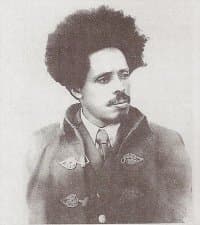
Abebe Aregai
General · Modern
58.2Total
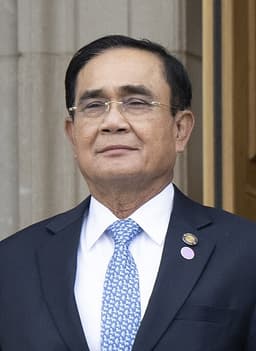
Prayut Chan-o-cha
General · Modern
48.1Total
Basic Information
Born
1903
1954
Died
1960
—
Era
Modern
Modern
Nationality
Ethiopia
Thailand
Occupation
General
General
Civilization
Other
Eastern
Score Comparison
Military (10%)
70.0
10.2
Political (20%)
53.8
68.0
Influence (20%)
62.0
51.8
Legacy (20%)
50.0
40.8
Leadership (15%)
62.0
68.0
Strategy (15%)
58.0
35.7
TOTAL
58.2
48.1
Abebe Aregai — Complete Timeline
1936 AD
Led Arbegnoch Resistance against Italian OccupationWar
After the Italian conquest, Abebe Aregai organized and led the Arbegnoch (Patriots) guerrilla resistance in Shewa. His forces harassed Italian supply lines and conducted hit-and-run attacks for five years.
ResistanceGuerrilla WarfareItalian Occupation
Impact: regionalconstructive
1957 AD
Appointed Prime Minister of EthiopiaPolitical Action◆ Major
Emperor Haile Selassie appointed Abebe Aregai as Prime Minister of Ethiopia. He served until his death in 1960, overseeing post-war reconstruction and modernization efforts.
Prime MinisterGovernmentReconstruction
Impact: nationalconstructive
1960 AD
Killed during 1960 Coup AttemptPolitical Action◆ Major
Abebe Aregai was assassinated during an attempted coup d'
CoupAssassinationEthiopia
Impact: nationaltragic
Prayut Chan-o-cha — Complete Timeline
2014 AD
Led the 2014 military coupPolitical Action
General Prayut Chan-o-cha, as Army Commander-in-Chief, led a coup d'
CoupMilitaryThailand
Impact: nationaldestructive
Appointed Prime Minister by military legislaturePolitical Action◆ Major
Following the coup, Prayut was appointed Prime Minister by the military-controlled National Legislative Assembly. He assumed executive power, leading a government that promised reforms and national reconciliation.
AppointmentMilitary RuleThailand
Impact: national
2017 AD
Promulgation of the 2017 ConstitutionReform◆ Major
Prayut's government oversaw the drafting and approval of a new constitution that strengthened the military's political role and created a fully appointed Senate. The charter was criticized for entrenching military influence.
ConstitutionMilitaryThailand
Impact: national
2019 AD
Re-elected Prime Minister after 2019 electionPolitical Action◆ Major
Prayut was re-elected Prime Minister following a general election that was criticized for being manipulated to favor pro-military parties. He formed a coalition government, continuing his rule under a civilian facade.
ElectionContinuityThailand
Impact: national
Expert Analysis
Abebe Aregai vs Prayut Chan-o-cha
# The General’s Dilemma: Two Paths to Power, Two Destinies
On a sweltering May morning in 2014, Prayut Chan-o-cha, a stern-faced Thai general in full dress uniform, stood before television cameras and announced that the military had seized control of the country. The coup was bloodless, efficient, and met with a strange mixture of relief and resignation from a populace weary of political chaos. Half a world away and seven decades earlier, another general named Abebe Aregai was leading a very different kind of struggle—a desperate guerrilla war against Italian invaders in the rugged highlands of Shewa, fighting for his nation’s survival with little more than outdated rifles and unyielding courage. Both men were generals who became prime ministers, but their journeys could not have been more different. What drove one to seize power and the other to serve a monarch? The answer lies not just in their characters, but in the eras that shaped them.
Origins
Prayut Chan-o-cha was born in 1954 in Nakhon Ratchasima, Thailand, a country that had never been colonized but had endured a long history of military interventions in politics. He grew up in a Thailand where the army was not just a protector of borders but a guardian of the nation’s soul, often stepping in when civilian governments faltered. His education at the Chulachomklao Royal Military Academy instilled in him a belief in hierarchy, order, and the military’s rightful place as the ultimate arbiter of stability.
Abebe Aregai, born in 1903 in the Ethiopian province of Shewa, came of age in a world where his country was one of the few African nations to resist European colonization. He was a product of Ethiopia’s feudal aristocracy, a society where loyalty to the Emperor was both a duty and a sacred bond. The early 20th century had already seen Ethiopia defeat an Italian invasion at Adwa in 1896, and the memory of that victory burned brightly in the national consciousness. Abebe was raised to be a warrior in the old tradition—not a technocrat, but a leader of men who could inspire devotion through personal bravery.
Rise to Power
Prayut’s ascent was methodical, almost bureaucratic. He rose through the ranks of the Thai army with quiet competence, commanding the elite 2nd Infantry Division and later becoming Army Commander-in-Chief in 2010. His turning point came not on a battlefield, but in the political chaos of 2013-2014, when mass protests paralyzed Bangkok. On May 22, 2014, he led a coup that overthrew the caretaker government, citing the need to restore order. The coup was a classic military takeover—swift, televised, and backed by the threat of force. Within months, a military-controlled legislature appointed him Prime Minister, a position he would hold for nearly a decade.
Abebe’s rise was forged in fire. When Italy invaded Ethiopia in 1935, he was a relatively obscure officer. But after Emperor Haile Selassie fled into exile in 1936, Abebe refused to surrender. He retreated to the mountains of Shewa and organized the Arbegnoch—the Patriots—a guerrilla force that harassed Italian garrisons for five long years. His tactics were brutal and effective: ambushes, sabotage, and a network of informants that made the Italian occupation a nightmare. By 1941, when British forces and the Emperor returned, Abebe had become a living legend, the symbol of Ethiopian resistance. In 1957, Haile Selassie appointed him Prime Minister, a reward for his loyalty and a recognition of his unassailable moral authority.
Leadership & Governance
Prayut ruled as a military strongman in civilian clothing. His style was paternalistic and authoritarian, wrapped in the language of “national reconciliation.” He oversaw the drafting of a 2017 constitution that entrenched military influence in Thai politics, ensuring that even after elections, the army would retain veto power. His economic policies were cautious, his social policies conservative, and his tolerance for dissent minimal. He was a manager, not a visionary—a general who saw governance as an extension of command, where orders were to be obeyed, not debated.
Abebe governed as a servant of the Emperor, not as a sovereign. As Prime Minister from 1957 until his death in 1960, he focused on modernization within the framework of Ethiopia’s ancient monarchy. He worked to rebuild the country after the war, balancing the demands of traditional nobles with the need for reform. His leadership was personal and charismatic, rooted in the respect he had earned through sacrifice. Where Prayut relied on institutional power, Abebe relied on moral authority. He was a politician in the old sense—a negotiator, a unifier, a man who understood that power without legitimacy was fragile.
Triumph & Tragedy
Prayut’s greatest moment was the 2019 election, where he managed to transform himself from coup leader to elected Prime Minister, albeit in a system rigged in his favor. It was a masterful piece of political engineering. His tragedy was that this victory felt hollow—a democracy by name, but not by substance. His legacy would be one of stability purchased at the cost of freedom, a nation that functioned but did not flourish.
Abebe’s triumph was the liberation of Ethiopia. His guerrilla war had kept the flame of resistance alive, and his name was synonymous with courage. His tragedy came in 1960, when a coup attempt by the Imperial Bodyguard erupted while he was trying to negotiate a peaceful resolution. He was shot and killed, a victim not of foreign enemies but of his own countrymen. He died as he had lived—in the service of the Emperor, trying to hold together a nation that was already fracturing.
Character & Destiny
Prayut was a creature of the modern era—pragmatic, cautious, and deeply institutional. He believed in order above all, and his decisions reflected a mind that saw politics as a problem to be managed, not a cause to be served. His destiny was to be a stabilizer, but also a brake on the democratic aspirations of his people.
Abebe was a figure from an older world—honor-bound, charismatic, and fatalistic. He believed in loyalty, sacrifice, and the sacredness of the nation. His destiny was to be a symbol, a man whose legend outgrew his life. Where Prayut’s power came from the barrel of a gun, Abebe’s came from the hearts of his people.
Legacy
Today, Prayut Chan-o-cha is remembered as a polarizing figure. To his supporters, he saved Thailand from chaos; to his critics, he crushed its democracy. His total score of 64.7 reflects a leader who was effective but not transformative, powerful but not beloved.
Abebe Aregai, with a total score of 72.7, is remembered as a hero of Ethiopian independence, a man who embodied the spirit of resistance. His legacy is not without controversy—some criticize his loyalty to a feudal monarchy—but his place in the national pantheon is secure.
Conclusion
The contrast between these two generals is a mirror of their times. Prayut inherited a stable, modern state and chose to preserve it through authoritarian means. Abebe inherited a nation under siege and chose to defend it through sacrifice. One seized power; the other earned it. One ruled through fear; the other through respect. Their stories remind us that the same uniform can clothe very different men, and that history judges not only by outcomes, but by the spirit in which power is wielded. In the end, the question is not whether a general should lead a nation, but what he is willing to sacrifice for it—and what he is willing to become.
Rankings
🥇
Abebe AregaiLeader
Mil: 70.0Pol: 53.8Inf: 62.0
58.2
🥈
Prayut Chan-o-cha
Mil: 10.2Pol: 68.0Inf: 51.8
48.1
+10.1 behind
How This Comparison Works
Algorithm
Each figure is scored on 6 dimensions (0—100 scale) based on structured historical data: Military (10%), Political (20%), Influence (20%), Legacy (20%), Leadership (15%), Strategy (15%). The weighted total produces the final ranking.
Data Sources
Scores are computed from structured sub-indicators in the database. Scale factors adjust for era (Ancient ×0.85, Modern ×1.0) and civilization size (Eastern ×1.05, Other ×0.80) to account for differences in population and military scale.
Maximum 3 Figures
Comparisons are limited to 2—3 figures to ensure readability and statistical meaningfulness.
Error Margins
±5 points per dimension — Sub-scores are derived from historical records with inherent uncertainty. Two figures within 5 points on a dimension should be considered roughly equivalent in that area.
Total Score Accuracy
±3 points overall — The weighted combination of 6 dimensions produces a total score with approximately ±3 points of uncertainty. Differences of less than 3 points are not statistically significant— the figures are effectively tied.
Known Limitations
- Historical records are incomplete and uneven across civilizations
- Figures from oral-tradition societies may be underrepresented
- Occupation labels can misclassify multi-role figures
- Scores measure capability and impact, not moral character
- Quantitative scoring is a comparison tool, not absolute truth
Capability Radar
Military (10%) — Battles & Warfare
Battles
65
5
Win Rate
60
5
Expansion
40
5
Political (20%) — Governance & Reform
Reform
45
30
Diplomacy
60
40
Economy
40
35
Influence (20%) — Cultural & Global Reach
Cultural
45
20
Global
35
20
Legacy (20%) — Historical Impact
Historical
55
20
Longevity
40
15
Leadership (15%) — Power & Stability
Tenure
55
60
Stability
50
25
Strategy (15%) — Tactics & Innovation
Strategy
75
15
Tactics
70
10
Reform
50
20
Similar Comparisons
Comments & Discussion
THAICOUP_DEFENDER6/16/2026
Prayut's 2014 takeover was textbook 'deep state' management, not ambition. He inherited a Bangkok paralyzed by red-yellow chaos and simply restored order like a janitor, not a conqueror. Abebe fought for Ethiopia's survival against Mussolini's poison gas—two completely different moral equations. Comparing a colonial resistance hero to a bureaucratic stabilizer misses the point entirely.|
丛林黑狮6/16/2026
阿贝贝才是真将军!1941年他带着谢瓦高原的农民用土制火药枪打意大利坦克,最后活捉内戈斯将军迫使意大利投降——这是游击战的教科书级胜利。相比之下,巴育2014年政变不过是穿着礼服念声明,连血都没见就当总理了。真正的将军应该像阿贝贝那样在战场上证明自己!|
ECONREALIST6/16/2026
Data doesn't lie: Prayut presided over Thailand's highest GDP growth in a decade post-coup (2015-2018 average 3.4%). Abebe's Ethiopia remained one of the poorest nations globally in 2023 despite his wartime heroics. Military governance's legacy is measured in economic outcomes, not romanticized guerrilla tactics. Abebe's resistance was noble but irrelevant to modern statecraft. Prayut delivered stability that enabled investment.|
铁蹄修道士6/16/2026
你们忽略殖民创伤!阿贝贝1936-1941年在谢瓦抵抗时,埃塞俄比亚被墨索里尼用芥子气屠杀了至少7.5万人。这种民族存亡危机催生的领袖和巴育在2014年经济平稳期搞政变根本不可比。后者面对的是红黄衫军斗殴,前者面对的是种族灭绝。把二战游击将军和现代政变将军放一起比较是对历史的侮辱。|
CLASSICS_SCHOLAR6/16/2026
Both illustrate Thucydides' insight: 'The strong do what they can, the weak suffer what they must.' Prayut's army was strong enough to dictate terms to a divided civilian government; Abebe's was so weak he had to hide in caves for years before victory. Their prime ministerships reflect power's origin—one seized it because he could, the other earned it through indispensable suffering. Same title, opposite foundations.|
战区书记员6/16/2026
说实话,阿贝贝1947年被海尔·塞拉西处决就说明一切了:他是被自己保护的人杀死的。巴育2014-2023执政整整九年,退休后还活着好好的。不是谁道德更高,而是体制不同——泰国军方允许将军当总理且全身而退;埃塞俄比亚帝制下的英雄轻易就被清洗。比较人物不如比较他们背后的权力机器。