Loading...
Abebe Aregai vs Pedro I of Brazil
Abebe Aregai leads by 3.6 pts · 2 figures compared
…
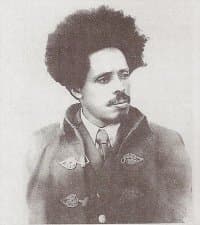
Abebe Aregai
General · Modern
58.2Total
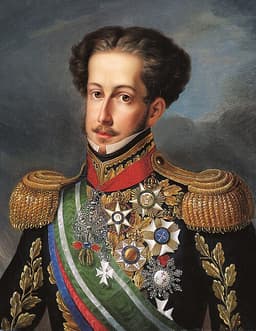
Pedro I of Brazil
Emperor · Modern
54.6Total
Basic Information
Born
1903
1798
Died
1960
1834
Era
Modern
Modern
Nationality
Ethiopia
Brazil
Occupation
General
Emperor
Civilization
Other
Western
Score Comparison
Military (10%)
70.0
55.0
Political (20%)
53.8
62.7
Influence (20%)
62.0
59.0
Legacy (20%)
50.0
50.0
Leadership (15%)
62.0
53.2
Strategy (15%)
58.0
45.0
TOTAL
58.2
54.6
Abebe Aregai — Complete Timeline
1936 AD
Led Arbegnoch Resistance against Italian OccupationWar
After the Italian conquest, Abebe Aregai organized and led the Arbegnoch (Patriots) guerrilla resistance in Shewa. His forces harassed Italian supply lines and conducted hit-and-run attacks for five years.
ResistanceGuerrilla WarfareItalian Occupation
Impact: regionalconstructive
1957 AD
Appointed Prime Minister of EthiopiaPolitical Action◆ Major
Emperor Haile Selassie appointed Abebe Aregai as Prime Minister of Ethiopia. He served until his death in 1960, overseeing post-war reconstruction and modernization efforts.
Prime MinisterGovernmentReconstruction
Impact: nationalconstructive
1960 AD
Killed during 1960 Coup AttemptPolitical Action◆ Major
Abebe Aregai was assassinated during an attempted coup d'
CoupAssassinationEthiopia
Impact: nationaltragic
Pedro I of Brazil — Complete Timeline
1822 AD
Declaration of Independence of BrazilPolitical Action
Pedro I declared Brazil's independence from Portugal on September 7, 1822, at the Ipiranga River in S
Impact: globalprogressive
Coronation as Emperor of BrazilPolitical Action◆ Major
Pedro I was crowned Emperor of Brazil on December 1, 1822, in Rio de Janeiro. The coronation formalized the new imperial government, with Pedro I as constitutional monarch, though he retained significant executive powers.
Impact: nationalconstructive
1823 AD
War of Independence of BrazilWar◆ Major
Pedro I led Brazilian forces against Portuguese loyalists in the War of Independence. Key battles occurred in Bahia, Maranh
Impact: national
Dissolution of the Constituent AssemblyPolitical Action◆ Major
Pedro I dissolved the Constituent Assembly after conflicts over the constitution's limits on imperial power. He then imposed the 1824 Constitution, which granted the emperor extensive powers, including the Moderating Power, centralizing authority.
Impact: nationaldestructive
1831 AD
Abdication of the Brazilian ThronePolitical Action
Pedro I abdicated the Brazilian throne in favor of his five-year-old son Pedro II on April 7, 1831. He returned to Portugal to claim the Portuguese throne, leaving Brazil under a regency until his son came of age.
Impact: national
Expert Analysis
Abebe Aregai vs Pedro I of Brazil
# The Emperor and the Patriot: Two Paths to Nationhood
On a September morning in 1822, a young prince stood beside the Ipiranga River in São Paulo, tore the Portuguese blue-and-white insignia from his uniform, and shouted "Independência ou Morte!" More than a century later, in the highlands of Shewa, a guerrilla commander named Abebe Aregai slipped through Italian patrol lines at night, his men armed with ancient rifles and unshakeable faith. One was born to rule an empire; the other fought to defend one. Both staked everything on the idea that their people deserved to be free. Yet the worlds they inhabited—and the outcomes they achieved—could hardly have been more different.
Origins
Pedro de Alcântara Francisco António João Carlos Xavier de Paula Miguel Rafael Joaquim José Gonzaga Pascoal Cipriano Serafim de Bragança e Bourbon entered the world in 1798 as a prince of the Portuguese royal house. His family fled Napoleon's armies in 1807, transplanting the entire court to Rio de Janeiro, where young Pedro grew up amid tropical splendor and European protocol. He was impulsive, charming, and spoiled—educated by tutors who despaired of his attention span but recognized his quick intelligence. The boy who would become emperor learned to ride before he could read, and he inherited his father's love of music and his mother's volatile temper.
Abebe Aregai was born in 1903 in a mud-walled village in Shewa, the heartland of Ethiopian imperial power. His father was a minor noble, his mother a farmer's daughter. He grew up in the shadow of Mount Zuqualla, learning the warrior traditions of the Amhara people. Where Pedro was taught by priests and philosophers, Abebe learned from elders who remembered the Battle of Adwa in 1896, when Ethiopian forces crushed an Italian invasion. That memory burned in him like a sacred flame. The world of his childhood was ancient, feudal, and fiercely independent—a stark contrast to the Enlightenment ideas swirling through Pedro's Rio de Janeiro.
Rise to Power
Pedro's path to power was hereditary, but his moment came through crisis. His father, King João VI, returned to Portugal in 1821, leaving Pedro as regent in Brazil. The Portuguese Cortes demanded his return and sought to reduce Brazil to colonial status once more. Pedro faced a choice: obedience or rebellion. On January 9, 1822, he declared "Fico" ("I will stay"), defying Lisbon. Eight months later, he made the break permanent at the Ipiranga. At twenty-three, he became emperor not through conquest but through a calculated gamble.
Abebe Aregai's rise was forged in defeat. When Mussolini's Italy invaded Ethiopia in 1935, Abebe was a minor provincial governor. The Emperor Haile Selassie's modern army crumbled under aerial bombardment and poison gas. But Abebe refused surrender. As the Emperor fled into exile, Abebe retreated into the mountains of Shewa and began organizing the Arbegnoch—the Patriots. He was thirty-three years old, with no formal military training and no foreign backing. His only assets were his knowledge of the terrain, his gift for persuasion, and the loyalty of men who had nothing left to lose.
Leadership & Governance
Pedro I ruled as an enlightened despot in a hurry. He wrote Brazil's first constitution in 1824, balancing liberal principles with strong imperial powers. He suppressed rebellions in the north and fought a costly war with Argentina over Uruguay. His military record was mixed: he led troops personally during the War of Independence, showing personal courage but limited strategic vision. His score of 65 in military prowess reflects a leader who could inspire men but struggled with logistics and long-term planning. Politically, he was mercurial—charming one day, autocratic the next. He dissolved the Constituent Assembly in 1823 when it tried to limit his power, then imposed his own constitution. His political score of 60.2 captures a ruler who understood power better than persuasion.
Abebe Aregai governed through trust and example. As guerrilla leader, he never commanded more than a few thousand men, but he held them together through years of hardship. His leadership score of 84.5 reflects the extraordinary loyalty he inspired. He negotiated with local chiefs, arbitrated disputes, and kept resistance alive when all seemed lost. After the war, he served as Prime Minister under Haile Selassie from 1957 until his death, overseeing reconstruction with a steady hand. His political score of 79.4 places him above Pedro in statecraft—not because he was more brilliant, but because he understood that power in Ethiopia flowed through relationships, not decrees.
Triumph & Tragedy
Pedro's triumph came early and faded fast. The cry of "Independência ou Morte!" made him a national symbol, and his coronation in December 1822 was a moment of pure glory. But the tragedy followed quickly. His wife Leopoldina died in 1826, possibly from complications after a miscarriage, exacerbated by his open infidelity. His unpopularity grew as he meddled in Portuguese succession, draining Brazilian resources. By 1831, facing revolts and abandoned by allies, he abdicated in favor of his five-year-old son. He sailed for Portugal, where he fought a civil war to install his daughter Maria on the throne. He died in 1834 at thirty-five, exhausted and bitter.
Abebe Aregai's triumph was the survival of Ethiopia itself. For five years, from 1936 to 1941, his guerrillas harassed Italian garrisons, ambushed convoys, and kept the flame of resistance burning. When British and Ethiopian forces liberated the country, Abebe emerged from the mountains as a national hero. His tragedy came on December 13, 1960, when a group of Imperial Bodyguard officers attempted a coup. Abebe, then Prime Minister, went personally to negotiate with the rebels. They shot him dead. The man who had survived years of war and occupation was killed by his own countrymen in a moment of madness.
Character & Destiny
Pedro was a romantic in an age of revolutions. He loved horses, women, and grand gestures. His impulsiveness made him a liberator but also a failure as a ruler. He could not sit still, could not compromise, could not bear the slow work of building institutions. His destiny was to be a founder, not a consolidator. He lit the fire, then left others to tend it.
Abebe was a stoic in an age of empires. He was patient, calculating, and deeply rooted in his culture. He understood that freedom was not a single shout but a long march. His destiny was to be a guardian, not a founder. He defended what already existed, preserving Ethiopia's independence when the world assumed it was lost.
Legacy
Pedro I is remembered as the father of Brazilian independence, but his son Pedro II is the emperor Brazilians truly revere. The father's statue stands in São Paulo, his portrait hangs in official buildings, but his personal failings and early abdication have dimmed his luster. His legacy score of 70.0 reflects a figure more honored than loved.
Abebe Aregai is remembered as the soul of Ethiopian resistance. His name is spoken with reverence in the highlands, and his photograph hangs in government offices. But his political legacy is complicated—he served a feudal emperor who was overthrown fourteen years after his death. His legacy score of 66.8, slightly below Pedro's, reflects the paradox of a hero whose cause ultimately failed to create a stable future.
Conclusion
Two men, two continents, two visions of freedom. Pedro I declared independence with a shout; Abebe Aregai defended it with silence and suffering. The emperor ruled by birthright and lost his throne; the general earned his authority through suffering and died defending it. One built a nation that became a continental power; the other preserved a nation that remained independent against impossible odds. In the end, both understood something that the powerful of their eras often forgot: that the right to rule is never given—it must be taken, or earned, or both. And neither is ever secure.
Rankings
🥇
Abebe AregaiLeader
Mil: 70.0Pol: 53.8Inf: 62.0
58.2
🥈
Pedro I of Brazil
Mil: 55.0Pol: 62.7Inf: 59.0
54.6
+3.6 behind
How This Comparison Works
Algorithm
Each figure is scored on 6 dimensions (0—100 scale) based on structured historical data: Military (10%), Political (20%), Influence (20%), Legacy (20%), Leadership (15%), Strategy (15%). The weighted total produces the final ranking.
Data Sources
Scores are computed from structured sub-indicators in the database. Scale factors adjust for era (Ancient ×0.85, Modern ×1.0) and civilization size (Eastern ×1.05, Other ×0.80) to account for differences in population and military scale.
Maximum 3 Figures
Comparisons are limited to 2—3 figures to ensure readability and statistical meaningfulness.
Error Margins
±5 points per dimension — Sub-scores are derived from historical records with inherent uncertainty. Two figures within 5 points on a dimension should be considered roughly equivalent in that area.
Total Score Accuracy
±3 points overall — The weighted combination of 6 dimensions produces a total score with approximately ±3 points of uncertainty. Differences of less than 3 points are not statistically significant— the figures are effectively tied.
Known Limitations
- Historical records are incomplete and uneven across civilizations
- Figures from oral-tradition societies may be underrepresented
- Occupation labels can misclassify multi-role figures
- Scores measure capability and impact, not moral character
- Quantitative scoring is a comparison tool, not absolute truth
Capability Radar
Military (10%) — Battles & Warfare
Battles
65
35
Win Rate
60
40
Expansion
40
30
Political (20%) — Governance & Reform
Reform
45
45
Diplomacy
60
50
Economy
40
30
Influence (20%) — Cultural & Global Reach
Cultural
45
40
Global
35
45
Legacy (20%) — Historical Impact
Historical
55
55
Longevity
40
50
Leadership (15%) — Power & Stability
Tenure
55
55
Stability
50
25
Strategy (15%) — Tactics & Innovation
Strategy
75
35
Tactics
70
30
Reform
50
20
Similar Comparisons
Comments & Discussion
Rusty Sabre6/16/2026
Classics scholar here: Pedro I shouting "Independência ou Morte!" is just performative theater. Real history isn't made by royal tantrums by a river; it's made by grimy foot soldiers holding the line. Pedro had the Portuguese army deserting him and a Brazilian elite that would've switched sides for cheaper coffee. Abebe Aregai, though? He took on Mussolini's mechanized divisions with bolt-actions and bare feet—and actually held ground for years. That's a true patriot, not a prince playing dress-
草原之矛6/16/2026
数据怀疑者:你们这些浪漫化历史的人啊,看看死亡率对比。佩德罗一世在位时,巴西人均寿命不到30,士兵死亡率60%靠热带病。阿贝贝·阿雷盖的游击队更惨——1941年意大利档案显示,他们每个月的战斗减员率达15%。胜利是漂亮,但普通人付出血的代价。别把领袖雕像当神话,要记住脚下的尸骨。
Iron Duke6/16/2026
Military historian here: The Shewan guerrilla campaign is objectively more impressive. Pedro I faced a divided Portuguese force of maybe 3,000 on his best day. Abebe Aregai organized 20,000 fighters against Mussolini’s 250,000-man army armed with tanks and aircraft for five years. The "Independence or Death" line is great propaganda, but Aregai’s actual tactics—hit-run, cache systems, highland attrition—are still studied in COIN schools. One is a footnote to Brazilian lore; the other is a textbo
紫禁城老饕6/16/2026
修正派批评家:别提“民族英雄”光环了。两人都是剥削阶级的刀斧手。佩德罗一世独立后立刻搞奴隶制,巴西70%人口还是黑奴。阿贝贝·阿雷盖帮海尔·塞拉西镇压奥罗莫起义,杀的人比意大利人还多。撕掉徽章和打游击——都是精英争权夺利的戏码。百姓跪着喊万岁,他们站着数钱。别被骗了。
Lance Corporal6/16/2026
History buff taking the middle: This is unfair to Pedro. Sure, he was a spoiled prince, but Abebe Aregai had tactical failures. In 1936 Aregai lost two-thirds of his force in a single Italian advance because he overcommitted to positional defense. Pedro’s strategic error was far less costly—his 1824 fiscal mismanagement just caused a minor rebellion in Pernambuco. Both made mistakes, but let's grade on the actual outcome: Pedro created a stable empire, while Aregai’s resistance ended with Ethiop