Loading...
Abebe Aregai vs Nguyen Cao Ky
Abebe Aregai leads by 9.2 pts · 2 figures compared
…
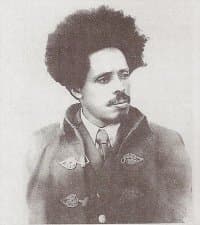
Abebe Aregai
General · Modern
58.2Total
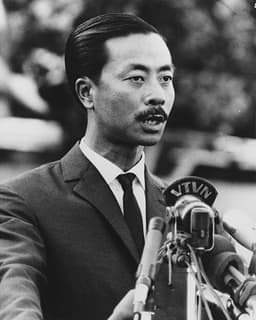
Nguyen Cao Ky
General · Modern
49.0Total
Basic Information
Born
1903
1930
Died
1960
—
Era
Modern
Modern
Nationality
Ethiopia
Vietnam
Occupation
General
General
Civilization
Other
Eastern
Score Comparison
Military (10%)
70.0
45.0
Political (20%)
53.8
39.4
Influence (20%)
62.0
50.2
Legacy (20%)
50.0
40.0
Leadership (15%)
62.0
67.0
Strategy (15%)
58.0
60.0
TOTAL
58.2
49.0
Abebe Aregai — Complete Timeline
1936 AD
Led Arbegnoch Resistance against Italian OccupationWar
After the Italian conquest, Abebe Aregai organized and led the Arbegnoch (Patriots) guerrilla resistance in Shewa. His forces harassed Italian supply lines and conducted hit-and-run attacks for five years.
ResistanceGuerrilla WarfareItalian Occupation
Impact: regionalconstructive
1957 AD
Appointed Prime Minister of EthiopiaPolitical Action◆ Major
Emperor Haile Selassie appointed Abebe Aregai as Prime Minister of Ethiopia. He served until his death in 1960, overseeing post-war reconstruction and modernization efforts.
Prime MinisterGovernmentReconstruction
Impact: nationalconstructive
1960 AD
Killed during 1960 Coup AttemptPolitical Action◆ Major
Abebe Aregai was assassinated during an attempted coup d'
CoupAssassinationEthiopia
Impact: nationaltragic
Nguyen Cao Ky — Complete Timeline
1963 AD
Commander of South Vietnamese Air ForcePolitical Action◆ Major
Nguyen Cao Ky was appointed commander of the Republic of Vietnam Air Force. He led the air force during the Buddhist crisis and participated in the coup that overthrew President Ngo Dinh Diem.
Air ForceCoupDiem
Impact: national
1965 AD
Appointed Prime MinisterPolitical Action◆ Major
Nguyen Cao Ky became Prime Minister of South Vietnam, leading a military junta. His government intensified the war against the Viet Cong and North Vietnam, with strong US support.
Prime MinisterMilitary juntaVietnam War
Impact: national
1967 AD
Conflict with President ThieuPolitical Action
Nguyen Cao Ky ran for president but lost to Nguyen Van Thieu, becoming vice president. The two leaders had a tense relationship, with Ky later accusing Thieu of corruption and mismanagement of the war.
ElectionThieuRivalry
Impact: nationaldestructive
1975 AD
Exile after fall of SaigonPolitical Action◆ Major
Nguyen Cao Ky fled South Vietnam as Saigon fell to North Vietnamese forces. He settled in the United States, where he became a critic of the communist government and later returned to Vietnam for visits.
ExileFall of SaigonVietnam War
Impact: nationaltragic
Expert Analysis
Abebe Aregai vs Nguyen Cao Ky
# The General Who Served Two Masters
On a humid morning in Saigon, 1965, a flamboyant air force commander with a pearl-handled revolver and a pencil-thin mustache stepped into the prime minister’s office. Half a world away, in the highlands of Ethiopia, a grizzled guerrilla fighter in a tattered coat was already an old man’s legend, his name whispered in the mountain passes where he had once outwitted Mussolini’s legions. Nguyen Cao Ky and Abebe Aregai never met, never exchanged a word, yet their lives trace a single, tragic arc: the fate of the military man who must become a politician. One chose power and lost everything; the other chose service and lost his life.
Origins
Nguyen Cao Ky was born in 1930 in Hanoi, then part of French Indochina, into a land already bleeding from colonial wounds. His father was a minor civil servant; his youth was shaped by the chaos of the First Indochina War. The French trained him as a pilot, and by 1963, at thirty-three, he commanded the entire South Vietnamese Air Force. His rise was swift, his style theatrical: he wore a black flight suit, smoked imported cigarettes, and spoke of communism as a disease to be burned out.
Abebe Aregai was born in 1903, the son of a minor noble in Shewa, Ethiopia. He grew up in a world where the emperor was a living god and the mountains were fortresses. He entered the imperial army as a young officer and learned warfare in the traditional way—on horseback, with a rifle, against rebellious chieftains. By the time Mussolini’s tanks rolled into Ethiopia in 1935, Abebe was already a battle-hardened commander. He was forty-three when the war began, old enough to know that defeat was not the end.
Rise to Power
Ky’s ascent came through the coup. In 1963, he supported the overthrow of President Ngo Dinh Diem, and his air force squadrons bombed the presidential palace. Two years later, in 1965, the military junta made him prime minister. He was thirty-five, the youngest leader in South Vietnam’s history, and he governed with the swagger of a man who believed that decisiveness could replace legitimacy. “We need a strong hand,” he told reporters. “Democracy is a luxury we cannot afford.”
Abebe’s rise was the opposite. When Addis Ababa fell in 1936, he did not flee. He retreated into the Shewa highlands and organized the Arbegnoch—the “Patriots”—a guerrilla force that harassed Italian supply lines, ambushed patrols, and kept the flame of resistance alive. For five years, he commanded from the shadows, living on wild grain and rainwater. He was not a politician; he was a symbol. When Emperor Haile Selassie returned from exile in 1941, Abebe came down from the mountains and knelt. His reward came slowly, over sixteen years: in 1957, at age fifty-four, he was appointed prime minister.
Leadership & Governance
As prime minister, Ky was a storm. He escalated the war against North Vietnam, allied himself with American escalation, and crushed Buddhist protests with force. His political score of 60.2 reflects a leader who never mastered the art of persuasion. He was a general ruling by decree, and his government was perpetually unstable. In 1967, he ran for president and lost to Nguyen Van Thieu; he accepted the vice presidency, but the two men despised each other. Ky’s leadership score of 76.3 is respectable, but it was a leadership of command, not consensus.
Abebe governed differently. As prime minister, he was a servant of the throne. He modernized the bureaucracy, built roads, and navigated Ethiopia’s delicate ethnic politics with the patience of a man who had learned that survival depends on allies. His political score of 79.4 reflects a genuine skill: he knew when to assert himself and when to defer to the emperor. His military score of 74.3 is higher than Ky’s 61.8, but it was a quieter kind of soldiering—the kind that builds, not destroys.
Triumph & Tragedy
Ky’s greatest moment was also his most hollow. In 1965, he stood on the tarmac of Tan Son Nhut air base and declared that his government would “crush the Viet Cong.” For a few years, American firepower gave him the illusion of victory. But the tragedy was inevitable. When Saigon fell in 1975, Ky fled—first to Taiwan, then to California. He became a liquor store owner in Orange County, a fallen emperor in exile.
Abebe’s triumph was the resistance itself. He kept Ethiopia’s honor alive when the world had forgotten it. His tragedy came on a December night in 1960, when the Imperial Bodyguard attempted a coup. Abebe, then fifty-seven, went to the palace to negotiate. He was shot dead in the corridor, killed by men he had once commanded. He died serving the emperor he had saved twenty years earlier.
Character & Destiny
Ky was a man of appearances. He cultivated an image of strength, but his decisions were reactive, shaped by fear of losing power. He once said, “In Vietnam, the man who hesitates is lost.” That impatience drove him to gamble everything on war. He had no plan for peace, no vision beyond victory.
Abebe was a man of endurance. He had learned in the mountains that the strongest weapon is patience. He was not charismatic; he was reliable. He did not seek power; he accepted it. His destiny was to be a bridge between the old Ethiopia of emperors and the new world of nation-states. The bridge collapsed under him.
Legacy
Ky’s legacy is a cautionary tale. His total score of 64.8 ranks him as a minor figure, remembered mostly for his flamboyance and his failure. In Vietnam, he is a footnote; in the Vietnamese diaspora, a symbol of a lost cause. His influence score of 70.9 is inflated by his visibility, but it is a visibility without substance.
Abebe’s legacy is deeper. His total score of 72.7 reflects a man who mattered. In Ethiopia, he is a national hero, the “Lion of Shewa,” a name taught to schoolchildren. The Arbegnoch are honored every year. But his legacy is also complicated: he served a feudal system that ultimately could not survive the modern world. He died defending a throne that would itself fall fourteen years later, in 1974.
Conclusion
Both men were generals who became prime ministers. Both fought for their countries. But one fought for a nation that existed only on paper, a creation of Cold War geopolitics; the other fought for a civilization that had endured for millennia. Ky’s Vietnam was a fiction held together by American dollars and French colonial borders. Abebe’s Ethiopia was a living memory, a land where the Ark of the Covenant was said to rest. Ky’s story ends in exile, a man without a country. Abebe’s ends in a palace corridor, a man who gave his life for a country that still remembers his name.
The difference is not in talent, nor in courage. It is in the ground beneath their feet. One stood on sand; the other, on rock. And when the storm came, only the rock remained.
Rankings
🥇
Abebe AregaiLeader
Mil: 70.0Pol: 53.8Inf: 62.0
58.2
🥈
Nguyen Cao Ky
Mil: 45.0Pol: 39.4Inf: 50.2
49.0
+9.2 behind
How This Comparison Works
Algorithm
Each figure is scored on 6 dimensions (0—100 scale) based on structured historical data: Military (10%), Political (20%), Influence (20%), Legacy (20%), Leadership (15%), Strategy (15%). The weighted total produces the final ranking.
Data Sources
Scores are computed from structured sub-indicators in the database. Scale factors adjust for era (Ancient ×0.85, Modern ×1.0) and civilization size (Eastern ×1.05, Other ×0.80) to account for differences in population and military scale.
Maximum 3 Figures
Comparisons are limited to 2—3 figures to ensure readability and statistical meaningfulness.
Error Margins
±5 points per dimension — Sub-scores are derived from historical records with inherent uncertainty. Two figures within 5 points on a dimension should be considered roughly equivalent in that area.
Total Score Accuracy
±3 points overall — The weighted combination of 6 dimensions produces a total score with approximately ±3 points of uncertainty. Differences of less than 3 points are not statistically significant— the figures are effectively tied.
Known Limitations
- Historical records are incomplete and uneven across civilizations
- Figures from oral-tradition societies may be underrepresented
- Occupation labels can misclassify multi-role figures
- Scores measure capability and impact, not moral character
- Quantitative scoring is a comparison tool, not absolute truth
Capability Radar
Military (10%) — Battles & Warfare
Battles
65
30
Win Rate
60
35
Expansion
40
10
Political (20%) — Governance & Reform
Reform
45
20
Diplomacy
60
25
Economy
40
15
Influence (20%) — Cultural & Global Reach
Cultural
45
15
Global
35
15
Legacy (20%) — Historical Impact
Historical
55
20
Longevity
40
10
Leadership (15%) — Power & Stability
Tenure
55
40
Stability
50
10
Strategy (15%) — Tactics & Innovation
Strategy
75
30
Tactics
70
40
Reform
50
25
Similar Comparisons
Comments & Discussion
The Airmen's Gambler6/16/2026
Ky was a showman who mistook theatrics for leadership. Sure, he could fly a plane and had guts, but his "let's burn out communism" bluster got him nowhere once the VC started running circles around his Saigon bubble. Ky's fatal flaw was thinking you can govern from a cockpit. Abebe Aregai? That man knew power is forged on the ground, with peasants and patience. Ky lost a war; Aregai built a legacy. Give me the Ethiopian every time.
历史真相挖掘机6/16/2026
根本不用比,阿贝贝·阿雷盖的真实战绩甩阮高祺十条街。抗战时他带着一千人与四万意军周旋,靠山区游击活活拖垮现代化军队。而阮高祺呢?1965年当了总理,结果被美国主子牵着鼻子走,连西贡都守不住。一个是把命押在祖国上的硬汉,另一个不过是个穿飞行夹克的木偶。谁更值得尊重?答案太明显了。
Classics & Coercion6/16/2026
Aregai's guerrilla war against Mussolini echoes the ancient Spartan stand at Thermopylae, but with a smarter ending. He didn't die gloriously—he lived to outmaneuver. That's the real art of war: knowing when to melt into the hills and when to reemerge. Ky, by contrast, was all hubris and no hedges. He flew high but never understood the terrains of power, whether political or military. One man studied the earth; the other only studied his own reflection.
暗线观察者6/16/2026
大家都忽略了最关键的区别:阿贝贝是为帝国效忠到底,哪怕后来被政敌处决也是因为站错了队;而阮高祺是个墙头草,1965年靠美国扶植上台,1967年就被人踢开,最后逃到美国开酒馆。一个在监狱里面对死亡,一个在加州喝威士忌。谁更像军人?谁更像政客?答案自己想。要我选,我更敬佩那个死在自己土地上的人。
Data & Dissent6/16/2026
Let's talk concrete numbers: Aregai's guerrilla forces—at most 2,000 men—tied down an entire Italian division of 40,000 for three years. That's a force ratio of 1:20. Ky's air force had 500+ aircraft and American backing, yet couldn't interdict Viet Cong supply lines running through Laos. Maybe fancy pistols don't compensate for strategic vision. Aregai understood asymmetric warfare; Ky just wanted to look good for the cameras. The data doesn't lie—one fought a war, the other played one.