Loading...
Abebe Aregai vs Louis Botha
Louis Botha leads by 2.9 pts · 2 figures compared
…
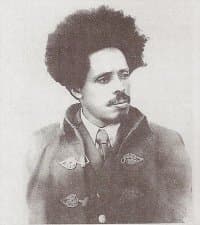
Abebe Aregai
General · Modern
58.2Total
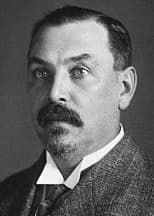
Louis Botha
General · Modern
61.1Total
Basic Information
Born
1903
1862
Died
1960
1919
Era
Modern
Modern
Nationality
Ethiopia
South Africa
Occupation
General
General
Civilization
Other
Other
Score Comparison
Military (10%)
70.0
61.7
Political (20%)
53.8
70.0
Influence (20%)
62.0
56.7
Legacy (20%)
50.0
50.0
Leadership (15%)
62.0
79.8
Strategy (15%)
58.0
58.0
TOTAL
58.2
61.1
Abebe Aregai — Complete Timeline
1936 AD
Led Arbegnoch Resistance against Italian OccupationWar
After the Italian conquest, Abebe Aregai organized and led the Arbegnoch (Patriots) guerrilla resistance in Shewa. His forces harassed Italian supply lines and conducted hit-and-run attacks for five years.
ResistanceGuerrilla WarfareItalian Occupation
Impact: regionalconstructive
1957 AD
Appointed Prime Minister of EthiopiaPolitical Action◆ Major
Emperor Haile Selassie appointed Abebe Aregai as Prime Minister of Ethiopia. He served until his death in 1960, overseeing post-war reconstruction and modernization efforts.
Prime MinisterGovernmentReconstruction
Impact: nationalconstructive
1960 AD
Killed during 1960 Coup AttemptPolitical Action◆ Major
Abebe Aregai was assassinated during an attempted coup d'
CoupAssassinationEthiopia
Impact: nationaltragic
Louis Botha — Complete Timeline
1899 AD
Battle of ColensoWar◆ Major
Botha commanded Boer forces at the Battle of Colenso during the Second Boer War. His troops repelled a British attack under General Buller, inflicting heavy casualties and boosting Boer morale.
Second Boer WarBattleVictory
Impact: regional
1900 AD
Boer War Guerrilla CommanderWar◆ Major
After the British captured Pretoria, Botha led Boer guerrilla forces in the Transvaal. He conducted hit-and-run attacks against British columns, prolonging the war and becoming a symbol of Afrikaner resistance.
Second Boer WarGuerrillaResistance
Impact: regional
1902 AD
Signed the Treaty of VereenigingPolitical Action
Botha, as a leading Boer general, signed the Treaty of Vereeniging which ended the Second Boer War. The treaty granted the Boer republics self-government under British sovereignty and promised eventual self-rule.
TreatyPeaceSecond Boer War
Impact: regional
1910 AD
First Prime Minister of the Union of South AfricaPolitical Action
Botha became the first Prime Minister of the newly formed Union of South Africa. He led a coalition government that sought to reconcile Afrikaners and English-speaking whites, while implementing segregationist policies.
Prime MinisterUnion of South AfricaFounding
Impact: nationalconstructive
1914 AD
Suppressed the 1914 RebellionWar◆ Major
Botha personally led government forces to suppress the Maritz Rebellion, an Afrikaner uprising against South Africa's entry into World War I. He defeated the rebels, asserting state authority and maintaining support for the British Empire.
RebellionWorld War ISuppression
Impact: national
1915 AD
Conquered German South West AfricaWar◆ Major
Botha commanded South African forces in the invasion and conquest of German South West Africa. The campaign succeeded, and the territory was later administered by South Africa under a League of Nations mandate.
World War IConquestGerman South West Africa
Impact: regional
Expert Analysis
Louis Botha vs Abebe Aregai
# The General Who Led Two Nations
In the summer of 1960, a bullet tore through the chest of Abebe Aregai as he stood in the Imperial Palace in Addis Ababa, trying to reason with young coup plotters who had seized the government. Half a century earlier and six thousand miles to the south, Louis Botha had faced a different kind of rebellion—Afrikaners who saw him as a traitor for making peace with the British they had fought. Botha suppressed that uprising with the same iron will he had once used against the British themselves. These two men, both soldiers turned prime ministers, both warriors who became statesmen, followed paths that diverged as dramatically as the African landscapes they called home.
Origins
Abebe Aregai was born in 1903 into the highland aristocracy of Shewa, a region that had long supplied Ethiopia’s ruling elite. His world was ancient, feudal, and fiercely independent—a Christian kingdom that had never been colonized. The young nobleman grew up in a society where honor was measured in horses and rifles, where loyalty to the emperor was absolute, and where the threat of foreign invasion hung like a storm cloud over the Horn of Africa.
Louis Botha entered the world forty-one years earlier, in 1862, on a farm in the Orange Free State. His people were the Boers—Dutch, German, and Huguenot settlers who had trekked into the interior of southern Africa to escape British rule. They were farmers, hunters, and frontiersmen who believed God had given them this land. Botha learned to ride and shoot before he could properly read, and his childhood was shaped by the constant friction between Boer republics and British imperial ambitions.
The difference in their origins was profound. Abebe inherited a tradition of imperial service; Botha inherited a tradition of resistance to empire. One was born into a civilization that had never bowed; the other into a people who had fled rather than submit.
Rise to Power
When Mussolini’s fascist legions invaded Ethiopia in 1935, Abebe Aregai was a provincial governor in his thirties. The Italian army was modern, mechanized, and brutal—they used poison gas against Ethiopian troops and bombed Red Cross hospitals. After the emperor fled into exile in 1936, most of the Ethiopian nobility surrendered or went into hiding. Abebe did neither.
He rode into the mountains of Shewa and began organizing the Arbegnoch—the Patriots. For five years, he led a guerrilla war that tied down tens of thousands of Italian soldiers. His fighters struck supply convoys, ambushed patrols, and melted back into the hills. The Italians put a price on his head, but they could never catch him. By the time Emperor Haile Selassie returned in 1941 with British help, Abebe had become a living legend—the man who never surrendered.
Louis Botha’s rise followed a similar arc but in compressed time. In 1899, when the Second Boer War erupted, he was a thirty-seven-year-old farmer and politician with no formal military training. Yet at the Battle of Colenso in December of that year, he commanded the Boer forces that shattered a British assault, inflicting over a thousand casualties while losing only a handful of men. The British commander, General Sir Redvers Buller, was so humiliated that he was relieved of command.
When the British captured Pretoria in 1900, Botha transformed into a guerrilla commander. He led hit-and-run raids across the Transvaal, attacking railways and supply depots, keeping the war alive long after conventional resistance had collapsed. The British responded with a scorched-earth policy—burning farms, herding Boer families into concentration camps, and building a network of blockhouses to trap the commandos. By 1902, Botha knew his people could not endure much more. He signed the Treaty of Vereeniging, accepting British sovereignty in exchange for self-government and the promise of eventual independence.
Leadership & Governance
Botha’s greatest achievement came in 1910, when he became the first Prime Minister of the Union of South Africa. He faced an impossible task: to unite bitter enemies—Boers and British, whites and blacks—into a single nation. He pursued reconciliation with the British while trying to heal the wounds of the war. But his policies also laid the foundation for racial segregation. He excluded black Africans from political power, arguing that white civilization needed protection. It was a tragic choice, one that would haunt South Africa for a century.
When the First World War broke out in 1914, Botha faced his most painful test. Some Afrikaners saw the war as an opportunity to restore the Boer republics. They rose in rebellion. Botha, the former guerrilla, personally led government forces to crush the uprising. Then he invaded German South West Africa, conquering it for the British Empire. He had gone from fighting the British to fighting for them.
Abebe Aregai’s political career was shorter but no less significant. After the war, he served as Minister of War and then as Prime Minister from 1957. His job was to modernize Ethiopia while preserving its ancient monarchy. He oversaw the expansion of education, infrastructure, and the military. But he was a soldier, not a reformer. Ethiopia remained a feudal state, with the emperor holding absolute power and the vast majority of peasants living in poverty.
Triumph & Tragedy
Abebe’s greatest moment was his five-year guerrilla war—a triumph of courage over technology. His tragedy came in December 1960, when a group of Imperial Bodyguard officers attempted a coup. The emperor was abroad, so Abebe, as Prime Minister, was the senior official in the palace. He went to confront the plotters, believing his authority and his legend would sway them. They shot him dead. He was fifty-seven years old. The coup failed, but Ethiopia had lost one of its most loyal servants.
Botha’s triumph was the creation of the Union of South Africa itself—a nation born from the ashes of war. His tragedy was more subtle. He died in 1919, at the age of fifty-six, of natural causes. But he had lived long enough to see that the reconciliation he had worked for was fragile. The racial policies he had endorsed would harden into apartheid. The Afrikaner nationalism he had tried to contain would eventually triumph over his vision of unity.
Character & Destiny
Abebe Aregai was a man of absolute loyalty—to his emperor, his country, and his people. He was brave to the point of recklessness. When he walked into the palace to face the coup plotters, he probably knew he might not come out alive. But he went anyway, because that was what a patriot did. His character was shaped by the Ethiopian tradition of *haynet*—a code of honor that demanded sacrifice for the nation.
Louis Botha was more pragmatic, more calculating. He knew when to fight and when to make peace. He could be ruthless—he bombed German positions and crushed his own countrymen in the Maritz Rebellion. But he could also be generous, extending his hand to former enemies. His greatness lay in his ability to adapt, to change with the times. Yet in adapting, he sometimes lost sight of what he was fighting for.
Legacy
Today, Abebe Aregai is remembered in Ethiopia as a national hero. Streets bear his name, statues honor his memory, and schoolchildren learn about the Arbegnoch. But his legacy is complicated. He served an emperor who was overthrown fourteen years after his death. The Ethiopia he fought for—independent, proud, ancient—still exists, but it has been transformed by revolution, famine, and war.
Louis Botha’s legacy is even more contested. White South Africans once revered him as a founding father. Black South Africans see him as an architect of white supremacy. The truth lies somewhere in between. He was a product of his time, a man who believed in the superiority of European civilization even as he fought for the rights of his own people. His statue still stands in Pretoria, but it has been moved, recontextualized, debated.
Conclusion
What drove these two men to such different outcomes? The answer lies not in their individual characters but in the worlds they inhabited. Abebe Aregai fought to preserve an ancient civilization against foreign conquest. Louis Botha fought to create a new nation from the wreckage of war. One died a martyr, the other a statesman. One is remembered for resistance, the other for reconciliation. But both understood something that their enemies never could: that the greatest battles are not fought with guns, but with the will to build something that outlasts the warrior.
Rankings
🥇
Louis BothaLeader
Mil: 61.7Pol: 70.0Inf: 56.7
61.1
🥈
Abebe Aregai
Mil: 70.0Pol: 53.8Inf: 62.0
58.2
+2.9 behind
How This Comparison Works
Algorithm
Each figure is scored on 6 dimensions (0—100 scale) based on structured historical data: Military (10%), Political (20%), Influence (20%), Legacy (20%), Leadership (15%), Strategy (15%). The weighted total produces the final ranking.
Data Sources
Scores are computed from structured sub-indicators in the database. Scale factors adjust for era (Ancient ×0.85, Modern ×1.0) and civilization size (Eastern ×1.05, Other ×0.80) to account for differences in population and military scale.
Maximum 3 Figures
Comparisons are limited to 2—3 figures to ensure readability and statistical meaningfulness.
Error Margins
±5 points per dimension — Sub-scores are derived from historical records with inherent uncertainty. Two figures within 5 points on a dimension should be considered roughly equivalent in that area.
Total Score Accuracy
±3 points overall — The weighted combination of 6 dimensions produces a total score with approximately ±3 points of uncertainty. Differences of less than 3 points are not statistically significant— the figures are effectively tied.
Known Limitations
- Historical records are incomplete and uneven across civilizations
- Figures from oral-tradition societies may be underrepresented
- Occupation labels can misclassify multi-role figures
- Scores measure capability and impact, not moral character
- Quantitative scoring is a comparison tool, not absolute truth
Capability Radar
Military (10%) — Battles & Warfare
Battles
65
65
Win Rate
60
70
Expansion
40
60
Political (20%) — Governance & Reform
Reform
45
65
Diplomacy
60
70
Economy
40
55
Influence (20%) — Cultural & Global Reach
Cultural
45
45
Global
35
50
Legacy (20%) — Historical Impact
Historical
55
55
Longevity
40
40
Leadership (15%) — Power & Stability
Tenure
55
60
Stability
50
50
Strategy (15%) — Tactics & Innovation
Strategy
75
72
Tactics
70
68
Reform
50
55
Similar Comparisons
Comments & Discussion
No comments yet. Be the first to share your thoughts!