Loading...
Abebe Aregai vs Julius Maada Bio
Abebe Aregai leads by 7.0 pts · 2 figures compared
…
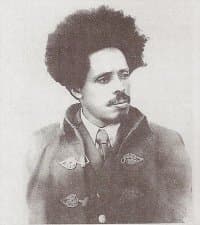
Abebe Aregai
General · Modern
58.2Total
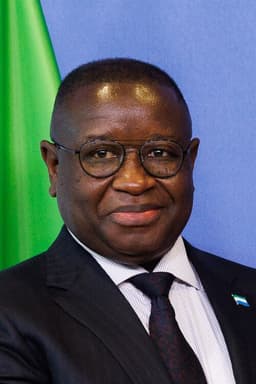
Julius Maada Bio
General · Modern
51.2Total
Basic Information
Born
1903
1964
Died
1960
—
Era
Modern
Modern
Nationality
Ethiopia
Sierra Leone
Occupation
General
General
Civilization
Other
Other
Score Comparison
Military (10%)
70.0
50.0
Political (20%)
53.8
45.0
Influence (20%)
62.0
53.3
Legacy (20%)
50.0
45.0
Leadership (15%)
62.0
70.0
Strategy (15%)
58.0
43.7
TOTAL
58.2
51.2
Abebe Aregai — Complete Timeline
1936 AD
Led Arbegnoch Resistance against Italian OccupationWar
After the Italian conquest, Abebe Aregai organized and led the Arbegnoch (Patriots) guerrilla resistance in Shewa. His forces harassed Italian supply lines and conducted hit-and-run attacks for five years.
ResistanceGuerrilla WarfareItalian Occupation
Impact: regionalconstructive
1957 AD
Appointed Prime Minister of EthiopiaPolitical Action◆ Major
Emperor Haile Selassie appointed Abebe Aregai as Prime Minister of Ethiopia. He served until his death in 1960, overseeing post-war reconstruction and modernization efforts.
Prime MinisterGovernmentReconstruction
Impact: nationalconstructive
1960 AD
Killed during 1960 Coup AttemptPolitical Action◆ Major
Abebe Aregai was assassinated during an attempted coup d'
CoupAssassinationEthiopia
Impact: nationaltragic
Julius Maada Bio — Complete Timeline
1992 AD
1992 Sierra Leonean coup d'étatPolitical Action◆ Major
Julius Maada Bio was a member of the National Provisional Ruling Council (NPRC) that overthrew President Joseph Momoh in a military coup. Bio served as a key figure in the junta, which promised to end the civil war but faced criticism for human rights abuses.
CoupSierra LeoneCivil War
Impact: nationaldestructive
1996 AD
Brief tenure as head of statePolitical Action◆ Major
Bio led a palace coup within the NPRC in January 1996, becoming head of state. He oversaw the transition to civilian rule, handing over power to Ahmad Tejan Kabbah after elections in March 1996, a move that earned him praise for restoring democracy.
TransitionDemocracyCoup
Impact: nationalconstructive
2018 AD
Election as President of Sierra LeonePolitical Action◆ Major
Bio won the 2018 Sierra Leonean presidential election as the candidate of the Sierra Leone People's Party, defeating Samura Kamara in a runoff. His victory marked a return to power for the SLPP after a decade in opposition.
ElectionSierra LeonePresidency
Impact: nationalconstructive
2023 AD
Re-election amid economic challengesPolitical Action◆ Major
Bio was re-elected in 2023 with 56.6% of the vote, but the election was disputed by the opposition. His second term has been marked by economic difficulties, including high inflation and debt, as well as allegations of authoritarianism.
ElectionSierra LeoneEconomy
Impact: national
Expert Analysis
Abebe Aregai vs Julius Maada Bio
# The General’s Two Paths: Abebe Aregai and Julius Maada Bio
In the summer of 1960, a bullet ended the life of Abebe Aregai, Ethiopia’s prime minister, as he tried to negotiate with mutinous soldiers in his own capital. Half a century later, in 2018, another general named Julius Maada Bio stood before a cheering crowd in Freetown, having won a democratic election after decades of coups and civil war. Both men were military leaders who entered politics through violence. One died a loyalist, the other became a democrat. Their stories, separated by geography and time, reveal how the same starting point—a soldier’s ambition—can lead to radically different ends.
Origins
Abebe Aregai was born in 1903 into the aristocratic warrior culture of Shewa, the heartland of Ethiopian imperial power. His world was one of feudal loyalty, where a man’s worth was measured by his service to the emperor. The Ethiopia of his youth was ancient, Christian, and fiercely independent, the only African nation to have escaped European colonization. Abebe learned to ride and fight as naturally as he breathed, and his early career was shaped by the rigid hierarchies of Emperor Haile Selassie’s court. He was a product of a society where authority was absolute and rebellion was treason.
Julius Maada Bio, born in 1964 in a small village in southern Sierra Leone, entered a different world entirely. His country was a patchwork of ethnic groups and colonial legacies, newly independent and already crumbling. The Sierra Leone of his youth was poor, corrupt, and volatile—a place where the state’s weakness invited ambitious men to seize power. Bio’s path was not one of aristocratic duty but of survival and opportunity. He joined the army not out of tradition, but because it offered a paycheck and a gun in a country where few other doors were open.
Rise to Power
Abebe’s rise came through resistance. In 1936, when Italian forces conquered Ethiopia, he refused to surrender. Instead, he vanished into the mountains of Shewa and organized the Arbegnoch—the Patriots—a guerrilla network that harassed the occupiers for five years. His leadership score of 84.5 reflects not just tactical skill but an almost spiritual authority: he kept hope alive when the empire seemed dead. When Haile Selassie returned from exile in 1941, Abebe was rewarded with high office. He became a pillar of the restored monarchy, a general who had proven his loyalty in fire.
Bio’s rise was faster and bloodier. In 1992, at just 28, he was part of a coup that overthrew President Joseph Momoh. The National Provisional Ruling Council that took power was a junta of young officers, and Bio rose within it. In January 1996, he led a palace coup within the junta, becoming head of state himself. But unlike Abebe, who used power to defend an ancient order, Bio used it to dismantle one. He oversaw elections that year, handing power to a civilian government. It was a gamble—and one that cost him the presidency for two decades.
Leadership & Governance
As prime minister from 1957 until his death, Abebe Aregai governed as a loyal servant of the emperor. His political score of 79.4 reflects competence within a system he never questioned. He modernized the bureaucracy and managed the transition from postwar reconstruction to peacetime administration, but he did so within the iron frame of autocracy. He was a fixer, not a visionary. His military score of 74.3, while solid, was overshadowed by his political role. He was a soldier who had become a bureaucrat.
Bio’s leadership, by contrast, was restless and adaptive. After losing power in 1996, he went into exile, then returned to civilian life, studied in the United States, and rebuilt himself as a politician. When he won the presidency in 2018, his military score of 37.5 told only part of the story: he was no longer a general but a democratic leader. His governance was pragmatic, focused on rebuilding an economy shattered by civil war and corruption. Yet his re-election in 2023, with 56.6% of the vote, was clouded by opposition disputes—a reminder that democracy, in Sierra Leone, remains fragile.
Triumph & Tragedy
Abebe’s greatest moment was his guerrilla war against Italy. For five years, he embodied Ethiopian defiance. His tragedy was that this triumph led to a death that was almost absurd: killed in 1960 by soldiers he had once commanded, during a coup attempt by the Imperial Bodyguard. He died trying to negotiate, a loyalist to the end, in a palace that no longer trusted him.
Bio’s triumph was his 2018 election—a former coup leader winning power through the ballot box. It was a redemption arc that few African strongmen have achieved. His tragedy is that the same country that elected him remains divided, poor, and suspicious. His second term began with protests and disputed results, and the shadow of the 1990s—when young men with guns decided who ruled—still hangs over Freetown.
Character & Destiny
Abebe Aregai was shaped by loyalty. He believed in hierarchy, in the emperor, in the idea that order was sacred. This made him effective in resistance and administration but blind to change. He could not imagine a Ethiopia without Haile Selassie, and so he died defending a system that was already cracking.
Julius Maada Bio was shaped by pragmatism. He saw that coups bring power but not legitimacy, and that democracy, however flawed, offers a path forward. He was willing to surrender power in 1996, and willing to wait two decades to win it back. His character was not heroic but adaptive—and adaptation, in the chaos of modern Africa, may be the truest form of wisdom.
Legacy
Abebe Aregai is remembered as a patriot, a hero of the resistance, and a martyr to the old order. His legacy score of 66.8 reflects a figure revered but static: a statue in a museum, a street name in Addis Ababa. He belongs to Ethiopia’s past.
Julius Maada Bio is still writing his legacy. His score of 59.0 is provisional, dependent on what he builds in his second term. He could be remembered as the general who became a democrat, or as just another leader who promised change and delivered more of the same. Sierra Leone, like Ethiopia, is still watching.
Conclusion
The difference between Abebe Aregai and Julius Maada Bio is not one of courage or intelligence. Both were brave, both were clever. The difference lies in what they believed power was for. For Abebe, power was a trust to be guarded for the emperor. For Bio, power was a tool to be used—and, if necessary, surrendered. One died for a throne, the other lives to see if democracy can survive. In their stories, we see the two faces of the soldier in politics: the defender and the reformer, the loyalist and the pragmatist. History does not judge which is better. It only records which one lasts.
Rankings
🥇
Abebe AregaiLeader
Mil: 70.0Pol: 53.8Inf: 62.0
58.2
🥈
Julius Maada Bio
Mil: 50.0Pol: 45.0Inf: 53.3
51.2
+7.0 behind
How This Comparison Works
Algorithm
Each figure is scored on 6 dimensions (0—100 scale) based on structured historical data: Military (10%), Political (20%), Influence (20%), Legacy (20%), Leadership (15%), Strategy (15%). The weighted total produces the final ranking.
Data Sources
Scores are computed from structured sub-indicators in the database. Scale factors adjust for era (Ancient ×0.85, Modern ×1.0) and civilization size (Eastern ×1.05, Other ×0.80) to account for differences in population and military scale.
Maximum 3 Figures
Comparisons are limited to 2—3 figures to ensure readability and statistical meaningfulness.
Error Margins
±5 points per dimension — Sub-scores are derived from historical records with inherent uncertainty. Two figures within 5 points on a dimension should be considered roughly equivalent in that area.
Total Score Accuracy
±3 points overall — The weighted combination of 6 dimensions produces a total score with approximately ±3 points of uncertainty. Differences of less than 3 points are not statistically significant— the figures are effectively tied.
Known Limitations
- Historical records are incomplete and uneven across civilizations
- Figures from oral-tradition societies may be underrepresented
- Occupation labels can misclassify multi-role figures
- Scores measure capability and impact, not moral character
- Quantitative scoring is a comparison tool, not absolute truth
Capability Radar
Military (10%) — Battles & Warfare
Battles
65
15
Win Rate
60
20
Expansion
40
5
Political (20%) — Governance & Reform
Reform
45
50
Diplomacy
60
55
Economy
40
45
Influence (20%) — Cultural & Global Reach
Cultural
45
30
Global
35
20
Legacy (20%) — Historical Impact
Historical
55
35
Longevity
40
25
Leadership (15%) — Power & Stability
Tenure
55
55
Stability
50
40
Strategy (15%) — Tactics & Innovation
Strategy
75
20
Tactics
70
25
Reform
50
10
Similar Comparisons
Comments & Discussion
ELECTION HAWK6/16/2026
Maada Bio's democratic victory is a masterclass in rebranding. After toppling the NPRC in 1996, he handed power to civilians—then waited 22 years to reclaim it legally. That's not redemption; that's patience. He knew Sierra Leone's war-weary voters would forgive a coup if he played the reformer card. Bio didn't learn democracy; he learned to weaponize it. His PhD in peacebuilding is a nice prop, but his trigger finger wrote the first chapter.
SHOGUN'S SHADOW6/16/2026
Abebe Aregai's end was a Shakespearean tragedy—he died defending a feudalism that had already failed Ethiopia. The 1960 coup wasn't just about pay; it was a revolt against Haile Selassie's ossified rule. Aregai's loyalty to the emperor blinded him to the fact that his own soldiers were starving while nobles feasted. He deserved better than a bullet in the dark, but he chose the wrong side of history.