Loading...
Abebe Aregai vs Giuseppe Garibaldi
Abebe Aregai leads by 3.2 pts · 2 figures compared
…
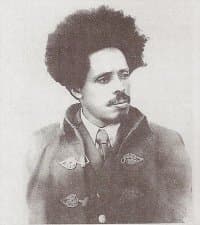
Abebe Aregai
General · Modern
58.2Total
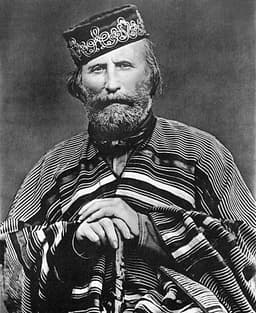
Giuseppe Garibaldi
General · Modern
55.0Total
Basic Information
Born
1903
1807
Died
1960
1882
Era
Modern
Modern
Nationality
Ethiopia
Italy
Occupation
General
General
Civilization
Other
Western
Score Comparison
Military (10%)
70.0
61.7
Political (20%)
53.8
54.7
Influence (20%)
62.0
40.0
Legacy (20%)
50.0
68.0
Leadership (15%)
62.0
54.2
Strategy (15%)
58.0
55.0
TOTAL
58.2
55.0
Abebe Aregai — Complete Timeline
1936 AD
Led Arbegnoch Resistance against Italian OccupationWar
After the Italian conquest, Abebe Aregai organized and led the Arbegnoch (Patriots) guerrilla resistance in Shewa. His forces harassed Italian supply lines and conducted hit-and-run attacks for five years.
ResistanceGuerrilla WarfareItalian Occupation
Impact: regionalconstructive
1957 AD
Appointed Prime Minister of EthiopiaPolitical Action◆ Major
Emperor Haile Selassie appointed Abebe Aregai as Prime Minister of Ethiopia. He served until his death in 1960, overseeing post-war reconstruction and modernization efforts.
Prime MinisterGovernmentReconstruction
Impact: nationalconstructive
1960 AD
Killed during 1960 Coup AttemptPolitical Action◆ Major
Abebe Aregai was assassinated during an attempted coup d'
CoupAssassinationEthiopia
Impact: nationaltragic
Giuseppe Garibaldi — Complete Timeline
1849 AD
Defense of the Roman RepublicWar◆ Major
Garibaldi commanded the defense of the short-lived Roman Republic against French forces sent to restore papal rule. Despite heroic resistance, the republic fell, and Garibaldi led a retreat through central Italy.
Italian UnificationRoman RepublicDefense
Impact: regionaltragic
1860 AD
Expedition of the ThousandWar
Garibaldi led a volunteer force of about 1,000 men to conquer Sicily and Naples. His campaign overthrew the Bourbon monarchy and unified southern Italy with the Kingdom of Sardinia.
Italian UnificationExpeditionVolunteers
Impact: nationalconstructive
Battle of CalatafimiWar◆ Major
Garibaldi's Redshirts defeated a larger Bourbon army at Calatafimi in Sicily. The victory boosted morale and demonstrated the effectiveness of his volunteers, opening the way to Palermo.
Italian UnificationBattleSicily
Impact: regional
Battle of VolturnusWar◆ Major
Garibaldi's forces defeated the Neapolitan army at the Volturno River. The victory secured his conquest of Naples and forced King Francis II into exile, completing the unification of southern Italy.
Italian UnificationBattleNaples
Impact: regional
Cession of Sicily and Naples to Victor Emmanuel IIPolitical Action
After conquering southern Italy, Garibaldi voluntarily handed over his conquests to King Victor Emmanuel II of Sardinia. This act unified Italy under the monarchy and avoided civil war.
Italian UnificationCessionMonarchy
Impact: nationalconstructive
Expert Analysis
Abebe Aregai vs Giuseppe Garibaldi
# The General and the Patriot: Garibaldi and Abebe Aregai
On a dusty Sicilian hillside in May 1860, Giuseppe Garibaldi watched his thousand Redshirts charge a Bourbon army more than twice their size. The Battle of Calatafimi was a gamble—a desperate, romantic gamble that would decide the fate of Italy. Seventy-six years later and thousands of miles away, in the rugged highlands of Shewa, Abebe Aregai gathered his own ragged band of patriots. The Italians had come again, this time to Ethiopia, and Abebe’s guerrillas melted into the mountains, fighting not for unification but for survival. Both men commanded volunteers against empires. Both were heroes to their peoples. Yet one became a global icon of liberation, the other a largely forgotten figure of resistance. Why such different outcomes from such similar beginnings?
Origins
Giuseppe Garibaldi was born in 1807 in Nice, a Mediterranean port city then part of the French Empire. His father was a fisherman, his mother a woman of deep piety. The sea and the revolutionary fervor of the age shaped him. By his twenties, Garibaldi had joined the secret society of Young Italy, dreaming of a unified republic free from foreign domination. Exile followed—first to South America, where he fought in civil wars, learned guerrilla tactics, and married his Brazilian love, Anita. The New World forged him into a soldier of fortune, a man who believed in liberty with a religious intensity.
Abebe Aregai came from a different world entirely. Born around 1903 in the Ethiopian highlands, he grew up in a society that had never been colonized, where the Emperor was both political and spiritual leader. His father was a minor noble, and Abebe entered the imperial army young. Unlike Garibaldi, he did not wander the globe seeking causes. His world was Shewa, his loyalty was to the Lion of Judah, and his understanding of war came from the harsh realities of Ethiopian feudal politics. Where Garibaldi was a romantic revolutionary, Abebe was a pragmatic soldier of the empire.
Rise to Power
Garibaldi’s path to fame came through defeat. In 1849, he commanded the defense of the Roman Republic against French forces sent to restore papal rule. The republic fell, but Garibaldi’s desperate retreat through central Italy—with his pregnant wife Anita dying in his arms—became legend. He fled to America, then returned to Italy a living symbol of resistance. When the moment came in 1860, he was ready.
Abebe Aregai’s rise began in catastrophe. In 1936, the Italian army conquered Ethiopia using poison gas, tanks, and aircraft against spears and old rifles. Emperor Haile Selassie fled into exile. Most Ethiopian commanders surrendered or were killed. Abebe did neither. He withdrew into the mountains of Shewa and organized the Arbegnoch—the Patriots. For five years, he led a guerrilla war that tied down tens of thousands of Italian troops. He was not a romantic hero leading a thousand men on a single campaign. He was a patient, ruthless organizer, building a network of fighters who struck from the shadows and vanished.
Leadership & Governance
Garibaldi was a commander of charisma, not strategy. At the Battle of Volturnus in 1860, his forces defeated the Neapolitan army through sheer determination, but his military score of 65.2 reflects a man who inspired more than he planned. His political score of 66.4 is similar: he was a man of grand gestures, not patient statecraft. After conquering Sicily and Naples, he could have declared himself dictator. Instead, he handed his conquests to King Victor Emmanuel II, shouting “Italy is made!” and retiring to his farm. It was noble, but it left the new kingdom in the hands of monarchists, not republicans.
Abebe Aregai was the opposite. His military score of 74.3 and leadership score of 84.5 show a commander of discipline and endurance. His strategy score of 59.0 is lower, but guerrilla war requires more patience than brilliance. After the war, he served as Prime Minister from 1957 until his death in 1960, governing a country trying to modernize under an absolute emperor. He was not a revolutionary but a loyal servant, overseeing roads and schools rather than conquests. His political score of 79.4 reflects a man who understood power as administration, not spectacle.
Triumph & Tragedy
Garibaldi’s greatest moment was the Expedition of the Thousand. In 1860, he landed in Sicily with 1,000 volunteers, defeated the Bourbon army at Calatafimi, and swept through the island. By September, he had taken Naples. It was a triumph of will over odds, of romantic nationalism over professional armies. His tragedy came later: the unified Italy he helped create was a monarchy that repressed the poor, and Garibaldi spent his final years in disappointment, writing memoirs and criticizing the government.
Abebe Aregai’s triumph was survival. From 1936 to 1941, he kept the flame of Ethiopian independence alive while the world ignored his country. When Emperor Haile Selassie returned in 1941, Abebe was there to greet him as the hero who had never surrendered. His tragedy came in 1960. During a coup attempt by the Imperial Bodyguard, Abebe was killed while trying to negotiate. He died not in glorious battle against a foreign enemy, but in a palace intrigue, shot by his own countrymen. The man who had defied Mussolini for five years fell in a few minutes of confusion.
Character & Destiny
Garibaldi was a man of the 19th century—an age of nationalism, romanticism, and revolution. He wore a red shirt, a poncho, and a wide-brimmed hat. He was photographed, written about, and celebrated across Europe and America. His character was open, generous, and impulsive. He trusted his instincts and his men. Destiny gave him the right moment: the crumbling of old monarchies, the rise of popular nationalism, the support of Piedmont-Sardinia. He was the right man for a revolution that needed a face.
Abebe Aregai was a man of the 20th century—an age of empires, ideology, and cold calculation. He wore a military uniform and spoke little. His character was reserved, patient, and suspicious. He trusted no one fully and planned for the long war. Destiny gave him a harder task: resisting a modern fascist empire with pre-modern tools. He succeeded, but his victory was a footnote in a war the world had already forgotten.
Legacy
Garibaldi’s legacy is monumental. In Italy, he is the “Hero of Two Worlds,” a founding father whose face appears on coins, stamps, and monuments. His influence score of 82.0 and legacy score of 75.0 reflect his global status. He inspired revolutionaries from Lincoln to Che Guevara. His name is synonymous with liberation.
Abebe Aregai’s legacy is more modest. His influence score of 72.6 and legacy score of 66.8 show a respected but not transcendent figure. In Ethiopia, he is remembered as a patriot, but his story is not taught in foreign schools. He was a hero of a war that the victors—the Allies—chose to forget, because acknowledging Ethiopia’s resistance meant acknowledging their own inaction.
Conclusion
One man unified a nation; the other defended one. Garibaldi rode the wave of history; Abebe Aregai held the line against it. Both were brave, both were betrayed by the peace they fought for, both died disappointed. But Garibaldi’s failure was that his revolution was incomplete, while Abebe’s tragedy was that his victory was invisible. In the end, the difference between a global hero and a national one is not courage or skill, but the attention of the world. Garibaldi had the cameras of the 19th century; Abebe Aregai had only the mountains.
Rankings
🥇
Abebe AregaiLeader
Mil: 70.0Pol: 53.8Inf: 62.0
58.2
🥈
Giuseppe Garibaldi
Mil: 61.7Pol: 54.7Inf: 40.0
55.0
+3.2 behind
How This Comparison Works
Algorithm
Each figure is scored on 6 dimensions (0—100 scale) based on structured historical data: Military (10%), Political (20%), Influence (20%), Legacy (20%), Leadership (15%), Strategy (15%). The weighted total produces the final ranking.
Data Sources
Scores are computed from structured sub-indicators in the database. Scale factors adjust for era (Ancient ×0.85, Modern ×1.0) and civilization size (Eastern ×1.05, Other ×0.80) to account for differences in population and military scale.
Maximum 3 Figures
Comparisons are limited to 2—3 figures to ensure readability and statistical meaningfulness.
Error Margins
±5 points per dimension — Sub-scores are derived from historical records with inherent uncertainty. Two figures within 5 points on a dimension should be considered roughly equivalent in that area.
Total Score Accuracy
±3 points overall — The weighted combination of 6 dimensions produces a total score with approximately ±3 points of uncertainty. Differences of less than 3 points are not statistically significant— the figures are effectively tied.
Known Limitations
- Historical records are incomplete and uneven across civilizations
- Figures from oral-tradition societies may be underrepresented
- Occupation labels can misclassify multi-role figures
- Scores measure capability and impact, not moral character
- Quantitative scoring is a comparison tool, not absolute truth
Capability Radar
Military (10%) — Battles & Warfare
Battles
65
65
Win Rate
60
70
Expansion
40
60
Political (20%) — Governance & Reform
Reform
45
40
Diplomacy
60
50
Economy
40
20
Influence (20%) — Cultural & Global Reach
Cultural
45
70
Global
35
65
Legacy (20%) — Historical Impact
Historical
55
75
Longevity
40
65
Leadership (15%) — Power & Stability
Tenure
55
30
Stability
50
25
Strategy (15%) — Tactics & Innovation
Strategy
75
60
Tactics
70
75
Reform
50
55
Similar Comparisons
Comments & Discussion
No comments yet. Be the first to share your thoughts!