Loading...
Abebe Aregai vs Francisco Morazan
Abebe Aregai leads by 0.2 pts · 2 figures compared
…
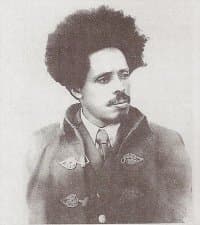
Abebe Aregai
General · Modern
58.2Total
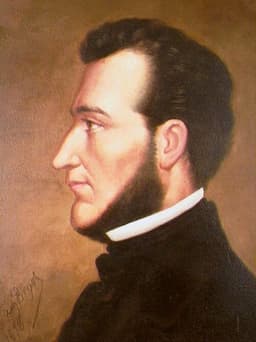
Francisco Morazan
General · Modern
58.0Total
Basic Information
Born
1903
1792
Died
1960
1842
Era
Modern
Modern
Nationality
Ethiopia
Honduras
Occupation
General
General
Civilization
Other
Western
Score Comparison
Military (10%)
70.0
52.5
Political (20%)
53.8
60.0
Influence (20%)
62.0
62.0
Legacy (20%)
50.0
50.0
Leadership (15%)
62.0
68.0
Strategy (15%)
58.0
55.0
TOTAL
58.2
58.0
Abebe Aregai — Complete Timeline
1936 AD
Led Arbegnoch Resistance against Italian OccupationWar
After the Italian conquest, Abebe Aregai organized and led the Arbegnoch (Patriots) guerrilla resistance in Shewa. His forces harassed Italian supply lines and conducted hit-and-run attacks for five years.
ResistanceGuerrilla WarfareItalian Occupation
Impact: regionalconstructive
1957 AD
Appointed Prime Minister of EthiopiaPolitical Action◆ Major
Emperor Haile Selassie appointed Abebe Aregai as Prime Minister of Ethiopia. He served until his death in 1960, overseeing post-war reconstruction and modernization efforts.
Prime MinisterGovernmentReconstruction
Impact: nationalconstructive
1960 AD
Killed during 1960 Coup AttemptPolitical Action◆ Major
Abebe Aregai was assassinated during an attempted coup d'
CoupAssassinationEthiopia
Impact: nationaltragic
Francisco Morazan — Complete Timeline
1824 AD
Abolition of slavery in Central AmericaReform◆ Major
As a key leader in the liberal movement, Moraz
AbolitionSlaveryLiberal Reform
Impact: regionalprogressive
1827 AD
Battle of La TrinidadWar◆ Major
Morazán led a liberal army to victory against conservative forces at La Trinidad, Honduras. This battle was a key turning point in the Central American civil war, allowing Morazán to consolidate power and eventually become president of the federation.
BattleLiberal VictoryCivil War
Impact: regional
1830 AD
Presidency of the Federal Republic of Central AmericaPolitical Action
Morazán was elected president of the Federal Republic of Central America, a union of Guatemala, El Salvador, Honduras, Nicaragua, and Costa Rica. He pursued liberal reforms including separation of church and state, free trade, and land reform, facing opposition from conservatives.
Federal RepublicLiberal ReformsCentral America
Impact: regionalconstructive
1842 AD
Execution by firing squadPolitical Action
After a failed attempt to restore the Federal Republic, Moraz
ExecutionEnd of FederationLiberal Defeat
Impact: regionaltragic
Expert Analysis
Francisco Morazan vs Abebe Aregai
# The Patriot and the Reformer
In the summer of 1960, as a coup d’état erupted in Addis Ababa, Prime Minister Abebe Aregai walked calmly into the Imperial Palace to negotiate with the rebels. He was a man who had faced Italian machine guns with nothing but grit and guerrilla cunning, yet here, in a palace corridor, he met his end. Twenty years earlier and two continents away, Francisco Morazán stood before a firing squad in San José, Costa Rica, his last words reportedly urging his executioners to aim for the heart. Both men were generals, both were reformers, both died violently in pursuit of a vision. But their paths could not have been more different. Why did one die defending an empire and the other trying to tear one down? The answer lies in the soil of their worlds.
Origins
Abebe Aregai was born in 1903 in the highlands of Shewa, Ethiopia, a land that had never been colonized. He grew up in a feudal society where loyalty to the emperor was sacred and land was power. The Ethiopian Orthodox Church, the nobility, and the monarchy formed a trinity that had held for centuries. Morazán, born in 1792 in Tegucigalpa, Honduras, came of age in the wreckage of the Spanish Empire. The Enlightenment was his air; liberal ideas about liberty, equality, and republicanism were the fire in his belly. Where Abebe inherited a world of ancient hierarchies, Morazán inherited a world of broken chains. Their eras shaped their instincts: Abebe saw order as the highest good; Morazán saw freedom.
Rise to Power
Abebe’s rise was forged in fire. When Mussolini’s forces invaded Ethiopia in 1935, the Emperor Haile Selassie fled into exile. But Abebe stayed. In the hills of Shewa, he organized the *Arbegnoch*—the Patriots—waging a guerrilla war that turned the Italian occupation into a nightmare. He was a master of ambush and evasion, using the terrain as his ally. By 1941, when the Emperor returned with British help, Abebe emerged as a national hero. His military score of 74.3 reflects competence, not genius, but his leadership score of 84.5 tells the real story: men followed him because he shared their suffering.
Morazán’s ascent was political. In 1827, at the Battle of La Trinidad, he led a liberal army to victory over conservative forces, a turning point that catapulted him onto the Central American stage. By 1830, he was president of the Federal Republic of Central America—a union of Guatemala, El Salvador, Honduras, Nicaragua, and Costa Rica. His military score of 65.4 is modest, but his political score of 72.0 and influence of 76.2 reveal a man who understood that battles were only the prelude to laws.
Leadership & Governance
Abebe governed as a loyal servant of the crown. As Prime Minister from 1957, he modernized Ethiopia’s bureaucracy and infrastructure, but always within the framework of Haile Selassie’s absolute rule. He was a builder, not a revolutionary. His strategy score of 59.0 suggests he was better at tactical resistance than grand vision. He believed in the emperor as the sun around which Ethiopia revolved.
Morazán was the opposite. He abolished slavery in 1824, championed freedom of the press, and tried to break the power of the Church and landed elite. He saw the Federal Republic as a beacon of liberal democracy in a sea of caudillos. But his reforms bred enemies. Conservatives in Guatemala, Honduras, and elsewhere saw him as a heretic who would tear down tradition. His political score of 72.0 is high, but his strategy score of 55.6 reveals a fatal flaw: he could win battles but not the peace.
Triumph & Tragedy
Abebe’s greatest moment was the resistance itself. For five years, he kept the flame of Ethiopian independence alive. His tragedy came in 1960, when the Imperial Bodyguard staged a coup. Abebe, loyal to the end, walked into the palace to negotiate—and was killed. He died for a system that, in truth, was already beginning to crumble.
Morazán’s triumph was the Federal Republic itself—a dream of unity that briefly held. But by 1838, the republic collapsed into civil war. In 1842, after a desperate attempt to restore it, he was captured and executed. His tragedy was that he believed reason could conquer power. It could not.
Character & Destiny
Abebe was cautious, pragmatic, and deeply traditional. He trusted in hierarchy and patience. His personality made him a perfect resistance leader—steady, unshakeable. But it also made him a man who could not imagine a future without an emperor. Morazán was bold, idealistic, and impatient. He trusted in ideas and action. That same fire made him a liberator and a martyr, but also a man who could not compromise with the forces of reaction.
Legacy
In Ethiopia, Abebe Aregai is remembered as a patriot who held the line. His legacy score of 66.8 is modest, but his name is carved into the national story. Morazán, with a legacy score of 68.9, is more complex. In Honduras, he is a hero; in Costa Rica, a villain. His dream of a united Central America died with him, but it never fully faded.
Conclusion
One man fought to preserve an empire; the other fought to create a republic. Both died for their visions. Their lives remind us that history is not a ladder of progress but a web of choices, each tangled in its own time. Abebe’s loyalty and Morazán’s idealism were both noble—and both fatal. Perhaps the lesson is not about who was right, but about how the ground beneath our feet shapes the battles we choose to fight.
Rankings
🥇
Abebe AregaiLeader
Mil: 70.0Pol: 53.8Inf: 62.0
58.2
🥈
Francisco Morazan
Mil: 52.5Pol: 60.0Inf: 62.0
58.0
+0.2 behind
How This Comparison Works
Algorithm
Each figure is scored on 6 dimensions (0—100 scale) based on structured historical data: Military (10%), Political (20%), Influence (20%), Legacy (20%), Leadership (15%), Strategy (15%). The weighted total produces the final ranking.
Data Sources
Scores are computed from structured sub-indicators in the database. Scale factors adjust for era (Ancient ×0.85, Modern ×1.0) and civilization size (Eastern ×1.05, Other ×0.80) to account for differences in population and military scale.
Maximum 3 Figures
Comparisons are limited to 2—3 figures to ensure readability and statistical meaningfulness.
Error Margins
±5 points per dimension — Sub-scores are derived from historical records with inherent uncertainty. Two figures within 5 points on a dimension should be considered roughly equivalent in that area.
Total Score Accuracy
±3 points overall — The weighted combination of 6 dimensions produces a total score with approximately ±3 points of uncertainty. Differences of less than 3 points are not statistically significant— the figures are effectively tied.
Known Limitations
- Historical records are incomplete and uneven across civilizations
- Figures from oral-tradition societies may be underrepresented
- Occupation labels can misclassify multi-role figures
- Scores measure capability and impact, not moral character
- Quantitative scoring is a comparison tool, not absolute truth
Capability Radar
Military (10%) — Battles & Warfare
Battles
65
55
Win Rate
60
60
Expansion
40
40
Political (20%) — Governance & Reform
Reform
45
70
Diplomacy
60
45
Economy
40
50
Influence (20%) — Cultural & Global Reach
Cultural
45
45
Global
35
35
Legacy (20%) — Historical Impact
Historical
55
50
Longevity
40
40
Leadership (15%) — Power & Stability
Tenure
55
55
Stability
50
30
Strategy (15%) — Tactics & Innovation
Strategy
75
55
Tactics
70
50
Reform
50
45
Similar Comparisons
Comments & Discussion
CentralEyes6/16/2026
Clever parallel, but here's the kicker: while Morazán died for a fragile republic of letters, Abebe died for an absolute monarchy. That's the difference between fighting for an idea and fighting for a man. Golluch's "The Patriot and the Reformer" is poetic but flat — it assumes both were reformers when one was literally a feudal lord. Morazán was executed by his own fellow liberals, betrayed by the very ideals he championed. Abebe was killed by military rebels who wanted modernization. Which is
老账房6/16/2026
说实话,这个对比像个花架子。莫拉桑是中美洲联邦的英雄不假,可他最后那场战斗在西边科斯塔里卡,根本不是他梦想的舞台。他死在1831年,离他巅峰已经过了十年,早就是强弩之末。阿贝贝是1960年死的,那会儿埃塞俄比亚还在用牛犁地,他的忠诚换不来一辆坦克。一个死在自由主义黄昏,一个死在封建余烬,但编故事的人非要拉成对称,图啥?历史不是儿戏,别把两个完全不同时空的结局硬拴成一根绳。|
SteelScribe6/16/2026
Golluch's essay misses the word "time." Abebe Aregai was a man of the 20th century fighting 19th-century wars. Morazán was a 19th-century man fighting 18th-century ideas. Abebe faced modern rifles with archaic loyalty; Morazán faced old generals with newfangled constitutions. The tragic irony isn't their ideology — it's that both were out of step with their own era. Abebe should have been a medieval knight; Morazán should have been a Roman senator. Their deaths weren't just political — they were
针线活6/16/2026
军事角度讲,莫拉桑是真正的战术天才,五次流放五次回归,最绝的是1839年从萨尔瓦多突袭洪都拉斯,靠三百骑兵翻越云雾山,抓住对方大营空隙,一口气打到首都。阿贝贝呢?他在1936-41年的抵抗运动里用的是标准游击战:烧粮仓、断补给、夜袭哨所,把意大利人拖到崩溃。但有趣的是,两人死法暴露了他们战术的尽头:莫拉桑被自己扶持的政府背叛,阿贝贝被自己培养的军官背刺。英雄死在内部,这比子弹更利索。|
TeaLeafReader6/16/2026
你们都在说政治和战术,没人提他们留下的