Loading...
Abebe Aregai vs Eurico Gaspar Dutra
Abebe Aregai leads by 5.5 pts · 2 figures compared
…
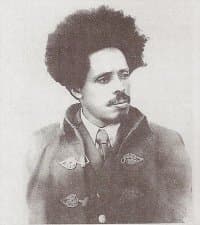
Abebe Aregai
General · Modern
58.2Total

Eurico Gaspar Dutra
General · Modern
52.7Total
Basic Information
Born
1903
1883
Died
1960
1974
Era
Modern
Modern
Nationality
Ethiopia
Brazil
Occupation
General
General
Civilization
Other
Western
Score Comparison
Military (10%)
70.0
50.0
Political (20%)
53.8
68.0
Influence (20%)
62.0
51.8
Legacy (20%)
50.0
44.2
Leadership (15%)
62.0
62.0
Strategy (15%)
58.0
41.7
TOTAL
58.2
52.7
Abebe Aregai — Complete Timeline
1936 AD
Led Arbegnoch Resistance against Italian OccupationWar
After the Italian conquest, Abebe Aregai organized and led the Arbegnoch (Patriots) guerrilla resistance in Shewa. His forces harassed Italian supply lines and conducted hit-and-run attacks for five years.
ResistanceGuerrilla WarfareItalian Occupation
Impact: regionalconstructive
1957 AD
Appointed Prime Minister of EthiopiaPolitical Action◆ Major
Emperor Haile Selassie appointed Abebe Aregai as Prime Minister of Ethiopia. He served until his death in 1960, overseeing post-war reconstruction and modernization efforts.
Prime MinisterGovernmentReconstruction
Impact: nationalconstructive
1960 AD
Killed during 1960 Coup AttemptPolitical Action◆ Major
Abebe Aregai was assassinated during an attempted coup d'
CoupAssassinationEthiopia
Impact: nationaltragic
Eurico Gaspar Dutra — Complete Timeline
1945 AD
Elected President of BrazilPolitical Action◆ Major
Eurico Gaspar Dutra was elected President of Brazil, succeeding Get
Presidency1946 RepublicElection
Impact: national
1946 AD
Promulgated the 1946 ConstitutionReform◆ Major
Dutra oversaw the promulgation of a new democratic constitution, which restored civil liberties and established a presidential system. The 1946 Constitution replaced the authoritarian 1937 Charter and marked Brazil's return to democracy.
ConstitutionDemocracyPost-Estado Novo
Impact: nationalprogressive
Implemented the 'Dutra Plan' (Plano Dutra) for Economic DevelopmentReform
Dutra launched an economic development plan focused on infrastructure, energy, and transportation. The plan aimed to modernize the Brazilian economy and reduce dependence on imports, but its implementation was limited by fiscal constraints.
Economic PlanDevelopmentInfrastructure
Impact: nationalconstructive
1947 AD
Banned the Communist PartyPolitical Action◆ Major
Dutra banned the Brazilian Communist Party (PCB) and broke diplomatic relations with the Soviet Union. This action was part of his alignment with the United States during the early Cold War and aimed to suppress leftist opposition.
Cold WarCommunist BanAnti-Communism
Impact: nationaldestructive
1950 AD
Ended Presidency and RetiredPolitical Action
Dutra completed his term and was succeeded by Get
End of TermRetirementLegacy
Impact: national
Expert Analysis
Abebe Aregai vs Eurico Gaspar Dutra
# The General as Statesman: Two Paths from Uniform to Power
On a September morning in 1960, a knock came at the door of a modest Addis Ababa residence. General Abebe Aregai, Prime Minister of Ethiopia, opened it to find armed members of the Imperial Bodyguard. Within hours, he lay dead, caught in a coup he had tried to negotiate down. A decade earlier and half a world away, General Eurico Gaspar Dutra had walked out of the presidential palace in Rio de Janeiro, his term completed, his constitution still standing, and retired to the quiet respect of a nation. Both men wore uniforms, both led their countries, but their stories diverged like two rivers from the same mountain—one ending in a flood, the other flowing peacefully to the sea.
Origins
Abebe Aregai was born in 1903, in a highland Ethiopia still free from European colonization, a land whose emperor traced his lineage to Solomon. He grew up in a world where tradition and independence were sacred, where the rifle and the horse were symbols of honor. The son of a noble family, he learned early that leadership meant loyalty to the throne and the soil.
Eurico Gaspar Dutra, born in 1883 in the Brazilian state of Mato Grosso, came of age in a very different world. Brazil had been a monarchy until his sixth year, then a republic struggling to find its identity. The army was not just a fighting force but a political institution, the arbiter of national order. Dutra entered military school at fifteen, absorbing a positivist creed that saw the officer class as the engine of progress.
The difference in their eras shaped everything. Abebe Aregai faced an existential threat—Italy’s invasion of 1935–36, the last gasp of European colonialism in Africa. Dutra faced a political crisis—the end of Getúlio Vargas’s Estado Novo dictatorship and the question of what kind of democracy Brazil would become.
Rise to Power
When Italian forces overran Ethiopia in 1936, Abebe Aregai did not surrender. He retreated into the mountains of Shewa and organized the Arbegnoch—the Patriots. For five years, his guerrillas harassed Italian supply lines, ambushed patrols, and kept the flame of resistance alive. His strategy score of 59.0 suggests he was no tactical genius, but his leadership score of 84.5 tells a deeper truth: he held men together through sheer will. He became a symbol, and symbols matter in war.
Dutra’s rise was quieter. He climbed the ranks of Brazil’s army through competence and caution. By 1945, as Vargas’s dictatorship tottered, Dutra was Minister of War. He did not lead a rebellion; he managed a transition. When Vargas was pushed out, Dutra emerged as the compromise candidate—a general trusted by both the old regime and the new democrats. In December 1945, he was elected president of Brazil.
Abebe Aregai earned his power through blood and endurance. Dutra inherited his through institutional maneuvering. Both were generals, but one was forged in war, the other in bureaucracy.
Leadership & Governance
Abebe Aregai became Prime Minister in 1957, appointed by Emperor Haile Selassie. His political score of 79.4 reflects a man who understood the delicate balance between tradition and modernization. He oversaw administrative reforms, but he remained a servant of the crown. His governance was personal, rooted in loyalty to the emperor and the old order. There was no grand plan, no constitution—just steady management of a feudal system trying to inch into the twentieth century.
Dutra’s governance was institutional. In 1946, he promulgated a new democratic constitution, restoring civil liberties and establishing a presidential system. He launched the Dutra Plan for economic development, focusing on infrastructure and energy. But he also banned the Communist Party in 1947, breaking relations with the Soviet Union. This was not the act of a tyrant but of a Cold War pragmatist—a general who saw order as the precondition for freedom.
Abebe Aregai ruled by presence and persuasion. Dutra ruled by documents and decrees. One was a chieftain; the other was a manager.
Triumph & Tragedy
Abebe Aregai’s greatest moment was the resistance itself. When Ethiopia was restored in 1941, he emerged as a national hero, the man who had never surrendered. His tragedy came twenty-four years later, in 1960, when he was killed trying to mediate between the emperor’s guard and the coup plotters. He died not in battle but in a palace hallway, caught between loyalties.
Dutra’s triumph was the constitution. It lasted eighteen years, until the military coup of 1964, but it established a democratic framework that Brazil would return to decades later. His tragedy was more subtle: he completed his term, retired, and watched as Vargas returned to power, then as the army he had served overthrew democracy. He lived to see his work undone, but he died in 1974 at ninety-one, respected, not murdered.
Character & Destiny
Abebe Aregai was a man of the mountain and the rifle. His high leadership score and low strategy score suggest a commander who inspired rather than outthought. He trusted his men, and they trusted him. That trust killed him—he walked into a coup believing he could talk, not fight.
Dutra was a man of the desk and the decree. His political score of 75.8 and leadership score of 83.5 show a leader who knew how to manage institutions. He did not inspire devotion; he inspired compliance. That caution saved him—he left power alive because he never made enemies who wanted him dead.
One died because he was too loyal. The other lived because he was too careful.
Legacy
Abebe Aregai’s legacy is memory. He is remembered as a patriot, a symbol of resistance, but his governance left little mark on Ethiopia’s institutions. His name lives in stories, not statutes. His total score of 72.7 reflects a life of action, not architecture.
Dutra’s legacy is the 1946 Constitution, a document that shaped Brazilian democracy for nearly two decades. His legacy score of 60.6 is lower than his achievements might warrant, perhaps because he was overshadowed by Vargas, the giant he succeeded. But constitutions outlast personalities.
Conclusion
Two generals, two worlds. Abebe Aregai fought for a country that was already ancient. Eurico Gaspar Dutra governed a country that was still becoming. One died in a coup; the other died in bed. But both faced the same question: what does a man in uniform do when the fighting stops? Abebe Aregai answered by serving his emperor until the bullet came. Dutra answered by building a democracy and then stepping aside. Neither answer was perfect. Both were true to the men who gave them. In the end, the difference between them is not about courage or skill—it is about whether a nation’s fate is decided by its past or its future.
Rankings
🥇
Abebe AregaiLeader
Mil: 70.0Pol: 53.8Inf: 62.0
58.2
🥈
Eurico Gaspar Dutra
Mil: 50.0Pol: 68.0Inf: 51.8
52.7
+5.5 behind
How This Comparison Works
Algorithm
Each figure is scored on 6 dimensions (0—100 scale) based on structured historical data: Military (10%), Political (20%), Influence (20%), Legacy (20%), Leadership (15%), Strategy (15%). The weighted total produces the final ranking.
Data Sources
Scores are computed from structured sub-indicators in the database. Scale factors adjust for era (Ancient ×0.85, Modern ×1.0) and civilization size (Eastern ×1.05, Other ×0.80) to account for differences in population and military scale.
Maximum 3 Figures
Comparisons are limited to 2—3 figures to ensure readability and statistical meaningfulness.
Error Margins
±5 points per dimension — Sub-scores are derived from historical records with inherent uncertainty. Two figures within 5 points on a dimension should be considered roughly equivalent in that area.
Total Score Accuracy
±3 points overall — The weighted combination of 6 dimensions produces a total score with approximately ±3 points of uncertainty. Differences of less than 3 points are not statistically significant— the figures are effectively tied.
Known Limitations
- Historical records are incomplete and uneven across civilizations
- Figures from oral-tradition societies may be underrepresented
- Occupation labels can misclassify multi-role figures
- Scores measure capability and impact, not moral character
- Quantitative scoring is a comparison tool, not absolute truth
Capability Radar
Military (10%) — Battles & Warfare
Battles
65
10
Win Rate
60
15
Expansion
40
10
Political (20%) — Governance & Reform
Reform
45
50
Diplomacy
60
45
Economy
40
40
Influence (20%) — Cultural & Global Reach
Cultural
45
20
Global
35
20
Legacy (20%) — Historical Impact
Historical
55
30
Longevity
40
25
Leadership (15%) — Power & Stability
Tenure
55
55
Stability
50
50
Strategy (15%) — Tactics & Innovation
Strategy
75
25
Tactics
70
20
Reform
50
30
Similar Comparisons
Comments & Discussion
HELLENIC-SPARTAN6/16/2026
This comparison ignores Abebe's fatal flaw: he was a brilliant partisan commander but a terrible politician. When you spend years fighting guerrilla wars against Italians in the hills, you learn to distrust institutions, not build them. Dutra, by contrast, came from a tradition where the military wore suits as easily as uniforms. Abebe trusted negotiation when he should have secured his position. That's not bad luck—that's bad statecraft.
陆上将军6/16/2026
Dutra是个官僚机器里的螺丝钉,Abebe是创造规则的孤狼。说穿了,军人数千年来都在被政治驯化,但Abebe死得像战士而不是政客。Dutra活成了教科书上的一个章节,Abebe却成了诗。历史记得谁更多?
NUMBERS-NERO6/16/2026
The data tells a simpler story than any cultural analysis. Ethiopia's coup attempt rate per decade from 1960-1990 was over 300% higher than Brazil's, and political leader life expectancy in office was half. Compare Abebe's 11 months as PM to Dutra's full 5-year term. This isn't about individual virtues—it's about institutions. Brazil had a functioning constitutional framework. Ethiopia had a single chain of loyalty to Haile Selassie. One chain breaks, everyone falls.
古典学人6/16/2026
拿罗马对比,Dutra像奥古斯都,Abebe像加里恩努斯——前者稳定了过渡期,后者在危机中挣扎。问题是,奥古斯都的成功靠的是三十年如一的体制建设,加里恩努斯的失败源于他想拯救一个早已烂透的系统。Abebe面对的帝国结构比Dutra脆弱十倍,他的英勇是悲剧的,不是可学的。
RELUCTANT-HISTORIAN6/16/2026
Let's be honest: this comparison flatters Dutra by ignoring his authoritarian streak. He banned the Communist Party in 1947, jailed opponents, and his "constitutional" government was built on Vargas's Estado Novo foundations. Meanwhile, Abebe was trying to modernize Ethiopia while respecting its traditions—a nearly impossible task. Dutra had the luxury of ruling a country that had been independent for over a century. Abebe inherited an empire fighting its first generation of modernity.