Loading...
Abebe Aregai vs Dzhokhar Dudayev
Abebe Aregai leads by 6.2 pts · 2 figures compared
…
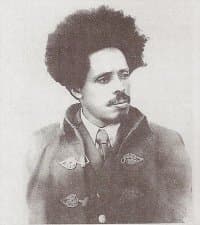
Abebe Aregai
General · Modern
58.2Total
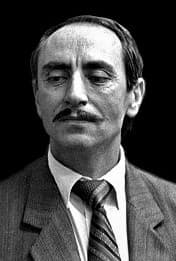
Dzhokhar Dudayev
General · Modern
52.0Total
Basic Information
Born
1903
1944
Died
1960
—
Era
Modern
Modern
Nationality
Ethiopia
Chechnya
Occupation
General
General
Civilization
Other
Western
Score Comparison
Military (10%)
70.0
46.7
Political (20%)
53.8
45.1
Influence (20%)
62.0
57.2
Legacy (20%)
50.0
47.5
Leadership (15%)
62.0
57.6
Strategy (15%)
58.0
57.5
TOTAL
58.2
52.0
Abebe Aregai — Complete Timeline
1936 AD
Led Arbegnoch Resistance against Italian OccupationWar
After the Italian conquest, Abebe Aregai organized and led the Arbegnoch (Patriots) guerrilla resistance in Shewa. His forces harassed Italian supply lines and conducted hit-and-run attacks for five years.
ResistanceGuerrilla WarfareItalian Occupation
Impact: regionalconstructive
1957 AD
Appointed Prime Minister of EthiopiaPolitical Action◆ Major
Emperor Haile Selassie appointed Abebe Aregai as Prime Minister of Ethiopia. He served until his death in 1960, overseeing post-war reconstruction and modernization efforts.
Prime MinisterGovernmentReconstruction
Impact: nationalconstructive
1960 AD
Killed during 1960 Coup AttemptPolitical Action◆ Major
Abebe Aregai was assassinated during an attempted coup d'
CoupAssassinationEthiopia
Impact: nationaltragic
Dzhokhar Dudayev — Complete Timeline
1991 AD
Proclaimed Independence of ChechnyaPolitical Action
Dzhokhar Dudayev declared the independence of the Chechen Republic of Ichkeria from the Soviet Union. He was elected president in a controversial election. This act triggered the First Chechen War with Russia.
ChechnyaIndependenceIchkeria
Impact: regionalconstructive
1994 AD
First Chechen War BeginsWar
Russian forces invaded Chechnya to suppress the independence movement. Dudayev led the Chechen resistance, using guerrilla tactics. The war resulted in heavy casualties and destruction but failed to defeat the Chechen forces.
Chechen WarRussiaInvasion
Impact: regionaltragic
1996 AD
Assassination by Russian MissileWar
Dudayev was killed by a Russian guided missile while using a satellite phone near Grozny. His death was a major blow to the Chechen resistance but did not end the war. He was succeeded by Aslan Maskhadov.
AssassinationChechnyaRussia
Impact: regionaltragic
Expert Analysis
Abebe Aregai vs Dzhokhar Dudayev
### The General Who Ruled Two Worlds
In the dying days of 1960, a bullet fired in the confusion of a coup ended the life of a man who had once led a guerrilla army from the mountains. In the spring of 1996, a missile guided by a satellite signal killed a man who had tried to conjure a nation from the ashes of an empire. Abebe Aregai and Dzhokhar Dudayev never met. They governed different centuries, different continents, different faiths. Yet both were generals who became political leaders of small nations fighting colossal enemies. One died defending an emperor; the other died fighting a superpower. Why did their paths diverge so starkly, and what drove their different outcomes?
### Origins
Abebe Aregai was born in 1903 into the feudal world of Emperor Menelik’s Ethiopia, a land that had humiliated Italy at Adwa in 1896. He grew up in the highlands of Shewa, where loyalty to the crown was a sacred duty and military service was the path to honor. The world he knew was one of clans, horses, and rifles—a medieval kingdom on the cusp of modernity.
Dzhokhar Dudayev was born in 1944, in the final convulsion of World War II, into a Chechen family that had just been deported to Central Asia by Stalin’s order. His people were a nation erased from maps, scattered across Kazakhstan. Dudayev grew up in exile, speaking Russian, dreaming of return. He joined the Soviet Air Force, rose to the rank of Major General, and commanded strategic bombers. By the time he came home to Chechnya in 1991, he was a product of the Soviet system—but a system he had come to despise.
### Rise to Power
Abebe Aregai’s rise was forged in defeat. When Mussolini’s modern army crushed Ethiopia in 1936, the Emperor fled into exile. But Aregai refused to surrender. He retreated into the mountains of Shewa and organized the *Arbegnoch*—the Patriots. For five years, he led a classic guerrilla campaign: ambushing Italian convoys, cutting supply lines, hiding among peasants who refused to betray him. He became a symbol of defiance, a living legend even before liberation. When Haile Selassie returned in 1941, Aregai emerged from the hills as the undisputed hero of the resistance. His military prowess had earned him political capital.
Dudayev’s rise was a lightning strike. In 1991, as the Soviet Union dissolved, he returned to Grozny and almost overnight became the voice of Chechen independence. He was elected president with overwhelming support, and on November 1, 1991, he proclaimed the Chechen Republic of Ichkeria. Unlike Aregai, who had fought for an existing kingdom, Dudayev was building a state from scratch—with no treasury, no international recognition, and a population exhausted by decades of Soviet rule.
### Leadership & Governance
Abebe Aregai governed as a loyal servant of the emperor. In 1957, Haile Selassie appointed him Prime Minister, a position that required balancing the traditional aristocracy with the rising generation of educated reformers. Aregai was no visionary modernizer; his strength lay in stability. He oversaw infrastructure projects and administrative reforms, but always within the framework of imperial autocracy. His leadership was cautious, bureaucratic, and deferential to the throne.
Dudayev was the opposite. He governed as a revolutionary, not a bureaucrat. His Chechnya was chaotic—a place of warlords, criminal gangs, and fractured loyalties. He failed to build effective institutions, and his rule was increasingly authoritarian. Yet he understood the power of symbolism. He created a flag, a constitution, a national currency. He spoke of Chechen honor and sovereignty with the fire of a poet. His military strategy was also flawed: when Russia invaded in 1994, he had no centralized army, only a loose coalition of fighters. But he knew the mountains, and he knew guerrilla war.
### Triumph & Tragedy
Abebe Aregai’s greatest triumph was the guerrilla campaign that humiliated Mussolini’s empire. It was a war of patience and suffering, but it kept the idea of Ethiopia alive. His greatest tragedy came in 1960, when a group of young officers in the Imperial Bodyguard attempted a coup. Aregai, then 57, tried to negotiate. He went to the palace to reason with the rebels. They shot him dead. The irony is bitter: the man who had outwitted the Italian army was killed by his own countrymen, in a failed bid to preserve the very emperor he had fought to restore.
Dudayev’s triumph was survival itself. For two years, his ragtag fighters held off the Russian army, inflicting humiliating losses. The First Chechen War ended in 1996 with a ceasefire that effectively recognized Chechen independence. But Dudayev never saw the victory. In April 1996, he was killed by a Russian missile that homed in on his satellite phone. He died in a field, talking to a peace negotiator, a martyr to the cause he had ignited.
### Character & Destiny
Aregai was a man of discipline and loyalty. He believed in hierarchy, tradition, and the emperor. His decisions were shaped by a deep sense of duty to an institution, not to an idea. He was cautious, patient, and ultimately, too trusting of the system that had raised him.
Dudayev was a man of fire and risk. He believed in independence, in the right of a small nation to exist. His decisions were shaped by a romantic nationalism that was both his strength and his weakness. He was bold, charismatic, and ultimately, too isolated to build the state he dreamed of.
One was a general who became a statesman; the other was a general who became a symbol. One died defending order; the other died defying it.
### Legacy
Abebe Aregai is remembered in Ethiopia as a patriot, but his legacy is overshadowed by the emperor he served and the coup that killed him. He is a footnote in a larger story—a loyal soldier who did his duty.
Dudayev is remembered as the father of Chechen independence. His portrait hangs in Grozny, his name is sung in folk songs, and his spirit haunts the Russian-Chechen conflict to this day. He failed to build a state, but he succeeded in creating a nation’s dream.
### Conclusion
Two generals. Two mountains. Two empires. Abebe Aregai fought for a throne that had stood for centuries; Dzhokhar Dudayev fought for a republic that had never existed. One was killed trying to save a system; the other was killed trying to destroy one. Their lives remind us that the same courage can serve opposite ends, and that history judges not by intentions, but by outcomes. In the end, Aregai’s Ethiopia survived; Dudayev’s Chechnya did not. But both men died believing they were right. Perhaps that is the only victory a general can ever truly claim.
Rankings
🥇
Abebe AregaiLeader
Mil: 70.0Pol: 53.8Inf: 62.0
58.2
🥈
Dzhokhar Dudayev
Mil: 46.7Pol: 45.1Inf: 57.2
52.0
+6.2 behind
How This Comparison Works
Algorithm
Each figure is scored on 6 dimensions (0—100 scale) based on structured historical data: Military (10%), Political (20%), Influence (20%), Legacy (20%), Leadership (15%), Strategy (15%). The weighted total produces the final ranking.
Data Sources
Scores are computed from structured sub-indicators in the database. Scale factors adjust for era (Ancient ×0.85, Modern ×1.0) and civilization size (Eastern ×1.05, Other ×0.80) to account for differences in population and military scale.
Maximum 3 Figures
Comparisons are limited to 2—3 figures to ensure readability and statistical meaningfulness.
Error Margins
±5 points per dimension — Sub-scores are derived from historical records with inherent uncertainty. Two figures within 5 points on a dimension should be considered roughly equivalent in that area.
Total Score Accuracy
±3 points overall — The weighted combination of 6 dimensions produces a total score with approximately ±3 points of uncertainty. Differences of less than 3 points are not statistically significant— the figures are effectively tied.
Known Limitations
- Historical records are incomplete and uneven across civilizations
- Figures from oral-tradition societies may be underrepresented
- Occupation labels can misclassify multi-role figures
- Scores measure capability and impact, not moral character
- Quantitative scoring is a comparison tool, not absolute truth
Capability Radar
Military (10%) — Battles & Warfare
Battles
65
35
Win Rate
60
30
Expansion
40
20
Political (20%) — Governance & Reform
Reform
45
35
Diplomacy
60
30
Economy
40
15
Influence (20%) — Cultural & Global Reach
Cultural
45
40
Global
35
35
Legacy (20%) — Historical Impact
Historical
55
45
Longevity
40
30
Leadership (15%) — Power & Stability
Tenure
55
30
Stability
50
10
Strategy (15%) — Tactics & Innovation
Strategy
75
50
Tactics
70
55
Reform
50
40
Similar Comparisons
Comments & Discussion
硬核史料控6/16/2026
阿贝贝·阿雷盖的游击战在奥加登地区干掉了多少意大利兵?具体数字没人敢吹。但别拿他当民族英雄吹——他不过是海尔·塞拉西的忠犬,带着封建色彩的死士。杜达耶夫呢?苏联空军少将的履历挺唬人,可他用导弹和车臣山民打游击?纯属自杀式赌局。阿雷盖死得壮烈但过时,杜达耶夫死得蠢到可笑。历史不怜悯迷信刀剑的人。
Classics Scholar6/16/2026
The Eagle’s Shadow|Both men mirror ancient archetypes: Aregai as the loyal satrap fighting for a failing crown (think Plato’s philosopher-king corrupted), Dudayev as the tragic rebel channeling Machiavelli’s prince without fortune. But their divergence is in legitimacy. Aregai died for a lineage that had ruled Ethiopia for centuries; Dudayev died for a Chechen presidency he invented. One had historical weight; the other had only a satellite-guided missile. History favors the rooted, not the root
历史辩证法6/16/2026
帝国残阳和游击神话的对比挺扎心。阿雷盖是封建体系的殉道者,连尸体都被政敌侮辱;杜达耶夫是苏联崩塌后的乱世枭雄,骨子里还是苏联将军的思维。但别把失败浪漫化——阿雷盖的忠诚本质是武士道式的盲从,杜达耶夫的独立梦更像一场自毁行为艺术。19世纪的光荣和20世纪的导弹都救不了他们,因为大国的棋盘不会偶然安排小卒的结局。
Acid-Tongue Data Skeptic6/16/2026
The Dead General Scorecard|Let’s crunch numbers: Aregai’s guerrilla campaign against Italy (1936–41) had maybe 10,000 fighters max, facing 300,000 colonial troops. He won tactical skirmishes but lost the strategic war. Dudayev’s Chechen war (1994–96) had 15,000 rebels vs 200,000 Russians, and they won a ceasefire. Point: Dudayev actually
ThroneAndTreaty6/16/2026
The Mountain Fox|Abebe Aregai’s guerrilla tactics in the Ogaden fight against Italy are underrated—he turned the highlands into a death trap for colonial forces. But calling him a "general who ruled two worlds" is hype. He was a loyalist to a fading feudal system, not a visionary. Dudayev, despite his Soviet bomber pilot resume, was a romantic fool who thought Chechnya could win a 20th-century war with 19th-century grit. Aregai fought for an emperor; Dudayev fought for a fantasy. Both died for l