Loading...
Juan Carlos I vs Julius Caesar
Julius Caesar leads by 25.3 pts · 2 figures compared
…
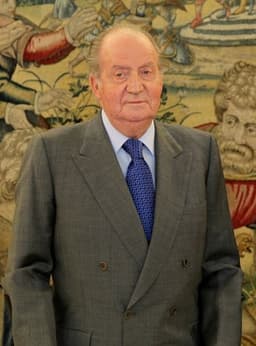
Juan Carlos I
Emperor · Modern
57.5Total

Julius Caesar
General · Ancient
82.8Total
Basic Information
Born
1938
-100
Died
—
-44
Era
Modern
Ancient
Nationality
Spain
Roman Republic
Occupation
Emperor
General
Civilization
Western
Western
Score Comparison
Military (10%)
26.8
88.0
Political (20%)
75.0
78.0
Influence (20%)
55.0
85.0
Legacy (20%)
52.0
82.0
Leadership (15%)
72.0
80.0
Strategy (15%)
60.0
85.0
TOTAL
57.5
82.8
Juan Carlos I — Complete Timeline
1975 AD
King of Spain CoronationPolitical Action◆ Major
Juan Carlos I was crowned King of Spain on November 22, 1975, two days after Francisco Franco's death. He inherited a dictatorship and immediately began steering the country toward democratic reform.
CoronationTransitionDemocracy
Impact: nationalconstructive
1976 AD
Spanish Transition to DemocracyReform
Juan Carlos I appointed Adolfo Suarez as Prime Minister and supported the Political Reform Act of 1976, which dismantled Francoist institutions. He used his authority to push through democratic reforms, leading to free elections in 1977.
DemocratizationReformConstitution
Impact: nationalprogressive
1981 AD
1981 Spanish Coup d'état AttemptPolitical Action
On February 23, 1981, Civil Guard officers led by Antonio Tejero stormed the Spanish Congress. Juan Carlos I appeared on national television in military uniform, denouncing the coup and ordering the military to remain loyal, which ended the attempt.
Coup AttemptCrisisLeadership
Impact: nationalconstructive
2014 AD
Abdication in Favor of Felipe VIPolitical Action◆ Major
Juan Carlos I abdicated the throne on June 2, 2014, citing personal reasons and the need for generational renewal. His son Felipe VI succeeded him. The abdication followed years of declining popularity due to scandals and economic crisis.
AbdicationMonarchySuccession
Impact: national
2020 AD
Corruption Scandals and ExilePolitical Action◆ Major
In August 2020, Juan Carlos I left Spain for the United Arab Emirates amid investigations into alleged financial irregularities, including hidden bank accounts and commissions from a high-speed rail contract in Saudi Arabia. He remained in self-imposed exile.
CorruptionExileScandal
Impact: nationaldestructive
Julius Caesar — Complete Timeline
58 BC
Gallic WarsWar◆ Major
Caesar, as proconsul of Gaul, launched a series of campaigns that conquered all of Gaul (modern France, Belgium, and parts of Switzerland). He fought numerous battles, including against the Helvetii, the Belgae, and the Gallic chieftain Vercingetorix. The wars brought immense wealth and a loyal army to Caesar.
Gallic WarsConquestRoman Expansion
Impact: regional
49 BC
Crossing the RubiconPolitical Action◆ Major
Caesar led Legio XIII across the Rubicon River into Italy, defying the Roman Senate's order to disband his army. This act triggered a civil war against Pompey and the Optimates, ultimately leading to Caesar's dictatorship and the end of the Roman Republic.
Roman Civil WarEnd of RepublicPower Struggle
Impact: global
48 BC
Battle of PharsalusWar◆ Major
Caesar's outnumbered army defeated the larger forces of Pompey the Great at Pharsalus in Greece. Caesar's tactical use of a reserve line to counter Pompey's cavalry charge proved decisive. Pompey fled to Egypt, where he was assassinated, leaving Caesar as the undisputed master of the Roman world.
Roman Civil WarBattleDecisive Victory
Impact: regional
44 BC
Appointment as Dictator for LifePolitical Action◆ Major
The Roman Senate appointed Caesar dictator perpetuo (dictator for life), granting him unprecedented personal power. This move concentrated military, legislative, and judicial authority in one person, effectively ending the Roman Republic's traditional system of checks and balances and alarming many senators.
DictatorshipEnd of RepublicPower Consolidation
Impact: regionaldestructive
Assassination on the Ides of MarchPolitical Action◆ Major
A group of Roman senators, led by Marcus Junius Brutus and Gaius Cassius Longinus, stabbed Caesar to death at a meeting of the Senate in the Theatre of Pompey. The assassination was intended to restore the Republic, but instead triggered another civil war that led to the rise of the Roman Empire.
AssassinationRoman PoliticsEnd of Republic
Impact: globaldestructive
Expert Analysis
juan-carlos-i-vs-julius-caesar
# The Dictator and the Democrat
On March 15, 44 BCE, Julius Caesar fell beneath twenty-three dagger strokes on the floor of the Roman Senate, the blood of the Republic's most brilliant conqueror pooling around the feet of his assassins. Two thousand years and a world away, on February 23, 1981, King Juan Carlos I of Spain sat in a palace study, facing a graver choice: whether to endorse a military coup that could restore authoritarian rule, or to risk his throne—and his life—by defying it. One man died because he had seized too much power; the other survived because he gave it away. Their stories, separated by centuries, converge on the same question: What does a leader owe the state he inherits?
Origins
Caesar was born into the twilight of the Roman Republic, a world of crumbling institutions and ambitious warlords. His family, the Julii, claimed descent from the goddess Venus, but its political fortunes had faded. Young Gaius watched his uncle Gaius Marius wage civil war against Sulla, learning early that in Rome, power flowed from legions, not laws. The Republic was already dying; Caesar would merely deliver the killing blow.
Juan Carlos was born into the opposite extreme: a Spain crushed under Francisco Franco's dictatorship. His grandfather, King Alfonso XIII, had fled into exile in 1931, and the young prince grew up in Portugal, Italy, and Switzerland, educated under Franco's watchful eye. The Caudillo chose him as successor precisely because he seemed pliable—a puppet king who would preserve the regime. But Juan Carlos had seen too much of exile to love tyranny. He understood that legitimacy cannot be inherited; it must be earned.
Rise to Power
Caesar's ascent was a masterpiece of calculated risk. He borrowed fortunes to fund public games, seduced the wives of enemies and allies alike, and built a network of debtors and clients that stretched across the Republic. His military genius flowered in Gaul, where between 58 and 50 BCE he conquered a million people and wrote his own legend. When the Senate ordered him to disband his army, he crossed the Rubicon River with a single legion, uttering the famous *alea iacta est*—"the die is cast." He gambled everything on the understanding that in a failing republic, only the man with the sword makes the law.
Juan Carlos rose by staying silent. For decades, he played the role Franco demanded: attending military ceremonies, praising the regime, never revealing his true intentions. When Franco finally died in November 1975, the new king inherited a state built on fear. But within months, he began dismantling it. He appointed Adolfo Suárez, a former Francoist turned reformer, as prime minister, and together they pushed through the Political Reform Act of 1976—a law that effectively voted the dictatorship out of existence. Where Caesar had crossed a river to seize power, Juan Carlos crossed a psychological Rubicon to surrender it.
Leadership & Governance
Caesar governed as he fought: with audacity and speed. As dictator, he reformed the calendar, granted citizenship to provincials, launched public works, and centralized authority in his own person. His genius was administrative as much as military—he understood that an empire could not be ruled by a city-state's obsolete institutions. But his reforms came at a terrible price: the Senate became a rubber stamp, elections a farce, and the Republic a corpse. "I am Caesar," he reportedly told a soothsayer who warned of danger. "And nothing can happen to me that is not my destiny."
Juan Carlos governed by restraint. His power was never absolute; Spain's 1978 Constitution made him a ceremonial monarch. But in moments of crisis, his symbolic authority proved decisive. On the night of February 23, 1981, when Colonel Antonio Tejero stormed the Cortes with armed guards, the king donned his uniform and broadcast a televised address ordering the military to remain loyal to the democratic government. "The Crown," he declared, "cannot tolerate in any form actions or attitudes that seek to interrupt the democratic process." The coup collapsed by morning. Caesar had used his army to destroy a republic; Juan Carlos used his crown to save one.
Triumph & Tragedy
Caesar's triumph was absolute: he conquered Gaul, defeated his rivals, and became master of the Roman world. His tragedy was equally absolute. On the Ides of March, 44 BCE, senators he had pardoned—men he called friends—surrounded him and struck. He died clutching his toga, covering his face, perhaps in shame that his clemency had bred not loyalty but contempt. His last breath ended not just a life but a political system. The Republic never recovered.
Juan Carlos's triumph was Spain's peaceful transition to democracy—a feat so rare in history that it bears the name *la Transición*. His tragedy came later, slower, and more ingloriously. In the 2010s, corruption scandals emerged: secret accounts in Switzerland, allegations of taking bribes from Saudi Arabia, a lavish lifestyle funded by hidden wealth. In August 2020, he fled to the United Arab Emirates, a voluntary exile that tarnished the legacy of the king who had once saved democracy. He abdicated in 2014, handing the throne to his son Felipe VI, but the damage was done.
Character & Destiny
Caesar was driven by an insatiable hunger for glory. He wrote his own commentaries, cultivated his own image, and believed himself above the laws that bound lesser men. His genius was his arrogance; his arrogance was his doom. He could not imagine a world without him at its center, and so he never built institutions that could survive him. His adopted heir Octavian would finish the work—but Octavian learned from Caesar's corpse that power must be disguised.
Juan Carlos was driven by a more subtle ambition: the desire to be remembered as the king who gave Spain back to the Spanish. He understood that his role was temporary, that true leadership sometimes means stepping aside. But his later years revealed a flaw Caesar would have recognized: the belief that exceptional service excuses exceptional privilege. The corruption scandals suggest a man who saved democracy but never fully believed its rules applied to him.
Legacy
Caesar's legacy is the Roman Empire itself. His name became a title—*Kaiser*, *Tsar*—and his reforms laid the foundation for two thousand years of Western governance. But he also left a warning: that the man who saves a republic may be the one who destroys it.
Juan Carlos's legacy is more fragile. For a generation of Spaniards, he was the hero who faced down tanks and saved freedom. For younger Spaniards, he is the king who fled to Dubai amid corruption allegations. His abdication was graceful; his exile was not. History will judge whether the man who dismantled a dictatorship deserves forgiveness for the sins he committed in its aftermath.
Conclusion
Standing in the Spanish Congress on that February night in 1981, Juan Carlos faced the ghost of Caesar. He could have chosen the path of the dictator—seized the crisis to expand his own power, as so many had done before. Instead, he chose the harder road: to use his authority to make himself unnecessary. Caesar died because he made himself indispensable; Juan Carlos lived because he made himself replaceable. In that difference lies the entire distance between the fall of a republic and the birth of a democracy.
Rankings
🥇
Julius CaesarLeader
Mil: 88.0Pol: 78.0Inf: 85.0
82.8
🥈
Juan Carlos I
Mil: 26.8Pol: 75.0Inf: 55.0
57.5
+25.3 behind
How This Comparison Works
Algorithm
Each figure is scored on 6 dimensions (0—100 scale) based on structured historical data: Military (10%), Political (20%), Influence (20%), Legacy (20%), Leadership (15%), Strategy (15%). The weighted total produces the final ranking.
Data Sources
Scores are computed from structured sub-indicators in the database. Scale factors adjust for era (Ancient ×0.85, Modern ×1.0) and civilization size (Eastern ×1.05, Other ×0.80) to account for differences in population and military scale.
Maximum 3 Figures
Comparisons are limited to 2—3 figures to ensure readability and statistical meaningfulness.
Error Margins
±5 points per dimension — Sub-scores are derived from historical records with inherent uncertainty. Two figures within 5 points on a dimension should be considered roughly equivalent in that area.
Total Score Accuracy
±3 points overall — The weighted combination of 6 dimensions produces a total score with approximately ±3 points of uncertainty. Differences of less than 3 points are not statistically significant— the figures are effectively tied.
Known Limitations
- Historical records are incomplete and uneven across civilizations
- Figures from oral-tradition societies may be underrepresented
- Occupation labels can misclassify multi-role figures
- Scores measure capability and impact, not moral character
- Quantitative scoring is a comparison tool, not absolute truth
Capability Radar
Military (10%) — Battles & Warfare
Battles
34
95
Win Rate
39
92
Expansion
41
97
Political (20%) — Governance & Reform
Reform
85
90
Diplomacy
80
85
Economy
60
82
Influence (20%) — Cultural & Global Reach
Cultural
55
88
Global
65
94
Legacy (20%) — Historical Impact
Historical
70
95
Longevity
60
96
Leadership (15%) — Power & Stability
Tenure
65
75
Stability
75
60
Strategy (15%) — Tactics & Innovation
Strategy
44
94
Tactics
46
96
Reform
52
88
Similar Comparisons
Comments & Discussion
No comments yet. Be the first to share your thoughts!