Loading...
Abd al-Rahman III vs Al-Mahdi
Abd al-Rahman III leads by 17.8 pts · 2 figures compared
…
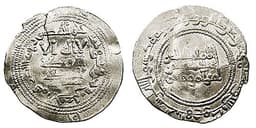
Abd al-Rahman III
Emperor · Medieval
72.3Total
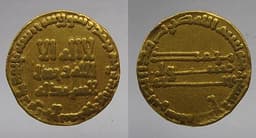
Al-Mahdi
Emperor · Medieval
54.5Total
Basic Information
Born
891
744
Died
961
785
Era
Medieval
Medieval
Nationality
Al-Andalus
Abbasid Caliphate
Occupation
Emperor
Emperor
Civilization
Middle Eastern
Middle Eastern
Score Comparison
Military (10%)
82.0
52.5
Political (20%)
70.3
68.0
Influence (20%)
68.0
59.0
Legacy (20%)
72.0
50.0
Leadership (15%)
80.0
40.0
Strategy (15%)
65.4
57.5
TOTAL
72.3
54.5
Abd al-Rahman III — Complete Timeline
929 AD
Proclamation as Caliph of CordobaPolitical Action
Abd al-Rahman III declared himself caliph of Cordoba, breaking all ties with the Abbasid and Fatimid caliphates. This established the Caliphate of Cordoba, elevating Al-Andalus to a major political and religious power in the Islamic world.
Caliphate of CordobaAl-AndalusPolitical Power
Impact: globalconstructive
930 AD
Consolidation of Al-AndalusPolitical Action◆ Major
Abd al-Rahman III launched campaigns to suppress rebellions and bring the entire Iberian Peninsula under his control. He subdued the Banu Qasi and other rebel factions, establishing a centralized and stable Caliphate of Cordoba.
Al-AndalusConsolidationCaliphate
Impact: regionalconstructive
939 AD
Battle of SimancasWar◆ Major
Abd al-Rahman III's forces were defeated by the Christian coalition led by King Ramiro II of Le
Al-AndalusBattleChristian Kingdoms
Impact: regional
949 AD
Diplomatic Relations with ByzantiumPolitical Action
Abd al-Rahman III exchanged embassies with the Byzantine Emperor Constantine VII. This diplomatic engagement enhanced the prestige of the Caliphate of Cordoba and facilitated cultural and technological exchanges.
DiplomacyByzantine EmpireAl-Andalus
Impact: regionalconstructive
950 AD
Golden Age of CordobaCultural◆ Major
Under Abd al-Rahman III, Cordoba became a center of learning, culture, and trade. The city's library, university, and architecture flourished, making it one of the most advanced cities in Europe and the Islamic world.
CordobaGolden AgeCulture
Impact: globalconstructive
Al-Mahdi — Complete Timeline
762 AD
Construction of Baghdad's Round CityCultural◆ Major
Al-Mahdi oversaw the completion of the Round City of Baghdad, the new Abbasid capital founded by his father al-Mansur. This city became a center of trade, learning, and culture, symbolizing Abbasid power.
Urban DevelopmentCapital City
Impact: globalconstructive
775 AD
Campaign against the ByzantinesWar◆ Major
Al-Mahdi led military campaigns against the Byzantine Empire, including a major expedition in 775 that reached as far as the outskirts of Constantinople. These campaigns were part of the ongoing Arab-Byzantine wars and resulted in territorial gains for the Abbasids.
Arab-Byzantine WarsMilitary Campaign
Impact: regional
779 AD
Suppression of the Kharijite RevoltWar
Al-Mahdi dispatched forces to suppress a Kharijite rebellion in the Jazira region. The revolt was crushed, and its leaders were executed, reinforcing Abbasid control over the region.
Kharijite RevoltInternal Conflict
Impact: regionaldestructive
780 AD
Patronage of the Translation MovementCultural◆ Major
Al-Mahdi supported the translation of Greek, Persian, and Indian scientific and philosophical texts into Arabic. This patronage contributed to the Abbasid Golden Age and the preservation of classical knowledge.
Translation MovementGolden Age
Impact: globalprogressive
Expert Analysis
Origins
Abd al-Rahman III was born in 891 in Cordoba, the grandson of the Umayyad emir Abdullah ibn Muhammad. His early life was shaped by the fragmented politics of Al-Andalus, where local rebel factions challenged Umayyad authority. He received a thorough education in Islamic law, literature, and military strategy, preparing him for rule. His grandfather's death in 912 left the emirate weakened, and Abd al-Rahman III ascended the throne at age 21.
Al-Mahdi, born in 744 or 745, was the son of the Abbasid caliph al-Mansur. His full name was Abu Abdallah Muhammad ibn Abdallah al-Mansur. Raised in the new Abbasid capital of Baghdad, he was groomed for leadership from an early age. His father's reign saw the consolidation of Abbasid power, and Al-Mahdi was appointed governor of Khurasan, where he gained administrative experience.
Rise to Power
Abd al-Rahman III's first decade as emir was spent suppressing rebellions. In 913, he launched a campaign against the Banu Qasi, a powerful local dynasty, defeating them by 916. He then moved against the rebel Umar ibn Hafsun, who controlled large parts of southern Iberia. After a series of sieges, Ibn Hafsun's stronghold of Bobastro fell in 928. By 929, Abd al-Rahman III had unified most of Al-Andalus under his rule. That same year, he proclaimed himself caliph, breaking ties with the Abbasid and Fatimid caliphates and establishing the Caliphate of Cordoba.
Al-Mahdi became caliph in 775 after the death of his father al-Mansur. His rise was smooth due to his father's careful planning. As caliph, he faced immediate challenges from the Byzantine Empire and internal Kharijite revolts. He continued his father's policies of centralization and expansion, but his reign was short, lasting only ten years until his death in 785.
Leadership & Governance
Abd al-Rahman III's leadership was characterized by a combination of military force and diplomatic finesse. He centralized power by appointing loyal governors, often from his own family, and by reducing the influence of Arab aristocracy. He built a professional army that included Berber and Slavic mercenaries, reducing reliance on local nobles. He also fostered trade and culture, making Cordoba a hub for scholars, artisans, and merchants. His patronage of the arts and sciences led to the construction of the Great Mosque of Cordoba and the establishment of a library with over 400,000 volumes.
Al-Mahdi's governance focused on consolidating the Abbasid state. He completed the Round City of Baghdad, a symbol of Abbasid power, and promoted the Translation Movement, which brought Greek, Persian, and Indian texts into Arabic. He also reformed the tax system and strengthened the bureaucracy. However, his military campaigns were less successful; his invasion of Byzantine territory in 775 reached the outskirts of Constantinople but failed to achieve a decisive victory. His leadership score of 40.0 reflects his inability to sustain momentum in military affairs.
Triumph & Tragedy
Abd al-Rahman III's greatest triumph was the creation of the Caliphate of Cordoba, which ushered in a golden age of culture and learning. His military campaigns unified Al-Andalus, and his diplomatic exchanges with Byzantium enhanced his prestige. However, his tragedy was the Battle of Simancas in 939, where his forces were defeated by King Ramiro II of León. This setback halted his northward expansion and revealed the limits of his power.
Al-Mahdi's triumph was his patronage of the Translation Movement, which preserved and transmitted classical knowledge to the Islamic world. He also successfully suppressed the Kharijite revolt in 777, reinforcing Abbasid authority. But his tragedy was his failure to achieve lasting military gains against Byzantium. His campaign in 775, despite reaching the Byzantine capital, did not result in territorial conquests, and his military score of 52.5 reflects this limitation.
Character & Destiny
Abd al-Rahman III was pragmatic and patient, often choosing diplomacy over war when possible. He was a skilled administrator who understood the importance of legitimacy, which is why he proclaimed himself caliph. His character shaped his destiny: his careful consolidation of power led to a stable and prosperous caliphate, but his reliance on mercenary forces and the cost of his building projects sowed seeds of future decline.
Al-Mahdi was more impulsive and ambitious, as seen in his costly and ultimately fruitless Byzantine campaign. He was generous in his patronage but also ruthless in suppressing revolts. His early death at age 40 prevented him from fully realizing his vision, and his reign is often overshadowed by his father's achievements.
Legacy
Abd al-Rahman III's legacy is immense. He transformed Al-Andalus into a cultural and political powerhouse, with Cordoba becoming one of the most advanced cities in Europe. His caliphate set a standard for Islamic rule in Iberia that lasted for centuries. His influence score of 68.0 reflects his impact on the region's history.
Al-Mahdi's legacy is more modest. He is remembered as a patron of learning and for completing Baghdad's Round City, but his military failures and short reign limited his impact. His total score of 54.5 reflects a competent but not exceptional ruler.
Conclusion
While both caliphs contributed to Islamic civilization, Abd al-Rahman III had a greater impact. His military score of 82.0 far exceeds Al-Mahdi's 52.5, and his total score of 72.3 versus 54.5 reflects a more successful reign. Abd al-Rahman III's unification of Al-Andalus and his establishment of a golden age in Cordoba had lasting consequences for Europe and the Islamic world. Al-Mahdi, despite his patronage of learning, failed to achieve significant military or political breakthroughs. Therefore, Abd al-Rahman III stands as the more influential and effective ruler.
Rankings
🥇
Abd al-Rahman IIILeader
Mil: 82.0Pol: 70.3Inf: 68.0
72.3
🥈
Al-Mahdi
Mil: 52.5Pol: 68.0Inf: 59.0
54.5
+17.8 behind
How This Comparison Works
Algorithm
Each figure is scored on 6 dimensions (0—100 scale) based on structured historical data: Military (10%), Political (20%), Influence (20%), Legacy (20%), Leadership (15%), Strategy (15%). The weighted total produces the final ranking.
Data Sources
Scores are computed from structured sub-indicators in the database. Scale factors adjust for era (Ancient ×0.85, Modern ×1.0) and civilization size (Eastern ×1.05, Other ×0.80) to account for differences in population and military scale.
Maximum 3 Figures
Comparisons are limited to 2—3 figures to ensure readability and statistical meaningfulness.
Error Margins
±5 points per dimension — Sub-scores are derived from historical records with inherent uncertainty. Two figures within 5 points on a dimension should be considered roughly equivalent in that area.
Total Score Accuracy
±3 points overall — The weighted combination of 6 dimensions produces a total score with approximately ±3 points of uncertainty. Differences of less than 3 points are not statistically significant— the figures are effectively tied.
Known Limitations
- Historical records are incomplete and uneven across civilizations
- Figures from oral-tradition societies may be underrepresented
- Occupation labels can misclassify multi-role figures
- Scores measure capability and impact, not moral character
- Quantitative scoring is a comparison tool, not absolute truth
Capability Radar
Military (10%) — Battles & Warfare
Battles
75
55
Win Rate
80
60
Expansion
70
50
Political (20%) — Governance & Reform
Reform
85
55
Diplomacy
80
60
Economy
90
65
Influence (20%) — Cultural & Global Reach
Cultural
85
50
Global
75
45
Legacy (20%) — Historical Impact
Historical
80
55
Longevity
70
50
Leadership (15%) — Power & Stability
Tenure
90
60
Stability
85
55
Strategy (15%) — Tactics & Innovation
Strategy
75
55
Tactics
70
50
Reform
65
40
Similar Comparisons
Comments & Discussion
No comments yet. Be the first to share your thoughts!