Loading...
Abd al-Rahman III vs Julius Caesar
Julius Caesar leads by 10.5 pts · 2 figures compared
…
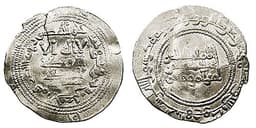
Abd al-Rahman III
Emperor · Medieval
72.3Total

Julius Caesar
General · Ancient
82.8Total
Basic Information
Born
891
-100
Died
961
-44
Era
Medieval
Ancient
Nationality
Al-Andalus
Roman Republic
Occupation
Emperor
General
Civilization
Middle Eastern
Western
Score Comparison
Military (10%)
82.0
88.0
Political (20%)
70.3
78.0
Influence (20%)
68.0
85.0
Legacy (20%)
72.0
82.0
Leadership (15%)
80.0
80.0
Strategy (15%)
65.4
85.0
TOTAL
72.3
82.8
Abd al-Rahman III — Complete Timeline
929 AD
Proclamation as Caliph of CordobaPolitical Action
Abd al-Rahman III declared himself caliph of Cordoba, breaking all ties with the Abbasid and Fatimid caliphates. This established the Caliphate of Cordoba, elevating Al-Andalus to a major political and religious power in the Islamic world.
Caliphate of CordobaAl-AndalusPolitical Power
Impact: globalconstructive
930 AD
Consolidation of Al-AndalusPolitical Action◆ Major
Abd al-Rahman III launched campaigns to suppress rebellions and bring the entire Iberian Peninsula under his control. He subdued the Banu Qasi and other rebel factions, establishing a centralized and stable Caliphate of Cordoba.
Al-AndalusConsolidationCaliphate
Impact: regionalconstructive
939 AD
Battle of SimancasWar◆ Major
Abd al-Rahman III's forces were defeated by the Christian coalition led by King Ramiro II of Le
Al-AndalusBattleChristian Kingdoms
Impact: regional
949 AD
Diplomatic Relations with ByzantiumPolitical Action
Abd al-Rahman III exchanged embassies with the Byzantine Emperor Constantine VII. This diplomatic engagement enhanced the prestige of the Caliphate of Cordoba and facilitated cultural and technological exchanges.
DiplomacyByzantine EmpireAl-Andalus
Impact: regionalconstructive
950 AD
Golden Age of CordobaCultural◆ Major
Under Abd al-Rahman III, Cordoba became a center of learning, culture, and trade. The city's library, university, and architecture flourished, making it one of the most advanced cities in Europe and the Islamic world.
CordobaGolden AgeCulture
Impact: globalconstructive
Julius Caesar — Complete Timeline
58 BC
Gallic WarsWar◆ Major
Caesar, as proconsul of Gaul, launched a series of campaigns that conquered all of Gaul (modern France, Belgium, and parts of Switzerland). He fought numerous battles, including against the Helvetii, the Belgae, and the Gallic chieftain Vercingetorix. The wars brought immense wealth and a loyal army to Caesar.
Gallic WarsConquestRoman Expansion
Impact: regional
49 BC
Crossing the RubiconPolitical Action◆ Major
Caesar led Legio XIII across the Rubicon River into Italy, defying the Roman Senate's order to disband his army. This act triggered a civil war against Pompey and the Optimates, ultimately leading to Caesar's dictatorship and the end of the Roman Republic.
Roman Civil WarEnd of RepublicPower Struggle
Impact: global
48 BC
Battle of PharsalusWar◆ Major
Caesar's outnumbered army defeated the larger forces of Pompey the Great at Pharsalus in Greece. Caesar's tactical use of a reserve line to counter Pompey's cavalry charge proved decisive. Pompey fled to Egypt, where he was assassinated, leaving Caesar as the undisputed master of the Roman world.
Roman Civil WarBattleDecisive Victory
Impact: regional
44 BC
Appointment as Dictator for LifePolitical Action◆ Major
The Roman Senate appointed Caesar dictator perpetuo (dictator for life), granting him unprecedented personal power. This move concentrated military, legislative, and judicial authority in one person, effectively ending the Roman Republic's traditional system of checks and balances and alarming many senators.
DictatorshipEnd of RepublicPower Consolidation
Impact: regionaldestructive
Assassination on the Ides of MarchPolitical Action◆ Major
A group of Roman senators, led by Marcus Junius Brutus and Gaius Cassius Longinus, stabbed Caesar to death at a meeting of the Senate in the Theatre of Pompey. The assassination was intended to restore the Republic, but instead triggered another civil war that led to the rise of the Roman Empire.
AssassinationRoman PoliticsEnd of Republic
Impact: globaldestructive
Expert Analysis
abd-al-rahman-iii-vs-julius-caesar
# The Two Caesars: Julius Caesar and Abd al-Rahman III
On a spring morning in 44 BCE, Julius Caesar fell beneath twenty-three dagger blows in the Senate chamber of Rome. Nearly a thousand years later, in 961 CE, Abd al-Rahman III died peacefully in his palace at Cordoba, surrounded by the greatest library in Europe and the wealth of a caliphate he had built from chaos. Both men were called Caesar—the first by birth, the second by title—yet their ends could not have been more different. What drove one to a violent grave and the other to a golden sunset?
Origins
Julius Caesar was born into the twilight of the Roman Republic, a world of senatorial intrigue, civil wars, and crumbling traditions. His patrician family was ancient but poor, and he grew up in a Rome where political power flowed through money and military command. The Republic was already dying; ambitious men like Marius and Sulla had shown that armies could be turned against the state. Caesar absorbed this lesson early.
Abd al-Rahman III came into a world equally fractured but differently structured. Born in 891 CE, he inherited the Emirate of Cordoba, a remnant of the Umayyad dynasty that had been slaughtered in Damascus two centuries earlier. Al-Andalus was a cauldron of ethnic tensions—Arabs, Berbers, Christians, Jews, and Slavs—all simmering with rebellion. His grandfather and father had fought to hold the emirate together; he would have to do the same.
Rise to Power
Caesar’s path was a ladder of debt, charisma, and risk. At thirty-seven, he secured the governorship of Gaul through a political alliance with Pompey and Crassus—the First Triumvirate. Over eight years, from 58 to 50 BCE, he conquered what is now France and Belgium, writing his own propaganda in *The Gallic Wars*. He crossed the Rubicon River in 49 BCE, defying the Senate, and within four years had defeated Pompey, pacified the East, and returned to Rome as dictator.
Abd al-Rahman III’s rise was quieter but no less decisive. He became emir at twenty-one, in 912 CE, and spent the next seventeen years crushing revolts one by one. His method was patient and systematic: he bribed rebels, besieged fortresses, and executed recalcitrant chieftains. By 929 CE, he felt secure enough to declare himself Caliph of Cordoba, breaking all ties with the Abbasid and Fatimid caliphates. It was a masterstroke of political theater—he claimed legitimacy not through conquest but through lineage, as the rightful heir of the Umayyads.
Leadership & Governance
Caesar governed through speed and spectacle. He reformed the calendar, granted citizenship to Gauls, and packed the Senate with his supporters. His military genius was undeniable—at Alesia in 52 BCE, he besieged a Gallic army while simultaneously defending against a relief force, a feat of logistics and nerve. But his political wisdom was brittle. He centralized power, accepted a life dictatorship, and treated the Senate with contempt, refusing to stand when they awarded him honors.
Abd al-Rahman III ruled through balance and architecture. He built the great palace-city of Medina Azahara outside Cordoba, a symbol of his power that also housed a vast bureaucracy. His administration was meritocratic: Jews and Christians held high offices alongside Muslims. He suppressed the rebellious Christian kingdoms of the north but never crushed them entirely, preferring tribute to annihilation. The Battle of Simancas in 939 CE, where his forces were defeated by King Ramiro II of León, taught him caution. After that, he relied more on diplomacy than war.
Triumph & Tragedy
Caesar’s greatest triumph was his own myth. He was the first Roman to have his portrait on coins while alive, the first to be deified after death. His tragedy was that he could not stop the Republic’s collapse—only accelerate it. The Ides of March was not a failure of power but of trust. He had pardoned his enemies, but they killed him anyway.
Abd al-Rahman III’s triumph was Cordoba itself. Under his rule, the city boasted a library of 400,000 volumes, a university that drew scholars from across Europe and the Middle East, and streets that were paved and lit at night—luxuries unknown in Paris or London. His tragedy was that this golden age was fragile. After his death, his son and grandson mismanaged the caliphate, and within fifty years, Al-Andalus had fractured into warring taifa kingdoms.
Character & Destiny
Caesar was reckless, generous, and supremely confident. He dismissed his bodyguard, ignored warnings of the conspiracy, and walked into the Senate alone. His character drove him to take risks that no sane politician would attempt—crossing the Rubicon, pardoning assassins, accepting divine honors. That same character made him unforgettable but also made him dead.
Abd al-Rahman III was cautious, methodical, and pragmatic. He was called “al-Nasir”—the Victorious—but he knew when to retreat. His character drove him to consolidate rather than expand, to build rather than conquer. That same character gave him a long reign of fifty years but also limited his ambition. He never tried to reconquer the whole of Spain or challenge the Fatimids in North Africa directly.
Legacy
Caesar’s legacy is the Roman Empire. His adopted heir, Octavian, became Augustus, and the imperial system that Caesar pioneered lasted for five centuries in the West and a thousand more in the East. Every European emperor, from Charlemagne to Napoleon, has claimed his mantle. His name became a title: Kaiser, Tsar, Caesar.
Abd al-Rahman III’s legacy is more subtle. He proved that a Muslim state in Europe could rival Baghdad and Constantinople in culture and power. Cordoba’s libraries and translations preserved Greek philosophy that later fueled the Renaissance. But his caliphate did not survive him. Today, he is remembered by historians as a symbol of Islamic Spain’s golden age—a brief, brilliant flowering that was extinguished by the Reconquista.
Conclusion
Two Caesars, two fates. Julius Caesar died because he could not stop moving forward; Abd al-Rahman III died in bed because he knew when to stop. The Roman pushed the world to its breaking point; the Andalusian held his world together with patience and grace. Both were great, but greatness takes many forms—and history, like the Ides of March, is merciless to those who forget that power is not the same as wisdom.
Rankings
🥇
Julius CaesarLeader
Mil: 88.0Pol: 78.0Inf: 85.0
82.8
🥈
Abd al-Rahman III
Mil: 82.0Pol: 70.3Inf: 68.0
72.3
+10.5 behind
How This Comparison Works
Algorithm
Each figure is scored on 6 dimensions (0—100 scale) based on structured historical data: Military (10%), Political (20%), Influence (20%), Legacy (20%), Leadership (15%), Strategy (15%). The weighted total produces the final ranking.
Data Sources
Scores are computed from structured sub-indicators in the database. Scale factors adjust for era (Ancient ×0.85, Modern ×1.0) and civilization size (Eastern ×1.05, Other ×0.80) to account for differences in population and military scale.
Maximum 3 Figures
Comparisons are limited to 2—3 figures to ensure readability and statistical meaningfulness.
Error Margins
±5 points per dimension — Sub-scores are derived from historical records with inherent uncertainty. Two figures within 5 points on a dimension should be considered roughly equivalent in that area.
Total Score Accuracy
±3 points overall — The weighted combination of 6 dimensions produces a total score with approximately ±3 points of uncertainty. Differences of less than 3 points are not statistically significant— the figures are effectively tied.
Known Limitations
- Historical records are incomplete and uneven across civilizations
- Figures from oral-tradition societies may be underrepresented
- Occupation labels can misclassify multi-role figures
- Scores measure capability and impact, not moral character
- Quantitative scoring is a comparison tool, not absolute truth
Capability Radar
Military (10%) — Battles & Warfare
Battles
75
95
Win Rate
80
92
Expansion
70
97
Political (20%) — Governance & Reform
Reform
85
90
Diplomacy
80
85
Economy
90
82
Influence (20%) — Cultural & Global Reach
Cultural
85
88
Global
75
94
Legacy (20%) — Historical Impact
Historical
80
95
Longevity
70
96
Leadership (15%) — Power & Stability
Tenure
90
75
Stability
85
60
Strategy (15%) — Tactics & Innovation
Strategy
75
94
Tactics
70
96
Reform
65
88
Similar Comparisons
Comments & Discussion
SPQR_Contrarian6/17/2026
Caesar didn't fall because he was "too powerful," he fell because he stopped being useful to his allies. By 44 BCE, he had pardoned too many enemies, packed the Senate with his own supporters, and destroyed the very patronage system that held the Republic together. Abd al-Rahman III understood something Caesar never did: consolidation isn't about killing enemies, it's about making them irrelevant. Caliphate of Córdoba outlasted Caesar's "eternal" dictatorship by centuries. That's the real metric
Numismatic_Nerd6/17/2026
别跟我提什么“伟大的征服者”——看看他俩的铸币就全明白了。恺撒的硬币上全是自己的肖像,还在活人头上刻神像,简直是把虚荣刻在金属上。阿卜杜勒·拉赫曼三世的第纳尔上只有经文,没有任何人像。一个靠自我神化,一个靠制度权威。差距就在这里:恺撒积累的是个人崇拜,拉赫曼积累的是国家认同。谁更“罗马”?显然是那个懂制度的。
Veritas_Vindex6/17/2026
Everyone romanticizes Caesar's assassination as a blow for liberty, but let's be real: the Liberatores were oligarchs who wanted their slice back. Brutus was literally Caesar's protege who owed him everything. Abd al-Rahman III faced constant rebellions from his own Arab aristocracy and responded by importing Slavs and Berbers as loyal administrators—a systematic reshaping of power rather than personal feuds. Caesar never learned to delegate outside his clique. That's why he bled out on the Sena
历史伪学术打假人6/17/2026
又来了,西方中心主义的老把戏。把阿卜杜勒·拉赫曼叫“西班牙的恺撒”本身就是殖民话语的残余。他压根不需要跟恺撒比,他统治的科尔多巴哈里发国在960年代有超过50万册藏书的图书馆,而同时期的罗马连个像样的下水道都修不起了。恺撒死于政治赌徒的孤注一掷,拉赫曼死于系统崩盘前的最后一刻安稳。别硬凑对比了,他俩连“伟大”的定义都不一样。
Chronicle_Chaser6/17/2026
The real irony? Caesar's assassination actually secured his legacy while Abd al-Rahman III's peaceful death almost erased his. Caesar became a god because he died dramatically. The Caliphate collapsed within 70 years of his passing—barely a footnote compared to the Roman Empire's thousand-year run. But here's what nobody says: Abd al-Rahman III faced a fractured Spain of warring tribes and still united it for three generations. Caesar got Gaul which was already half-Romanized. Different problems