Loading...
Abbas the Great vs Oscar II
Abbas the Great leads by 27.0 pts · 2 figures compared
…
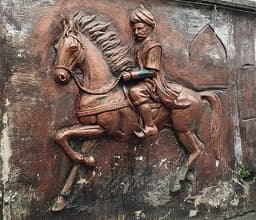
Abbas the Great
Emperor · Modern
74.5Total

Oscar II
Emperor · Modern
47.5Total
Basic Information
Born
1571
1829
Died
1629
1907
Era
Modern
Modern
Nationality
Persia
Sweden
Occupation
Emperor
Emperor
Civilization
Middle Eastern
Western
Score Comparison
Military (10%)
72.0
25.9
Political (20%)
84.0
46.6
Influence (20%)
69.8
49.4
Legacy (20%)
72.0
39.2
Leadership (15%)
73.8
65.0
Strategy (15%)
82.0
60.0
TOTAL
74.5
47.5
Abbas the Great — Complete Timeline
1598 AD
Construction of Isfahan as CapitalCultural
Abbas the Great moved the Safavid capital from Qazvin to Isfahan. He initiated a massive building program, constructing the Naqsh-e Jahan Square, the Shah Mosque, and the Ali Qapu palace. Isfahan was transformed into a grand city with parks, bridges, and bazaars, becoming a center of Persian culture and commerce.
Urban PlanningArchitectureIsfahan
Impact: globalconstructive
1600 AD
Reform of the Army (Ghulam System)Reform◆ Major
Abbas the Great established a new military corps of ghulams (slave soldiers) recruited from Christian subjects in the Caucasus. These troops were trained in modern firearms and artillery, reducing the Safavid reliance on the Qizilbash tribal forces. This reform created a loyal, professional army that strengthened the central government.
Military ReformGhulamsCentralization
Impact: nationalconstructive
1605 AD
Battle of SufiyanWar◆ Major
Abbas the Great led the Safavid army to victory against the Ottoman Empire at Sufiyan near Tabriz. This battle was part of the Ottoman-Safavid War of 1603-1618. The victory allowed Abbas to recapture Tabriz and other territories lost to the Ottomans in earlier wars.
BattleOttoman WarTabriz
Impact: regional
1622 AD
Expulsion of the Portuguese from HormuzWar◆ Major
Abbas the Great allied with the English East India Company to expel the Portuguese from the island of Hormuz in the Persian Gulf. A joint Persian-English force captured the Portuguese fort after a siege. This victory ended Portuguese dominance in the Persian Gulf and opened trade routes for Persian and English merchants.
SiegePortuguesePersian Gulf
Impact: regional
1623 AD
Recapture of BaghdadWar◆ Major
Abbas the Great led a campaign to recapture Baghdad from the Ottoman Empire. The Safavid army besieged the city and forced the Ottoman garrison to surrender. This victory restored Safavid control over Mesopotamia, a region lost since the Battle of Chaldiran in 1514.
SiegeMesopotamiaOttoman War
Impact: regional
Oscar II — Complete Timeline
1880 AD
Patronage of the arts and sciencesCultural
Oscar II was a noted patron of the arts and sciences. He supported the Swedish Academy, the Royal Swedish Academy of Sciences, and various cultural institutions. He also personally funded expeditions, such as the Vega Expedition, which completed the first navigation of the Northeast Passage.
SwedenCultureSciencePatronage
Impact: nationalconstructive
1901 AD
Defense reform and military modernizationReform◆ Major
Oscar II oversaw a major reform of the Swedish military, introducing universal conscription and modernizing the army and navy. This was in response to the changing geopolitical situation in Europe and aimed at maintaining Sweden's neutrality and defense capabilities.
SwedenMilitaryConscriptionReform
Impact: nationalconstructive
1905 AD
Dissolution of the union with NorwayPolitical Action
Oscar II was the last king of the united kingdoms of Sweden and Norway. After a political crisis, the Norwegian parliament unilaterally declared the dissolution of the union. Oscar II accepted the separation peacefully, abdicating his claim to the Norwegian throne and recognizing Norway's independence.
SwedenNorwayUnionIndependence
Impact: regional
Expert Analysis
Origins
Abbas the Great was born in 1571 in Herat (present-day Afghanistan), the third son of Shah Mohammad Khodabanda. His early life was marked by the political instability of the Safavid Empire, where Qizilbash tribal factions vied for power. Abbas received a traditional education in Islamic jurisprudence and Persian literature but was more shaped by the brutal court intrigues that saw his father deposed and his brothers blinded or killed. His formative experience was the threat of Ottoman and Uzbek invasions, which exposed him to the empire's military weaknesses.
Oscar II was born in 1829 in Stockholm, the third son of King Oscar I of Sweden and Norway. He grew up in a constitutional monarchy with a strong naval tradition. He studied at Uppsala University, focusing on mathematics and history, and later served as an admiral in the Swedish navy. His early life was stable, with little exposure to war or revolution, shaping his preference for diplomacy and cultural patronage over military action.
Rise to Power
Abbas ascended the throne in 1588 at age 17 after a coup that deposed his father. The empire was in crisis: the Ottomans had seized western territories, the Uzbeks threatened the east, and the Qizilbash were uncontrollable. Abbas's first act was to eliminate the Qizilbash leader Murshid Quli Khan, whom he had initially relied on. To secure his power, he moved the capital from Qazvin to Isfahan in 1598, a city less influenced by tribal factions. He also signed a humiliating peace with the Ottomans in 1590 to buy time, ceding territory, then rebuilt his army.
Oscar II became king in 1872 upon the death of his brother Charles XV. He inherited a stable but evolving union with Norway. His rise was peaceful, with no coup or war. He was popular for his intellectual interests, but his political influence was limited by the constitution. The key turning point was the growing Norwegian nationalism demanding independence, which Oscar tried to manage through concessions, but ultimately failed.
Leadership & Governance
Abbas was an absolute ruler who centralized power. He created the ghulam system, recruiting slave soldiers from the Caucasus (Armenians, Georgians, Circassians) to form a loyal military corps. This reduced dependence on the Qizilbash, whose power he systematically dismantled. He also reformed the bureaucracy, appointing ghulams to key posts. Economically, he encouraged trade by building caravanserais and roads, and expelled the Portuguese from Hormuz in 1622 with English help, securing Persian Gulf trade. His governance was ruthless but effective: he executed or blinded potential rivals, including his own son, to prevent succession disputes.
Oscar II governed as a constitutional monarch, with real power held by the parliament. His leadership style was consultative and intellectual. He supported defense modernization, introducing universal conscription in 1885 and expanding the navy. He also funded scientific expeditions, including Adolf Erik Nordenskiöld's Arctic voyages. However, his inability to prevent the dissolution of the union with Norway in 1905 showed his political weakness. He chose not to use military force to keep Norway, accepting a peaceful separation, which scored him 46.6 in political skill versus Abbas's 84.0.
Triumph & Tragedy
Abbas's greatest triumph was transforming the Safavid Empire into a prosperous, stable state. He recaptured Baghdad from the Ottomans in 1623 and expanded to the Caucasus. Isfahan became a world capital with the Naqsh-e Jahan Square, a UNESCO World Heritage site. His military reforms scored 72.0, and his strategy 82.0. However, his tragedy was his cruelty: he killed his eldest son and blinded others, leading to a succession crisis after his death. The empire declined rapidly under weaker successors.
Oscar II's triumph was his patronage of arts and sciences, which strengthened Sweden's cultural legacy. His defense reforms modernized the military. But his greatest failure was the dissolution of the union with Norway in 1905, which ended the Swedish-Norwegian union peacefully but diminished Sweden's status. He scored only 25.9 in military, reflecting Sweden's neutral stance, and 39.2 in legacy.
Character & Destiny
Abbas was pragmatic, ruthless, and visionary. He understood that centralization required eliminating rivals, even family. His character shaped his destiny: his reforms built a strong state, but his paranoia led to succession chaos. Historians like Roger Savory note that he was a "great organizer" but also a "cruel despot." His total score of 74.5 reflects a leader who achieved much but at a human cost.
Oscar II was scholarly, diplomatic, and cautious. He preferred negotiation over conflict, which suited Sweden's neutral stance. However, his character made him passive in the Norwegian crisis. Historians view him as a cultured king but a weak political leader. His total score of 47.5 reflects limited impact.
Legacy
Abbas's legacy is immense: he revived Persian culture and architecture, making Isfahan a jewel. The ghulam system influenced later Islamic armies. However, his centralization decayed after his death. Today, he is remembered as a national hero in Iran, with his image on currency and stamps. His influence score is 69.8.
Oscar II's legacy is more modest. He is remembered as the last king of the union, and his cultural patronage continues through the Nobel Prize (founded during his reign). Sweden's neutrality and modern military owe some debt to his reforms. But his legacy score of 39.2 reflects a king who presided over decline.
Conclusion
Abbas the Great had greater impact than Oscar II. With a total score of 74.5 versus 47.5, Abbas transformed a fragmented empire into a world power, while Oscar managed a peaceful dissolution. Abbas's military and political scores are significantly higher, and his legacy endures in Persian architecture and identity. Oscar's achievements were important but limited to a small, neutral state. Abbas's reforms shaped the Middle East for centuries; Oscar's reign was a footnote in Sweden's history. Therefore, Abbas the Great is the more significant historical figure.
Rankings
🥇
Abbas the GreatLeader
Mil: 72.0Pol: 84.0Inf: 69.8
74.5
🥈
Oscar II
Mil: 25.9Pol: 46.6Inf: 49.4
47.5
+27.0 behind
How This Comparison Works
Algorithm
Each figure is scored on 6 dimensions (0—100 scale) based on structured historical data: Military (10%), Political (20%), Influence (20%), Legacy (20%), Leadership (15%), Strategy (15%). The weighted total produces the final ranking.
Data Sources
Scores are computed from structured sub-indicators in the database. Scale factors adjust for era (Ancient ×0.85, Modern ×1.0) and civilization size (Eastern ×1.05, Other ×0.80) to account for differences in population and military scale.
Maximum 3 Figures
Comparisons are limited to 2—3 figures to ensure readability and statistical meaningfulness.
Error Margins
±5 points per dimension — Sub-scores are derived from historical records with inherent uncertainty. Two figures within 5 points on a dimension should be considered roughly equivalent in that area.
Total Score Accuracy
±3 points overall — The weighted combination of 6 dimensions produces a total score with approximately ±3 points of uncertainty. Differences of less than 3 points are not statistically significant— the figures are effectively tied.
Known Limitations
- Historical records are incomplete and uneven across civilizations
- Figures from oral-tradition societies may be underrepresented
- Occupation labels can misclassify multi-role figures
- Scores measure capability and impact, not moral character
- Quantitative scoring is a comparison tool, not absolute truth
Capability Radar
Military (10%) — Battles & Warfare
Battles
85
34
Win Rate
80
37
Expansion
85
44
Political (20%) — Governance & Reform
Reform
92
30
Diplomacy
88
40
Economy
90
30
Influence (20%) — Cultural & Global Reach
Cultural
88
20
Global
80
15
Legacy (20%) — Historical Impact
Historical
85
25
Longevity
75
20
Leadership (15%) — Power & Stability
Tenure
85
35
Stability
78
45
Strategy (15%) — Tactics & Innovation
Strategy
88
46
Tactics
82
50
Reform
90
51
Similar Comparisons
Comments & Discussion
No comments yet. Be the first to share your thoughts!