Loading...
Abbas the Great vs Catherine the Great
Abbas the Great leads by 7.7 pts · 2 figures compared
…
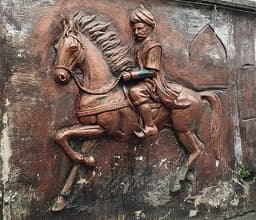
Abbas the Great
Emperor · Modern
74.5Total
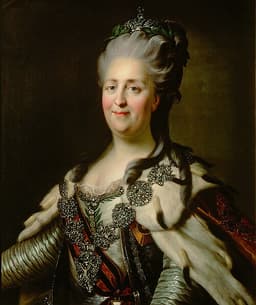
Catherine the Great
Emperor · Modern
66.8Total
Basic Information
Born
1571
1729
Died
1629
1796
Era
Modern
Modern
Nationality
Persia
Russia
Occupation
Emperor
Emperor
Civilization
Middle Eastern
Western
Score Comparison
Military (10%)
72.0
78.5
Political (20%)
84.0
90.0
Influence (20%)
69.8
65.0
Legacy (20%)
72.0
40.0
Leadership (15%)
73.8
80.0
Strategy (15%)
82.0
72.0
TOTAL
74.5
66.8
Abbas the Great — Complete Timeline
1598 AD
Construction of Isfahan as CapitalCultural
Abbas the Great moved the Safavid capital from Qazvin to Isfahan. He initiated a massive building program, constructing the Naqsh-e Jahan Square, the Shah Mosque, and the Ali Qapu palace. Isfahan was transformed into a grand city with parks, bridges, and bazaars, becoming a center of Persian culture and commerce.
Urban PlanningArchitectureIsfahan
Impact: globalconstructive
1600 AD
Reform of the Army (Ghulam System)Reform◆ Major
Abbas the Great established a new military corps of ghulams (slave soldiers) recruited from Christian subjects in the Caucasus. These troops were trained in modern firearms and artillery, reducing the Safavid reliance on the Qizilbash tribal forces. This reform created a loyal, professional army that strengthened the central government.
Military ReformGhulamsCentralization
Impact: nationalconstructive
1605 AD
Battle of SufiyanWar◆ Major
Abbas the Great led the Safavid army to victory against the Ottoman Empire at Sufiyan near Tabriz. This battle was part of the Ottoman-Safavid War of 1603-1618. The victory allowed Abbas to recapture Tabriz and other territories lost to the Ottomans in earlier wars.
BattleOttoman WarTabriz
Impact: regional
1622 AD
Expulsion of the Portuguese from HormuzWar◆ Major
Abbas the Great allied with the English East India Company to expel the Portuguese from the island of Hormuz in the Persian Gulf. A joint Persian-English force captured the Portuguese fort after a siege. This victory ended Portuguese dominance in the Persian Gulf and opened trade routes for Persian and English merchants.
SiegePortuguesePersian Gulf
Impact: regional
1623 AD
Recapture of BaghdadWar◆ Major
Abbas the Great led a campaign to recapture Baghdad from the Ottoman Empire. The Safavid army besieged the city and forced the Ottoman garrison to surrender. This victory restored Safavid control over Mesopotamia, a region lost since the Battle of Chaldiran in 1514.
SiegeMesopotamiaOttoman War
Impact: regional
Catherine the Great — Complete Timeline
1762 AD
Coup d'État of 1762Political Action
Catherine II led a coup d'
CoupAccessionPower
Impact: national
1764 AD
Hermitage Museum FoundedCultural◆ Major
Catherine the Great founded the Hermitage Museum in St. Petersburg by purchasing a large collection of paintings from Berlin. The museum grew into one of the world's largest art collections, reflecting her patronage of Enlightenment culture.
ArtMuseumEnlightenment
Impact: globalconstructive
1768 AD
Russo-Turkish War (1768-1774)War◆ Major
Catherine the Great initiated a war against the Ottoman Empire, resulting in Russian victory. The Treaty of K
WarOttoman EmpireExpansion
Impact: regional
1783 AD
Annexation of CrimeaPolitical Action◆ Major
Catherine the Great formally annexed the Crimean Peninsula from the Ottoman Empire. This strategic acquisition gave Russia a dominant position in the Black Sea and a warm-water port, fulfilling a long-standing imperial ambition.
AnnexationCrimeaBlack Sea
Impact: regional
1785 AD
Charter to the Gentry GrantedReform◆ Major
Catherine the Great issued the Charter to the Gentry, which codified the rights and privileges of the Russian nobility. It exempted nobles from taxation and military service, solidifying their social status and support for her rule.
NobilityReformSocial Structure
Impact: nationalconstructive
Expert Analysis
Origins
Abbas the Great (1571-1629) was born as the third son of Shah Mohammad Khodabanda of the Safavid dynasty. His early life was marked by political instability and tribal infighting. He was raised in a court where his father was a weak ruler, and his mother and other relatives vied for power. Abbas's formative experiences included witnessing the fragmentation of the Safavid state and the encroachment of Ottoman and Uzbek forces. His education focused on military arts and statecraft, preparing him for the throne he would seize in 1588.
Catherine the Great (1729-1796) was born Sophie Friederike Auguste von Anhalt-Zerbst, a minor German princess. She arrived in Russia at age 14 to marry the future Peter III. Her early life was shaped by her ambition to embrace Russian culture and Orthodox Christianity. She learned the language, converted to Orthodoxy, and immersed herself in Enlightenment philosophy, reading Voltaire, Montesquieu, and Diderot. Her marriage was unhappy, but she cultivated relationships with powerful nobles and military officers, setting the stage for her eventual coup.
Rise to Power
Abbas the Great rose to power in 1588 by overthrowing his ineffective father. At 16, he led a coup with the support of the Qizilbash tribal forces, who were disillusioned with the Shah's inability to defend the realm. Abbas immediately faced existential threats: the Ottomans had seized western territories, and the Uzbeks were attacking from the east. His first decade was spent consolidating control, neutralizing rebellious tribal leaders, and building a new army. The turning point came with the reform of the military, creating the ghulam corps of loyal slave soldiers from the Caucasus, which reduced dependence on unreliable Qizilbash tribes.
Catherine's rise was equally dramatic. In 1762, she orchestrated a coup d'état against her husband, Peter III, with the help of the Orlov brothers and the Imperial Guard. Peter's unpopular reforms and his admiration for Prussia had alienated the Russian nobility and military. Catherine was proclaimed empress, and Peter was arrested and later killed (likely with her tacit approval). Her accession marked the beginning of a 34-year reign. She initially faced challenges from rivals but quickly consolidated power by rewarding allies and projecting an image of enlightened reform.
Leadership & Governance
Abbas the Great centralized the Safavid state. He moved the capital from Qazvin to Isfahan in 1598, transforming it into a magnificent city with the Naqsh-e Jahan Square, palaces, and mosques. He reformed the bureaucracy, reducing the power of tribal leaders and appointing loyal administrators from the ghulam class. Economically, he fostered trade with European powers, particularly the English and Dutch, to weaken Portuguese influence. His governance was pragmatic: he allied with the English to expel the Portuguese from Hormuz in 1622, securing control of Persian Gulf trade. However, his rule remained autocratic, and he suppressed dissent ruthlessly.
Catherine the Great pursued a policy of "enlightened absolutism." She corresponded with Voltaire and Diderot, and attempted legal reforms through the Nakaz (Instruction), a document based on Enlightenment principles. She granted the Charter to the Gentry in 1785, solidifying noble privileges, and expanded education, founding the Smolny Institute for noble girls. However, her reforms were limited: she maintained serfdom and harshly suppressed Pugachev's Rebellion (1773-1775). Her governance style combined reformist rhetoric with practical conservatism to maintain noble support. She expanded the empire through war and diplomacy, notably annexing Crimea in 1783.
Triumph & Tragedy
Abbas's greatest triumphs were military and diplomatic. He recaptured Baghdad from the Ottomans in 1623, though it was lost again after his death. He defeated the Uzbeks, securing the eastern borders. His economic policies revived trade, and Isfahan became a global hub. However, his tragedies included the blinding and murder of his own sons to prevent succession challenges, leading to a weak heir. His ghulam system, while effective, created a military elite that later contributed to the Safavid decline.
Catherine's triumphs include the successful Russo-Turkish Wars (1768-1774, 1787-1792), which gave Russia access to the Black Sea and annexed Crimea. She also founded the Hermitage Museum, collecting art that remains a cultural treasure. Her tragedies include the failure to reform serfdom, which led to widespread peasant unrest. The Pugachev Rebellion exposed the limits of her Enlightenment ideals. Additionally, her partition of Poland (1772, 1793, 1795) with Prussia and Austria, while expanding territory, was a cynical act that contradicted her professed values.
Character & Destiny
Abbas was a shrewd, calculating ruler. He possessed a strategic mind, evident in his military reforms and diplomatic maneuvering. His caution in battle contrasted with his ruthlessness in domestic affairs. He trusted few, which led to the elimination of potential rivals, including his own family. His character shaped his fate: his centralized system held the empire together during his reign but sowed seeds of decline after his death. Historians assess him as a brilliant administrator and military commander, but a flawed father and ruler who left a fragile legacy.
Catherine was ambitious, intelligent, and pragmatic. She cultivated a persona of enlightened monarch while wielding absolute power. Her ability to charm and manipulate nobles was key to her longevity. She was a prolific writer and patron of the arts, but also a ruthless imperialist. Her character allowed her to navigate the treacherous Russian court and expand the empire, but her legacy is marred by the enforcement of serfdom and the suppression of liberty. She scored 80.0 in leadership, reflecting her effectiveness, but her influence score of 65.0 suggests limited lasting impact on Russian society.
Legacy
Abbas's legacy is the transformation of Safavid Persia into a centralized, prosperous state. Isfahan remains a symbol of Persian architecture and culture. His ghulam system influenced later military reforms. However, his empire declined rapidly after his death due to succession weaknesses. He scored 72.0 in legacy, reflecting his enduring reputation as a builder and reformer.
Catherine's legacy is more complex. She expanded Russia's borders significantly, adding Crimea and vast territories in the west. She founded the Hermitage and promoted education, but her reforms did not survive her. The serfdom she reinforced would lead to future revolutions. Her legacy score of 40.0 reflects the mixed assessment of her reign. In total scores, Abbas leads with 74.5 over Catherine's 66.8.
Conclusion
While both were transformative rulers, Abbas the Great had a more profound impact on the structure and identity of his empire. He rebuilt Persia from a fractured state into a major power, creating institutions and a capital that endured. Catherine expanded Russia but did not modernize its social structure. Abbas's strategic reforms were more lasting; Catherine's were superficial. Therefore, Abbas the Great is the greater ruler, with a total score of 74.5 compared to Catherine's 66.8.
Rankings
🥇
Abbas the GreatLeader
Mil: 72.0Pol: 84.0Inf: 69.8
74.5
🥈
Catherine the Great
Mil: 78.5Pol: 90.0Inf: 65.0
66.8
+7.7 behind
How This Comparison Works
Algorithm
Each figure is scored on 6 dimensions (0—100 scale) based on structured historical data: Military (10%), Political (20%), Influence (20%), Legacy (20%), Leadership (15%), Strategy (15%). The weighted total produces the final ranking.
Data Sources
Scores are computed from structured sub-indicators in the database. Scale factors adjust for era (Ancient ×0.85, Modern ×1.0) and civilization size (Eastern ×1.05, Other ×0.80) to account for differences in population and military scale.
Maximum 3 Figures
Comparisons are limited to 2—3 figures to ensure readability and statistical meaningfulness.
Error Margins
±5 points per dimension — Sub-scores are derived from historical records with inherent uncertainty. Two figures within 5 points on a dimension should be considered roughly equivalent in that area.
Total Score Accuracy
±3 points overall — The weighted combination of 6 dimensions produces a total score with approximately ±3 points of uncertainty. Differences of less than 3 points are not statistically significant— the figures are effectively tied.
Known Limitations
- Historical records are incomplete and uneven across civilizations
- Figures from oral-tradition societies may be underrepresented
- Occupation labels can misclassify multi-role figures
- Scores measure capability and impact, not moral character
- Quantitative scoring is a comparison tool, not absolute truth
Capability Radar
Military (10%) — Battles & Warfare
Battles
85
85
Win Rate
80
80
Expansion
85
90
Political (20%) — Governance & Reform
Reform
92
90
Diplomacy
88
85
Economy
90
85
Influence (20%) — Cultural & Global Reach
Cultural
88
85
Global
80
80
Legacy (20%) — Historical Impact
Historical
85
85
Longevity
75
80
Leadership (15%) — Power & Stability
Tenure
85
95
Stability
78
80
Strategy (15%) — Tactics & Innovation
Strategy
88
85
Tactics
82
75
Reform
90
90
Similar Comparisons
Comments & Discussion
No comments yet. Be the first to share your thoughts!