Loading...
Abbas the Great vs Nader Shah
Abbas the Great leads by 12.3 pts · 2 figures compared
…
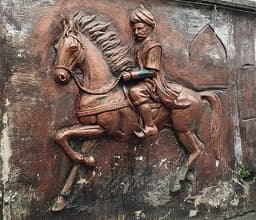
Abbas the Great
Emperor · Modern
74.5Total

Nader Shah
Emperor · Modern
62.2Total
Basic Information
Born
1571
1688
Died
1629
1747
Era
Modern
Modern
Nationality
Persia
Persia
Occupation
Emperor
Emperor
Civilization
Middle Eastern
Middle Eastern
Score Comparison
Military (10%)
72.0
65.0
Political (20%)
84.0
70.0
Influence (20%)
69.8
68.0
Legacy (20%)
72.0
52.0
Leadership (15%)
73.8
53.2
Strategy (15%)
82.0
72.0
TOTAL
74.5
62.2
Abbas the Great — Complete Timeline
1598 AD
Construction of Isfahan as CapitalCultural
Abbas the Great moved the Safavid capital from Qazvin to Isfahan. He initiated a massive building program, constructing the Naqsh-e Jahan Square, the Shah Mosque, and the Ali Qapu palace. Isfahan was transformed into a grand city with parks, bridges, and bazaars, becoming a center of Persian culture and commerce.
Urban PlanningArchitectureIsfahan
Impact: globalconstructive
1600 AD
Reform of the Army (Ghulam System)Reform◆ Major
Abbas the Great established a new military corps of ghulams (slave soldiers) recruited from Christian subjects in the Caucasus. These troops were trained in modern firearms and artillery, reducing the Safavid reliance on the Qizilbash tribal forces. This reform created a loyal, professional army that strengthened the central government.
Military ReformGhulamsCentralization
Impact: nationalconstructive
1605 AD
Battle of SufiyanWar◆ Major
Abbas the Great led the Safavid army to victory against the Ottoman Empire at Sufiyan near Tabriz. This battle was part of the Ottoman-Safavid War of 1603-1618. The victory allowed Abbas to recapture Tabriz and other territories lost to the Ottomans in earlier wars.
BattleOttoman WarTabriz
Impact: regional
1622 AD
Expulsion of the Portuguese from HormuzWar◆ Major
Abbas the Great allied with the English East India Company to expel the Portuguese from the island of Hormuz in the Persian Gulf. A joint Persian-English force captured the Portuguese fort after a siege. This victory ended Portuguese dominance in the Persian Gulf and opened trade routes for Persian and English merchants.
SiegePortuguesePersian Gulf
Impact: regional
1623 AD
Recapture of BaghdadWar◆ Major
Abbas the Great led a campaign to recapture Baghdad from the Ottoman Empire. The Safavid army besieged the city and forced the Ottoman garrison to surrender. This victory restored Safavid control over Mesopotamia, a region lost since the Battle of Chaldiran in 1514.
SiegeMesopotamiaOttoman War
Impact: regional
Nader Shah — Complete Timeline
1719 AD
Battle of MihmandustWar
Nader Shah, then a general for the Safavids, defeated a rebel army at Mihmandust in Khorasan. This victory established his military reputation and allowed him to become the leading military commander in the region. It was a key step in his rise to power.
BattleKhorasanRise to Power
1729 AD
Restoration of Tahmasp IIWar◆ Major
Nader Shah defeated the Afghan Hotaki dynasty at the Battle of Damghan, driving them from Isfahan. He then restored the Safavid prince Tahmasp II to the throne as shah. This campaign ended Afghan rule in Persia and reestablished Safavid authority, with Nader as the de facto military ruler.
RestorationAfghan WarSafavid
Impact: national
1739 AD
Battle of KarnalWar
Nader Shah invaded the Mughal Empire and defeated the Mughal army at Karnal in northern India. The Mughal emperor Muhammad Shah surrendered. Nader Shah then entered Delhi, where he sacked the city and massacred thousands of inhabitants. He returned to Persia with immense plunder, including the Peacock Throne and the Koh-i-Noor diamond.
InvasionMughal EmpirePlunder
Impact: globaldestructive
1740 AD
Conquest of the Khanate of BukharaWar◆ Major
Nader Shah led a campaign into Central Asia, defeating the Khanate of Bukhara. He captured the city of Bukhara and forced the khan to submit. This campaign extended Persian influence into Transoxiana and secured the northern borders of his empire.
ConquestCentral AsiaBukhara
Impact: regional
1747 AD
Assassination of Nader ShahPolitical Action◆ Major
Nader Shah was assassinated in his sleep by a group of his own officers, including members of his Qizilbash guard. The assassination was motivated by his increasing paranoia, harsh rule, and demands for taxes. His death led to the collapse of the Afsharid dynasty and plunged Persia into civil war.
AssassinationAfsharid DynastyCollapse
Impact: nationaltragic
Expert Analysis
Origins
Abbas the Great (born 1571) was the fifth Safavid shah, ascending the throne in 1588 at age 17. He inherited a realm weakened by internal strife and external threats from the Ottomans and Uzbeks. His early life was shaped by the court intrigues of Qazvin, where he witnessed the murder of his father, Shah Mohammad Khodabanda, and his brother. This experience instilled a deep distrust of the Qizilbash tribal elite.
Nader Shah (born 1688) emerged from humble origins as Nader Qoli of the Afshar tribe in Khorasan. His father, a shepherd, died when Nader was young, and he and his mother were taken as slaves by raiders. He escaped and rose through the ranks as a mercenary, displaying early military talent. By 1726, he had become a key commander for the Safavid prince Tahmasp II, then fighting to restore Safavid rule after the Afghan Hotaki invasion.
Rise to Power
Abbas the Great consolidated power by first neutralizing the Qizilbash. In 1590, he made a humiliating peace with the Ottomans, ceding territory to focus on internal enemies. He then turned on the Qizilbash, executing leaders and replacing them with ghulams (slave soldiers) from the Caucasus. By 1598, he had crushed a major rebellion in Khorasan and moved his capital to Isfahan, a strategic and symbolic shift.
Nader Shah's rise began with his service to Tahmasp II. In 1729, he defeated the Afghans at the Battle of Damghan, restoring Safavid control over Isfahan. He then fought the Ottomans, recapturing Tabriz in 1730. However, Tahmasp II's weak leadership led to a treaty with the Ottomans that Nader deemed unacceptable. In 1732, Nader deposed Tahmasp and placed his infant son, Abbas III, on the throne as a puppet. By 1736, Nader felt secure enough to crown himself shah, founding the Afsharid dynasty.
Leadership & Governance
Abbas the Great centralized the state through the ghulam system, reducing tribal influence. He reformed the army, creating a standing force of 40,000 soldiers, including musketeers and artillery. His governance emphasized infrastructure: he built the Chaharbagh avenue, bridges, and caravanserais, and encouraged trade with European powers. His religious policy balanced Shia orthodoxy with tolerance for Christians and Jews, though he persecuted Sunni Muslims.
Nader Shah's leadership was focused on military expansion. He maintained a large army through constant campaigning, funding it through plunder. He attempted to reconcile Shia and Sunni Islam by promoting a new sect, "Ja'fari" jurisprudence, to gain Ottoman acceptance, but this failed. His governance was harsh: he imposed heavy taxes to support his wars, leading to revolts. He showed little interest in administration, delegating to subordinates who often mismanaged.
Triumph & Tragedy
Abbas the Great's greatest triumph was transforming Isfahan into a world capital, with the Naqsh-e Jahan Square, the Shah Mosque, and the Ali Qapu palace. He recaptured Baghdad in 1623 and expelled the Portuguese from Hormuz in 1622, securing Persian Gulf trade. However, his greatest failure was his harsh treatment of his own family: he blinded or killed his sons, leaving no capable heir. This led to decline after his death in 1629.
Nader Shah's pinnacle was the conquest of India in 1739. At the Battle of Karnal, he defeated the Mughal army and entered Delhi, taking the Peacock Throne and the Koh-i-Noor diamond. He also subdued the Khanate of Bukhara in 1740. But his later years were marked by paranoia and brutality. He blinded his own son, Reza Qoli, after suspecting treason, and suppressed revolts with extreme violence. His assassination in 1747 by his own officers was a direct result of his tyranny.
Character & Destiny
Abbas the Great was calculating and patient, willing to make temporary concessions for long-term gain. His decision to move the capital to Isfahan, a city more centrally located and easier to defend, showed strategic foresight. However, his paranoia about succession crippled the dynasty. Historians note that his personal insecurity, born from his father's murder, led him to eliminate potential rivals, including his own sons.
Nader Shah was a military genius but a poor statesman. His score of 72.0 in military strategy reflects his tactical brilliance, yet his political score of 70.0 is undermined by his inability to govern peacefully. His temper and cruelty alienated his supporters. The assassination was a direct consequence of his erratic behavior: he executed officers for minor offenses, creating a climate of fear. His destiny was a classic tragedy of a conqueror who could not transition to peacetime rule.
Legacy
Abbas the Great's legacy endures in Iran's cultural heritage. Isfahan remains a symbol of Safavid glory, and his architectural projects are UNESCO World Heritage sites. The ghulam system influenced later reforms by the Qajars. However, his failure to ensure a stable succession led to the empire's decline within a century. His total score of 74.5 reflects balanced contributions across military, political, and cultural spheres.
Nader Shah's legacy is more ambiguous. He is remembered as a brilliant general but a brutal ruler. His military campaigns expanded Persian borders to their greatest extent since the Sassanids, but his conquests were unsustainable. The Afsharid dynasty collapsed soon after his death, and much of his empire was lost. His score of 62.2 reflects high military and strategic scores, but low legacy and leadership scores due to his failure to build lasting institutions.
Conclusion
Abbas the Great had a greater impact on Persian history. While Nader Shah's military exploits were spectacular, Abbas's institutional reforms and cultural achievements created a lasting legacy. Abbas scored 74.5 total, Nader 62.2, a gap of 12.3 points. Abbas built something that endured for centuries; Nader conquered but could not govern. The Safavid state under Abbas became a model of centralized rule, while Nader's empire fragmented. In the data-driven assessment, Abbas the Great is the superior figure.
Rankings
🥇
Abbas the GreatLeader
Mil: 72.0Pol: 84.0Inf: 69.8
74.5
🥈
Nader Shah
Mil: 65.0Pol: 70.0Inf: 68.0
62.2
+12.3 behind
How This Comparison Works
Algorithm
Each figure is scored on 6 dimensions (0—100 scale) based on structured historical data: Military (10%), Political (20%), Influence (20%), Legacy (20%), Leadership (15%), Strategy (15%). The weighted total produces the final ranking.
Data Sources
Scores are computed from structured sub-indicators in the database. Scale factors adjust for era (Ancient ×0.85, Modern ×1.0) and civilization size (Eastern ×1.05, Other ×0.80) to account for differences in population and military scale.
Maximum 3 Figures
Comparisons are limited to 2—3 figures to ensure readability and statistical meaningfulness.
Error Margins
±5 points per dimension — Sub-scores are derived from historical records with inherent uncertainty. Two figures within 5 points on a dimension should be considered roughly equivalent in that area.
Total Score Accuracy
±3 points overall — The weighted combination of 6 dimensions produces a total score with approximately ±3 points of uncertainty. Differences of less than 3 points are not statistically significant— the figures are effectively tied.
Known Limitations
- Historical records are incomplete and uneven across civilizations
- Figures from oral-tradition societies may be underrepresented
- Occupation labels can misclassify multi-role figures
- Scores measure capability and impact, not moral character
- Quantitative scoring is a comparison tool, not absolute truth
Capability Radar
Military (10%) — Battles & Warfare
Battles
85
92
Win Rate
80
88
Expansion
85
90
Political (20%) — Governance & Reform
Reform
92
75
Diplomacy
88
65
Economy
90
60
Influence (20%) — Cultural & Global Reach
Cultural
88
60
Global
80
65
Legacy (20%) — Historical Impact
Historical
85
75
Longevity
75
50
Leadership (15%) — Power & Stability
Tenure
85
70
Stability
78
30
Strategy (15%) — Tactics & Innovation
Strategy
88
90
Tactics
82
95
Reform
90
85
Similar Comparisons
Comments & Discussion
No comments yet. Be the first to share your thoughts!