Loading...
Abbas the Great vs Julius Caesar
Julius Caesar leads by 8.3 pts · 2 figures compared
…
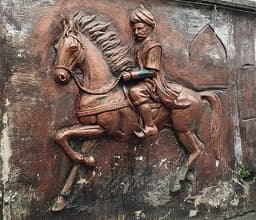
Abbas the Great
Emperor · Modern
74.5Total

Julius Caesar
General · Ancient
82.8Total
Basic Information
Born
1571
-100
Died
1629
-44
Era
Modern
Ancient
Nationality
Persia
Roman Republic
Occupation
Emperor
General
Civilization
Middle Eastern
Western
Score Comparison
Military (10%)
72.0
88.0
Political (20%)
84.0
78.0
Influence (20%)
69.8
85.0
Legacy (20%)
72.0
82.0
Leadership (15%)
73.8
80.0
Strategy (15%)
82.0
85.0
TOTAL
74.5
82.8
Abbas the Great — Complete Timeline
1598 AD
Construction of Isfahan as CapitalCultural
Abbas the Great moved the Safavid capital from Qazvin to Isfahan. He initiated a massive building program, constructing the Naqsh-e Jahan Square, the Shah Mosque, and the Ali Qapu palace. Isfahan was transformed into a grand city with parks, bridges, and bazaars, becoming a center of Persian culture and commerce.
Urban PlanningArchitectureIsfahan
Impact: globalconstructive
1600 AD
Reform of the Army (Ghulam System)Reform◆ Major
Abbas the Great established a new military corps of ghulams (slave soldiers) recruited from Christian subjects in the Caucasus. These troops were trained in modern firearms and artillery, reducing the Safavid reliance on the Qizilbash tribal forces. This reform created a loyal, professional army that strengthened the central government.
Military ReformGhulamsCentralization
Impact: nationalconstructive
1605 AD
Battle of SufiyanWar◆ Major
Abbas the Great led the Safavid army to victory against the Ottoman Empire at Sufiyan near Tabriz. This battle was part of the Ottoman-Safavid War of 1603-1618. The victory allowed Abbas to recapture Tabriz and other territories lost to the Ottomans in earlier wars.
BattleOttoman WarTabriz
Impact: regional
1622 AD
Expulsion of the Portuguese from HormuzWar◆ Major
Abbas the Great allied with the English East India Company to expel the Portuguese from the island of Hormuz in the Persian Gulf. A joint Persian-English force captured the Portuguese fort after a siege. This victory ended Portuguese dominance in the Persian Gulf and opened trade routes for Persian and English merchants.
SiegePortuguesePersian Gulf
Impact: regional
1623 AD
Recapture of BaghdadWar◆ Major
Abbas the Great led a campaign to recapture Baghdad from the Ottoman Empire. The Safavid army besieged the city and forced the Ottoman garrison to surrender. This victory restored Safavid control over Mesopotamia, a region lost since the Battle of Chaldiran in 1514.
SiegeMesopotamiaOttoman War
Impact: regional
Julius Caesar — Complete Timeline
58 BC
Gallic WarsWar◆ Major
Caesar, as proconsul of Gaul, launched a series of campaigns that conquered all of Gaul (modern France, Belgium, and parts of Switzerland). He fought numerous battles, including against the Helvetii, the Belgae, and the Gallic chieftain Vercingetorix. The wars brought immense wealth and a loyal army to Caesar.
Gallic WarsConquestRoman Expansion
Impact: regional
49 BC
Crossing the RubiconPolitical Action◆ Major
Caesar led Legio XIII across the Rubicon River into Italy, defying the Roman Senate's order to disband his army. This act triggered a civil war against Pompey and the Optimates, ultimately leading to Caesar's dictatorship and the end of the Roman Republic.
Roman Civil WarEnd of RepublicPower Struggle
Impact: global
48 BC
Battle of PharsalusWar◆ Major
Caesar's outnumbered army defeated the larger forces of Pompey the Great at Pharsalus in Greece. Caesar's tactical use of a reserve line to counter Pompey's cavalry charge proved decisive. Pompey fled to Egypt, where he was assassinated, leaving Caesar as the undisputed master of the Roman world.
Roman Civil WarBattleDecisive Victory
Impact: regional
44 BC
Appointment as Dictator for LifePolitical Action◆ Major
The Roman Senate appointed Caesar dictator perpetuo (dictator for life), granting him unprecedented personal power. This move concentrated military, legislative, and judicial authority in one person, effectively ending the Roman Republic's traditional system of checks and balances and alarming many senators.
DictatorshipEnd of RepublicPower Consolidation
Impact: regionaldestructive
Assassination on the Ides of MarchPolitical Action◆ Major
A group of Roman senators, led by Marcus Junius Brutus and Gaius Cassius Longinus, stabbed Caesar to death at a meeting of the Senate in the Theatre of Pompey. The assassination was intended to restore the Republic, but instead triggered another civil war that led to the rise of the Roman Empire.
AssassinationRoman PoliticsEnd of Republic
Impact: globaldestructive
Expert Analysis
abbas-the-great-vs-julius-caesar
# The Edge of the Knife
On a winter morning in 44 BCE, a man dressed in purple walked into the Senate chamber in Rome, ignoring the warnings of a soothsayer and the pleas of his wife. Within minutes, sixty daggers would end his life and change the course of history. Half a world away and sixteen centuries later, another ruler—a king in silk and turquoise—stood on the balcony of his new capital, watching minarets rise against the Persian sky, knowing that every stone he laid was a declaration of permanence. One died at the height of his power, betrayed by those he trusted. The other died in his bed, having built an empire that would outlast him. What separated Julius Caesar from Abbas the Great was not merely time or geography—it was the fundamental question of how power should be used, and how a ruler should face his own mortality.
Origins
Caesar was born into the chaos of a dying republic. The year was 100 BCE, and Rome was a city of marble and mud, where patrician families fought for glory while the poor starved in tenements. His family, the Julii, claimed descent from the goddess Venus, but they were not among the wealthiest. Young Caesar learned early that in Rome, debt was a tool and charisma a weapon. He watched his uncle Marius purge political enemies, then saw Sulla do the same in reverse. The lesson was brutal: in a republic without law, only the ruthless survived.
Abbas the Great was born in 1571 into a very different world—a Persia still recovering from the chaos of Turkic invasions, but unified under the Safavid dynasty. His father, Shah Mohammad Khodabanda, was nearly blind and politically weak. Abbas grew up in a court of whispers and poison, where his mother and half-brothers schemed for control. At sixteen, he watched his own tutor executed by Qizilbash tribal leaders. The lesson was equally brutal: in a monarchy without order, only the clever survived. But while Caesar learned to charm crowds, Abbas learned to manipulate factions.
Rise to Power
Caesar’s path was a ladder of ambition. He borrowed fortunes to fund festivals, bought votes, and seduced allies. His military command in Gaul from 58 to 50 BCE was not just conquest—it was a personal empire built on plunder and loyalty. When the Senate ordered him to disband his army, he crossed the Rubicon River in 49 BCE, a line that meant civil war. He gambled everything on the loyalty of his legions, and won. Within four years, he was dictator for life.
Abbas took a different route. In 1587, at age sixteen, he staged a coup against his own mother and the Qizilbash warlords who controlled him. He did not cross a river; he walked into a palace and seized the throne. His first act was not war but patience: he waited a decade before challenging the Ottomans, using that time to build a new army of ghulams—slave soldiers loyal only to him. While Caesar’s power came from the sword and the vote, Abbas’s came from the treasury and the harem. Both men understood that power must be seized, but Caesar believed it must be seen, while Abbas believed it must be hidden.
Leadership & Governance
As a general, Caesar was unmatched. He fought fifty battles, wrote his own commentaries, and turned the Roman army into a machine of personal glory. His siege of Alesia in 52 BCE—where he surrounded a Gallic fortress while simultaneously building defenses against a relief army—remains a masterpiece of military strategy. His political reforms were equally bold: he reformed the calendar, extended citizenship to provincials, and began public works that employed the poor. But he governed like a general, issuing decrees rather than building consensus. His famous phrase, “Veni, vidi, vici”—I came, I saw, I conquered—captured his approach: speed, clarity, and overwhelming force.
Abbas was a different kind of commander. His military score of 77.7 is lower than Caesar’s 88, but his political score of 84.1 is higher. He understood that in Persia, a shah must weave alliances as carefully as a carpet. At the Battle of Sufiyan in 1605, he defeated the Ottomans not through sheer force but through maneuver and timing, using his new ghulam corps to counter the Janissaries. In 1622, he allied with the English East India Company to expel the Portuguese from Hormuz—a stroke of diplomacy as much as war. His greatest achievement was not a battle but a city: Isfahan, which he made his capital in 1598. He transformed a dusty town into a jewel of domes and gardens, where Armenian merchants, Jewish artisans, and European ambassadors mingled in the royal square. While Caesar built bridges and roads, Abbas built a civilization.
Triumph & Tragedy
Caesar’s triumph was absolute: he conquered Gaul, defeated Pompey, and stood alone at the top of the Roman world. But his tragedy was that he could not stop. He ignored the republican traditions that had held Rome together for centuries. He accepted the title “dictator for life,” wore a purple robe like a king, and put his face on coins. When a group of senators stabbed him on March 15, 44 BCE, they did so not because they hated him, but because they feared what he would become.
Abbas’s triumph was equally grand: he recaptured Baghdad from the Ottomans in 1623, restored Persian power from the Caucasus to the Gulf, and made Isfahan one of the great cities of the world. But his tragedy was quieter. He became paranoid in his later years, blinding or killing his own sons to prevent rebellion. When he died in 1629, his heir was a weak grandson. The empire he built would decline within a generation. Both men created greatness, but their methods destroyed what they loved. Caesar died by the knife; Abbas died by the slow poison of his own suspicion.
Character & Destiny
Caesar was a gambler who believed in his own star. He pardoned his enemies, promoted talent regardless of birth, and laughed at danger. But he could not imagine his own death—or rather, he saw it as a risk worth taking. “The die is cast,” he said at the Rubicon, but the die was always cast for him. He lived as if history were a stage and he the lead actor.
Abbas was a chess player who believed in preparation. He was patient, calculating, and suspicious. He trusted no one completely, and that caution preserved his reign for forty-two years. But it also isolated him. He could build a city but not a family; he could defeat the Ottomans but not his own fear. While Caesar died because he trusted too much, Abbas lived because he trusted too little.
Legacy
Caesar’s legacy is the Roman Empire. His adopted son Octavian became Augustus, the first emperor, and the Republic became a memory. His name became a title—Kaiser, Tsar—and his calendar lasted for sixteen centuries. He is remembered as the man who changed the world, for better or worse.
Abbas’s legacy is more subtle. Isfahan still stands, its mosques and palaces a testament to Safavid glory. He is remembered as the greatest of the Safavids, the shah who made Persia a world power again. But his empire did not last. The decline began within decades of his death, and Persia would not recover its strength until the modern era. He is a national hero in Iran, but his name does not echo across continents like Caesar’s.
Conclusion
What separates these two men is not ability but context. Caesar lived in a world of open competition, where a man could rise by the force of his personality and the loyalty of his soldiers. Abbas lived in a world of hidden intrigue, where survival depended on reading the room and controlling the shadows. Caesar’s tragedy was that he could not stop winning; Abbas’s tragedy was that he could not stop fearing. One died spectacularly, the other quietly. But both understood the same truth: that power is a knife, and the hand that holds it must never tremble. The question is not whether to use it, but what to build with it—and whether what you build will outlast the scars you leave behind.
Rankings
🥇
Julius CaesarLeader
Mil: 88.0Pol: 78.0Inf: 85.0
82.8
🥈
Abbas the Great
Mil: 72.0Pol: 84.0Inf: 69.8
74.5
+8.3 behind
How This Comparison Works
Algorithm
Each figure is scored on 6 dimensions (0—100 scale) based on structured historical data: Military (10%), Political (20%), Influence (20%), Legacy (20%), Leadership (15%), Strategy (15%). The weighted total produces the final ranking.
Data Sources
Scores are computed from structured sub-indicators in the database. Scale factors adjust for era (Ancient ×0.85, Modern ×1.0) and civilization size (Eastern ×1.05, Other ×0.80) to account for differences in population and military scale.
Maximum 3 Figures
Comparisons are limited to 2—3 figures to ensure readability and statistical meaningfulness.
Error Margins
±5 points per dimension — Sub-scores are derived from historical records with inherent uncertainty. Two figures within 5 points on a dimension should be considered roughly equivalent in that area.
Total Score Accuracy
±3 points overall — The weighted combination of 6 dimensions produces a total score with approximately ±3 points of uncertainty. Differences of less than 3 points are not statistically significant— the figures are effectively tied.
Known Limitations
- Historical records are incomplete and uneven across civilizations
- Figures from oral-tradition societies may be underrepresented
- Occupation labels can misclassify multi-role figures
- Scores measure capability and impact, not moral character
- Quantitative scoring is a comparison tool, not absolute truth
Capability Radar
Military (10%) — Battles & Warfare
Battles
85
95
Win Rate
80
92
Expansion
85
97
Political (20%) — Governance & Reform
Reform
92
90
Diplomacy
88
85
Economy
90
82
Influence (20%) — Cultural & Global Reach
Cultural
88
88
Global
80
94
Legacy (20%) — Historical Impact
Historical
85
95
Longevity
75
96
Leadership (15%) — Power & Stability
Tenure
85
75
Stability
78
60
Strategy (15%) — Tactics & Innovation
Strategy
88
94
Tactics
82
96
Reform
90
88
Similar Comparisons
Comments & Discussion
No comments yet. Be the first to share your thoughts!