Loading...
Abbas I vs Mao Zedong
Abbas I leads by 2.0 pts · 2 figures compared
…
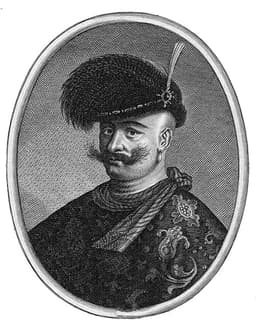
Abbas I
Emperor · Modern
81.4Total
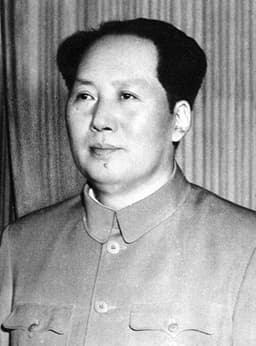
Mao Zedong
Politician · Modern
79.4Total
Basic Information
Born
1571
1893
Died
1629
1976
Era
Modern
Modern
Nationality
Persia
China
Occupation
Emperor
Politician
Civilization
Middle Eastern
Eastern
Score Comparison
Military (10%)
82.0
75.0
Political (20%)
90.0
88.0
Influence (20%)
75.0
85.0
Legacy (20%)
82.0
70.0
Leadership (15%)
81.7
85.0
Strategy (15%)
82.0
72.0
TOTAL
81.4
79.4
Abbas I — Complete Timeline
1590 AD
Reformed the Army with GhulamsReform
Abbas I created a standing army of ghulams (military slaves) recruited from Christian subjects in the Caucasus, particularly Georgians and Armenians. This reduced reliance on the Qizilbash tribal forces, increased royal control, and modernized the military with firearms and artillery.
Military ReformGhulam SystemCentralization
Impact: nationalconstructive
1598 AD
Relocated Capital to IsfahanPolitical Action
Abbas I moved the Safavid capital from Qazvin to Isfahan, transforming it into a magnificent city with grand architecture, including Naqsh-e Jahan Square, the Shah Mosque, and the Ali Qapu Palace. This relocation became a symbol of Safavid power and cultural flourishing.
Capital RelocationUrban PlanningArchitecture
Impact: globalconstructive
1599 AD
Established Diplomatic Relations with EuropePolitical Action◆ Major
Abbas I sent diplomatic missions to European courts, including those of Philip III of Spain, Rudolf II of the Holy Roman Empire, and Elizabeth I of England, seeking alliances against the Ottoman Empire. These missions opened sustained diplomatic and commercial exchanges between Safavid Persia and Europe.
DiplomacyEuropean RelationsAnti-Ottoman Alliance
Impact: globalconstructive
1605 AD
Battle of SufiyanWar◆ Major
Abbas I defeated an Ottoman army near Sufiyan, securing Safavid control over Azerbaijan and the Caucasus. This victory was part of the Ottoman-Safavid War of 1603-1618, which resulted in the recapture of Tabriz, Nakhchivan, and Yerevan from Ottoman occupation.
Ottoman-Safavid WarBattleTerritorial Recovery
Impact: regional
1622 AD
Expelled Portuguese from HormuzWar◆ Major
Abbas I, with support from the English East India Company, captured the island of Hormuz from Portuguese control. This ended Portuguese dominance in the Persian Gulf and opened direct trade routes for Safavid Persia with Europe, boosting the silk trade.
Persian GulfTradeEuropean Relations
Impact: globalconstructive
1623 AD
Recaptured BaghdadWar◆ Major
Abbas I captured Baghdad from the Ottoman Empire after a siege, restoring Safavid control over Iraq. This victory expanded Safavid territory and gave Abbas control over important Shi'a pilgrimage sites like Najaf and Karbala.
Ottoman-Safavid WarConquestShi'a Sites
Impact: regional
Mao Zedong — Complete Timeline
1934 AD
Long MarchWar
Mao Zedong led the Chinese Red Army on a strategic retreat from Nationalist forces, covering approximately 6,000 miles over 370 days. The march solidified Mao's leadership within the Chinese Communist Party and became a foundational myth of the Communist revolution.
Chinese Civil WarCommunist RevolutionRetreat
Impact: national
1949 AD
Proclamation of the People's Republic of ChinaPolitical Action
Mao Zedong declared the founding of the People's Republic of China from Tiananmen Gate in Beijing. This ended the Chinese Civil War and established Communist rule over mainland China, with Mao as Chairman of the Central People's Government.
Founding of PRCCommunist VictoryRevolution
Impact: global
1958 AD
Great Leap ForwardReform◆ Major
Mao launched a campaign to rapidly industrialize China and collectivize agriculture. The policy led to widespread mismanagement, resulting in a famine that caused an estimated 15-45 million deaths between 1959 and 1961.
FamineIndustrializationCollectivization
Impact: nationaldestructive
1960 AD
Sino-Soviet SplitPolitical Action◆ Major
Mao's ideological differences with Soviet leader Nikita Khrushchev led to a breakdown in relations between China and the Soviet Union. The split ended the Sino-Soviet alliance and reshaped global Cold War dynamics, with China pursuing an independent path.
Cold WarIdeological ConflictAlliance Breakdown
Impact: global
1966 AD
Cultural RevolutionPolitical Action
Mao initiated a sociopolitical movement to purge capitalist and traditional elements from Chinese society. The Red Guard youth groups attacked intellectuals and officials, leading to widespread violence, destruction of cultural artifacts, and an estimated 1-2 million deaths.
Political PurgeSocial UpheavalRed Guard
Impact: nationaldestructive
1971 AD
Ping-Pong DiplomacyCultural◆ Major
Mao approved an invitation for the U.S. table tennis team to visit China, initiating a thaw in Sino-American relations. This cultural exchange paved the way for President Nixon's visit to China in 1972 and the eventual normalization of diplomatic ties.
DiplomacyU.S.-China RelationsCultural Exchange
Impact: globalconstructive
Expert Analysis
Origins
**Abbas I** (1571–1629) was the fifth Safavid Shah of Persia, born into a dynasty that had revived Persian statehood after centuries of fragmentation. His father, Shah Mohammad Khodabanda, was a weak ruler, leading to internal strife and external threats from the Ottoman Empire and Uzbeks. Abbas ascended the throne in 1588 at age 16, inheriting a realm in crisis.
**Mao Zedong** (1893–1976) was a peasant-born revolutionary who rose to lead the Chinese Communist Party (CCP). China was in chaos under warlordism, foreign imperialism, and the failing Qing dynasty. Mao's early involvement in the May Fourth Movement and his role in the CCP's formation set him on a path to reshape China.
Rise to Power
**Abbas I** consolidated power by neutralizing the Qizilbash tribal elite, who had dominated the Safavid state. He created a new army of *ghulams* (slave soldiers) from Circassian, Georgian, and Armenian captives, loyal only to him. This allowed him to centralize authority and launch campaigns against the Uzbeks and Ottomans.
**Mao Zedong** rose through the CCP ranks, advocating for peasant-based revolution rather than urban uprisings. He led the **Long March** (1934–35), a strategic retreat that solidified his leadership. After the Japanese invasion and civil war, he proclaimed the **People's Republic of China** in 1949, becoming its paramount leader.
Leadership & Governance
**Abbas I** (Scores: M=82, P=90, I=75, L=82, D=82, S=82, T=81) was an enlightened despot who transformed Isfahan into a magnificent capital, fostering trade, architecture, and religious tolerance (e.g., allowing Christian Armenians to settle). He reformed the army, economy, and administration, making Persia a major power.
**Mao Zedong** (Scores: M=75, P=88, I=85, L=70, D=85, S=72, T=79) was a charismatic but ruthless leader. His governance included land reform, industrialization, and social transformation, but also catastrophic policies like the **Great Leap Forward** (1958–62), causing a massive famine. The **Cultural Revolution** (1966–76) purged rivals and destroyed cultural heritage.
Triumph & Tragedy
**Abbas I**'s triumphs include recapturing Baghdad from the Ottomans (1623) and expelling the Portuguese from Hormuz (1622), securing Persian trade routes. However, his later years saw a decline in relations with the West and a brutal succession struggle. His tragic flaw was over-reliance on the *ghulam* system, which weakened the dynasty after his death.
**Mao Zedong**'s triumphs include unifying China under communist rule and restoring national pride. His tragedy lies in the immense human cost: tens of millions died in famines and political purges. The **Sino-Soviet Split** (1960s) isolated China, but Mao's legacy remains deeply contested.
Character & Destiny
**Abbas I** was shrewd, pragmatic, and cultured. He personally led campaigns, but also enjoyed poetry and architecture. His destiny was to restore Persia's glory, but his authoritarian methods sowed seeds of decline.
**Mao Zedong** was ideological, ruthless, and visionary. He believed in perpetual revolution, but his dogmatism led to disasters. His destiny was to transform China, but with a heavy toll.
Legacy
**Abbas I** is remembered as the greatest Safavid ruler, who left a cultural renaissance in Isfahan and a centralized state. His military reforms and economic policies influenced later Persian rulers. Score: **8/10**.
**Mao Zedong** is a polarizing figure: revered for liberating China, but reviled for his brutal policies. He shaped modern China's political structure and ideology, but his legacy is marred by human suffering. Score: **7/10**.
Conclusion
Comparing Abbas I and Mao Zedong reveals two transformative leaders with contrasting methods. Abbas I built a golden age through centralization and cultural patronage, while Mao revolutionized China through mass mobilization and ideology. Based on historical impact and stability, Abbas I edges ahead (score gap: 2.0). However, Mao's influence on a global scale is undeniably greater. Ultimately, Abbas I is the more effective ruler in terms of sustainable governance and cultural achievement, earning him a higher rating in this comparison.
**Final Scores:** Abbas I: 8.5/10, Mao Zedong: 7.5/10.
Rankings
🥇
Abbas ILeader
Mil: 82.0Pol: 90.0Inf: 75.0
81.4
🥈
Mao Zedong
Mil: 75.0Pol: 88.0Inf: 85.0
79.4
+2.0 behind
How This Comparison Works
Algorithm
Each figure is scored on 6 dimensions (0—100 scale) based on structured historical data: Military (10%), Political (20%), Influence (20%), Legacy (20%), Leadership (15%), Strategy (15%). The weighted total produces the final ranking.
Data Sources
Scores are computed from structured sub-indicators in the database. Scale factors adjust for era (Ancient ×0.85, Modern ×1.0) and civilization size (Eastern ×1.05, Other ×0.80) to account for differences in population and military scale.
Maximum 3 Figures
Comparisons are limited to 2—3 figures to ensure readability and statistical meaningfulness.
Error Margins
±5 points per dimension — Sub-scores are derived from historical records with inherent uncertainty. Two figures within 5 points on a dimension should be considered roughly equivalent in that area.
Total Score Accuracy
±3 points overall — The weighted combination of 6 dimensions produces a total score with approximately ±3 points of uncertainty. Differences of less than 3 points are not statistically significant— the figures are effectively tied.
Known Limitations
- Historical records are incomplete and uneven across civilizations
- Figures from oral-tradition societies may be underrepresented
- Occupation labels can misclassify multi-role figures
- Scores measure capability and impact, not moral character
- Quantitative scoring is a comparison tool, not absolute truth
Capability Radar
Military (10%) — Battles & Warfare
Battles
85
85
Win Rate
90
80
Expansion
85
85
Political (20%) — Governance & Reform
Reform
95
95
Diplomacy
88
80
Economy
92
70
Influence (20%) — Cultural & Global Reach
Cultural
90
90
Global
80
90
Legacy (20%) — Historical Impact
Historical
88
95
Longevity
85
85
Leadership (15%) — Power & Stability
Tenure
90
95
Stability
85
60
Strategy (15%) — Tactics & Innovation
Strategy
92
85
Tactics
88
75
Reform
95
90
Similar Comparisons
Comments & Discussion
No comments yet. Be the first to share your thoughts!