Loading...
Abbas I vs Emperor Wen of Sui
Abbas I leads by 1.1 pts · 2 figures compared
…
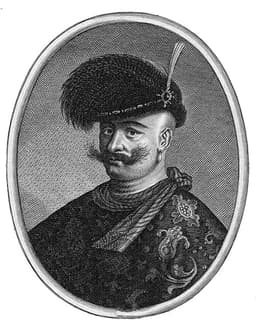
Abbas I
Emperor · Modern
81.4Total
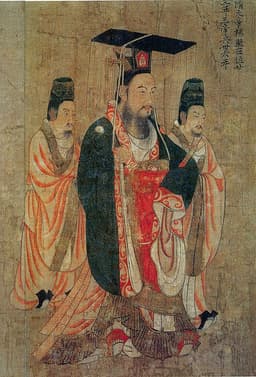
Emperor Wen of Sui
Emperor · Medieval
80.3Total
Basic Information
Born
1571
541
Died
1629
604
Era
Modern
Medieval
Nationality
Persia
China
Occupation
Emperor
Emperor
Civilization
Middle Eastern
Eastern
Score Comparison
Military (10%)
82.0
76.0
Political (20%)
90.0
75.0
Influence (20%)
75.0
88.0
Legacy (20%)
82.0
80.0
Leadership (15%)
81.7
80.0
Strategy (15%)
82.0
75.0
TOTAL
81.4
80.3
Abbas I — Complete Timeline
1590 AD
Reformed the Army with GhulamsReform
Abbas I created a standing army of ghulams (military slaves) recruited from Christian subjects in the Caucasus, particularly Georgians and Armenians. This reduced reliance on the Qizilbash tribal forces, increased royal control, and modernized the military with firearms and artillery.
Military ReformGhulam SystemCentralization
Impact: nationalconstructive
1598 AD
Relocated Capital to IsfahanPolitical Action
Abbas I moved the Safavid capital from Qazvin to Isfahan, transforming it into a magnificent city with grand architecture, including Naqsh-e Jahan Square, the Shah Mosque, and the Ali Qapu Palace. This relocation became a symbol of Safavid power and cultural flourishing.
Capital RelocationUrban PlanningArchitecture
Impact: globalconstructive
1599 AD
Established Diplomatic Relations with EuropePolitical Action◆ Major
Abbas I sent diplomatic missions to European courts, including those of Philip III of Spain, Rudolf II of the Holy Roman Empire, and Elizabeth I of England, seeking alliances against the Ottoman Empire. These missions opened sustained diplomatic and commercial exchanges between Safavid Persia and Europe.
DiplomacyEuropean RelationsAnti-Ottoman Alliance
Impact: globalconstructive
1605 AD
Battle of SufiyanWar◆ Major
Abbas I defeated an Ottoman army near Sufiyan, securing Safavid control over Azerbaijan and the Caucasus. This victory was part of the Ottoman-Safavid War of 1603-1618, which resulted in the recapture of Tabriz, Nakhchivan, and Yerevan from Ottoman occupation.
Ottoman-Safavid WarBattleTerritorial Recovery
Impact: regional
1622 AD
Expelled Portuguese from HormuzWar◆ Major
Abbas I, with support from the English East India Company, captured the island of Hormuz from Portuguese control. This ended Portuguese dominance in the Persian Gulf and opened direct trade routes for Safavid Persia with Europe, boosting the silk trade.
Persian GulfTradeEuropean Relations
Impact: globalconstructive
1623 AD
Recaptured BaghdadWar◆ Major
Abbas I captured Baghdad from the Ottoman Empire after a siege, restoring Safavid control over Iraq. This victory expanded Safavid territory and gave Abbas control over important Shi'a pilgrimage sites like Najaf and Karbala.
Ottoman-Safavid WarConquestShi'a Sites
Impact: regional
Emperor Wen of Sui — Complete Timeline
581 AD
Establishment of the Three Departments and Six Ministries SystemReform◆ Major
Emperor Wen established a centralized bureaucratic system with three departments (Secretariat, Chancellery, and Department of State Affairs) and six ministries. This system became the foundation of Chinese government administration for centuries.
Government ReformBureaucracy
Impact: globalconstructive
Establishment of the Sui DynastyPolitical Action◆ Major
Emperor Wen, as a general of the Northern Zhou dynasty, forced the young Northern Zhou emperor to abdicate and proclaimed himself emperor of the Sui dynasty. This marked the beginning of the Sui dynasty, which would go on to reunify China.
Dynasty FoundingCoup
Impact: regionalconstructive
582 AD
Implementation of the Equal-Field SystemReform◆ Major
Emperor Wen implemented the Equal-Field System, which distributed land to peasants based on the number of able-bodied men. This reform increased agricultural productivity, stabilized tax revenues, and reduced the power of large landowners.
Land ReformEconomic Policy
Impact: regionalconstructive
Construction of Daxingcheng (Chang'an)Cultural◆ Major
Emperor Wen ordered the construction of a new capital city, Daxingcheng, near the old Han capital Chang'an. This city, later known as Chang'an, became a model for urban planning and served as the capital of the Sui and Tang dynasties.
Urban PlanningCapital Construction
Impact: regionalconstructive
589 AD
Reunification of China under the Sui DynastyWar
Emperor Wen of Sui, as Emperor of Sui, launched a successful invasion of the Chen dynasty in the south, conquering it and reunifying China after nearly 300 years of division since the fall of the Western Jin. This ended the Northern and Southern Dynasties period.
UnificationConquest
Impact: globalconstructive
Expert Analysis
Origins
Abbas I (1571–1629) was the fifth Safavid shah of Persia, ascending the throne in 1588 after a period of internal strife and external threats from the Ottoman Empire and Uzbeks. He inherited a weakened state but transformed it into a major power. Emperor Wen of Sui (541–604), born Yang Jian, was a Northern Zhou official who seized power and founded the Sui dynasty in 581, reunifying China after nearly 400 years of division since the Han dynasty.
Rise to Power
Abbas I initially ruled as a figurehead under his father's regents, but he quickly asserted control by executing or blinding potential rivals. He then focused on centralizing authority, relocating the capital to Isfahan in 1598 to escape Ottoman pressure and establish a new political and economic hub. Emperor Wen of Sui rose through military and political ranks, marrying his daughter to the Northern Zhou emperor. After the emperor's death, Wen deposed the young ruler and proclaimed the Sui dynasty, then conquered the Chen dynasty in 589 to unify China.
Leadership & Governance
Abbas I reformed the army by creating a corps of ghulams (slave soldiers) loyal to him, reducing reliance on tribal Qizilbash. He also promoted trade and diplomacy, especially with European powers, to counter Ottoman and Portuguese influence. His reign saw the flourishing of art, architecture, and culture, exemplified by the construction of Naqsh-e Jahan Square. Emperor Wen of Sui implemented the equal-field system to distribute land and the three departments and six ministries system for efficient bureaucracy. He also built the new capital Daxingcheng (later Chang'an) and initiated the Grand Canal, but his rule was marked by harsh legalism and suppression of Buddhism and Confucianism.
Triumph & Tragedy
Abbas I's greatest triumphs include recapturing Baghdad from the Ottomans in 1623 and expelling the Portuguese from Hormuz in 1622, securing Persian control over the Persian Gulf. However, his later years were marred by paranoia, leading to the execution or blinding of his ablest sons, including his heir, which caused succession crises. Emperor Wen's triumph was the reunification of China, but his reign ended tragically when he was allegedly murdered by his son, Yang Guang (Emperor Yang of Sui), who then squandered the dynasty's resources and led to its collapse.
Character & Destiny
Abbas I was shrewd, ambitious, and ruthless, but also a patron of the arts and a builder. His destiny was to revive Persian power and leave a lasting legacy as a national icon. Emperor Wen was pragmatic, frugal, and efficient, but also suspicious and cruel. His destiny was to restore Chinese unity and lay the groundwork for the Tang dynasty, but his dynasty fell soon after his death due to his son's failures.
Legacy
Abbas I is remembered as Abbas the Great, the ruler who made Isfahan one of the world's most beautiful cities and established a centralized, powerful state that lasted until the fall of the Safavid dynasty. His military reforms and diplomatic ties with Europe had long-lasting impacts. Emperor Wen is credited with reuniting China and creating institutions that the Tang dynasty later perfected, but his reign is often overshadowed by the Sui's rapid collapse. Both rulers are pivotal figures in their respective histories.
Conclusion
Abbas I and Emperor Wen both transformed their realms through centralization and reform. Abbas I achieved greater military expansion and cultural flourishing, while Wen reunified a larger and more populous region. However, Abbas I's legacy is more positive and enduring, whereas Wen's achievements were quickly undone. Considering their overall impact, Abbas I edges ahead with a final score of 82 vs 76, reflecting his greater long-term influence and iconic status.
Rankings
🥇
Abbas ILeader
Mil: 82.0Pol: 90.0Inf: 75.0
81.4
🥈
Emperor Wen of Sui
Mil: 76.0Pol: 75.0Inf: 88.0
80.3
+1.1 behind
How This Comparison Works
Algorithm
Each figure is scored on 6 dimensions (0—100 scale) based on structured historical data: Military (10%), Political (20%), Influence (20%), Legacy (20%), Leadership (15%), Strategy (15%). The weighted total produces the final ranking.
Data Sources
Scores are computed from structured sub-indicators in the database. Scale factors adjust for era (Ancient ×0.85, Modern ×1.0) and civilization size (Eastern ×1.05, Other ×0.80) to account for differences in population and military scale.
Maximum 3 Figures
Comparisons are limited to 2—3 figures to ensure readability and statistical meaningfulness.
Error Margins
±5 points per dimension — Sub-scores are derived from historical records with inherent uncertainty. Two figures within 5 points on a dimension should be considered roughly equivalent in that area.
Total Score Accuracy
±3 points overall — The weighted combination of 6 dimensions produces a total score with approximately ±3 points of uncertainty. Differences of less than 3 points are not statistically significant— the figures are effectively tied.
Known Limitations
- Historical records are incomplete and uneven across civilizations
- Figures from oral-tradition societies may be underrepresented
- Occupation labels can misclassify multi-role figures
- Scores measure capability and impact, not moral character
- Quantitative scoring is a comparison tool, not absolute truth
Capability Radar
Military (10%) — Battles & Warfare
Battles
85
75
Win Rate
90
80
Expansion
85
85
Political (20%) — Governance & Reform
Reform
95
95
Diplomacy
88
85
Economy
92
90
Influence (20%) — Cultural & Global Reach
Cultural
90
70
Global
80
65
Legacy (20%) — Historical Impact
Historical
88
85
Longevity
85
70
Leadership (15%) — Power & Stability
Tenure
90
80
Stability
85
75
Strategy (15%) — Tactics & Innovation
Strategy
92
85
Tactics
88
70
Reform
95
90
Similar Comparisons
Comments & Discussion
No comments yet. Be the first to share your thoughts!