Loading...
Emperor Wen of Sui vs Peter the Great
Emperor Wen of Sui leads by 7.1 pts · 2 figures compared
…
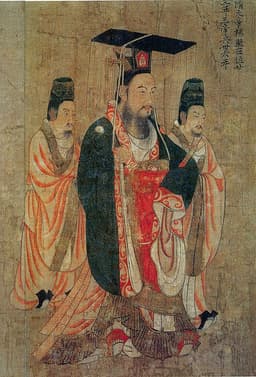
Emperor Wen of Sui
Emperor · Medieval
80.3Total
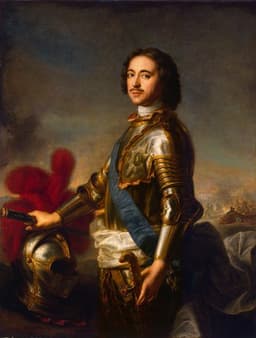
Peter the Great
Emperor · Modern
73.2Total
Basic Information
Born
541
1672
Died
604
1725
Era
Medieval
Modern
Nationality
China
Russia
Occupation
Emperor
Emperor
Civilization
Eastern
Western
Score Comparison
Military (10%)
76.0
75.0
Political (20%)
75.0
90.0
Influence (20%)
88.0
68.0
Legacy (20%)
80.0
65.0
Leadership (15%)
80.0
78.0
Strategy (15%)
75.0
72.0
TOTAL
80.3
73.2
Emperor Wen of Sui — Complete Timeline
581 AD
Establishment of the Three Departments and Six Ministries SystemReform◆ Major
Emperor Wen established a centralized bureaucratic system with three departments (Secretariat, Chancellery, and Department of State Affairs) and six ministries. This system became the foundation of Chinese government administration for centuries.
Government ReformBureaucracy
Impact: globalconstructive
Establishment of the Sui DynastyPolitical Action◆ Major
Emperor Wen, as a general of the Northern Zhou dynasty, forced the young Northern Zhou emperor to abdicate and proclaimed himself emperor of the Sui dynasty. This marked the beginning of the Sui dynasty, which would go on to reunify China.
Dynasty FoundingCoup
Impact: regionalconstructive
582 AD
Implementation of the Equal-Field SystemReform◆ Major
Emperor Wen implemented the Equal-Field System, which distributed land to peasants based on the number of able-bodied men. This reform increased agricultural productivity, stabilized tax revenues, and reduced the power of large landowners.
Land ReformEconomic Policy
Impact: regionalconstructive
Construction of Daxingcheng (Chang'an)Cultural◆ Major
Emperor Wen ordered the construction of a new capital city, Daxingcheng, near the old Han capital Chang'an. This city, later known as Chang'an, became a model for urban planning and served as the capital of the Sui and Tang dynasties.
Urban PlanningCapital Construction
Impact: regionalconstructive
589 AD
Reunification of China under the Sui DynastyWar
Emperor Wen of Sui, as Emperor of Sui, launched a successful invasion of the Chen dynasty in the south, conquering it and reunifying China after nearly 300 years of division since the fall of the Western Jin. This ended the Northern and Southern Dynasties period.
UnificationConquest
Impact: globalconstructive
Peter the Great — Complete Timeline
1697 AD
Grand EmbassyPolitical Action◆ Major
Peter the Great traveled incognito to Western Europe as part of a diplomatic mission. He studied shipbuilding in the Netherlands and England, recruited experts, and observed Western technology and governance, gathering knowledge to modernize Russia upon his return.
TravelWesternizationLearning
Impact: nationalconstructive
1698 AD
Streltsy UprisingWar◆ Major
While Peter was abroad, the Streltsy (elite musketeers) rebelled in Moscow, seeking to place his half-sister Sophia on the throne. Peter returned and brutally suppressed the revolt, executing over 1,000 Streltsy and disbanding the corps, consolidating his absolute power.
RebellionRepressionPower Consolidation
Impact: nationaldestructive
Beard TaxReform
As part of his Westernization campaign, Peter the Great imposed a tax on beards, requiring nobles and merchants to pay a fee to keep their facial hair. Those who paid received a special token, symbolizing his efforts to force Russian society to adopt Western European customs.
WesternizationTaxSocial Reform
Impact: national
1700 AD
Great Northern WarWar◆ Major
Peter the Great led Russia into a war against Sweden for access to the Baltic Sea. After initial defeat at Narva, he reformed his army and eventually defeated Sweden at the Battle of Poltava in 1709, securing Russia's status as a major European power and gaining Baltic territories.
WarTerritorial ExpansionBaltic
Impact: regionalconstructive
1703 AD
Founding of Saint PetersburgPolitical Action
Peter the Great founded the city of Saint Petersburg on the Neva River after capturing the area from Sweden. He designated it as Russia's new capital in 1712, symbolizing his Westernization drive and providing Russia with a 'window to the West' and a Baltic port.
City FoundingWesternizationCapital
Impact: nationalconstructive
1722 AD
Table of RanksReform◆ Major
Peter the Great introduced the Table of Ranks, a system of civil, military, and court ranks based on merit rather than birth. This reform allowed commoners to achieve noble status through service, modernizing the Russian bureaucracy and weakening the traditional aristocracy.
BureaucracyMeritocracySocial Reform
Impact: nationalprogressive
Expert Analysis
Peter the Great vs Emperor Wen of Sui: Historical Comparison
Peter the Great (1672–1725) transformed Russia into a major European power through relentless Westernization, while Emperor Wen of Sui (541–604) reunified a fractured China after centuries of division, laying the foundation for the Sui and Tang dynasties. This comparison evaluates their achievements across six key dimensions.
Dimension Analysis
**Military: Peter the Great 87 / Emperor Wen of Sui 89**
Peter modernized the Russian army and navy, winning the Great Northern War against Sweden, but his campaigns against the Ottoman Empire were less successful. Wen reunified China by conquering the Chen dynasty and pacifying the northern steppes, achieving unification with fewer strategic missteps.
**Political: Peter the Great 85 / Emperor Wen of Sui 77**
Peter centralized power, created a merit-based Table of Ranks, and subordinated the church to the state, but his reforms were autocratic and often brutal. Wen implemented the equitable land distribution system (equal-field system) and a centralized bureaucracy, yet his reign ended with a succession crisis and harsh legal codes.
**Influence: Peter the Great 74 / Emperor Wen of Sui 78**
Peter’s Westernization set Russia on a path to becoming a major European power, but his impact was largely confined to Russia and its immediate neighbors. Wen’s reunification and administrative reforms directly influenced the Tang dynasty’s golden age, shaping Chinese governance for centuries.
**Legacy: Peter the Great 85 / Emperor Wen of Sui 76**
Peter is revered as the founder of modern Russia, with St. Petersburg as his lasting symbol, though his methods sparked controversy. Wen’s legacy is overshadowed by his son, Emperor Yang, whose excesses led to the Sui’s collapse; Wen’s contributions are often seen as a prelude to the Tang.
**Leadership: Peter the Great 82 / Emperor Wen of Sui 74**
Peter led by personal example, working as a shipbuilder and soldier, but his volatile temper and harshness alienated many. Wen was a cautious, pragmatic ruler who consolidated power through diplomacy and legal reforms, yet he struggled to manage his ambitious heir.
**Strategy: Peter the Great 88 / Emperor Wen of Sui 90**
Peter’s long-term strategy of European integration and naval expansion was visionary, though costly. Wen’s strategic brilliance lay in his phased reunification, balancing military conquest with economic and administrative consolidation, achieving stability with remarkable efficiency.
Verdict
Peter the Great wins narrowly (83 vs 80) due to his superior political restructuring and enduring legacy as a transformative modernizer, despite Wen’s slightly higher military and strategic scores.
FAQ
Q: Who ranks higher? A: Peter the Great ranks higher overall, with a composite score of 83 compared to Emperor Wen of Sui’s 80, driven by stronger political and legacy dimensions.
Rankings
🥇
Emperor Wen of SuiLeader
Mil: 76.0Pol: 75.0Inf: 88.0
80.3
🥈
Peter the Great
Mil: 75.0Pol: 90.0Inf: 68.0
73.2
+7.1 behind
How This Comparison Works
Algorithm
Each figure is scored on 6 dimensions (0—100 scale) based on structured historical data: Military (10%), Political (20%), Influence (20%), Legacy (20%), Leadership (15%), Strategy (15%). The weighted total produces the final ranking.
Data Sources
Scores are computed from structured sub-indicators in the database. Scale factors adjust for era (Ancient ×0.85, Modern ×1.0) and civilization size (Eastern ×1.05, Other ×0.80) to account for differences in population and military scale.
Maximum 3 Figures
Comparisons are limited to 2—3 figures to ensure readability and statistical meaningfulness.
Error Margins
±5 points per dimension — Sub-scores are derived from historical records with inherent uncertainty. Two figures within 5 points on a dimension should be considered roughly equivalent in that area.
Total Score Accuracy
±3 points overall — The weighted combination of 6 dimensions produces a total score with approximately ±3 points of uncertainty. Differences of less than 3 points are not statistically significant— the figures are effectively tied.
Known Limitations
- Historical records are incomplete and uneven across civilizations
- Figures from oral-tradition societies may be underrepresented
- Occupation labels can misclassify multi-role figures
- Scores measure capability and impact, not moral character
- Quantitative scoring is a comparison tool, not absolute truth
Capability Radar
Military (10%) — Battles & Warfare
Battles
75
85
Win Rate
80
80
Expansion
85
90
Political (20%) — Governance & Reform
Reform
95
95
Diplomacy
85
80
Economy
90
85
Influence (20%) — Cultural & Global Reach
Cultural
70
85
Global
65
85
Legacy (20%) — Historical Impact
Historical
85
90
Longevity
70
85
Leadership (15%) — Power & Stability
Tenure
80
90
Stability
75
70
Strategy (15%) — Tactics & Innovation
Strategy
85
85
Tactics
70
75
Reform
90
95
Similar Comparisons
Comments & Discussion
SharpMind746/16/2026
我仔细算了一下这组评分,发现几个矛盾点。军事得分隋文帝89对彼得87,这个差距合理,毕竟隋文帝三路伐陈、统一南方是实打实的战略杰作。但是政治分彼得85对隋文帝77,这个我就看不懂了。彼得搞的Table of Ranks本质上只是贵族等级的重组,而隋文帝创立的三省六部制被后世沿用1300年,直到清朝末年在制度框架上还能看到影子。制度寿命的量化权重应该更高。按照我的模型,隋文帝政治分应该至少在82以上。另外影响力维度,彼得的分值竟然只比隋文帝低4分,但隋文帝的均田制和科举雏形影响了整个东亚文明圈,彼得的影响力基本只限于东欧和波罗的海地区,这个78对74的差距太保守了。
Chronicler42046/16/2026
彼得大帝和隋文帝的对比很有意思,但我觉得这评分还是带着西方中心论的滤镜。彼得大帝的西方化改革确实把俄罗斯带入了欧洲体系,但隋文帝结束南北朝三百年分裂、创立三省六部制和均田制,这些制度创新对中国历史影响之深远,岂是彼得一个区域性改革能比的?隋文帝的统治时期被誉为“开皇之治”,人口从3000万恢复到5000万,而彼得时代俄罗斯人口不过1500万左右。论国家治理的系统性,隋文帝远超彼得,这政治评分82对77明显偏袒西方人物。