Loading...
Charles de Gaulle vs Emperor Wen of Sui
Emperor Wen of Sui leads by 12.1 pts · 2 figures compared
…
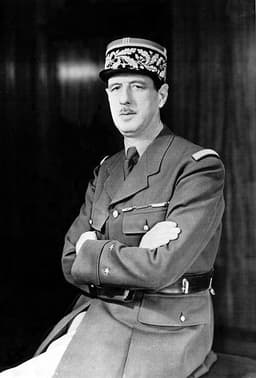
Charles de Gaulle
Politician · Modern
68.2Total
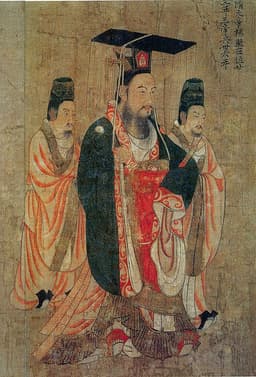
Emperor Wen of Sui
Emperor · Medieval
80.3Total
Basic Information
Born
1890
541
Died
1970
604
Era
Modern
Medieval
Nationality
France
China
Occupation
Politician
Emperor
Civilization
Western
Eastern
Score Comparison
Military (10%)
55.0
76.0
Political (20%)
75.0
75.0
Influence (20%)
65.0
88.0
Legacy (20%)
68.0
80.0
Leadership (15%)
78.0
80.0
Strategy (15%)
65.0
75.0
TOTAL
68.2
80.3
Charles de Gaulle — Complete Timeline
1940 AD
Appeal of 18 June 1940Political Action
From London, de Gaulle broadcast a radio appeal urging French resistance against Nazi occupation. He called on French soldiers and citizens to continue the fight, founding the Free French Forces and becoming the symbol of French defiance.
World War IIResistanceLeadership
Impact: nationalconstructive
1958 AD
Founding of the Fifth RepublicPolitical Action
De Gaulle returned to power during the Algerian crisis and oversaw the drafting of a new constitution. The Fifth Republic established a strong executive presidency, replacing the unstable parliamentary system of the Fourth Republic.
ConstitutionGovernment ReformPolitical System
Impact: nationalconstructive
1962 AD
End of the Algerian WarPolitical Action◆ Major
De Gaulle negotiated the
DecolonizationPeace TreatyAlgeria
Impact: regionalconstructive
1968 AD
May 1968 CrisisPolitical Action◆ Major
Mass student protests and general strikes paralyzed France, challenging de Gaulle's government. De Gaulle briefly fled to Germany, then returned to dissolve the National Assembly and call elections, which his party won, but his authority was weakened.
ProtestPolitical CrisisSocial Unrest
Impact: nationaldestructive
1969 AD
Resignation as PresidentPolitical Action
De Gaulle resigned after losing a referendum on regional reform and Senate restructuring. The defeat marked the end of his political career, as he withdrew from public life and died the following year.
ResignationPolitical DefeatReferendum
Impact: nationaltragic
Emperor Wen of Sui — Complete Timeline
581 AD
Establishment of the Three Departments and Six Ministries SystemReform◆ Major
Emperor Wen established a centralized bureaucratic system with three departments (Secretariat, Chancellery, and Department of State Affairs) and six ministries. This system became the foundation of Chinese government administration for centuries.
Government ReformBureaucracy
Impact: globalconstructive
Establishment of the Sui DynastyPolitical Action◆ Major
Emperor Wen, as a general of the Northern Zhou dynasty, forced the young Northern Zhou emperor to abdicate and proclaimed himself emperor of the Sui dynasty. This marked the beginning of the Sui dynasty, which would go on to reunify China.
Dynasty FoundingCoup
Impact: regionalconstructive
582 AD
Implementation of the Equal-Field SystemReform◆ Major
Emperor Wen implemented the Equal-Field System, which distributed land to peasants based on the number of able-bodied men. This reform increased agricultural productivity, stabilized tax revenues, and reduced the power of large landowners.
Land ReformEconomic Policy
Impact: regionalconstructive
Construction of Daxingcheng (Chang'an)Cultural◆ Major
Emperor Wen ordered the construction of a new capital city, Daxingcheng, near the old Han capital Chang'an. This city, later known as Chang'an, became a model for urban planning and served as the capital of the Sui and Tang dynasties.
Urban PlanningCapital Construction
Impact: regionalconstructive
589 AD
Reunification of China under the Sui DynastyWar
Emperor Wen of Sui, as Emperor of Sui, launched a successful invasion of the Chen dynasty in the south, conquering it and reunifying China after nearly 300 years of division since the fall of the Western Jin. This ended the Northern and Southern Dynasties period.
UnificationConquest
Impact: globalconstructive
Expert Analysis
Charles de Gaulle vs Emperor Wen of Sui
# The Lonely Heights of Power
On a June evening in 1940, a tall, awkward French general stood before a microphone in a BBC studio in London, his nose so large and his ears so prominent that he seemed almost a caricature of a Frenchman. He spoke to a nation that had just surrendered, telling them that a battle had been lost but the war was not over. Half a world away and fourteen centuries earlier, another general stood before the gates of a conquered southern capital, having done what no one had done for nearly three hundred years—unified a fractured land under a single rule. Both men were outsiders in their own way, both were architects of nations reborn, yet their paths and their fates could not have been more different. Why did one die in power, mourned by millions, while the other walked away in defeat, bitter to the end?
Origins
Charles de Gaulle was born in 1890 in Lille, into a devoutly Catholic, nationalist family that had lost everything in the French Revolution. His father taught him that France was meant for greatness, that defeat was a temporary condition. De Gaulle grew up in the shadow of the Franco-Prussian War, a humiliation that burned in his soul. He was a tall, bookish boy who wrote poetry and dreamed of military glory, yet he was never quite comfortable with his peers. He was too serious, too aloof, too certain of his own destiny. When he entered Saint-Cyr military academy, his classmates nicknamed him "the Great Asparagus" for his height and stiffness.
Emperor Wen of Sui, born Yang Jian in 541, came from a world of chaos and opportunity. China had been splintered into rival dynasties for centuries, a period known as the Northern and Southern Dynasties. His family were powerful generals in the Northern Zhou, one of the northern kingdoms, and Yang Jian grew up in a court where loyalty was measured in blood and betrayal was a survival skill. He was not a poet or a dreamer. He was a pragmatist, a man who understood power in its rawest form—who held the sword, who controlled the grain, who commanded the loyalty of soldiers. His wife, Empress Dugu, was his equal in ambition and ruthlessness, and together they formed a partnership that would reshape China.
Rise to Power
De Gaulle's rise was a study in defiance. In 1940, when France fell, he was a 49-year-old brigadier general, a tank commander who had been wounded at Verdun and captured, spending years as a prisoner of war. He escaped, fought in the final battles of World War I, and spent the interwar years writing military treatises that no one read. When the Germans invaded, he led one of the few successful French counterattacks, but it was too late. The government surrendered. De Gaulle fled to London, and on June 18, 1940, he broadcast his appeal. He had no army, no territory, no legitimacy. He had only his voice and his absolute conviction that he spoke for France.
Emperor Wen's rise was a study in patience and opportunism. In 581, when he was 40 years old, he was the most powerful general in the Northern Zhou dynasty. The emperor was a child, and the court was rife with intrigue. Yang Jian did not flee to a foreign capital; he stayed and maneuvered. He suppressed rebellions, married his daughter to the young emperor, and slowly, methodically, accumulated power. When the moment came, he forced the boy emperor to abdicate and proclaimed himself emperor of a new dynasty, the Sui. He did not need to convince a nation from a radio studio; he needed to outmaneuver a dozen rivals in the same palace.
Leadership & Governance
De Gaulle's leadership was built on a single, unshakeable idea: the grandeur of France. He believed that France was not merely a country but an idea, a civilization, a beacon of liberty. This vision drove him through the dark years of war, when he was dismissed by Churchill and Roosevelt as a difficult, arrogant figure. After the war, when the Fourth Republic collapsed into political chaos and the Algerian War threatened to tear France apart, de Gaulle returned in 1958. He drafted a new constitution for the Fifth Republic, concentrating power in the presidency, and ended the Algerian War in 1962 through the Évian Accords—a decision that horrified his own supporters and triggered assassination attempts. He was a reformer who understood that to preserve France, he had to change it.
Emperor Wen's leadership was built on a different foundation: efficiency. He reunified China in 589 by conquering the Chen dynasty in the south, but his true genius was administrative. He established the Three Departments and Six Ministries system, a centralized bureaucracy that would influence Chinese governance for centuries. He implemented the Equal-Field System, distributing land to peasants based on the number of able-bodied men in each family, breaking the power of the great aristocratic clans. He ordered the construction of a new capital, Daxingcheng, which would later become Chang'an, the greatest city in the world. Where de Gaulle was a visionary, Emperor Wen was a builder.
Triumph & Tragedy
De Gaulle's greatest triumph was the survival of France as a great power. He gave the French back their pride, stood up to America, withdrew from NATO's military command, and vetoed British entry into the European Economic Community. His greatest tragedy came in May 1968, when student protests and a general strike paralyzed France. The old general, now 77, seemed bewildered. He briefly fled to Baden-Baden to consult with French generals in Germany, a moment of weakness that shattered his mystique. He won the subsequent election, but the magic was gone. In 1969, he lost a referendum on regional reform and resigned. He returned to his country home in Colombey-les-Deux-Églises, where he died the following year, a lonely, bitter man.
Emperor Wen's triumph was the reunification of China, a feat that had seemed impossible. He was a frugal, hardworking ruler who reduced taxes, built granaries, and maintained peace. His tragedy was his son. Emperor Wen was suspicious, cruel, and paranoid in his later years, and he made the catastrophic decision to name his son Yang Guang as his successor. This son, Emperor Yang, would bankrupt the Sui dynasty with grandiose projects and military campaigns, leading to rebellions that destroyed everything his father had built.
Character & Destiny
De Gaulle's character was a fortress. He was cold, aloof, and utterly convinced of his own rightness. He once said, "A statesman must have no heart." This made him effective in crisis but incapable of warmth. He could not bend, could not compromise, could not understand the young people who protested in 1968. His destiny was to be the savior of France, but also its lonely conscience.
Emperor Wen's character was a mask. He presented himself as a Confucian sage, a frugal, benevolent ruler, but he was also capable of terrible cruelty. He executed generals, purged officials, and lived in constant fear of betrayal. His destiny was to build a dynasty that would last only thirty-seven years, but whose institutions would outlive it for a millennium.
Legacy
De Gaulle is remembered as the founder of the Fifth Republic, the father of modern France. Every French president since has governed within the constitutional framework he created. His name adorns airports, streets, and the world's most famous aircraft carrier. Yet his legacy is contested. Some see him as a great man who saved France; others see him as a authoritarian who stifled democracy.
Emperor Wen's legacy is more ambiguous. He reunified China, but his dynasty collapsed. His bureaucratic systems were adopted by the Tang dynasty, which would create a golden age. He is remembered as a founder, but also as a warning—a man who achieved the impossible but could not secure it.
Conclusion
Both men stood at the lonely heights of power, looking down at the nations they had remade. De Gaulle ended his life in quiet retirement, writing his memoirs, still certain that he had been right. Emperor Wen died in his palace, possibly murdered by his own son, his dynasty already crumbling. One man built a system that lasted; the other built a system that collapsed but provided the foundation for what came after. Perhaps that is the final irony of leadership: the greatest achievements are often the ones we do not live to see completed.
Rankings
🥇
Emperor Wen of SuiLeader
Mil: 76.0Pol: 75.0Inf: 88.0
80.3
🥈
Charles de Gaulle
Mil: 55.0Pol: 75.0Inf: 65.0
68.2
+12.1 behind
How This Comparison Works
Algorithm
Each figure is scored on 6 dimensions (0—100 scale) based on structured historical data: Military (10%), Political (20%), Influence (20%), Legacy (20%), Leadership (15%), Strategy (15%). The weighted total produces the final ranking.
Data Sources
Scores are computed from structured sub-indicators in the database. Scale factors adjust for era (Ancient ×0.85, Modern ×1.0) and civilization size (Eastern ×1.05, Other ×0.80) to account for differences in population and military scale.
Maximum 3 Figures
Comparisons are limited to 2—3 figures to ensure readability and statistical meaningfulness.
Error Margins
±5 points per dimension — Sub-scores are derived from historical records with inherent uncertainty. Two figures within 5 points on a dimension should be considered roughly equivalent in that area.
Total Score Accuracy
±3 points overall — The weighted combination of 6 dimensions produces a total score with approximately ±3 points of uncertainty. Differences of less than 3 points are not statistically significant— the figures are effectively tied.
Known Limitations
- Historical records are incomplete and uneven across civilizations
- Figures from oral-tradition societies may be underrepresented
- Occupation labels can misclassify multi-role figures
- Scores measure capability and impact, not moral character
- Quantitative scoring is a comparison tool, not absolute truth
Capability Radar
Military (10%) — Battles & Warfare
Battles
60
75
Win Rate
55
80
Expansion
20
85
Political (20%) — Governance & Reform
Reform
95
95
Diplomacy
90
85
Economy
70
90
Influence (20%) — Cultural & Global Reach
Cultural
70
70
Global
80
65
Legacy (20%) — Historical Impact
Historical
85
85
Longevity
75
70
Leadership (15%) — Power & Stability
Tenure
85
80
Stability
75
75
Strategy (15%) — Tactics & Innovation
Strategy
85
85
Tactics
70
70
Reform
80
90
Similar Comparisons
Comments & Discussion
L'Asperge du Destin6/16/2026
The real question isn't who unified more—it's who faced the harder odds. De Gaulle walked into London with literally nothing but his voice and a vision; Wen inherited a military machine from his father-in-law and crushed the Chen dynasty with overwhelming force. Wen was a brilliant administrator, sure, but give me the man who rallied a defeated nation from a BBC studio any day. That's not just leadership—that's alchemy.