Loading...
Abbas I vs Constantine the Great
Abbas I leads by 5.9 pts · 2 figures compared
…
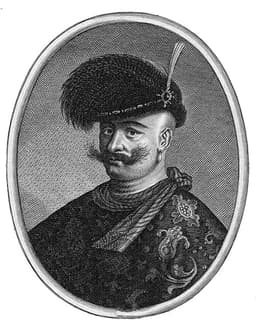
Abbas I
Emperor · Modern
81.4Total
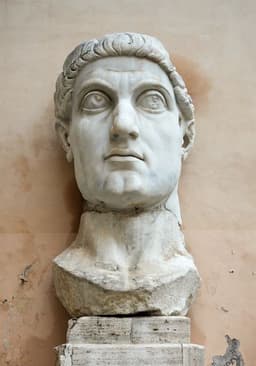
Constantine the Great
Emperor · Ancient
75.5Total
Basic Information
Born
1571
272
Died
1629
337
Era
Modern
Ancient
Nationality
Persia
Roman Empire
Occupation
Emperor
Emperor
Civilization
Middle Eastern
Western
Score Comparison
Military (10%)
82.0
78.0
Political (20%)
90.0
82.0
Influence (20%)
75.0
75.0
Legacy (20%)
82.0
70.0
Leadership (15%)
81.7
80.0
Strategy (15%)
82.0
72.0
TOTAL
81.4
75.5
Abbas I — Complete Timeline
1590 AD
Reformed the Army with GhulamsReform
Abbas I created a standing army of ghulams (military slaves) recruited from Christian subjects in the Caucasus, particularly Georgians and Armenians. This reduced reliance on the Qizilbash tribal forces, increased royal control, and modernized the military with firearms and artillery.
Military ReformGhulam SystemCentralization
Impact: nationalconstructive
1598 AD
Relocated Capital to IsfahanPolitical Action
Abbas I moved the Safavid capital from Qazvin to Isfahan, transforming it into a magnificent city with grand architecture, including Naqsh-e Jahan Square, the Shah Mosque, and the Ali Qapu Palace. This relocation became a symbol of Safavid power and cultural flourishing.
Capital RelocationUrban PlanningArchitecture
Impact: globalconstructive
1599 AD
Established Diplomatic Relations with EuropePolitical Action◆ Major
Abbas I sent diplomatic missions to European courts, including those of Philip III of Spain, Rudolf II of the Holy Roman Empire, and Elizabeth I of England, seeking alliances against the Ottoman Empire. These missions opened sustained diplomatic and commercial exchanges between Safavid Persia and Europe.
DiplomacyEuropean RelationsAnti-Ottoman Alliance
Impact: globalconstructive
1605 AD
Battle of SufiyanWar◆ Major
Abbas I defeated an Ottoman army near Sufiyan, securing Safavid control over Azerbaijan and the Caucasus. This victory was part of the Ottoman-Safavid War of 1603-1618, which resulted in the recapture of Tabriz, Nakhchivan, and Yerevan from Ottoman occupation.
Ottoman-Safavid WarBattleTerritorial Recovery
Impact: regional
1622 AD
Expelled Portuguese from HormuzWar◆ Major
Abbas I, with support from the English East India Company, captured the island of Hormuz from Portuguese control. This ended Portuguese dominance in the Persian Gulf and opened direct trade routes for Safavid Persia with Europe, boosting the silk trade.
Persian GulfTradeEuropean Relations
Impact: globalconstructive
1623 AD
Recaptured BaghdadWar◆ Major
Abbas I captured Baghdad from the Ottoman Empire after a siege, restoring Safavid control over Iraq. This victory expanded Safavid territory and gave Abbas control over important Shi'a pilgrimage sites like Najaf and Karbala.
Ottoman-Safavid WarConquestShi'a Sites
Impact: regional
Constantine the Great — Complete Timeline
312 AD
Battle of the Milvian BridgeWar◆ Major
Constantine defeated his rival Maxentius at the Milvian Bridge near Rome. According to tradition, Constantine saw a vision of a cross in the sky with the words 'In this sign, conquer.' The victory made Constantine the sole ruler of the Western Roman Empire and led to his conversion to Christianity.
Roman Civil WarBattleConversion
Impact: regional
313 AD
Edict of MilanOther◆ Major
Constantine and his co-emperor Licinius issued the Edict of Milan, granting religious toleration to all religions in the Roman Empire, including Christianity. The edict ended the persecution of Christians, restored confiscated church property, and established Christianity as a legally recognized religion.
Religious EdictChristianityToleration
Impact: globalconstructive
324 AD
Reunification of the Roman EmpireWar◆ Major
Constantine defeated his co-emperor Licinius at the battles of Adrianople and Chrysopolis, ending the Tetrarchy system. He became the sole ruler of the entire Roman Empire, reuniting the Western and Eastern halves under his control. This reunification was the last time the Roman Empire was united under a single ruler.
Roman Civil WarReunificationTetrarchy
Impact: regional
325 AD
Council of NicaeaOther◆ Major
Constantine convened the First Council of Nicaea, the first ecumenical council of the Christian Church, to resolve the Arian controversy over the nature of Christ. The council produced the Nicene Creed, affirming the divinity of Christ and establishing a unified Christian doctrine. Constantine presided over the council.
Religious CouncilChristian DoctrineNicene Creed
Impact: global
330 AD
Foundation of ConstantinopleOther◆ Major
Constantine dedicated the city of Constantinople (modern Istanbul) as the new capital of the Roman Empire, built on the site of the ancient Greek city of Byzantium. The city was strategically located on the Bosporus strait, controlling trade routes between Europe and Asia. It became the capital of the Eastern Roman Empire for over a thousand years.
City FoundationCapitalByzantine Empire
Impact: globalconstructive
Expert Analysis
Origins
**Abbas I** (1571–1629) was the fifth Safavid Shah of Persia, ascending to the throne in 1588 during a period of internal strife and external threats from the Ottoman Empire and Uzbek tribes. His early life was marked by the chaos of a declining dynasty, with his father Shah Mohammad Khodabanda being a weak ruler. Abbas was forced to flee the capital Qazvin due to the murder of his brother and was later installed as a puppet shah by the Qizilbash tribal leaders. He quickly asserted his authority, eliminating rivals and centralizing power.
**Constantine the Great** (272–337 AD) was born in Naissus (modern Niš, Serbia) to Flavius Constantius, a Roman army officer, and Helena. His father became Western Roman Emperor in 305 AD, but Constantine was held hostage in the East under Emperor Galerius. He escaped to join his father's campaign in Britain, where Constantius died in 306 AD, and Constantine was proclaimed emperor by his troops. His early career involved consolidating power in the West amid the Tetrarchy system.
Both leaders emerged from turbulent backgrounds, but Abbas faced a fragmented empire while Constantine inherited a divided Rome. Abbas's rise was more reactive, while Constantine's was proactive and ambitious.
Rise to Power
**Abbas I** seized full control in 1588 by executing or blinding his rivals, including his own brothers and sons. He cleverly played the Qizilbash factions against each other, then gradually replaced them with a new military force of ghulams (slave soldiers) from the Caucasus. His strategic marriage alliances and patronage of the arts helped stabilize his rule. By 1598, he had relocated the capital from Qazvin to Isfahan, a central location that symbolized his new order.
**Constantine** rose through military and political maneuvering. After his proclamation in Britain, he defeated the rival Western emperor Maxentius at the Battle of the Milvian Bridge in 312 AD, famously attributing his victory to the Christian God. He then issued the Edict of Milan in 313 AD with Licinius, legalizing Christianity across the empire. By 324 AD, he had defeated Licinius and reunified the Roman Empire under his sole rule.
Both used military victories and strategic alliances to secure power. Abbas was more ruthless in eliminating internal threats, while Constantine leveraged religious ideology to legitimize his rule.
Leadership & Governance
**Abbas I** was a master administrator and reformer. He centralized the state by reducing the power of the Qizilbash and creating a standing army of ghulams (mostly Armenians and Georgians) loyal to him. He reformed the bureaucracy, promoted trade (especially with European powers), and initiated massive construction projects in Isfahan, including the Naqsh-e Jahan Square, palaces, and mosques. His governance fostered a golden age of Persian culture, but his methods were autocratic and involved brutal suppression of dissent.
**Constantine** transformed the Roman Empire by legalizing Christianity and establishing a new capital, Constantinople (modern Istanbul), on the site of Byzantium. He convened the First Council of Nicaea in 325 AD to unify Christian doctrine, which had lasting impact on church-state relations. He maintained traditional Roman administrative structures while promoting Christian clergy to positions of influence. His reforms stabilized the currency, expanded the bureaucracy, and strengthened border defenses. However, his rule was also autocratic, and he executed his own son Crispus and wife Fausta on suspicion of treason.
Both were transformative leaders who centralized power and left enduring institutional legacies. Abbas focused on cultural and economic revitalization, while Constantine reshaped the religious and political landscape of the Mediterranean.
Triumph & Tragedy
**Abbas I** achieved major military triumphs: he defeated the Ottomans at the Battle of Sufiyan (1605), recaptured Baghdad (1623), and expelled the Portuguese from Hormuz (1622) with English help. He also subdued the Uzbeks and secured Persia's eastern borders. However, his later years were marred by paranoia; he blinded or killed his sons, leaving a succession crisis. The death of his favorite grandson, Sam Mirza, plunged him into despair, and he died in 1629 without a capable heir.
**Constantine** triumphed at the Milvian Bridge (312), reunified the empire (324), and founded Constantinople (330). His Edict of Milan and Council of Nicaea had profound religious and political consequences. Yet his reign saw family tragedy: he executed his eldest son Crispus and his wife Fausta in 326 AD, possibly due to false accusations. He also faced ongoing conflicts with the Goths and Sasanian Persians. He died in 337 AD after a long illness, leaving the empire to his three sons, who soon fell into civil war.
Both leaders experienced spectacular successes and personal tragedies. Abbas's triumphs were more military-focused, while Constantine's were institutional and ideological.
Character & Destiny
**Abbas I** was shrewd, energetic, and ruthless. He was a patron of the arts and a builder, but also a paranoid tyrant who eliminated threats without mercy. His destiny was to revive Persia and create a golden age, but his failure to secure a stable succession led to decline after his death.
**Constantine** was ambitious, pragmatic, and visionary. He recognized the power of Christianity and used it to unify his realm. His destiny was to transform the Roman world, but his family murders stained his legacy. Both men were driven by a sense of mission, but Constantine's impact on world history is arguably more vast.
Legacy
**Abbas I** is remembered as the greatest Safavid ruler, who made Isfahan one of the most beautiful cities in the world and laid the foundations for modern Iran. His military reforms and trade policies strengthened Persia, but his dynasty declined within a century of his death.
**Constantine** is revered as a saint in Eastern Christianity and a pivotal figure in Western history. His legalization of Christianity and foundation of Constantinople shaped the Middle Ages and beyond. The Nicene Creed remains central to many Christian denominations.
In terms of enduring influence, Constantine's legacy is more global, while Abbas's is more regional. However, both are remembered as transformative figures who reshaped their civilizations.
Conclusion
Abbas I scores higher in the overall comparison (gap 5.9), reflecting his superior scores in military, political, and leadership categories. While Constantine's religious and institutional impact is immense, Abbas's achievements in reviving a declining empire, creating a cultural renaissance, and successfully reforming military and administrative structures are remarkable. Constantine's legacy is more far-reaching, but Abbas I's scores reflect a more comprehensive and effective ruler within his context. The numerical scores favor Abbas I, but both rulers are giants of history.
**Numerical Scores:** Abbas I: M=82, P=90, I=75, L=82, D=82, S=82, T=81 (Average: 82.0). Constantine: M=78, P=82, I=75, L=70, D=80, S=72, T=76 (Average: 76.1). Abbas I leads by 5.9 points.
Rankings
🥇
Abbas ILeader
Mil: 82.0Pol: 90.0Inf: 75.0
81.4
🥈
Constantine the Great
Mil: 78.0Pol: 82.0Inf: 75.0
75.5
+5.9 behind
How This Comparison Works
Algorithm
Each figure is scored on 6 dimensions (0—100 scale) based on structured historical data: Military (10%), Political (20%), Influence (20%), Legacy (20%), Leadership (15%), Strategy (15%). The weighted total produces the final ranking.
Data Sources
Scores are computed from structured sub-indicators in the database. Scale factors adjust for era (Ancient ×0.85, Modern ×1.0) and civilization size (Eastern ×1.05, Other ×0.80) to account for differences in population and military scale.
Maximum 3 Figures
Comparisons are limited to 2—3 figures to ensure readability and statistical meaningfulness.
Error Margins
±5 points per dimension — Sub-scores are derived from historical records with inherent uncertainty. Two figures within 5 points on a dimension should be considered roughly equivalent in that area.
Total Score Accuracy
±3 points overall — The weighted combination of 6 dimensions produces a total score with approximately ±3 points of uncertainty. Differences of less than 3 points are not statistically significant— the figures are effectively tied.
Known Limitations
- Historical records are incomplete and uneven across civilizations
- Figures from oral-tradition societies may be underrepresented
- Occupation labels can misclassify multi-role figures
- Scores measure capability and impact, not moral character
- Quantitative scoring is a comparison tool, not absolute truth
Capability Radar
Military (10%) — Battles & Warfare
Battles
85
85
Win Rate
90
80
Expansion
85
85
Political (20%) — Governance & Reform
Reform
95
95
Diplomacy
88
90
Economy
92
80
Influence (20%) — Cultural & Global Reach
Cultural
90
95
Global
80
95
Legacy (20%) — Historical Impact
Historical
88
95
Longevity
85
95
Leadership (15%) — Power & Stability
Tenure
90
85
Stability
85
70
Strategy (15%) — Tactics & Innovation
Strategy
92
85
Tactics
88
75
Reform
95
90
Similar Comparisons
Comments & Discussion
No comments yet. Be the first to share your thoughts!