Loading...
Analysis will be generated on first visit.
Scores and timeline are available below. The page will refresh automatically when ready.
Qin Shi Huang vs Winston Churchill
Qin Shi Huang leads by 11.2 pts · 2 figures compared
…
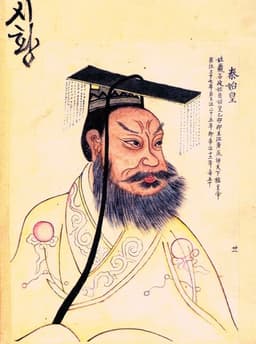
Qin Shi Huang
Emperor · Ancient
83.5Total
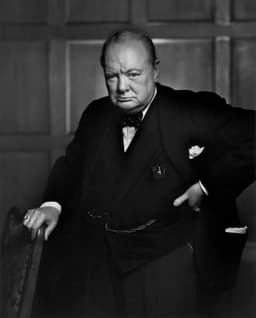
Winston Churchill
Politician · Modern
72.3Total
Basic Information
Born
-259
1874
Died
-210
1965
Era
Ancient
Modern
Nationality
China
United Kingdom
Occupation
Emperor
Politician
Civilization
Eastern
Western
Score Comparison
Military (10%)
80.0
55.0
Political (20%)
88.0
82.0
Influence (20%)
82.0
72.0
Legacy (20%)
85.0
75.0
Leadership (15%)
88.0
85.0
Strategy (15%)
75.0
55.0
TOTAL
83.5
72.3
Analysis will be generated on first visit.
Scores and timeline are available below. The page will refresh automatically when ready.
Rankings
🥇
Qin Shi HuangLeader
Mil: 80.0Pol: 88.0Inf: 82.0
83.5
🥈
Winston Churchill
Mil: 55.0Pol: 82.0Inf: 72.0
72.3
+11.2 behind
How This Comparison Works
Algorithm
Each figure is scored on 6 dimensions (0—100 scale) based on structured historical data: Military (10%), Political (20%), Influence (20%), Legacy (20%), Leadership (15%), Strategy (15%). The weighted total produces the final ranking.
Data Sources
Scores are computed from structured sub-indicators in the database. Scale factors adjust for era (Ancient ×0.85, Modern ×1.0) and civilization size (Eastern ×1.05, Other ×0.80) to account for differences in population and military scale.
Maximum 3 Figures
Comparisons are limited to 2—3 figures to ensure readability and statistical meaningfulness.
Error Margins
±5 points per dimension — Sub-scores are derived from historical records with inherent uncertainty. Two figures within 5 points on a dimension should be considered roughly equivalent in that area.
Total Score Accuracy
±3 points overall — The weighted combination of 6 dimensions produces a total score with approximately ±3 points of uncertainty. Differences of less than 3 points are not statistically significant— the figures are effectively tied.
Known Limitations
- Historical records are incomplete and uneven across civilizations
- Figures from oral-tradition societies may be underrepresented
- Occupation labels can misclassify multi-role figures
- Scores measure capability and impact, not moral character
- Quantitative scoring is a comparison tool, not absolute truth
Capability Radar
Military (10%) — Battles & Warfare
Battles
85
55
Win Rate
90
60
Expansion
90
40
Political (20%) — Governance & Reform
Reform
95
70
Diplomacy
75
85
Economy
90
60
Influence (20%) — Cultural & Global Reach
Cultural
95
85
Global
85
85
Legacy (20%) — Historical Impact
Historical
95
90
Longevity
95
80
Leadership (15%) — Power & Stability
Tenure
70
75
Stability
65
70
Strategy (15%) — Tactics & Innovation
Strategy
85
85
Tactics
80
65
Reform
95
70
Qin Shi Huang — Complete Timeline
246 BC
Construction of the Mausoleum and Terracotta ArmyOther◆ Major
Qin Shi Huang commissioned a vast mausoleum complex near Xi'an, guarded by thousands of life-sized terracotta soldiers, horses, and chariots. The project employed hundreds of thousands of workers and reflected his obsession with immortality and imperial power.
Impact: global
230 BC
Conquest of the Six Warring StatesWar
From 230 to 221 BCE, Ying Zheng led the Qin state in a series of campaigns that conquered the Han, Zhao, Wei, Chu, Yan, and Qi states. This unified China under a single ruler for the first time, ending the Warring States period.
Impact: global
221 BC
Standardization of Writing, Currency, and MeasurementsReform◆ Major
Qin Shi Huang ordered the standardization of Chinese script, currency, and weights and measures across the unified empire. This facilitated administration, trade, and cultural integration, laying a foundation for future dynasties.
Impact: globalconstructive
Proclamation of the Qin DynastyPolitical Action
After conquering the last independent state, Ying Zheng declared himself Shi Huangdi (First Emperor), founding the Qin Dynasty. He adopted a new title to signify his supreme authority and initiated centralized imperial rule.
Impact: global
214 BC
Initiation of the Great Wall ConstructionOther◆ Major
Qin Shi Huang ordered the connection and extension of existing northern fortifications to create a unified defensive wall against nomadic Xiongnu raids. This project involved massive conscripted labor and became the precursor to the later Great Wall.
Impact: regional
213 BC
Burning of Books and Burying of ScholarsPolitical Action◆ Major
On the advice of Li Si, Qin Shi Huang ordered the burning of historical records and philosophical texts not aligned with Legalist doctrine. He also had 460 Confucian scholars buried alive to suppress dissent and consolidate ideological control.
Impact: nationaldestructive
Winston Churchill — Complete Timeline
1940 AD
Appointed Prime Minister of the United KingdomPolitical Action◆ Major
On May 10, 1940, Winston Churchill became Prime Minister of the United Kingdom, replacing Neville Chamberlain. His appointment came as Nazi Germany invaded France and the Low Countries, and Churchill formed a coalition government to lead Britain through World War II.
World War IILeadershipCoalition Government
Impact: globalconstructive
Delivered the 'We Shall Fight on the Beaches' SpeechOther◆ Major
On June 4, 1940, Churchill delivered a speech to the House of Commons following the evacuation of British forces from Dunkirk. He declared that Britain would fight on the beaches, landing grounds, fields, streets, and hills, and never surrender, rallying British morale during the darkest days of World War II.
World War IIOratoryMorale
Impact: nationalconstructive
1941 AD
Signed the Atlantic CharterOther◆ Major
On August 14, 1941, Churchill and U.S. President Franklin D. Roosevelt signed the Atlantic Charter aboard HMS Prince of Wales. This joint declaration outlined post-war goals including self-determination, disarmament, and free trade, and became a foundational document for the Allied war aims and the United Nations.
World War IIAllied CooperationPost-war Planning
Impact: globalconstructive
1945 AD
Attended the Yalta ConferenceOther◆ Major
In February 1945, Churchill attended the Yalta Conference with Roosevelt and Stalin to discuss the post-war reorganization of Europe. The conference agreed on the division of Germany, the establishment of the United Nations, and the fate of Eastern Europe, though Churchill later expressed regret over concessions to Stalin.
World War IIPost-war SettlementBig Three
Impact: global
1946 AD
Delivered the 'Iron Curtain' SpeechOther◆ Major
On March 5, 1946, Churchill delivered a speech at Westminster College in Fulton, Missouri, where he stated that an 'iron curtain' had descended across Europe from Stettin to Trieste. This speech is widely regarded as marking the beginning of the Cold War, as it highlighted the division between Soviet-controlled Eastern Europe and the West.
Cold WarSoviet UnionDivision of Europe
Impact: globaldestructive
1953 AD
Awarded the Nobel Prize in LiteratureOther◆ Major
In 1953, Churchill was awarded the Nobel Prize in Literature for his historical writings, particularly 'The Second World War' and 'A History of the English-Speaking Peoples'. The Nobel committee cited his mastery of historical and biographical description as well as his brilliant oratory in defending human values.
LiteratureNobel PrizeHistorical Writing
Impact: nationalconstructive
Similar Comparisons
Comments & Discussion
丝路书生6/16/2026
丘吉尔的得分居然在军事上只有55分?这倒不意外。西方史学界总喜欢把他的“铁幕演说”捧上天,却忘了Qin Shi Huang(秦始皇)不仅统一了六国,还建立了世界上最早的标准化军事后勤体系——从战车的轮距到箭镞的规格,全都统一。对比之下,丘吉尔在加里波第战役中的惨败,简直是一场毫无章法的冒险。要论真正的军事组织和战略远见,秦始皇甩他几条街。
HistoryDetour6/16/2026
Okay, hear me out — I know Churchill is a legend for standing up to Hitler, but Qin Shi Huang’s score feels a bit inflated? Like, yeah, he unified China and built the Great Wall, but he also burned books and buried scholars alive. Churchill may have bungled Gallipoli, but at least he didn’t try to erase everyone’s memory of their own culture. Still, I guess if you’re rating by sheer lasting impact on a civilization’s structure, Qin Shi Huang wins. Just feels weird giving a tyrant an 88 in political leadership. Just my two cents from binging too many documentaries. 😅
BattlefieldScholar6/16/2026
The military scores here are interesting but flawed. Qin Shi Huang’s 80 vs Churchill’s 55 feels too generous to the former and too harsh on the latter. Let’s break it down: Qin’s campaigns against the six states were impressive logistically — he mobilized armies of up to 600,000 men with standardized equipment. But his opponents were fragmented and feudal. Churchill, on the other hand, oversaw global coalition warfare against a peer competitor (Nazi Germany). His direct tactical blunder at Gallipoli (1915) is a stain, but his strategic rebound in WWII — including the D-Day planning and Mediterranean campaigns — shows adaptability. I’d give Qin a 75 and Churchill a 65 here. Pure conquest isn’t the same as managing combined-arms operations across theaters.
量化史官6/16/2026
这个总分83.5对72.3,表面合理,但细节值得商榷。政治分88对82,差了6分,但秦始皇的“政治”本质是暴力集权——他废除分封、统一文字度量衡,代价是焚书坑儒和严刑峻法。丘吉尔在二战期间组建战时联合内阁,保住民主体制,并在战后推动福利国家雏形。如果政治分包括制度可持续性,丘吉尔应该更高。另外,影响力分82对72,但现代中国的外交和文化输出,有多少直接源自秦始皇的制度?恐怕要打折扣。我建议重新加权:政治影响力应考虑长期稳定度。
EmpireBuilderFan6/16/2026
Are you kidding me? Churchill only scores 55 in military? That’s almost insulting! The man literally stared down the Luftwaffe during the Blitz, rallied a broken Britain, and orchestrated the defeat of the Third Reich. Sure, Gallipoli was a disaster, but he learned from it. Meanwhile, Qin Shi Huang gets 80 for conquering a bunch of squabbling feudal states with bronze swords? That’s like giving someone credit for winning a kindergarten fight. Churchill had to coordinate the Normandy invasion, the Battle of the Atlantic, and the Burma Campaign — all at once. Give credit where it’s due: Churchill was the ultimate wartime CEO. Qin Shi Huang was a ruthless boss, but Churchill saved the free world. Period.