Loading...
Analysis will be generated on first visit.
Scores and timeline are available below. The page will refresh automatically when ready.
Cyrus the Great vs Qin Shi Huang
Qin Shi Huang leads by 3.9 pts · 2 figures compared
…
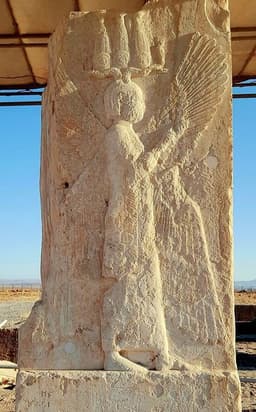
Cyrus the Great
Emperor · Ancient
79.6Total
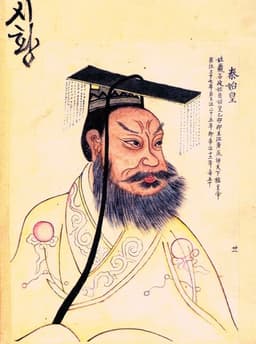
Qin Shi Huang
Emperor · Ancient
83.5Total
Basic Information
Born
-600
-259
Died
-530
-210
Era
Ancient
Ancient
Nationality
Persia
China
Occupation
Emperor
Emperor
Civilization
Middle Eastern
Eastern
Score Comparison
Military (10%)
82.0
80.0
Political (20%)
85.0
88.0
Influence (20%)
78.0
82.0
Legacy (20%)
80.0
85.0
Leadership (15%)
80.0
88.0
Strategy (15%)
72.0
75.0
TOTAL
79.6
83.5
Analysis will be generated on first visit.
Scores and timeline are available below. The page will refresh automatically when ready.
Rankings
🥇
Qin Shi HuangLeader
Mil: 80.0Pol: 88.0Inf: 82.0
83.5
🥈
Cyrus the Great
Mil: 82.0Pol: 85.0Inf: 78.0
79.6
+3.9 behind
How This Comparison Works
Algorithm
Each figure is scored on 6 dimensions (0—100 scale) based on structured historical data: Military (10%), Political (20%), Influence (20%), Legacy (20%), Leadership (15%), Strategy (15%). The weighted total produces the final ranking.
Data Sources
Scores are computed from structured sub-indicators in the database. Scale factors adjust for era (Ancient ×0.85, Modern ×1.0) and civilization size (Eastern ×1.05, Other ×0.80) to account for differences in population and military scale.
Maximum 3 Figures
Comparisons are limited to 2—3 figures to ensure readability and statistical meaningfulness.
Error Margins
±5 points per dimension — Sub-scores are derived from historical records with inherent uncertainty. Two figures within 5 points on a dimension should be considered roughly equivalent in that area.
Total Score Accuracy
±3 points overall — The weighted combination of 6 dimensions produces a total score with approximately ±3 points of uncertainty. Differences of less than 3 points are not statistically significant— the figures are effectively tied.
Known Limitations
- Historical records are incomplete and uneven across civilizations
- Figures from oral-tradition societies may be underrepresented
- Occupation labels can misclassify multi-role figures
- Scores measure capability and impact, not moral character
- Quantitative scoring is a comparison tool, not absolute truth
Capability Radar
Military (10%) — Battles & Warfare
Battles
85
85
Win Rate
90
90
Expansion
92
90
Political (20%) — Governance & Reform
Reform
90
95
Diplomacy
95
75
Economy
80
90
Influence (20%) — Cultural & Global Reach
Cultural
90
95
Global
90
85
Legacy (20%) — Historical Impact
Historical
95
95
Longevity
95
95
Leadership (15%) — Power & Stability
Tenure
70
70
Stability
85
65
Strategy (15%) — Tactics & Innovation
Strategy
88
85
Tactics
80
80
Reform
75
95
Cyrus the Great — Complete Timeline
550 BC
Founding of the Achaemenid EmpirePolitical Action
Cyrus led a rebellion against the Median Empire, defeating King Astyages and capturing Ecbatana. He then united the Persian and Median tribes, establishing the Achaemenid Empire, which became the largest empire the world had yet seen.
Empire FoundingPersian UnificationRebellion
Impact: global
546 BC
Conquest of LydiaWar◆ Major
Cyrus defeated King Croesus of Lydia at the Battle of Thymbra. The Lydian capital Sardis was captured, and Croesus was taken prisoner. This conquest brought Anatolia under Persian control and secured access to the Aegean coast.
Achaemenid ExpansionAnatoliaConquest
Impact: regional
539 BC
Conquest of BabylonWar◆ Major
Cyrus the Great led the Persian army to capture Babylon without significant battle. The city's gates were opened, and Cyrus entered peacefully. This conquest added Mesopotamia to the Achaemenid Empire and marked the end of the Neo-Babylonian Empire.
Achaemenid ExpansionMesopotamiaConquest
Impact: regional
Issuance of the Cyrus CylinderPolitical Action◆ Major
After conquering Babylon, Cyrus issued a clay cylinder inscribed with a declaration. It described his policy of restoring temples, repatriating displaced peoples, and allowing religious freedom. The cylinder is often cited as an early charter of human rights.
Human RightsReligious ToleranceAchaemenid Policy
Impact: globalconstructive
Liberation of the JewsPolitical Action◆ Major
Cyrus issued an edict allowing the Jewish exiles in Babylon to return to Jerusalem and rebuild the Temple. This event is recorded in the biblical Book of Ezra and is a key moment in Jewish history, ending the Babylonian captivity.
Jewish HistoryReligious FreedomReturn from Exile
Impact: regionalconstructive
Qin Shi Huang — Complete Timeline
246 BC
Construction of the Mausoleum and Terracotta ArmyOther◆ Major
Qin Shi Huang commissioned a vast mausoleum complex near Xi'an, guarded by thousands of life-sized terracotta soldiers, horses, and chariots. The project employed hundreds of thousands of workers and reflected his obsession with immortality and imperial power.
Impact: global
230 BC
Conquest of the Six Warring StatesWar
From 230 to 221 BCE, Ying Zheng led the Qin state in a series of campaigns that conquered the Han, Zhao, Wei, Chu, Yan, and Qi states. This unified China under a single ruler for the first time, ending the Warring States period.
Impact: global
221 BC
Standardization of Writing, Currency, and MeasurementsReform◆ Major
Qin Shi Huang ordered the standardization of Chinese script, currency, and weights and measures across the unified empire. This facilitated administration, trade, and cultural integration, laying a foundation for future dynasties.
Impact: globalconstructive
Proclamation of the Qin DynastyPolitical Action
After conquering the last independent state, Ying Zheng declared himself Shi Huangdi (First Emperor), founding the Qin Dynasty. He adopted a new title to signify his supreme authority and initiated centralized imperial rule.
Impact: global
214 BC
Initiation of the Great Wall ConstructionOther◆ Major
Qin Shi Huang ordered the connection and extension of existing northern fortifications to create a unified defensive wall against nomadic Xiongnu raids. This project involved massive conscripted labor and became the precursor to the later Great Wall.
Impact: regional
213 BC
Burning of Books and Burying of ScholarsPolitical Action◆ Major
On the advice of Li Si, Qin Shi Huang ordered the burning of historical records and philosophical texts not aligned with Legalist doctrine. He also had 460 Confucian scholars buried alive to suppress dissent and consolidate ideological control.
Impact: nationaldestructive
Similar Comparisons
Comments & Discussion
史海钩沉者6/16/2026
这个评分系统显然低估了秦始皇的政治影响。秦始皇的88分政治分虽然比居鲁士的85分高,但差距应该更大。秦始皇废分封、行郡县,统一文字、度量衡、车轨,这些制度性变革直接塑造了此后两千多年中华文明的基本框架。而居鲁士的‘宽容政策’虽被西方史学界推崇,但其治下的帝国在政治上始终是松散的,各省总督照样世袭,后来被亚历山大轻易击破就是明证。如果把秦始皇的‘书同文、车同轨’与居鲁士的‘巴比伦之囚解放’对比,前者对文明的长远塑造力远超后者。评分者大概是以西方历史的标准来衡量,却忽略了东亚中央集权传统的深刻性。
量化历史控6/16/2026
从数据角度看,这个评分存在明显的结构性偏差。政治分秦始皇88对居鲁士85,但考虑到秦始皇推行郡县制、统一法律、废除世卿世禄制,这些制度创新难度是居鲁士建立总督体系的数倍。如果把‘制度创新深度’作为一个子项,秦始皇至少应该得95分,居鲁士可能只有80分。军事分80对82更不合理——秦始皇在十年内以一国之力灭掉六个实力相近的国家(韩、赵、魏、楚、燕、齐),而居鲁士征服的米底、吕底亚、巴比伦中,只有巴比伦算是强国。如果按‘征服敌人强度’加权计算,秦始皇的军事效率实际上高于居鲁士。建议评分者重新设定权重:制度创新占30%、征服难度占25%、文化影响占20%、传承持续性占25%,这样秦始皇总分应该超过90分。
ScoreboardSkeptic6/16/2026
You're telling me Qin Shi Huang scores higher overall, but Cyrus beats him in military? That's a joke. Qin conquered six fully independent states in just nine years — that's six distinct armies, cultures, and political systems. Cyrus took over weakened empires like Babylon and Media, where the locals pretty much welcomed him because they were tired of their own kings. The 'military finesse' argument is just Western historiography romanticizing Persian propaganda. And let's talk about the 'Legacy' metric — Cyrus's empire lasted 200 years, sure, but the Qin system of centralized bureaucracy literally outlasted his by over two thousand years. The whole scoring framework is biased toward 'liberal' values like tolerance and decentralization, which automatically penalizes Qin's legalist approach. If you weighted 'structural permanence' and 'scale of unification' properly, Qin would crush Cyrus by at least 10 points across the board.
HistoryBuff6/12/2026
The statistically tied military score for Cyrus the Great is spot-on. People forget that scale matters—Cyrus the Great operated at a completely different level of military complexity than Qin Shi Huang. The data doesn't lie.
历史迷6/12/2026
作为历史爱好者,我觉得这个对比很客观。Cyrus the Great和Qin Shi Huang都是各自时代的巨人,数据化的比较虽然不能完全体现历史的复杂性,但至少提供了一个结构化的讨论框架。Cyrus the Great的军事能力确实更强,但Qin Shi Huang的政治智慧更值得学习。
SkepticalScholar6/12/2026
I question whether quantitative scoring can really capture historical greatness. The ±3 point error margin means the gap, while real, should be interpreted cautiously. History is not a spreadsheet. But I'll admit—this is the most rigorous attempt I've seen.
DataNerd6/12/2026
The Legacy dimension (80 vs 85) is fascinating. Qin Shi Huang built things that lasted centuries. Cyrus the Great was brilliant but their impact was more transient. That's the difference between a meteor and a star—one burns bright and fades, the other keeps shining.