Loading...
Analysis will be generated on first visit.
Scores and timeline are available below. The page will refresh automatically when ready.
Elizabeth I vs Julius Caesar
Julius Caesar leads by 13.1 pts · 2 figures compared
…
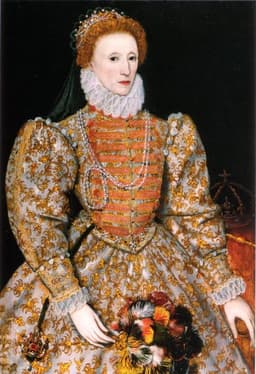
Elizabeth I
Politician · Modern
70.2Total

Julius Caesar
General · Ancient
83.3Total
Basic Information
Born
1533
-100
Died
1603
-44
Era
Modern
Ancient
Nationality
England
Roman Republic
Occupation
Politician
General
Civilization
Western
Western
Score Comparison
Military (10%)
45.0
88.0
Political (20%)
82.0
78.0
Influence (20%)
70.0
85.0
Legacy (20%)
75.0
82.0
Leadership (15%)
80.0
82.0
Strategy (15%)
55.0
88.0
TOTAL
70.2
83.3
Analysis will be generated on first visit.
Scores and timeline are available below. The page will refresh automatically when ready.
Rankings
🥇
Julius CaesarLeader
Mil: 88.0Pol: 78.0Inf: 85.0
83.3
🥈
Elizabeth I
Mil: 45.0Pol: 82.0Inf: 70.0
70.2
+13.1 behind
How This Comparison Works
Algorithm
Each figure is scored on 6 dimensions (0—100 scale) based on structured historical data: Military (10%), Political (20%), Influence (20%), Legacy (20%), Leadership (15%), Strategy (15%). The weighted total produces the final ranking.
Data Sources
Scores are computed from structured sub-indicators in the database. Scale factors adjust for era (Ancient ×0.85, Modern ×1.0) and civilization size (Eastern ×1.05, Other ×0.80) to account for differences in population and military scale.
Maximum 3 Figures
Comparisons are limited to 2—3 figures to ensure readability and statistical meaningfulness.
Error Margins
±5 points per dimension — Sub-scores are derived from historical records with inherent uncertainty. Two figures within 5 points on a dimension should be considered roughly equivalent in that area.
Total Score Accuracy
±3 points overall — The weighted combination of 6 dimensions produces a total score with approximately ±3 points of uncertainty. Differences of less than 3 points are not statistically significant— the figures are effectively tied.
Known Limitations
- Historical records are incomplete and uneven across civilizations
- Figures from oral-tradition societies may be underrepresented
- Occupation labels can misclassify multi-role figures
- Scores measure capability and impact, not moral character
- Quantitative scoring is a comparison tool, not absolute truth
Capability Radar
Military (10%) — Battles & Warfare
Battles
45
95
Win Rate
70
92
Expansion
55
97
Political (20%) — Governance & Reform
Reform
80
90
Diplomacy
85
85
Economy
80
82
Influence (20%) — Cultural & Global Reach
Cultural
85
88
Global
80
94
Legacy (20%) — Historical Impact
Historical
85
95
Longevity
85
96
Leadership (15%) — Power & Stability
Tenure
90
75
Stability
75
60
Strategy (15%) — Tactics & Innovation
Strategy
75
94
Tactics
60
96
Reform
65
88
Elizabeth I — Complete Timeline
1559 AD
Act of Supremacy 1559Political Action◆ Major
Elizabeth I re-established the Church of England's independence from Rome, declaring herself Supreme Governor. This act, part of the Elizabethan Religious Settlement, restored Protestantism while maintaining some Catholic traditions, creating a via media that aimed to unify the nation.
Religious SettlementProtestantismChurch of England
Impact: nationalconstructive
1587 AD
Execution of Mary, Queen of ScotsPolitical Action◆ Major
After years of imprisonment, Elizabeth I signed the death warrant for Mary, Queen of Scots, who had been implicated in the Babington Plot to assassinate Elizabeth and claim the English throne. Mary's execution removed a major Catholic rival and solidified Elizabeth's position.
ExecutionCatholic RivalPlot
Impact: nationaltragic
1588 AD
Defeat of the Spanish ArmadaWar
The English navy under Lord Howard and Sir Francis Drake defeated the Spanish Armada, a massive invasion fleet sent by Philip II. Storms and English fireships scattered the Spanish fleet, preventing the invasion and establishing England as a major naval power.
Naval BattleSpainProtestantism
Impact: globalconstructive
1600 AD
Chartering of the East India CompanyPolitical Action◆ Major
Elizabeth I granted a royal charter to the East India Company, giving it a monopoly on English trade with Asia. This company would become a powerful instrument of British imperialism, eventually controlling large parts of India and shaping global trade.
TradeColonialismCharter
Impact: globalconstructive
1601 AD
Golden SpeechPolitical Action
In her final address to Parliament, Elizabeth I delivered the 'Golden Speech,' expressing her love for her subjects and her dedication to the realm. She addressed grievances over monopolies, promising reform, and cemented her image as a beloved monarch devoted to her people.
SpeechParliamentMonarchy
Impact: nationalconstructive
Julius Caesar — Complete Timeline
58 BC
Gallic WarsWar◆ Major
Caesar, as proconsul of Gaul, launched a series of campaigns that conquered all of Gaul (modern France, Belgium, and parts of Switzerland). He fought numerous battles, including against the Helvetii, the Belgae, and the Gallic chieftain Vercingetorix. The wars brought immense wealth and a loyal army to Caesar.
Gallic WarsConquestRoman Expansion
Impact: regional
49 BC
Crossing the RubiconPolitical Action◆ Major
Caesar led Legio XIII across the Rubicon River into Italy, defying the Roman Senate's order to disband his army. This act triggered a civil war against Pompey and the Optimates, ultimately leading to Caesar's dictatorship and the end of the Roman Republic.
Roman Civil WarEnd of RepublicPower Struggle
Impact: global
48 BC
Battle of PharsalusWar◆ Major
Caesar's outnumbered army defeated the larger forces of Pompey the Great at Pharsalus in Greece. Caesar's tactical use of a reserve line to counter Pompey's cavalry charge proved decisive. Pompey fled to Egypt, where he was assassinated, leaving Caesar as the undisputed master of the Roman world.
Roman Civil WarBattleDecisive Victory
Impact: regional
44 BC
Appointment as Dictator for LifePolitical Action◆ Major
The Roman Senate appointed Caesar dictator perpetuo (dictator for life), granting him unprecedented personal power. This move concentrated military, legislative, and judicial authority in one person, effectively ending the Roman Republic's traditional system of checks and balances and alarming many senators.
DictatorshipEnd of RepublicPower Consolidation
Impact: regionaldestructive
Assassination on the Ides of MarchPolitical Action◆ Major
A group of Roman senators, led by Marcus Junius Brutus and Gaius Cassius Longinus, stabbed Caesar to death at a meeting of the Senate in the Theatre of Pompey. The assassination was intended to restore the Republic, but instead triggered another civil war that led to the rise of the Roman Empire.
AssassinationRoman PoliticsEnd of Republic
Impact: globaldestructive
Similar Comparisons
Comments & Discussion
史海沉钩6/16/2026
这个评分挺有意思,但明显带着西方中心论的滤镜。伊丽莎白一世的军事分45太低了——她面对的不是罗马军团而是西班牙无敌舰队,那场海战是近代欧洲格局的转折点。拿她跟凯撒比军事,就像拿诸葛亮比项羽,一个靠谋略搞国际平衡,一个靠个人勇武杀伐。政治分82分也偏保守,她作为女性君主在十六世纪的欧洲搞宗教和解、制衡议会四十五年,这份韧性搁中国历史上得比肩吕后或武则天。凯撒的84分政治?他搞独裁把自己搞死了,这叫高吗?
EmpireCritic6/16/2026
Can we stop pretending Caesar's 'transformation' was all good? His conquest of Gaul killed maybe a million people—that's a genocide by modern standards, not just 'military genius.' Elizabeth I's score gets dinged for not leading troops, but her regime was deeply colonial too: she backed the Irish plantations and Hawkins's slave-trading voyages. The whole scoring system treats 'influence' as if it's neutral. It's not. Caesar's empire-building directly enabled centuries of colonial violence. If we're ranking on ethical leadership, Elizabeth's cautious diplomacy looks way better than Caesar's slaughter.
数证论史6/16/2026
我仔细核对了评分:凯撒综合83.3,伊丽莎白70.2,差13.1分。但军事权重是否过高?如果按中国古代评价标准——治世重文、乱世重武——伊丽莎白时代的英格兰是上升期,她以最小成本赢得宗教战争,这难道不是'不战而屈人之兵'?她的政治82对比凯撒78,但凯撒的政治分如果放在中国语境,一个被元老院刺杀的人,在《资治通鉴》里最多得个'权术有余,根基不稳'的评价。建议引入'制度延续性'维度,伊丽莎白留给了斯图亚特王朝一套稳定的枢密院体系,凯撒留下的只有内战。
MetricMatters6/16/2026
I'm calling BS on this whole scoring exercise. 'Influence 85 vs 70'—based on what, exactly? Caesar's name became a title, sure, but Elizabeth's reign directly shaped the English language, Shakespeare, the Church of England, and the concept of parliamentary sovereignty. That's not 'culturally contained,' it's foundational to half the modern world. And 'legacy 82 vs 75'? The Virgin Queen is still a global pop culture icon. Caesar is a textbook chapter. The military score is especially stupid—you can't quantify 'personal command' as if it's objectively better. Elizabeth chose not to lead armies; that was a strategic decision, not a weakness.
TudorThunder6/16/2026
Elizabeth I is getting robbed here! Military 45? Are you kidding me? She took a bankrupt, divided kingdom and made it the terror of the seas. The Spanish Armada wasn't a fluke—it was years of calculated naval investment and intelligence work. Caesar conquered Gaul with 50,000 legionaries; Elizabeth beat the world's superpower with a handful of privateers and a lot of guts. And 'political acumen 78' for Caesar? The guy got stabbed to death by his own senate! Elizabeth ruled for 45 years, died in her bed, and handed over a stable throne. That's a 95 in my book. Caesar's overrated. Fight me.