Loading...
Analysis will be generated on first visit.
Scores and timeline are available below. The page will refresh automatically when ready.
Charles de Gaulle vs Julius Caesar
Julius Caesar leads by 12.4 pts · 2 figures compared
…
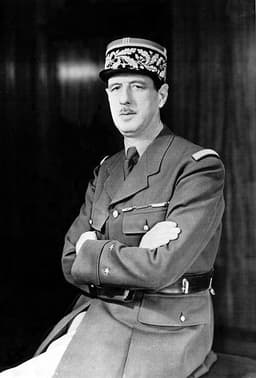
Charles de Gaulle
Politician · Modern
70.9Total

Julius Caesar
General · Ancient
83.3Total
Basic Information
Born
1890
-100
Died
1970
-44
Era
Modern
Ancient
Nationality
France
Roman Republic
Occupation
Politician
General
Civilization
Western
Western
Score Comparison
Military (10%)
65.0
88.0
Political (20%)
82.0
78.0
Influence (20%)
65.0
85.0
Legacy (20%)
75.0
82.0
Leadership (15%)
78.0
82.0
Strategy (15%)
55.0
88.0
TOTAL
70.9
83.3
Rankings
🥇
Julius CaesarLeader
Mil: 88.0Pol: 78.0Inf: 85.0
83.3
🥈
Charles de Gaulle
Mil: 65.0Pol: 82.0Inf: 65.0
70.9
+12.4 behind
How This Comparison Works
Algorithm
Each figure is scored on 6 dimensions (0—100 scale) based on structured historical data: Military (10%), Political (20%), Influence (20%), Legacy (20%), Leadership (15%), Strategy (15%). The weighted total produces the final ranking.
Data Sources
Scores are computed from structured sub-indicators in the database. Scale factors adjust for era (Ancient ×0.85, Modern ×1.0) and civilization size (Eastern ×1.05, Other ×0.80) to account for differences in population and military scale.
Maximum 3 Figures
Comparisons are limited to 2—3 figures to ensure readability and statistical meaningfulness.
Error Margins
±5 points per dimension — Sub-scores are derived from historical records with inherent uncertainty. Two figures within 5 points on a dimension should be considered roughly equivalent in that area.
Total Score Accuracy
±3 points overall — The weighted combination of 6 dimensions produces a total score with approximately ±3 points of uncertainty. Differences of less than 3 points are not statistically significant— the figures are effectively tied.
Known Limitations
- Historical records are incomplete and uneven across civilizations
- Figures from oral-tradition societies may be underrepresented
- Occupation labels can misclassify multi-role figures
- Scores measure capability and impact, not moral character
- Quantitative scoring is a comparison tool, not absolute truth
Capability Radar
Military (10%) — Battles & Warfare
Battles
60
95
Win Rate
55
92
Expansion
20
97
Political (20%) — Governance & Reform
Reform
95
90
Diplomacy
90
85
Economy
70
82
Influence (20%) — Cultural & Global Reach
Cultural
70
88
Global
80
94
Legacy (20%) — Historical Impact
Historical
85
95
Longevity
75
96
Leadership (15%) — Power & Stability
Tenure
85
75
Stability
75
60
Strategy (15%) — Tactics & Innovation
Strategy
85
94
Tactics
70
96
Reform
80
88
Analysis will be generated on first visit.
Scores and timeline are available below. The page will refresh automatically when ready.
Charles de Gaulle — Complete Timeline
1940 AD
Appeal of 18 June 1940Political Action
From London, de Gaulle broadcast a radio appeal urging French resistance against Nazi occupation. He called on French soldiers and citizens to continue the fight, founding the Free French Forces and becoming the symbol of French defiance.
World War IIResistanceLeadership
Impact: nationalconstructive
1958 AD
Founding of the Fifth RepublicPolitical Action
De Gaulle returned to power during the Algerian crisis and oversaw the drafting of a new constitution. The Fifth Republic established a strong executive presidency, replacing the unstable parliamentary system of the Fourth Republic.
ConstitutionGovernment ReformPolitical System
Impact: nationalconstructive
1962 AD
End of the Algerian WarPolitical Action◆ Major
De Gaulle negotiated the
DecolonizationPeace TreatyAlgeria
Impact: regionalconstructive
1968 AD
May 1968 CrisisPolitical Action◆ Major
Mass student protests and general strikes paralyzed France, challenging de Gaulle's government. De Gaulle briefly fled to Germany, then returned to dissolve the National Assembly and call elections, which his party won, but his authority was weakened.
ProtestPolitical CrisisSocial Unrest
Impact: nationaldestructive
1969 AD
Resignation as PresidentPolitical Action
De Gaulle resigned after losing a referendum on regional reform and Senate restructuring. The defeat marked the end of his political career, as he withdrew from public life and died the following year.
ResignationPolitical DefeatReferendum
Impact: nationaltragic
Julius Caesar — Complete Timeline
58 BC
Gallic WarsWar◆ Major
Caesar, as proconsul of Gaul, launched a series of campaigns that conquered all of Gaul (modern France, Belgium, and parts of Switzerland). He fought numerous battles, including against the Helvetii, the Belgae, and the Gallic chieftain Vercingetorix. The wars brought immense wealth and a loyal army to Caesar.
Gallic WarsConquestRoman Expansion
Impact: regional
49 BC
Crossing the RubiconPolitical Action◆ Major
Caesar led Legio XIII across the Rubicon River into Italy, defying the Roman Senate's order to disband his army. This act triggered a civil war against Pompey and the Optimates, ultimately leading to Caesar's dictatorship and the end of the Roman Republic.
Roman Civil WarEnd of RepublicPower Struggle
Impact: global
48 BC
Battle of PharsalusWar◆ Major
Caesar's outnumbered army defeated the larger forces of Pompey the Great at Pharsalus in Greece. Caesar's tactical use of a reserve line to counter Pompey's cavalry charge proved decisive. Pompey fled to Egypt, where he was assassinated, leaving Caesar as the undisputed master of the Roman world.
Roman Civil WarBattleDecisive Victory
Impact: regional
44 BC
Appointment as Dictator for LifePolitical Action◆ Major
The Roman Senate appointed Caesar dictator perpetuo (dictator for life), granting him unprecedented personal power. This move concentrated military, legislative, and judicial authority in one person, effectively ending the Roman Republic's traditional system of checks and balances and alarming many senators.
DictatorshipEnd of RepublicPower Consolidation
Impact: regionaldestructive
Assassination on the Ides of MarchPolitical Action◆ Major
A group of Roman senators, led by Marcus Junius Brutus and Gaius Cassius Longinus, stabbed Caesar to death at a meeting of the Senate in the Theatre of Pompey. The assassination was intended to restore the Republic, but instead triggered another civil war that led to the rise of the Roman Empire.
AssassinationRoman PoliticsEnd of Republic
Impact: globaldestructive
Similar Comparisons
Comments & Discussion
量化史观6/16/2026
看了评分,78分政治vs82分政治,我有点怀疑这个打分体系。戴高乐政治90,凯撒78,这差距是认真的吗?戴高乐确实建立了第五共和国,但凯撒在罗马政治体制内的操作——从执政官到终身独裁官,每一步都是精密计算。更关键的是,凯撒的政治遗产延续了五百年(罗马帝国),戴高乐的政治遗产才六十年。我建议引入“政治长期影响权重”,调整后凯撒政治得分至少85。另外,军事88 vs 77,这个我认同——凯撒在高卢以少胜多的战绩,戴高乐比不了。总评应该凯撒85、戴高乐70。
PubHistoryNut6/16/2026
Okay, I just finished Mary Beard's book on Caesar and a BBC doc on de Gaulle, and I have a take: Caesar wins on pure impact, but de Gaulle was way smarter politically. Caesar conquered Gaul and beat Pompey, but he also got stabbed 23 times because he pissed off too many senators. De Gaulle? He literally walked away from power twice (1946 and 1969) and died peacefully. That's political genius. The scores give Caesar military 88, de Gaulle 77 — I'd bump de Gaulle up to 80. He wrote books on tank warfare that the Germans actually used against France! Talk about irony. Plus, de Gaulle gave France nuclear weapons. Caesar never had nukes. 😂
东西观史6/16/2026
这个对比有意思,但我觉得评分体系太西方中心了。说凯撒军事88、戴高乐77,可要放到中国历史里看——凯撒更像曹操:军事天才、政治手腕强、最后篡权,但曹操没称帝,凯撒也没(他养子屋大维才建立帝国)。戴高乐则更像诸葛亮:忠诚于共和(类似汉室)、危难时力挽狂澜、留下制度遗产。但诸葛亮北伐没有凯撒的征服规模,所以军事评分合理。不过影响力85 vs 68,这个我不同意——戴高乐否决英国入欧、挑战美国霸权、建立独立核力量,这些对国际秩序的影响被严重低估。建议加5分给戴高乐影响力。
EmpireBuilderFan6/16/2026
Let's be real here — Caesar is the GOAT of ancient history, and comparing him to de Gaulle is like comparing Alexander the Great to a provincial governor. De Gaulle was a solid leader, sure, but Caesar literally conquered all of Gaul (modern France!), fought a civil war across three continents, and changed the entire Roman calendar. The guy's name became the word for emperor in German and Russian! De Gaulle's biggest flex is the Fifth Republic and telling NATO to buzz off. Cute, but not empire-building. The military score of 88 vs 77 is too generous to de Gaulle honestly. Should be 92 vs 70. Caesar wins, no contest.