Loading...
Analysis will be generated on first visit.
Scores and timeline are available below. The page will refresh automatically when ready.
Cleisthenes vs Ito Hirobumi
Cleisthenes leads by 3.3 pts · 2 figures compared
…
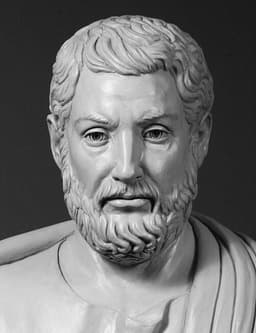
Cleisthenes
Politician · Ancient
78.4Total
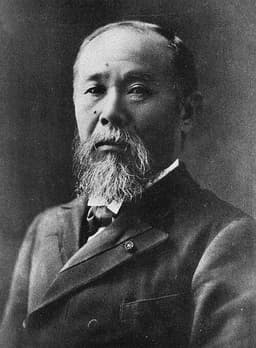
Ito Hirobumi
Politician · Modern
75.1Total
Basic Information
Born
-570
1841
Died
-508
1909
Era
Ancient
Modern
Nationality
Greece
Japan
Occupation
Politician
Politician
Civilization
Western
Eastern
Score Comparison
Military (10%)
64.5
48.6
Political (20%)
66.6
87.2
Influence (20%)
90.0
91.6
Legacy (20%)
87.6
81.0
Leadership (15%)
89.6
65.1
Strategy (15%)
64.3
56.9
TOTAL
78.4
75.1
Cleisthenes — Complete Timeline
510 BC
Expulsion of the PeisistratidsPolitical Action◆ Major
Cleisthenes, with the support of the Alcmaeonid family and Spartan assistance, led the overthrow of the tyrant Hippias, son of Peisistratus. This ended the Peisistratid tyranny in Athens and opened the way for democratic reforms.
Tyranny OverthrownAthensSparta
Impact: nationalconstructive
508 BC
Reforms of CleisthenesReform
Cleisthenes reorganized the Athenian citizen body into ten new tribes based on demes, replacing the old four Ionian tribes. He established the Council of 500 (Boule) and introduced ostracism, creating a system of isonomia (equal rights) that is considered the foundation of Athenian democracy.
Athenian DemocracyConstitutional ReformAncient Greece
Impact: globalprogressive
507 BC
Introduction of OstracismReform◆ Major
Cleisthenes instituted ostracism, a procedure allowing Athenian citizens to vote annually to exile a prominent citizen deemed a threat to democracy for ten years. This mechanism aimed to prevent the rise of a new tyrant and stabilize the democratic system.
Athenian DemocracyPolitical MechanismExile
Impact: national
Ito Hirobumi — Complete Timeline
1882 AD
Establishment of the Bank of JapanReform◆ Major
Under Ito Hirobumi's leadership, the Bank of Japan was established as the nation's central bank. It was modeled after European central banks and aimed to stabilize the currency and control inflation. This institution was crucial for Japan's economic modernization and industrial growth.
Central BankEconomic ReformModernization
Impact: nationalconstructive
1885 AD
First Prime Minister of JapanPolitical Action◆ Major
Ito Hirobumi became the first Prime Minister of Japan under the new cabinet system. He served four non-consecutive terms and was instrumental in shaping the modern Japanese state. His tenure focused on centralizing power, modernizing the economy, and strengthening the military.
Prime MinisterCabinet SystemMeiji Period
Impact: nationalconstructive
1889 AD
Drafting of the Meiji ConstitutionReform
Ito Hirobumi led the drafting of the Meiji Constitution, which established a constitutional monarchy with a bicameral parliament (the Diet). The constitution granted the emperor sovereign power but also provided for elected representatives. It was promulgated in 1889 and remained in effect until 1947.
ConstitutionMeiji PeriodGovernment Reform
Impact: nationalconstructive
1909 AD
Assassination at Harbin StationPolitical Action◆ Major
Ito Hirobumi was assassinated by Korean nationalist An Jung-geun at Harbin railway station in Manchuria. Ito was on a mission to negotiate with Russian officials regarding Korea. His death shocked Japan and was used to justify the formal annexation of Korea in 1910.
AssassinationKoreaAnnexation
Impact: globaltragic
Analysis will be generated on first visit.
Scores and timeline are available below. The page will refresh automatically when ready.
Rankings
🥇
CleisthenesLeader
Mil: 64.5Pol: 66.6Inf: 90.0
78.4
🥈
Ito Hirobumi
Mil: 48.6Pol: 87.2Inf: 91.6
75.1
+3.3 behind
How This Comparison Works
Algorithm
Each figure is scored on 6 dimensions (0—100 scale) based on structured historical data: Military (10%), Political (20%), Influence (20%), Legacy (20%), Leadership (15%), Strategy (15%). The weighted total produces the final ranking.
Data Sources
Scores are computed from structured sub-indicators in the database. Scale factors adjust for era (Ancient ×0.85, Modern ×1.0) and civilization size (Eastern ×1.05, Other ×0.80) to account for differences in population and military scale.
Maximum 3 Figures
Comparisons are limited to 2—3 figures to ensure readability and statistical meaningfulness.
Error Margins
±5 points per dimension — Sub-scores are derived from historical records with inherent uncertainty. Two figures within 5 points on a dimension should be considered roughly equivalent in that area.
Total Score Accuracy
±3 points overall — The weighted combination of 6 dimensions produces a total score with approximately ±3 points of uncertainty. Differences of less than 3 points are not statistically significant— the figures are effectively tied.
Known Limitations
- Historical records are incomplete and uneven across civilizations
- Figures from oral-tradition societies may be underrepresented
- Occupation labels can misclassify multi-role figures
- Scores measure capability and impact, not moral character
- Quantitative scoring is a comparison tool, not absolute truth
Capability Radar
Military (10%) — Battles & Warfare
Battles
58
0
Win Rate
62
0
Expansion
59
70
Political (20%) — Governance & Reform
Reform
95
95
Diplomacy
70
90
Economy
40
80
Influence (20%) — Cultural & Global Reach
Cultural
85
75
Global
85
80
Legacy (20%) — Historical Impact
Historical
90
85
Longevity
95
80
Leadership (15%) — Power & Stability
Tenure
30
85
Stability
60
85
Strategy (15%) — Tactics & Innovation
Strategy
62
0
Tactics
67
0
Reform
72
85
Similar Comparisons
Comments & Discussion
史海钩沉者6/16/2026
克利斯提尼和伊藤博文放在一起比,有意思。但说伊藤政治分高于克利斯提尼,我看未必。伊藤搞的明治宪法,表面上是立宪,实际上天皇大权独揽,内阁对天皇负责而非议会,这跟雅典的公民大会和陶片放逐法比,民主成色差远了。克利斯提尼把部落重组为地域单位,打破贵族垄断,这在中国历史上类似商鞅废分封行县制,但早了四百多年。西方中心论的评分往往低估东方政治家的制度创新,伊藤的“君主立宪”更多是拿来主义加威权包装,影响力虽大,但思想深度不如克利斯提尼的原生民主实验。
HistoryUnmasked6/16/2026
Let's be real — Ito Hirobumi's political score of 87 is inflated because Western historians love a 'successful modernizer' narrative. They ignore that his Meiji Constitution was basically a fig leaf for oligarchic rule, designed to centralize power under the Emperor while paying lip service to 'democracy'. Cleisthenes gets 67 for politics? That's absurd. He literally invented the concept of isonomia (equality before law) and gave common citizens a voice. This comparison reeks of presentism and Eurocentrism — it measures Cleisthenes by Athenian standards but judges Ito by how well he played the Western imperial game. Flip the lens: if you judge Ito by how much power he gave to ordinary Japanese, he's a failure. Cleisthenes by contrast built the first real participatory system. The scoring here is biased towards top-down 'effective' state-builders over bottom-up democratic pioneers.
DemocracyDiehard6/16/2026
Cleisthenes absolutely destroys Ito Hirobumi when it comes to leadership and vision. Score: 90 vs 65? That's not even close. Cleisthenes pulled off a bloodless revolution that gave power to the demos — the actual people! He didn't just write a constitution for an emperor; he created a system where ordinary guys could vote, speak in assembly, and exile tyrants with ostraka. That's like comparing George Washington to a bureaucratic technocrat. Ito? He was just a smart lawyer for the Meiji elites. His constitution was top-down, authoritarian, and designed to keep the masses out. Give me the Athenian who trusted the people any day over the Japanese aristocrat who feared them. Cleisthenes' legacy is literally the foundation of Western democracy — Ito's is a footnote in the rise of Japanese militarism.
量化史观6/16/2026
这组评分数据有问题。伊藤军事分48,但他在甲午战争和日俄战争期间是最高决策者之一,主导了军备扩张和参谋本部建设,分数不该低于50。克利斯提尼军事分64也偏高——他改革的核心是政治重组,而非军事统帅,同期雅典陆军主力是马拉松战役才成型的。再看影响力分:克利斯提尼90、伊藤92,仅差2分。但按历史实际影响人口和地域算,伊藤的宪法体系影响了整个东亚近代化,从朝鲜到大清变法都有参照;克利斯提尼的影响主要限于希腊城邦,经罗马中介才间接影响后世。若按影响范围加权,伊藤至少该95以上。建议重新校准权重,引入“制度传播半径”指标。