Loading...
Analysis will be generated on first visit.
Scores and timeline are available below. The page will refresh automatically when ready.
Chen Qun vs Ito Hirobumi
Ito Hirobumi leads by 3.8 pts · 2 figures compared
…
Chen Qun
Politician · Ancient
71.3Total
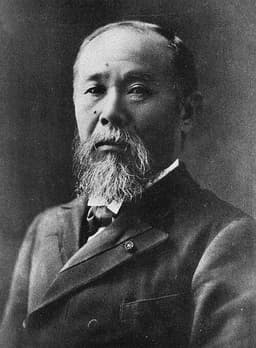
Ito Hirobumi
Politician · Modern
75.1Total
Basic Information
Born
160
1841
Died
237
1909
Era
Ancient
Modern
Nationality
China
Japan
Occupation
Politician
Politician
Civilization
Eastern
Eastern
Score Comparison
Military (10%)
30.2
48.6
Political (20%)
69.8
87.2
Influence (20%)
92.4
91.6
Legacy (20%)
89.6
81.0
Leadership (15%)
80.0
65.1
Strategy (15%)
39.8
56.9
TOTAL
71.3
75.1
Chen Qun — Complete Timeline
220 AD
Proposed the Nine-rank SystemReform◆ Major
Chen Qun proposed the Nine-rank system for civil service appointments to Cao Pi, the first emperor of Wei. This system ranked candidates based on family background and personal merit, replacing the earlier recommendation system and becoming the standard for official selection in China for centuries.
Civil Service ReformWei DynastyBureaucracy
Impact: nationalconstructive
Advised Cao Pi on Legal CodeReform
Chen Qun assisted Cao Pi in drafting the new legal code for the Wei dynasty. He advocated for clearer laws and more consistent punishments, contributing to the legal framework that helped stabilize Wei's early rule.
Legal ReformWei DynastyLaw
Impact: nationalconstructive
226 AD
Served as Minister over the MassesPolitical Action
Chen Qun was appointed Minister over the Masses (Sikong) under Emperor Cao Rui of Wei. In this high-ranking position, he oversaw civil administration and continued to refine the implementation of the Nine-rank system, solidifying its role in Wei governance.
AppointmentWei DynastyGovernment
Impact: nationalconstructive
Ito Hirobumi — Complete Timeline
1882 AD
Establishment of the Bank of JapanReform◆ Major
Under Ito Hirobumi's leadership, the Bank of Japan was established as the nation's central bank. It was modeled after European central banks and aimed to stabilize the currency and control inflation. This institution was crucial for Japan's economic modernization and industrial growth.
Central BankEconomic ReformModernization
Impact: nationalconstructive
1885 AD
First Prime Minister of JapanPolitical Action◆ Major
Ito Hirobumi became the first Prime Minister of Japan under the new cabinet system. He served four non-consecutive terms and was instrumental in shaping the modern Japanese state. His tenure focused on centralizing power, modernizing the economy, and strengthening the military.
Prime MinisterCabinet SystemMeiji Period
Impact: nationalconstructive
1889 AD
Drafting of the Meiji ConstitutionReform
Ito Hirobumi led the drafting of the Meiji Constitution, which established a constitutional monarchy with a bicameral parliament (the Diet). The constitution granted the emperor sovereign power but also provided for elected representatives. It was promulgated in 1889 and remained in effect until 1947.
ConstitutionMeiji PeriodGovernment Reform
Impact: nationalconstructive
1909 AD
Assassination at Harbin StationPolitical Action◆ Major
Ito Hirobumi was assassinated by Korean nationalist An Jung-geun at Harbin railway station in Manchuria. Ito was on a mission to negotiate with Russian officials regarding Korea. His death shocked Japan and was used to justify the formal annexation of Korea in 1910.
AssassinationKoreaAnnexation
Impact: globaltragic
Analysis will be generated on first visit.
Scores and timeline are available below. The page will refresh automatically when ready.
Rankings
🥇
Ito HirobumiLeader
Mil: 48.6Pol: 87.2Inf: 91.6
75.1
🥈
Chen Qun
Mil: 30.2Pol: 69.8Inf: 92.4
71.3
+3.8 behind
How This Comparison Works
Algorithm
Each figure is scored on 6 dimensions (0—100 scale) based on structured historical data: Military (10%), Political (20%), Influence (20%), Legacy (20%), Leadership (15%), Strategy (15%). The weighted total produces the final ranking.
Data Sources
Scores are computed from structured sub-indicators in the database. Scale factors adjust for era (Ancient ×0.85, Modern ×1.0) and civilization size (Eastern ×1.05, Other ×0.80) to account for differences in population and military scale.
Maximum 3 Figures
Comparisons are limited to 2—3 figures to ensure readability and statistical meaningfulness.
Error Margins
±5 points per dimension — Sub-scores are derived from historical records with inherent uncertainty. Two figures within 5 points on a dimension should be considered roughly equivalent in that area.
Total Score Accuracy
±3 points overall — The weighted combination of 6 dimensions produces a total score with approximately ±3 points of uncertainty. Differences of less than 3 points are not statistically significant— the figures are effectively tied.
Known Limitations
- Historical records are incomplete and uneven across civilizations
- Figures from oral-tradition societies may be underrepresented
- Occupation labels can misclassify multi-role figures
- Scores measure capability and impact, not moral character
- Quantitative scoring is a comparison tool, not absolute truth
Capability Radar
Military (10%) — Battles & Warfare
Battles
19
0
Win Rate
22
0
Expansion
25
70
Political (20%) — Governance & Reform
Reform
85
95
Diplomacy
50
90
Economy
60
80
Influence (20%) — Cultural & Global Reach
Cultural
70
75
Global
65
80
Legacy (20%) — Historical Impact
Historical
80
85
Longevity
85
80
Leadership (15%) — Power & Stability
Tenure
40
85
Stability
65
85
Strategy (15%) — Tactics & Innovation
Strategy
31
0
Tactics
32
0
Reform
36
85
Similar Comparisons
Comments & Discussion
SamuraiStatist6/16/2026
You want to compare a Chinese bureaucrat to the man who dragged Japan into modernity? Be serious. Chen Qin designed a civil exam system that ossified China for centuries. Ito Hirobumi literally wrote the Meiji Constitution and steamrolled the feudal domains into a centralized empire. Chen Qiu rewarded memorization; Ito rewarded merit and foreign expertise. One produced cookie-cutter mandarins; the other produced a navy that crushed Russia. There’s no contest.
墨守成规6/16/2026
陈群的九品中正制不过是门阀政治的遮羞布,而伊藤博文把日本从幕府乱世拽进宪政时代。一个靠家世定前程,一个靠宪法立国本。你说陈群“成功”?成功让魏晋变成士族俱乐部?伊藤博文至少敢废藩置县、敢于兵临朝鲜城下。拿这两人并列,是在侮辱明治维新的血与铁。