Loading...
Analysis will be generated on first visit.
Scores and timeline are available below. The page will refresh automatically when ready.
Charles de Gaulle vs Peter the Great
Peter the Great leads by 7.1 pts · 2 figures compared
…
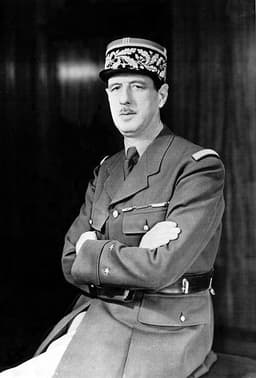
Charles de Gaulle
Politician · Modern
70.9Total
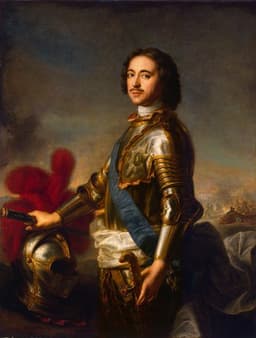
Peter the Great
Emperor · Modern
78.0Total
Basic Information
Born
1890
1672
Died
1970
1725
Era
Modern
Modern
Nationality
France
Russia
Occupation
Politician
Emperor
Civilization
Western
Western
Score Comparison
Military (10%)
65.0
75.0
Political (20%)
82.0
82.0
Influence (20%)
65.0
78.0
Legacy (20%)
75.0
75.0
Leadership (15%)
78.0
82.0
Strategy (15%)
55.0
75.0
TOTAL
70.9
78.0
Charles de Gaulle — Complete Timeline
1940 AD
Appeal of 18 June 1940Political Action
From London, de Gaulle broadcast a radio appeal urging French resistance against Nazi occupation. He called on French soldiers and citizens to continue the fight, founding the Free French Forces and becoming the symbol of French defiance.
World War IIResistanceLeadership
Impact: nationalconstructive
1958 AD
Founding of the Fifth RepublicPolitical Action
De Gaulle returned to power during the Algerian crisis and oversaw the drafting of a new constitution. The Fifth Republic established a strong executive presidency, replacing the unstable parliamentary system of the Fourth Republic.
ConstitutionGovernment ReformPolitical System
Impact: nationalconstructive
1962 AD
End of the Algerian WarPolitical Action◆ Major
De Gaulle negotiated the
DecolonizationPeace TreatyAlgeria
Impact: regionalconstructive
1968 AD
May 1968 CrisisPolitical Action◆ Major
Mass student protests and general strikes paralyzed France, challenging de Gaulle's government. De Gaulle briefly fled to Germany, then returned to dissolve the National Assembly and call elections, which his party won, but his authority was weakened.
ProtestPolitical CrisisSocial Unrest
Impact: nationaldestructive
1969 AD
Resignation as PresidentPolitical Action
De Gaulle resigned after losing a referendum on regional reform and Senate restructuring. The defeat marked the end of his political career, as he withdrew from public life and died the following year.
ResignationPolitical DefeatReferendum
Impact: nationaltragic
Peter the Great — Complete Timeline
1697 AD
Grand EmbassyPolitical Action◆ Major
Peter the Great traveled incognito to Western Europe as part of a diplomatic mission. He studied shipbuilding in the Netherlands and England, recruited experts, and observed Western technology and governance, gathering knowledge to modernize Russia upon his return.
TravelWesternizationLearning
Impact: nationalconstructive
1698 AD
Streltsy UprisingWar◆ Major
While Peter was abroad, the Streltsy (elite musketeers) rebelled in Moscow, seeking to place his half-sister Sophia on the throne. Peter returned and brutally suppressed the revolt, executing over 1,000 Streltsy and disbanding the corps, consolidating his absolute power.
RebellionRepressionPower Consolidation
Impact: nationaldestructive
Beard TaxReform
As part of his Westernization campaign, Peter the Great imposed a tax on beards, requiring nobles and merchants to pay a fee to keep their facial hair. Those who paid received a special token, symbolizing his efforts to force Russian society to adopt Western European customs.
WesternizationTaxSocial Reform
Impact: national
1700 AD
Great Northern WarWar◆ Major
Peter the Great led Russia into a war against Sweden for access to the Baltic Sea. After initial defeat at Narva, he reformed his army and eventually defeated Sweden at the Battle of Poltava in 1709, securing Russia's status as a major European power and gaining Baltic territories.
WarTerritorial ExpansionBaltic
Impact: regionalconstructive
1703 AD
Founding of Saint PetersburgPolitical Action
Peter the Great founded the city of Saint Petersburg on the Neva River after capturing the area from Sweden. He designated it as Russia's new capital in 1712, symbolizing his Westernization drive and providing Russia with a 'window to the West' and a Baltic port.
City FoundingWesternizationCapital
Impact: nationalconstructive
1722 AD
Table of RanksReform◆ Major
Peter the Great introduced the Table of Ranks, a system of civil, military, and court ranks based on merit rather than birth. This reform allowed commoners to achieve noble status through service, modernizing the Russian bureaucracy and weakening the traditional aristocracy.
BureaucracyMeritocracySocial Reform
Impact: nationalprogressive
Analysis will be generated on first visit.
Scores and timeline are available below. The page will refresh automatically when ready.
Rankings
🥇
Peter the GreatLeader
Mil: 75.0Pol: 82.0Inf: 78.0
78.0
🥈
Charles de Gaulle
Mil: 65.0Pol: 82.0Inf: 65.0
70.9
+7.1 behind
How This Comparison Works
Algorithm
Each figure is scored on 6 dimensions (0—100 scale) based on structured historical data: Military (10%), Political (20%), Influence (20%), Legacy (20%), Leadership (15%), Strategy (15%). The weighted total produces the final ranking.
Data Sources
Scores are computed from structured sub-indicators in the database. Scale factors adjust for era (Ancient ×0.85, Modern ×1.0) and civilization size (Eastern ×1.05, Other ×0.80) to account for differences in population and military scale.
Maximum 3 Figures
Comparisons are limited to 2—3 figures to ensure readability and statistical meaningfulness.
Error Margins
±5 points per dimension — Sub-scores are derived from historical records with inherent uncertainty. Two figures within 5 points on a dimension should be considered roughly equivalent in that area.
Total Score Accuracy
±3 points overall — The weighted combination of 6 dimensions produces a total score with approximately ±3 points of uncertainty. Differences of less than 3 points are not statistically significant— the figures are effectively tied.
Known Limitations
- Historical records are incomplete and uneven across civilizations
- Figures from oral-tradition societies may be underrepresented
- Occupation labels can misclassify multi-role figures
- Scores measure capability and impact, not moral character
- Quantitative scoring is a comparison tool, not absolute truth
Capability Radar
Military (10%) — Battles & Warfare
Battles
60
85
Win Rate
55
80
Expansion
20
90
Political (20%) — Governance & Reform
Reform
95
95
Diplomacy
90
80
Economy
70
85
Influence (20%) — Cultural & Global Reach
Cultural
70
85
Global
80
85
Legacy (20%) — Historical Impact
Historical
85
90
Longevity
75
85
Leadership (15%) — Power & Stability
Tenure
85
90
Stability
75
70
Strategy (15%) — Tactics & Innovation
Strategy
85
85
Tactics
70
75
Reform
80
95
Similar Comparisons
Comments & Discussion
中西史鉴者6/16/2026
这个对比有意思,但我觉得评分有点偏西方中心了。彼得大帝的军事改革确实厉害,但拿他跟秦始皇比更合适——都强行推行现代化、统一制度、甚至迁都。而戴高乐更像晚清的李鸿章,在列强环伺中搞平衡外交,但戴高乐成功建立了第五共和国,李鸿章却失败了。另外彼得大帝82的政治分我觉得偏低,他可是把俄罗斯从封建国家变成了帝国,这影响力和秦始皇焚书坑儒、书同文车同轨差不多,秦始皇在咱们这儿政治分至少95。
量化历史控6/16/2026
数据帝来挑刺了。彼得大帝军事75分,可他打赢了长达21年的大北方战争,从无到有建立了波罗的海舰队,还灭了瑞典这个当时欧洲强国。反观戴高乐65的军事分,基本靠象征性的自由法国和装甲兵理论,实战方面真不如彼得。更关键的是,彼得大帝影响力78分,但圣彼得堡这座城市的建立就改变了整个东欧格局,延续了200多年,这影响力在中国历史里相当于隋炀帝修大运河,绝对不止78分。我算了一下,彼得大帝应该至少82分才合理。