Loading...
Analysis will be generated on first visit.
Scores and timeline are available below. The page will refresh automatically when ready.
Charles de Gaulle vs Napoleon Bonaparte
Napoleon Bonaparte leads by 11.5 pts · 2 figures compared
…
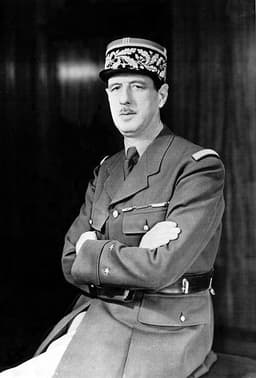
Charles de Gaulle
Politician · Modern
70.9Total

Napoleon Bonaparte
General · Modern
82.4Total
Basic Information
Born
1890
1769
Died
1970
1821
Era
Modern
Modern
Nationality
France
France
Occupation
Politician
General
Civilization
Western
Western
Score Comparison
Military (10%)
65.0
94.0
Political (20%)
82.0
75.0
Influence (20%)
65.0
82.0
Legacy (20%)
75.0
78.0
Leadership (15%)
78.0
80.0
Strategy (15%)
55.0
93.0
TOTAL
70.9
82.4
Rankings
🥇
Napoleon BonaparteLeader
Mil: 94.0Pol: 75.0Inf: 82.0
82.4
🥈
Charles de Gaulle
Mil: 65.0Pol: 82.0Inf: 65.0
70.9
+11.5 behind
How This Comparison Works
Algorithm
Each figure is scored on 6 dimensions (0—100 scale) based on structured historical data: Military (10%), Political (20%), Influence (20%), Legacy (20%), Leadership (15%), Strategy (15%). The weighted total produces the final ranking.
Data Sources
Scores are computed from structured sub-indicators in the database. Scale factors adjust for era (Ancient ×0.85, Modern ×1.0) and civilization size (Eastern ×1.05, Other ×0.80) to account for differences in population and military scale.
Maximum 3 Figures
Comparisons are limited to 2—3 figures to ensure readability and statistical meaningfulness.
Error Margins
±5 points per dimension — Sub-scores are derived from historical records with inherent uncertainty. Two figures within 5 points on a dimension should be considered roughly equivalent in that area.
Total Score Accuracy
±3 points overall — The weighted combination of 6 dimensions produces a total score with approximately ±3 points of uncertainty. Differences of less than 3 points are not statistically significant— the figures are effectively tied.
Known Limitations
- Historical records are incomplete and uneven across civilizations
- Figures from oral-tradition societies may be underrepresented
- Occupation labels can misclassify multi-role figures
- Scores measure capability and impact, not moral character
- Quantitative scoring is a comparison tool, not absolute truth
Capability Radar
Military (10%) — Battles & Warfare
Battles
60
95
Win Rate
55
90
Expansion
20
95
Political (20%) — Governance & Reform
Reform
95
95
Diplomacy
90
80
Economy
70
85
Influence (20%) — Cultural & Global Reach
Cultural
70
85
Global
80
90
Legacy (20%) — Historical Impact
Historical
85
95
Longevity
75
90
Leadership (15%) — Power & Stability
Tenure
85
85
Stability
75
70
Strategy (15%) — Tactics & Innovation
Strategy
85
95
Tactics
70
98
Reform
80
92
Analysis will be generated on first visit.
Scores and timeline are available below. The page will refresh automatically when ready.
Charles de Gaulle — Complete Timeline
1940 AD
Appeal of 18 June 1940Political Action
From London, de Gaulle broadcast a radio appeal urging French resistance against Nazi occupation. He called on French soldiers and citizens to continue the fight, founding the Free French Forces and becoming the symbol of French defiance.
World War IIResistanceLeadership
Impact: nationalconstructive
1958 AD
Founding of the Fifth RepublicPolitical Action
De Gaulle returned to power during the Algerian crisis and oversaw the drafting of a new constitution. The Fifth Republic established a strong executive presidency, replacing the unstable parliamentary system of the Fourth Republic.
ConstitutionGovernment ReformPolitical System
Impact: nationalconstructive
1962 AD
End of the Algerian WarPolitical Action◆ Major
De Gaulle negotiated the
DecolonizationPeace TreatyAlgeria
Impact: regionalconstructive
1968 AD
May 1968 CrisisPolitical Action◆ Major
Mass student protests and general strikes paralyzed France, challenging de Gaulle's government. De Gaulle briefly fled to Germany, then returned to dissolve the National Assembly and call elections, which his party won, but his authority was weakened.
ProtestPolitical CrisisSocial Unrest
Impact: nationaldestructive
1969 AD
Resignation as PresidentPolitical Action
De Gaulle resigned after losing a referendum on regional reform and Senate restructuring. The defeat marked the end of his political career, as he withdrew from public life and died the following year.
ResignationPolitical DefeatReferendum
Impact: nationaltragic
Napoleon Bonaparte — Complete Timeline
1799 AD
Coup of 18 BrumaireOther◆ Major
Napoleon Bonaparte, with support from his brother Lucien and key political figures, overthrew the Directory in a bloodless coup. He established the Consulate with himself as First Consul, effectively becoming the ruler of France. This event ended the French Revolution's most unstable period.
French RevolutionCoupRise to Power
Impact: regional
1804 AD
Promulgation of the Napoleonic CodeOther◆ Major
Napoleon enacted the Civil Code of the French, known as the Napoleonic Code, a comprehensive set of laws that replaced the fragmented feudal legal systems. The code established legal equality, protected property rights, and secularized law. It became the basis for legal systems in many European and world countries.
Legal ReformNapoleonic CodeCivil Law
Impact: globalconstructive
1805 AD
Battle of AusterlitzWar◆ Major
Napoleon's Grande Arm
Napoleonic WarsBattleDecisive Victory
Impact: global
1812 AD
Invasion of RussiaWar◆ Major
Napoleon led the Grande Arm
Napoleonic WarsInvasionDisaster
Impact: globaldestructive
1815 AD
Battle of WaterlooWar◆ Major
Napoleon's French army was defeated by the combined forces of the Duke of Wellington's Anglo-Allied army and Gebhard Leberecht von Bl
Napoleonic WarsBattleFinal Defeat
Impact: globaldestructive
Similar Comparisons
Comments & Discussion
数据侦探小王6/16/2026
仔细看了分数,有几个疑点。拿破仑军事94,但滑铁卢战役他的战术失误(分兵追击、未协调格鲁希)直接导致失败,这种决策失误在评分里被忽略了吗?戴高乐政治82,但如果按照中国历代政治制度评估标准——稳定性和延续性,法国第五共和国至今64年,而拿破仑的帝国仅15年。按年化稳定性算,拿破仑政治得分应低于50。再说影响力,拿破仑82 vs 戴高乐68,但戴高乐在非洲法语区的影响力(CFA法郎、军事干预)至今仍在,拿破仑法典在欧洲部分国家已被取代。建议引入‘持续时间加权’指标,否则分数有短期偏见。
MetricMatters6/16/2026
I'm always suspicious of these quantified comparisons. Napoleon's 94 military score is based on battlefield wins, but how do you weight the fact that he lost 2 out of 3 major campaigns (Russia, Waterloo)? De Gaulle's 65 military score seems low—he was a visionary tank strategist who predicted WWII armor tactics in his 1934 book 'Vers l'Armée de Métier,' which the French high command ignored. The scoring system clearly favors Napoleonic-scale conquests over doctrinal influence. And the leadership gap (80 vs 91) feels arbitrary. Napoleon inspired devotion unto death at Austerlitz; De Gaulle's leadership was more about political symbolism. Numbers don't capture that.
东方历史迷6/16/2026
拿法国人物跟中国比很有意思。拿破仑的军事94分,但和成吉思汗或曹操比,他的战略纵深和持久战能力差远了。滑铁卢一败就彻底完蛋,不像中国历史人物能屡败屡战。戴高乐的政治82分,在第五共和国的制度建设上确实厉害,但比起商鞅的变法或朱元璋的集权,他的创新其实有限。拿破仑法典影响深远,类似秦律的基础性作用,但西方评分往往忽略东方视角下的‘治乱循环’——拿破仑的帝国十五年就崩了,戴高乐的共和国至今也才六十多年。中国的汉唐盛世可是延续数百年,这才是真正的政治得分。
ProfessorAurelius6/16/2026
Tacitus wrote that 'the lust for power is the most flagrant of all passions,' and both men embodied that, albeit differently. Napoleon's military score of 94 echoes Caesar's Commentaries on the Gallic Wars—brilliant propaganda masking catastrophic losses (400,000 dead in Russia alone, per Chandler's statistics). De Gaulle's 77 military score, while lower, overlooks his prescient 1934 treatise on mechanized warfare, which Guderian read and implemented. The political comparison is more nuanced: Napoleon's 75 reflects his Napoleonic Code and meritocracy, but also his coronation—a theatrical return to hereditary rule. De Gaulle's 82 is earned by navigating Algeria's decolonization, a political tightrope walk that even Machiavelli would admire. The scores flatten these complexities into numbers, but the narratives remain richer.
HistoryBuff996/16/2026
Okay, I just finished watching a documentary on Napoleon and I gotta say—his military score is deserved. The guy conquered Italy at 26, invented modern corps organization, and fought 60+ battles. But De Gaulle's leadership score beating him? I'm not so sure. Napoleon had marshals who'd follow him into hell (Ney at Borodino), while De Gaulle had to flee to London and lead from a BBC studio. That takes guts, but it's different. I think the summary is right that De Gaulle's legacy is 'cleaner'—he died in retirement, not on a remote island. But Napoleon's influence on modern warfare is huge. Clausewitz based 'On War' on Napoleon's campaigns! The scores don't show that ripple effect well enough.